Themes from St. Paul's Suite: 1st Violin Sheet Music Preview

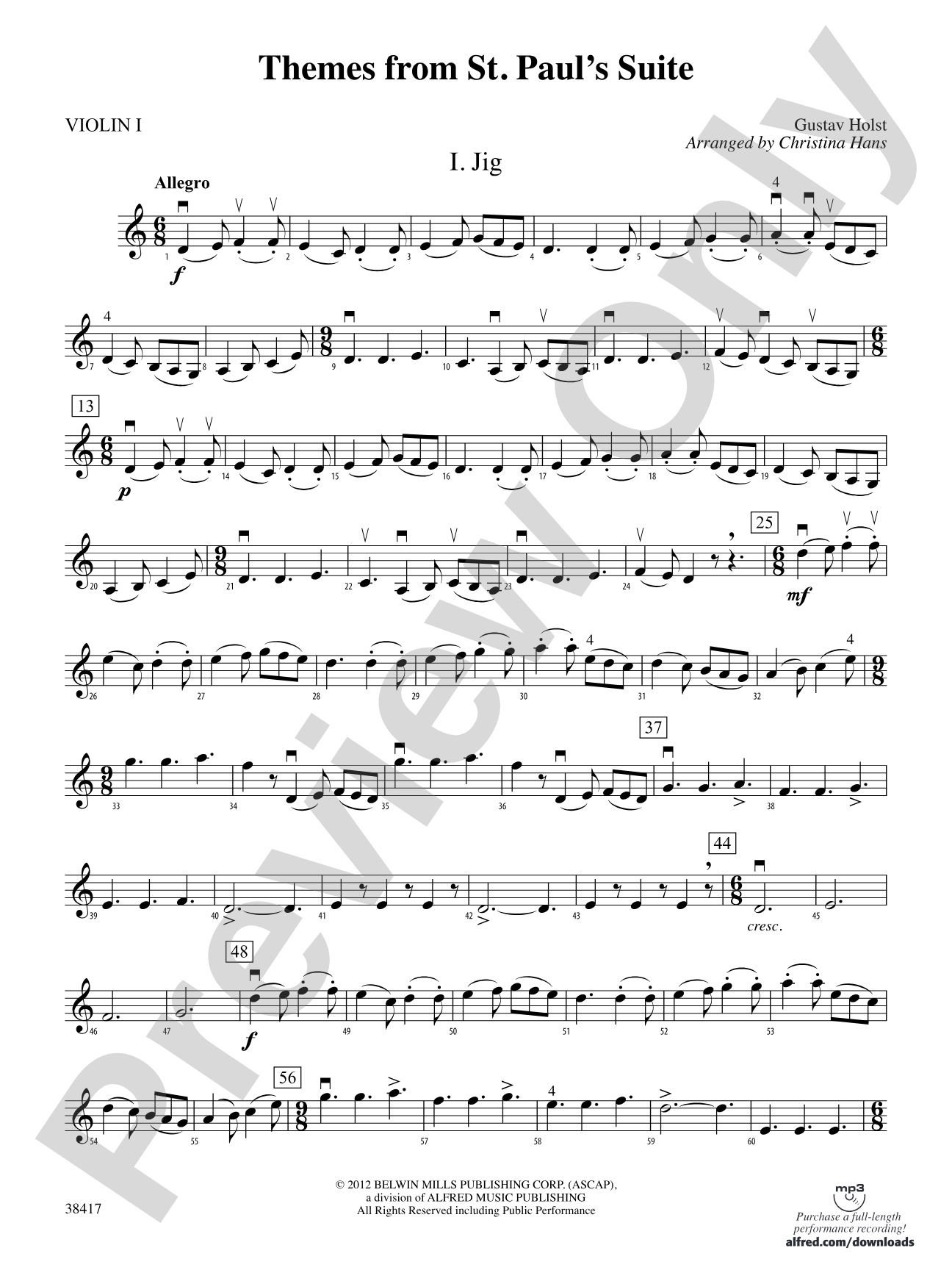
Themes from St. Paul's Suite: 1st Violin

By Gustav Holst / arr. Christina Hans

Grade: 3

Item: 00-PC-0015484_VN1

Digital Download
$5.99
Description
A great introduction to the main themes of this timeless piece! Violin, viola, and cello parts stay in first position and rhythms have been simplified for success. This arrangement includes the Jig, the Ostinato, the Intermezzo, and the Dargason.

Don't just read it, hear it, play along with it, and watch your students grow with it. In MakeMusic Cloud, Themes from St. Paul's Suite: 1st Violin comes alive with professional accompaniment, adjustable tempo, and built-in practice tools that turn solo practice into real progress.

Sample Audio
0:00
0:00
Sample Video
Additional Details
Series: Belwin Intermediate String Orchestra
Publisher: Alfred Music
Page Count: 144
SKU: 00-PC-0015484_VN1

More about this title

About the Composer: Gustav Holst

Gustav Holst (1874-1934) was an English composer whose orchestral works remain central to music education repertoire. His ability to craft memorable melodies and transparent orchestrations made his music accessible to student ensembles while maintaining genuine artistic substance. St. Paul's Suite, composed in 1913, stands as one of his most performed works in schools and communities.

Why we love this

This arrangement opens the door to a masterwork that would otherwise sit beyond reach at Grade 3. Christina Hans has preserved Holst's distinctive voice and harmonic character while keeping fingering manageable and rhythms clear, so your students engage with real compositional craftsmanship rather than a watered-down approximation.

What to expect

Elegant and spirited by turns. The Intermezzo offers a lyrical moment of calm contemplation, while the Jig sparkles with English folk warmth. The Dargason recalls traditional melody with Holst's sophisticated harmonic treatment, creating music that feels both familiar and refined.

Who it's for

Grade 3 string orchestras ready to step into standard repertoire without sacrificing intonation or bow control. This works equally well for community ensembles, school orchestras tracking toward competitive festival play, and homeschool music groups seeking substantive material at an honest level.

How to get the most out of it

  • Shape the melodic lines with natural phrasing rather than playing phrase marks mechanically; Holst's themes sing, and even simplified versions reward careful attention to where the line breathes.
  • Balance the parts during the Ostinato section so the repetitive foundation stays steady while upper voices remain conversational.
  • Approach the Dargason with rhythmic confidence; its folk character comes alive when the ensemble commits to a clear pulse without rushing the spirited momentum.
  • Use the conductor score to follow all four themes in rehearsal, marking rehearsal letters or key moments so players understand how sections connect.

How to use it

Schedule this alongside other Grade 3 string material to show students how a great composer thinks about melody and orchestration. It pairs well with contests or festivals where you want to showcase solid musicianship without programming above your ensemble's technical level. The four contrasting movements also give you flexibility to feature movement-length selections in informal concerts before tackling the full suite.

Skills your students will build

  • First position reading across all four string voices
  • Articulation control in fast passages (Jig, Dargason)
  • Sustained tone and vibrato application in lyrical sections (Intermezzo)
  • Balance and blend in multi-part orchestral textures
  • Rhythmic ensemble precision with simplified but varied meters
  • Recognition of thematic development and form across four distinct movements

You May Also Like