
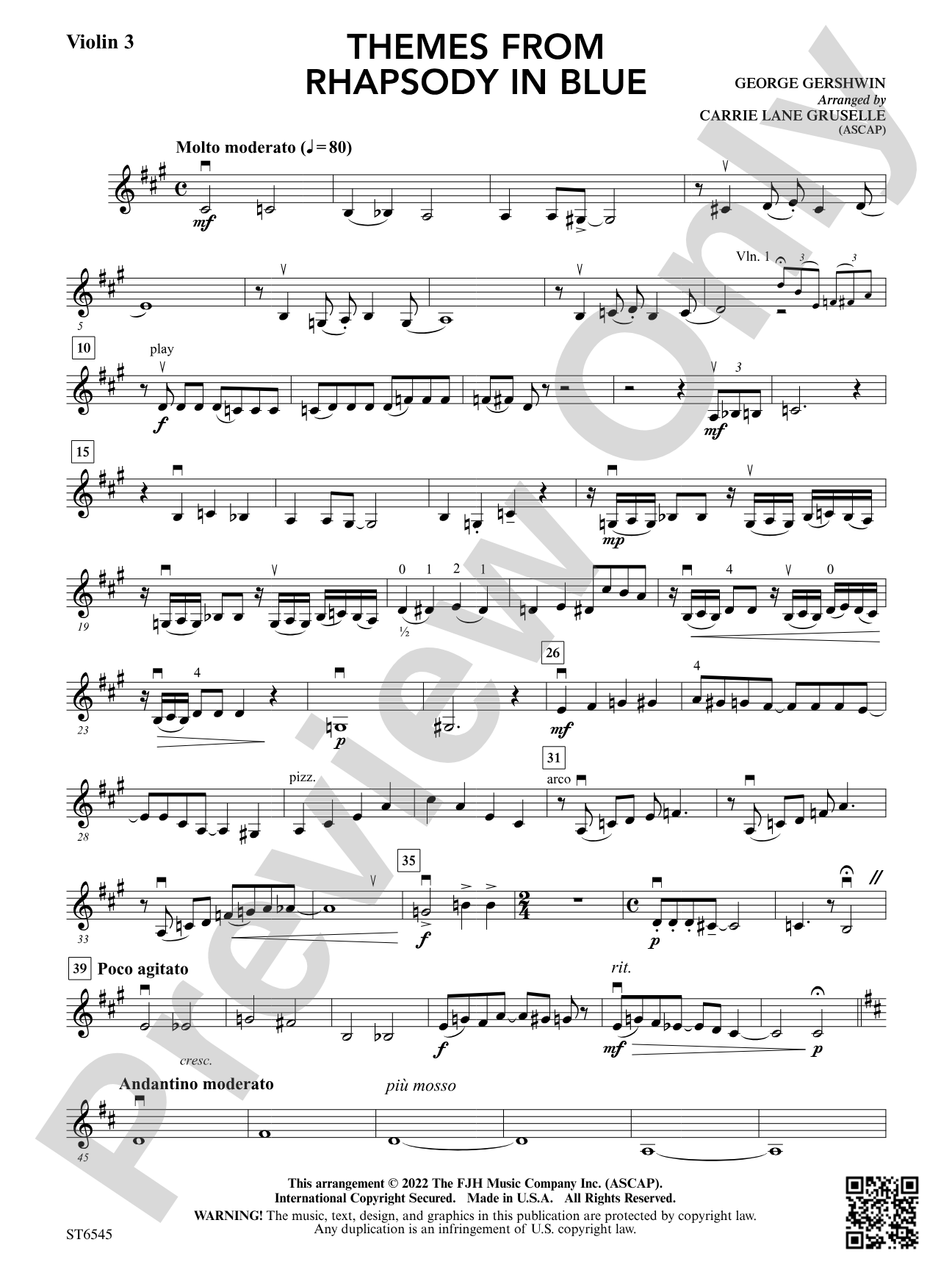

Themes from Rhapsody in Blue: Violin 3 (Viola T.C.)
By George Gershwin / arr. Carrie Lane Gruselle
Grade: 3.5;4
Item: 98-PC-DST6545_VN3
$7.00
Pickup currently not available
Description
This landmark arrangement showcases Gershwin's beloved piece that validated the merging of classical music and jazz during the "roaring 20s!" This setting for strings presents a sampling of the most memorable themes in a dynamic and well-constructed arrangement. Ideal to work on bow distribution, weight, and speed; as well as chromatics and some basic position work with ample fingerings provided. Exceptional! (4:30)


Don't just read it, hear it, play along with it, and watch your students grow with it. In MakeMusic Cloud, Themes from Rhapsody in Blue: Violin 3 (Viola T.C.) comes alive with professional accompaniment, adjustable tempo, and built-in practice tools that turn solo practice into real progress.
Open in the Player
Jump straight in and assign it today.
Start Your Free Trial
Open this title and explore the full library in minutes.
Sample Audio
1
Audio File
--:--
0:00
0:00
Sample Video
Additional Details
Series:
FJH String Orchestra
Publisher:
The FJH Music Company, Inc.
SKU:
98-PC-DST6545_VN3
More about this title
About the Composer: George Gershwin
George Gershwin (1898-1937) composed at the intersection of popular song, jazz, and concert music, creating works that challenged the boundary between "serious" and "vernacular" American music. His ability to craft memorable melodies and harmonize jazz idioms earned him recognition from both Broadway audiences and classical composers; Rhapsody in Blue remains his most performed work and a touchstone of twentieth-century American music.
Why we love this
This arrangement distills Rhapsody in Blue into its most recognizable and dramatically effective themes, giving string players a genuine masterwork without the technical demands of the original. Carrie Lane Gruselle's orchestration maintains the piece's harmonic sophistication and jazz character while building string technique methodically through bow work, chromatic passages, and position development. The Grade 3½–4 level makes this accessible to developing orchestras ready for repertoire with real substance and concert appeal.
What to expect
The energy of 1920s New York City channeled through sustained strings; Gershwin's signature blend of jazzy syncopation and lush romantic phrasing creates a piece that feels both sophisticated and swinging. Players encounter moments of lyrical beauty alongside rhythmic vitality, making every section feel like it carries the work forward.
Who it's for
String orchestras at the intermediate level (Grade 3½–4) that want to tackle a culturally significant masterwork with built-in pedagogical payoff. Directors seeking festival or concert repertoire that deepens bow technique and position work while engaging students with music they recognize and respect.
How to get the most out of it
- Shape the famous opening theme with weight in the bow and clear direction; Gershwin's melodies thrive on expressive phrasing, not mechanical accuracy. Let singers in your section guide the contour of each phrase.
- Balance chromatic passages by keeping a steady, even bow speed and maintaining consistent pressure across each note. Inconsistency in weight makes chromatics sound labored rather than flowing.
- Coordinate bow distribution among sections carefully during the arrangement's busier passages to ensure no part gets buried. Mark sectional cues and balance checks in rehearsal.
- Approach the jazz-inflected rhythmic figures with a slight lift and flexibility rather than rigid precision; the piece's charm comes from the interplay between classical polish and jazz swagger.
How to use it
Showcase this as a standalone concert feature or as part of a "Jazz Meets Classical" program pairing it with other American masterworks. Its moderate length (4 minutes 30 seconds) and high recognition factor make it an excellent closer for a concert or a strong opening number to establish energy and quality.
Skills your students will build
- Bow distribution, weight management, and speed control across longer passages
- Reading and executing chromatic lines with accurate intonation and fluent bow motion
- Basic position work with guided fingerings in the upper register
- Jazz articulation and rhythmic flexibility within a string context
- Balancing melody and accompaniment within an ensemble arrangement