
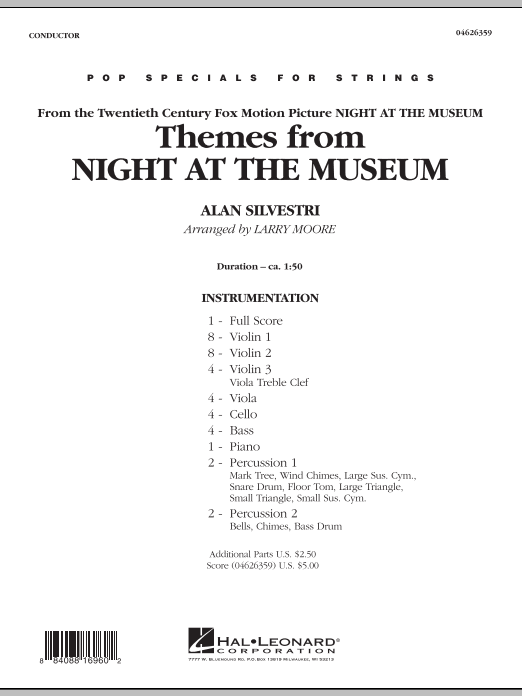

Themes from Night at the Museum: String Orchestra Conductor Score & Parts
By Alan Silvestri / Arranged by Larry Moore
Grade: 3-4
Item: 35-PK00096850
$50.00
Pickup currently not available
Buy Extra Parts (Digital PDF Download)
Parts Added to Cart!
Description
The composer from "Polar Express," "Forrest Gump," and "Back to the Future" has another hit with this year's box office smash that appeals to all ages. Several themes are combined into this impressive showcase for string orchestra, including "Full House," "Heroes Return," and "Main Theme." Dur: 1:50


Themes from Night at the Museum: String Orchestra Conductor Score & Parts isn't in MakeMusic Cloud just yet...but it could be. Let us know you'd like to see it, and you'll help shape what comes next. In the meantime, start a free trial and dive into thousands of interactive titles your students can play along with today.
Request This Title
Tell us you want it.
Start Your Free Trial
Explore everything that's ready to play right now.
Sample Audio
No sample audio found.
Sample Video
No sample videos found.
Additional Details
Publisher:
Hal Leonard
SKU:
35-PK00096850
More about this title
About the Composer: Alan Silvestri
Alan Silvestri has spent decades composing for film and television, earning multiple Grammy and Golden Globe nominations for his distinctive orchestral voice. His work spans across genres and decades, from the energetic adventure scores of "Back to the Future" and "Forrest Gump" to the warmth and wonder of "Polar Express," making him one of the most recognizable film composers in music education settings.
Silvestri's film scores translate exceptionally well to school orchestras because they balance accessibility with musical substance. His melodies are memorable and singable, his orchestrations reward solid ensemble playing, and his thematic development gives young musicians something genuine to interpret rather than simply execute.
Why we love this
Silvestri writes for film in a way that actually works when you hand it to student musicians. The themes are strong enough that your orchestra will sound impressive even while they're still building the technical chops to handle more complex scoring. Combining three recognizable themes into one concert piece gives you substantial musical material without requiring your students to sustain focus through an unfamiliar single-theme structure.
What to expect
Energetic and warmhearted. The piece captures the adventure and humor of the film while maintaining orchestral clarity that lets young string players shine. You get moments of soaring melody alongside rhythmic drive, creating a performance experience that feels both impressive and genuinely enjoyable to play.
Who it's for
String orchestras in grades 3 and 4 looking for concert repertoire with genuine audience appeal. This works equally well for ensembles building confidence with film music and for intermediate programs ready to tackle clean execution and musicality simultaneously.
How to get the most out of it
- Balance the melody line across your section heads early in rehearsal. Silvestri's themes weave between first and second violins, so clarify who's leading at each transition before worrying about details.
- Pay attention to the recorded accompaniment's tempo and character. This piece gains enormous energy from strong rhythmic clarity in the cello and bass section, so lock that foundation first.
- Shape each theme's arc rather than playing it straight through. "Full House" especially benefits from slight dynamic breathing between phrases, which makes the melody sing without requiring perfect intonation.
- Use the contrasting themes as opportunities to reset your ensemble's focus. Moving from "Full House" into "Heroes Return" gives you natural rehearsal break points and keeps students engaged across the 1:50 duration.
How to use it
Program this when you want a substantial crowd pleaser that doesn't require your orchestra to sight-read complex rhythms or navigate extensive divisi writing. It works beautifully as a second or third piece on a concert, providing energy without exhausting your musicians before a more technically demanding selection.
Skills your students will build
- Lyrical phrasing across sustained melodic lines
- Sectional balance when themes pass between violin parts
- Rhythmic precision in accompaniment figures
- Dynamic shaping and musical interpretation within film idiom
- Ensemble blend across multiple thematic transitions