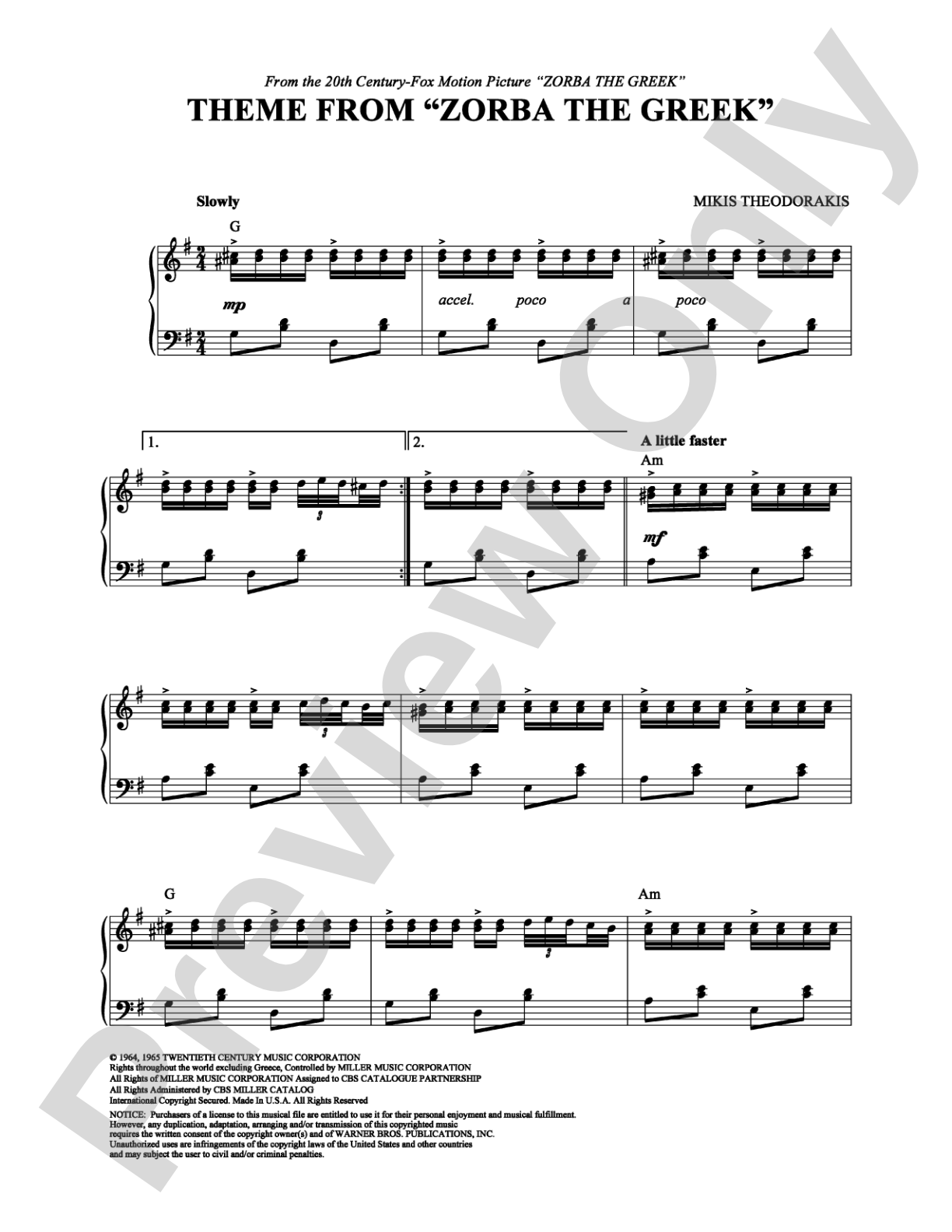
Theme from Zorba the Greek: Piano Digital Sheet Music

Theme from Zorba the Greek: Piano Digital Sheet Music

Mikis Theodorakis

Item: 00-PS-0006132

Digital Download
$3.99
Description

Theme from Zorba the Greek: Piano Digital Sheet Music isn't in MakeMusic Cloud just yet...but it could be. Let us know you'd like to see it, and you'll help shape what comes next. In the meantime, start a free trial and dive into thousands of interactive titles your students can play along with today.

Sample Audio
No sample audio found.
Sample Video
Additional Details
SKU: 00-PS-0006132

More about this title

About the Creator: Mikis Theodorakis

Mikis Theodorakis (1925, 2021) was a Greek composer whose music became inseparable from his nation's cultural and political identity. He wrote the score for the 1964 film Zorba the Greek, and that iconic theme transcended cinema to become a global symbol of Greek life and spirit. Beyond film scoring, Theodorakis was a prolific symphonist and vocal composer whose work ranged from modernist concert pieces to deeply accessible popular songs.

Why we love this

This iconic theme sits perfectly at the intersection of recognizable and genuinely rewarding to play. The melody is memorable enough that audiences connect instantly, but the harmonic movement and rhythmic character give pianists real material to shape and interpret.

What to expect

Warm, spirited, and full of movement. The theme carries an earthy joy and Mediterranean character that feels both intimate and celebratory. There's a natural lilt to the rhythms that invites the listener into a kind of musical dance.

Who it's for

Pianists at the intermediate level who want a piece with immediate appeal and strong musical character. This works equally well for students seeking recital repertoire and for teachers looking for something that connects with audiences while remaining within reach technically.

How to get the most out of it

  • Commit fully to the dance-like rhythm. This piece thrives on forward momentum and a lilting quality; resist the urge to rush or flatten the articulation.
  • Shape the melody with clear phrase direction rather than playing it note-to-note. Find the peak of each musical thought and let it breathe.
  • Balance the accompaniment so the left hand supports rather than overwhelms. The right hand melody must always sing through.
  • Listen for the resilience in the character. This is energetic and spirited music, not gentle or tentative.

How to use it

Include this on a solo recital where you want a moment of accessible brightness and cultural flavor. It also pairs well with other twentieth-century or contemporary classics, providing a recognizable anchor in a program of less familiar works.

Skills your students will build

  • Playing sustained melodic lines with clear phrasing and direction
  • Maintaining rhythmic clarity in dance-like meters
  • Balancing melody and accompaniment texture
  • Interpreting recognizable themes with personal musicality

You May Also Like