Theme from "The Moldau": 1st F Horn Sheet Music Preview

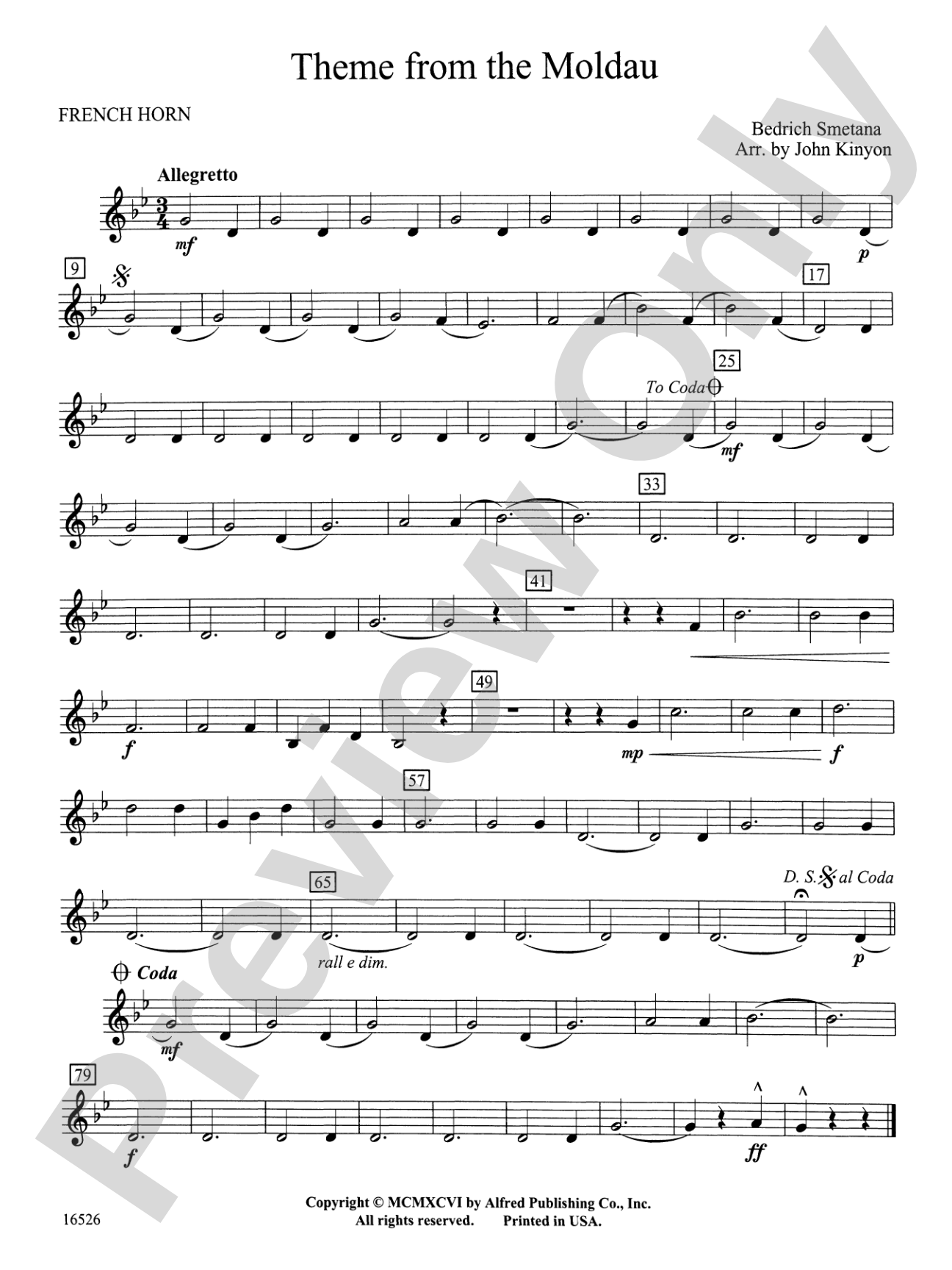
Theme from "The Moldau": 1st F Horn

By Bedrich Smetana / arr. John Kinyon

Grade: 1 (Very Easy)

Item: 00-PC-0014249_H1

Digital Download
$3.00
Description
John Kinyon has another winner with this transcription of the symphonic masterpiece "The Moldau." A tribute to Bedrich Smetana's beloved river, this captivating piece describes the flowing and turmoil of water in musical terms. The parts are written well within the capabilities of young performers while keeping the essence of the original. This will add more than a little class to your next concert!

Don't just read it, hear it, play along with it, and watch your students grow with it. In MakeMusic Cloud, Theme from "The Moldau": 1st F Horn comes alive with professional accompaniment, adjustable tempo, and built-in practice tools that turn solo practice into real progress.

Sample Audio
0:00
0:00
Sample Video
Additional Details
Series: Mini Score Series
Publisher: Alfred Music
Page Count: 102
SKU: 00-PC-0014249_H1

More about this title

About the Composer: Bedrich Smetana

Bedrich Smetana (1824-1884) stands as the founding figure of Czech national music. His work emerged during a period when Bohemia sought cultural identity under Austro-Hungarian rule, and Smetana's compositions became a musical voice for his nation's spirit and landscape.

"The Moldau" forms the second movement of his symphonic poem cycle "Ma vlast" (My Homeland). Written in 1874, it remains one of the most performed orchestral works worldwide. For music educators, Smetana's gift lies in his ability to paint vivid pictures through orchestration and melody, making his work both accessible and artistically substantial at any grade level.

Why we love this

Kinyon's arrangement preserves everything that makes this symphonic masterpiece resonate with audiences: the gentle opening theme of the river, the building energy of currents and cascades, and the triumphant conclusion. Young bands rarely get to perform repertoire this musically substantial, and students immediately grasp the programmatic storytelling, which deepens their connection to both the music and the historical context.

What to expect

The music flows like water itself: beginning as a delicate trickle, gathering momentum through rapids and whirlpools, and finally surging into powerful, majestic currents. The piece carries listeners on a journey through a landscape, complete with pastoral moments and moments of dramatic intensity.

Who it's for

This arrangement serves young concert bands (Grade 1 level) seeking repertoire with real artistic substance. Directors programming their first major concert or preparing students for festival performance will find parts that challenge musicianship without overwhelming young players.

How to get the most out of it

  • Shape the opening theme with careful attention to dynamic control; the river's gentle beginning sets expectations for the journey ahead, so avoid starting too loudly.
  • Balance the melodic line clearly across sections as themes pass between voices; listeners should always know which instrument is telling the story.
  • Build intensity gradually through the middle section, resisting the urge to rush the tempo during busier passages; the drama lies in the accumulation, not the speed.
  • Bring out the triumphant final theme with full ensemble energy while maintaining clarity in the accompaniment parts.

How to use it

Open a concert with this piece to immediately establish artistic credibility and capture audience attention through recognizable melody and vivid storytelling. It also pairs exceptionally well on a "Musical Stories" or "National Traditions" themed program alongside other programmatic works.

Skills your students will build

  • Following a clear musical narrative and program
  • Sustaining long melodic lines with proper phrase shaping
  • Balance and blend when passing thematic material between instrumental families
  • Dynamic control from pianissimo to fortissimo transitions
  • Maintaining ensemble cohesion through tempo and style changes

You May Also Like