Theme from the "1812 Overture": 2nd Violin Sheet Music Preview

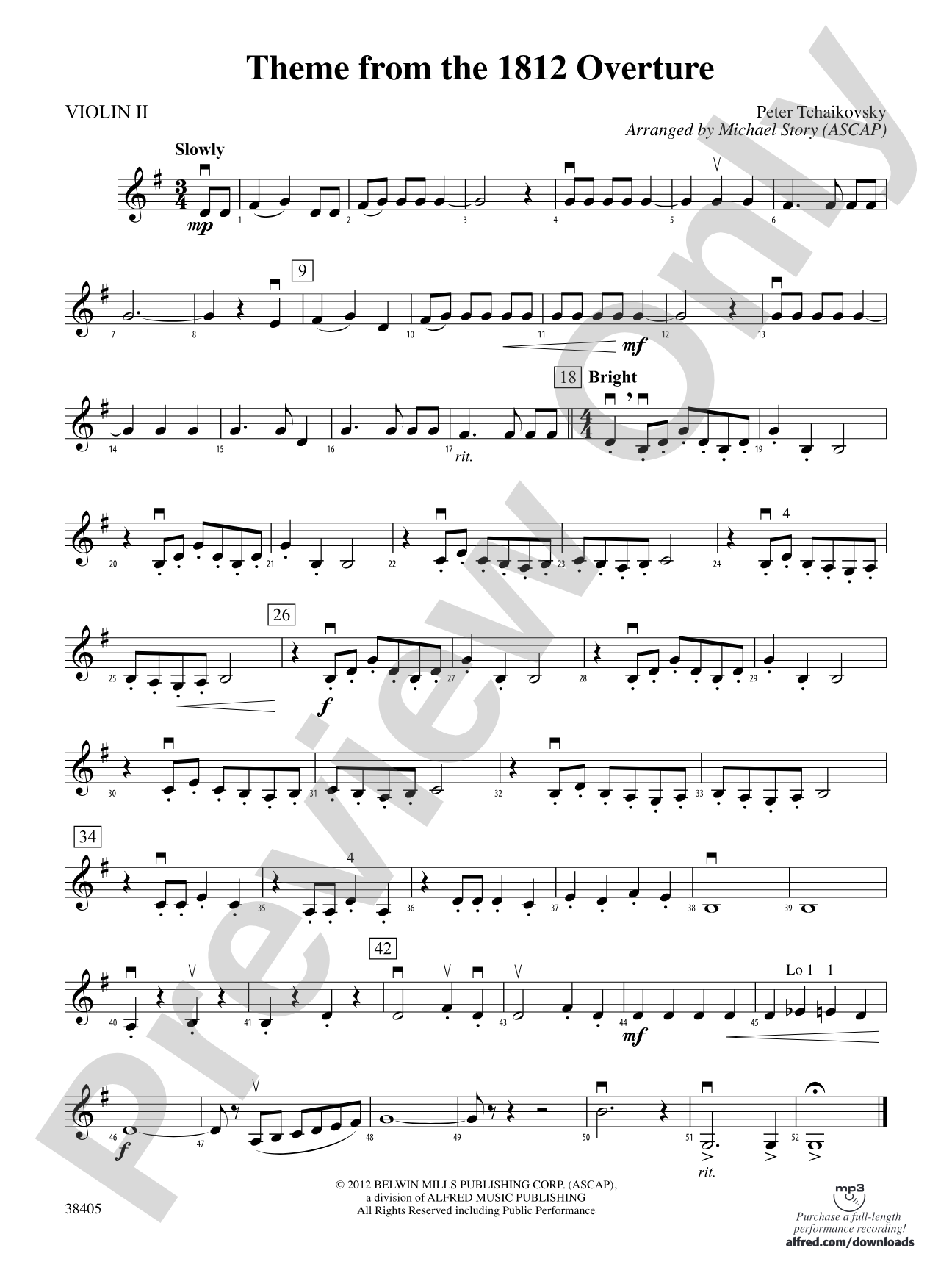
Theme from the "1812 Overture": 2nd Violin

By Peter Ilyich Tchaikovsky / arr. Michael Story

Grade: 2.5

Item: 00-PC-0015473_VN2

Digital Download
$5.99
Description
200 years after the event it commemorates, let's celebrate Tchaikovsky with a very playable reduction of his great overture. Perfect for festival or contest---or just for fun, using paper bags for the canon effect!

Don't just read it, hear it, play along with it, and watch your students grow with it. In MakeMusic Cloud, Theme from the "1812 Overture": 2nd Violin comes alive with professional accompaniment, adjustable tempo, and built-in practice tools that turn solo practice into real progress.

Sample Audio
0:00
0:00
Sample Video
Additional Details
Series: Orchestra Expressions
Publisher: Alfred Music
Page Count: 76
SKU: 00-PC-0015473_VN2

More about this title

About the Composer: Peter Ilyich Tchaikovsky

Peter Ilyich Tchaikovsky (1840-1893) stands as one of the most performed composers in the orchestral repertoire. His gift for melody and dramatic orchestration shaped the late Romantic era, and his works remain central to concert life worldwide. Tchaikovsky composed across every major genre: symphonies, concertos, ballets, operas, and overtures that blend Russian musical tradition with Western European forms.

The 1812 Overture, written in 1880 to commemorate Russia's victory over Napoleon's invasion, exemplifies Tchaikovsky's ability to blend personal expression with grand historical narrative. Its combination of Russian folk themes, stirring patriotic fervor, and spectacular orchestral effects has made it one of the most recognizable pieces in classical music.

Why we love this

Michael Story's arrangement captures the epic sweep and memorable themes of this masterwork while keeping the orchestration manageable for young ensembles. The Grade 2.5 reduction doesn't sacrifice the piece's character or its crowd-pleasing appeal, making it genuinely rewarding to rehearse and perform. This is the 1812 that works for festival circuits and concert programs where you want big impact without requiring advanced technique.

What to expect

Stirring and grand, with moments of tender lyricism woven through celebratory fanfares. The piece unfolds as a pageant of Russian character, building toward moments of triumph that feel earned rather than imposed, creating a sense of occasion that young musicians respond to with genuine pride.

Who it's for

String orchestras at the intermediate level who want to perform a recognizable, musically substantial work without requiring advanced technique or extreme ranges. Directors preparing ensembles for festival competitions or spring concerts will find this arrangement strikes the right balance between accessibility and musical integrity.

How to get the most out of it

  • Balance the melody line across your violin sections so the famous Russian folk themes sing through without drowning out the harmonic underpinnings in lower strings.
  • The described paper bag effect for the canon sections invites students to engage with orchestration creatively; rehearse the sound cue separately so it lands with precision, not as an afterthought.
  • Shape phrases across entire sections rather than stopping at bar lines. Tchaikovsky's melodies breathe in long arcs, and your ensemble will sound more cohesive when you conduct through the larger musical gestures.
  • Lock in the rhythmic drive during faster passages by having the violas and cellos anchor the pulse; this stability lets upper voices focus on ensemble intonation and phrasing.

How to use it

Program this as a festival or contest centerpiece where you want an audience favorite paired with solid musical substance. It also works as a strong closing number on a mixed concert program, offering spectacle and recognition without overshadowing other repertoire.

Skills your students will build

  • Sustaining long melodic lines across phrase lengths
  • Balancing multiple musical ideas simultaneously (melody, harmony, counter-melody)
  • Reading and executing style markers and dynamic shaping in Romantic-era writing
  • Coordinating rhythmic precision during syncopated and layered sections
  • Understanding orchestration through the dialogue between string sections

You May Also Like