
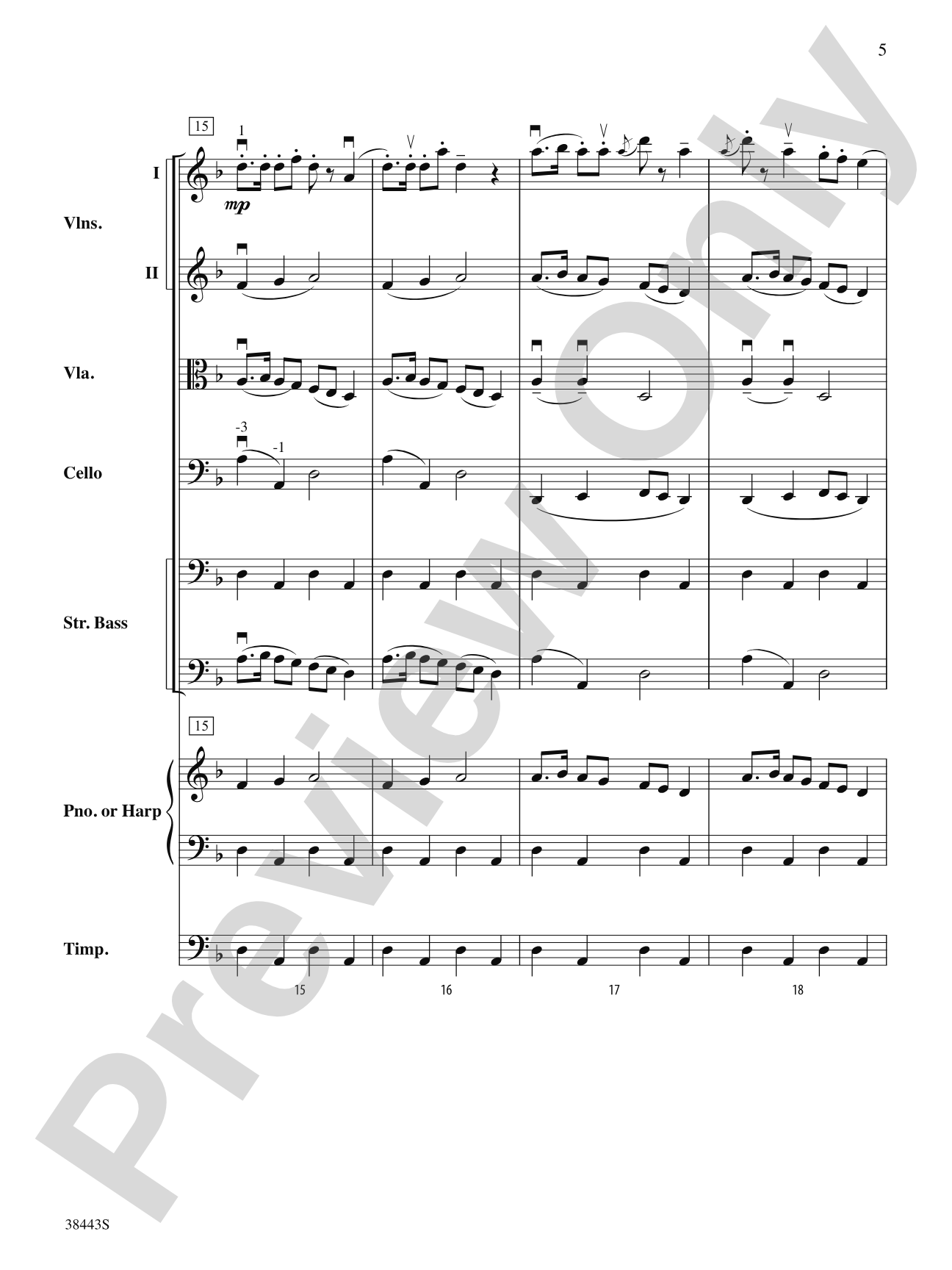
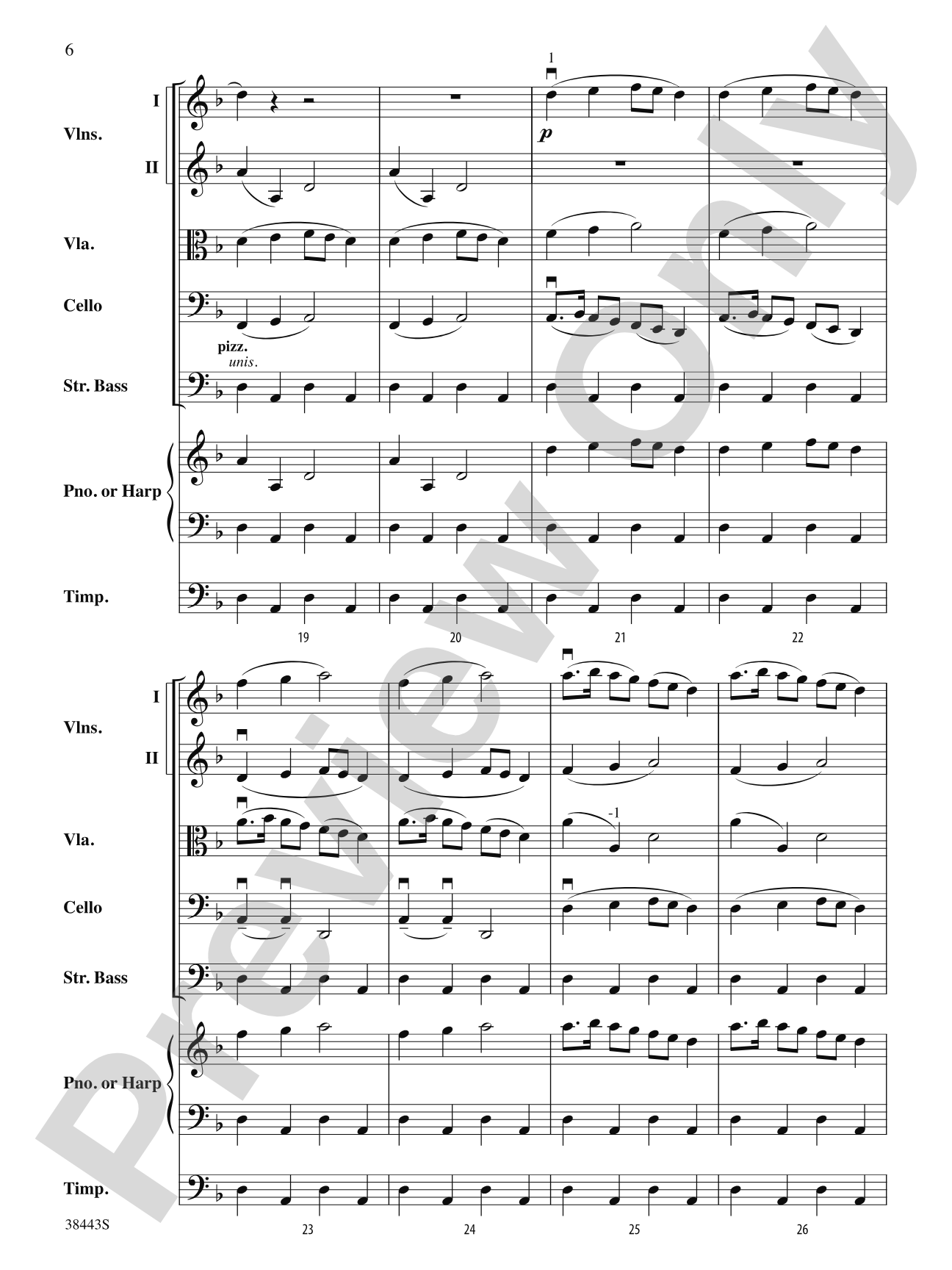
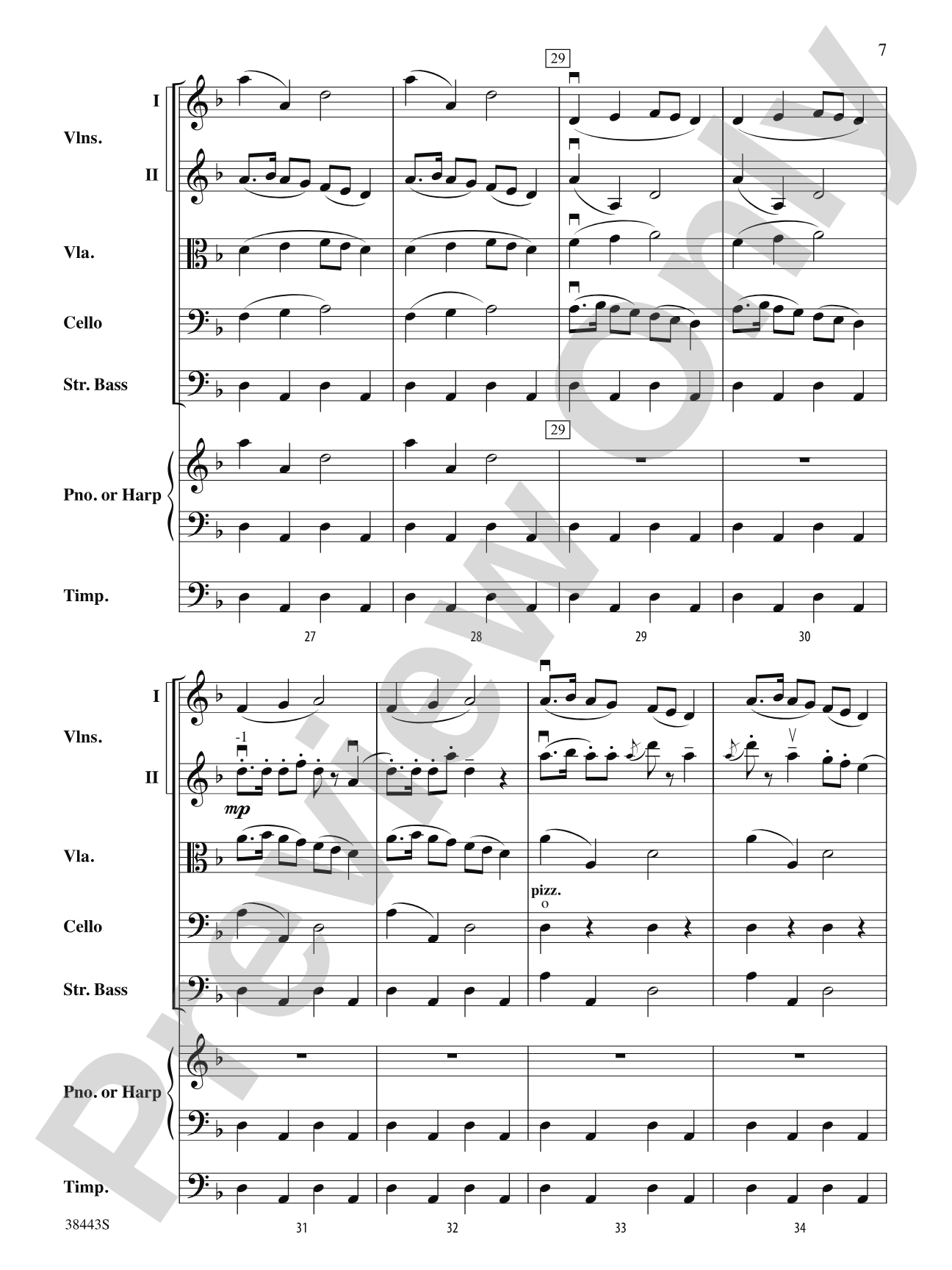
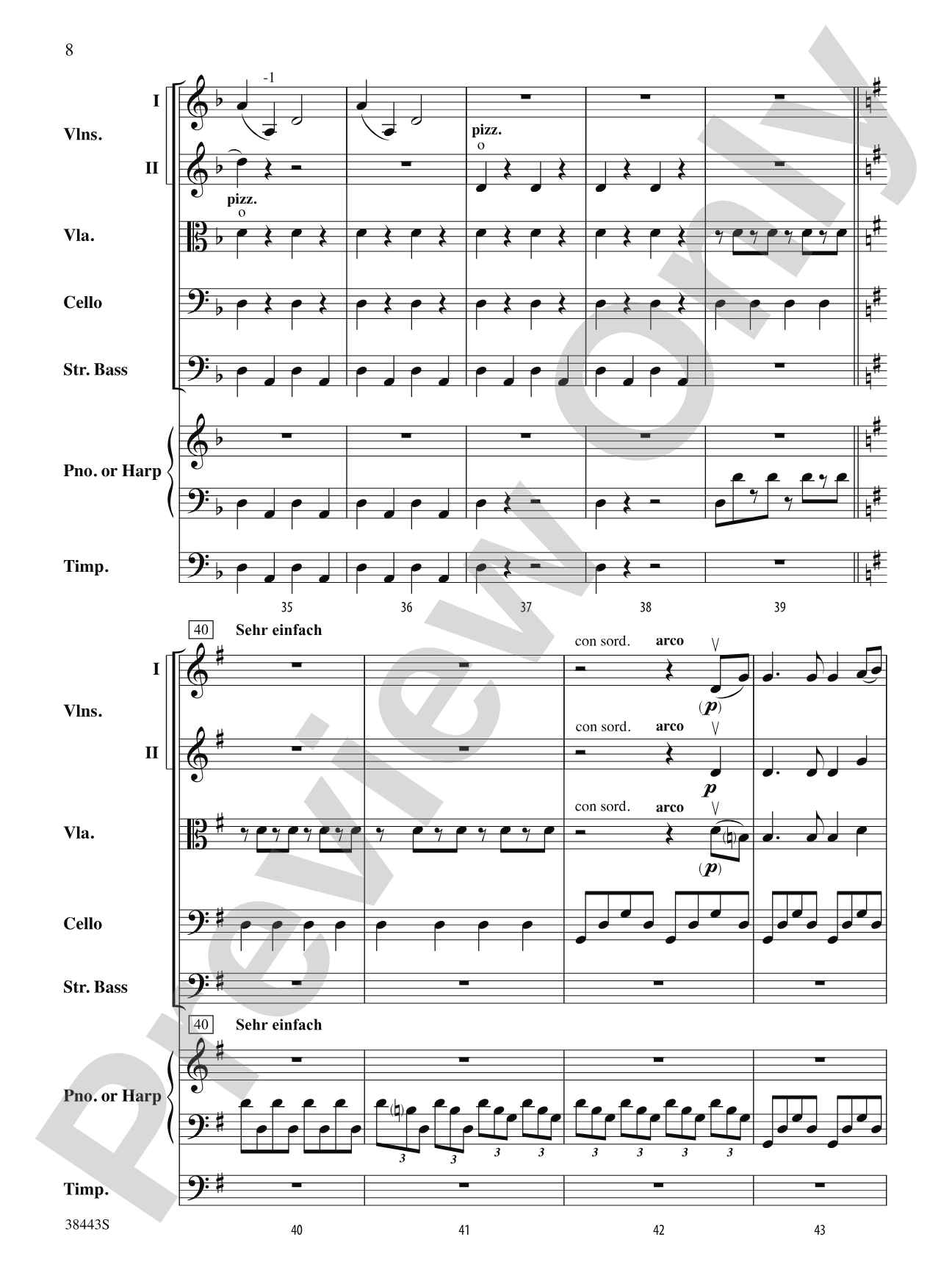
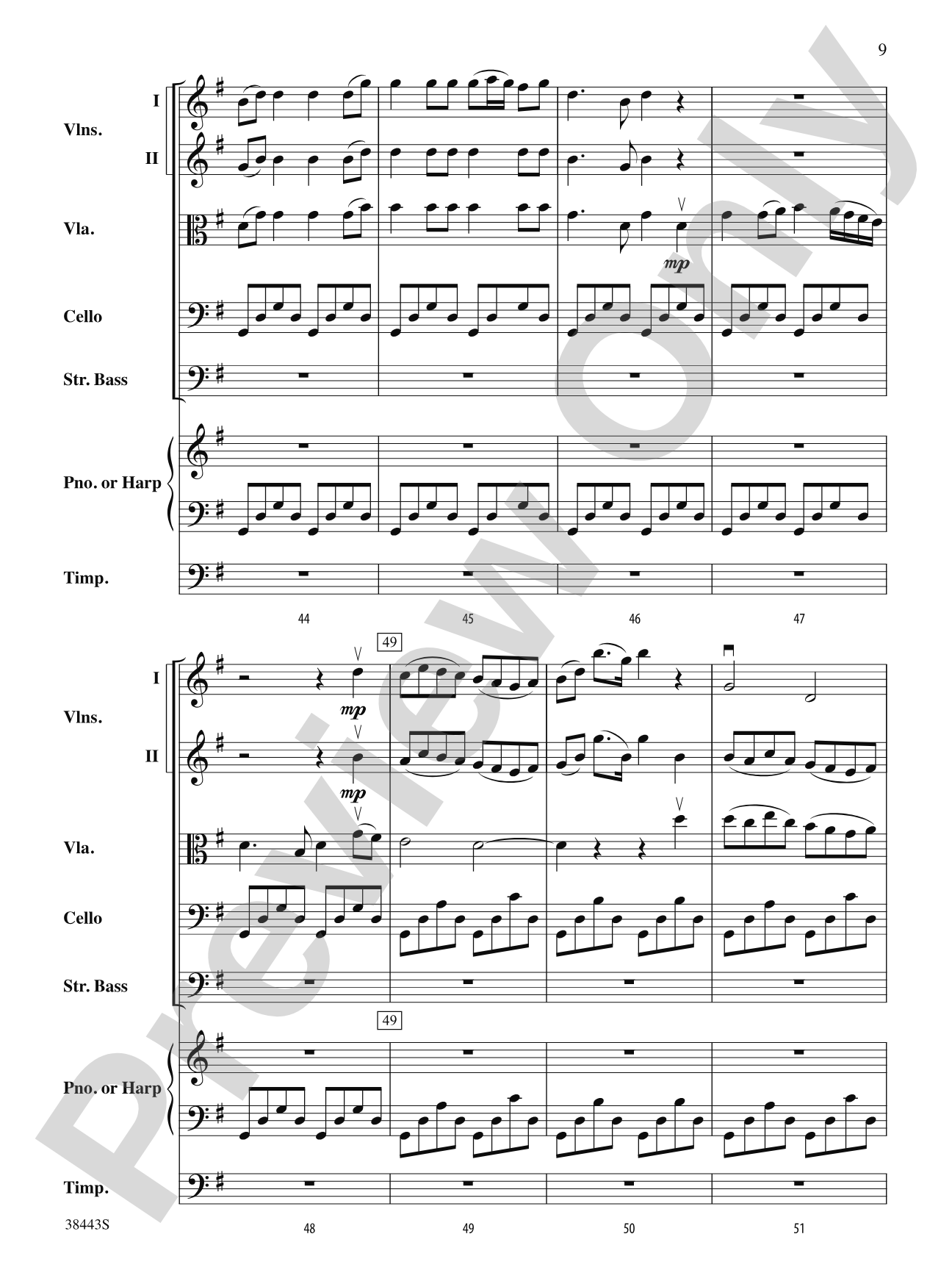
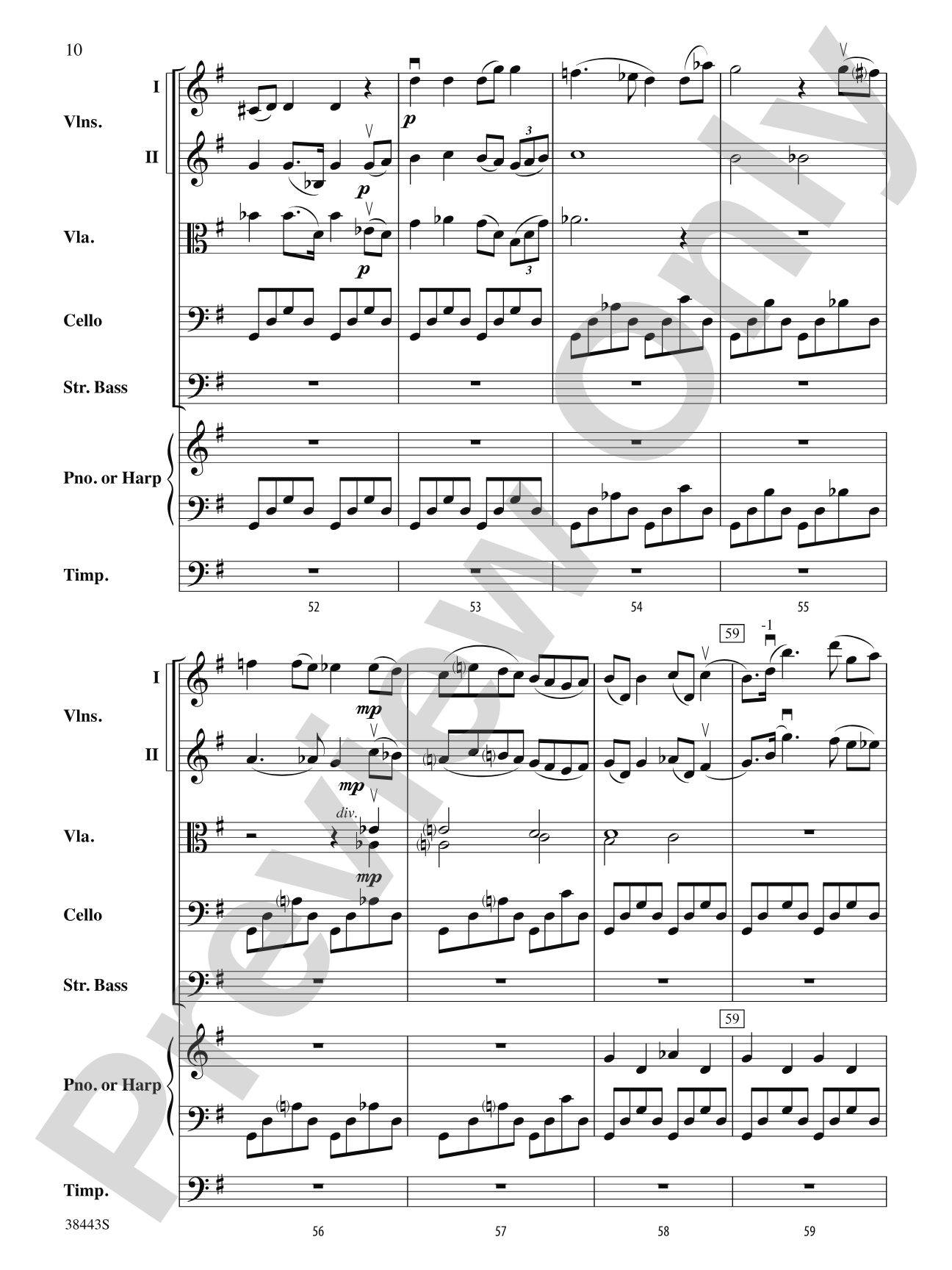
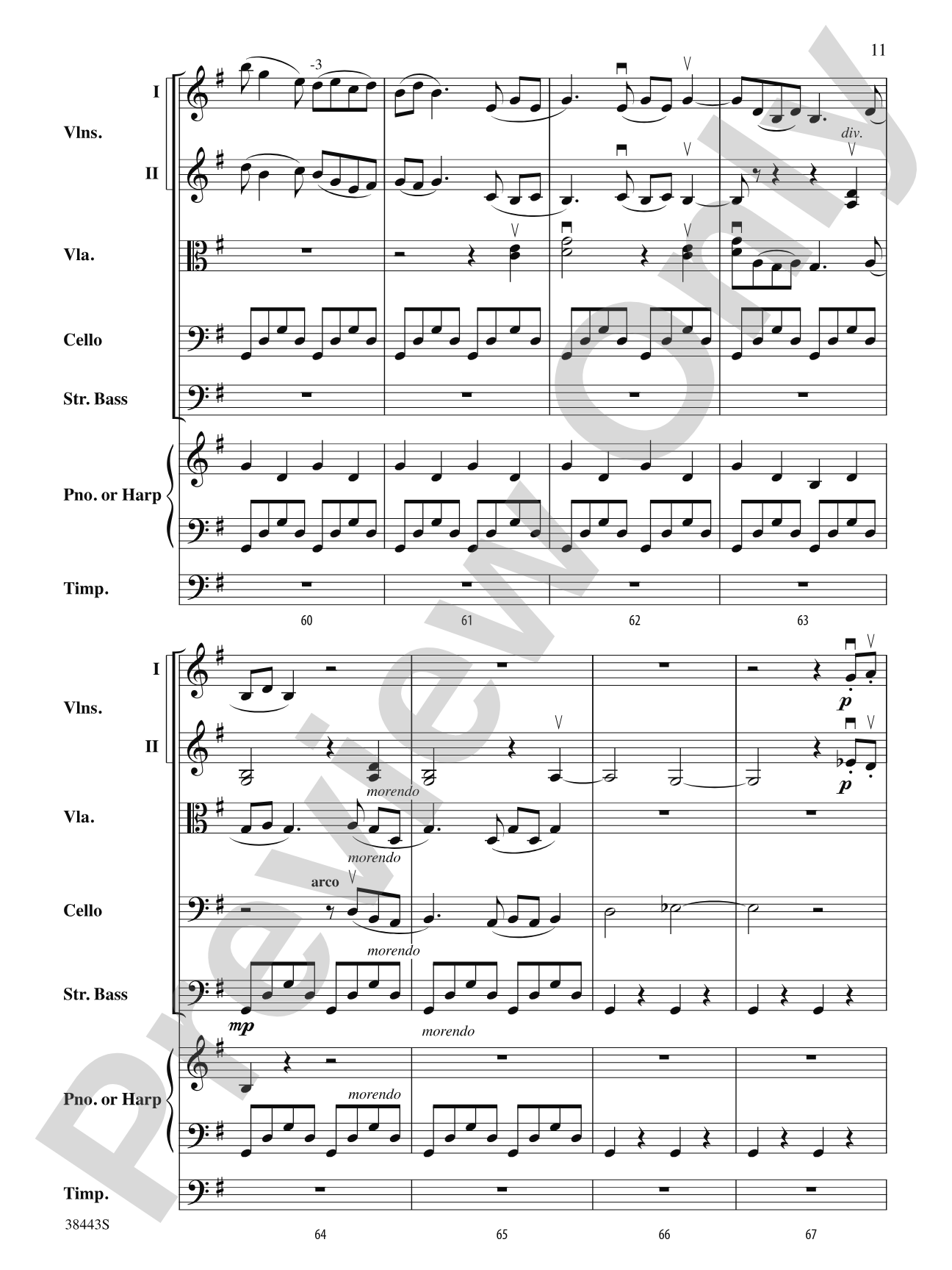
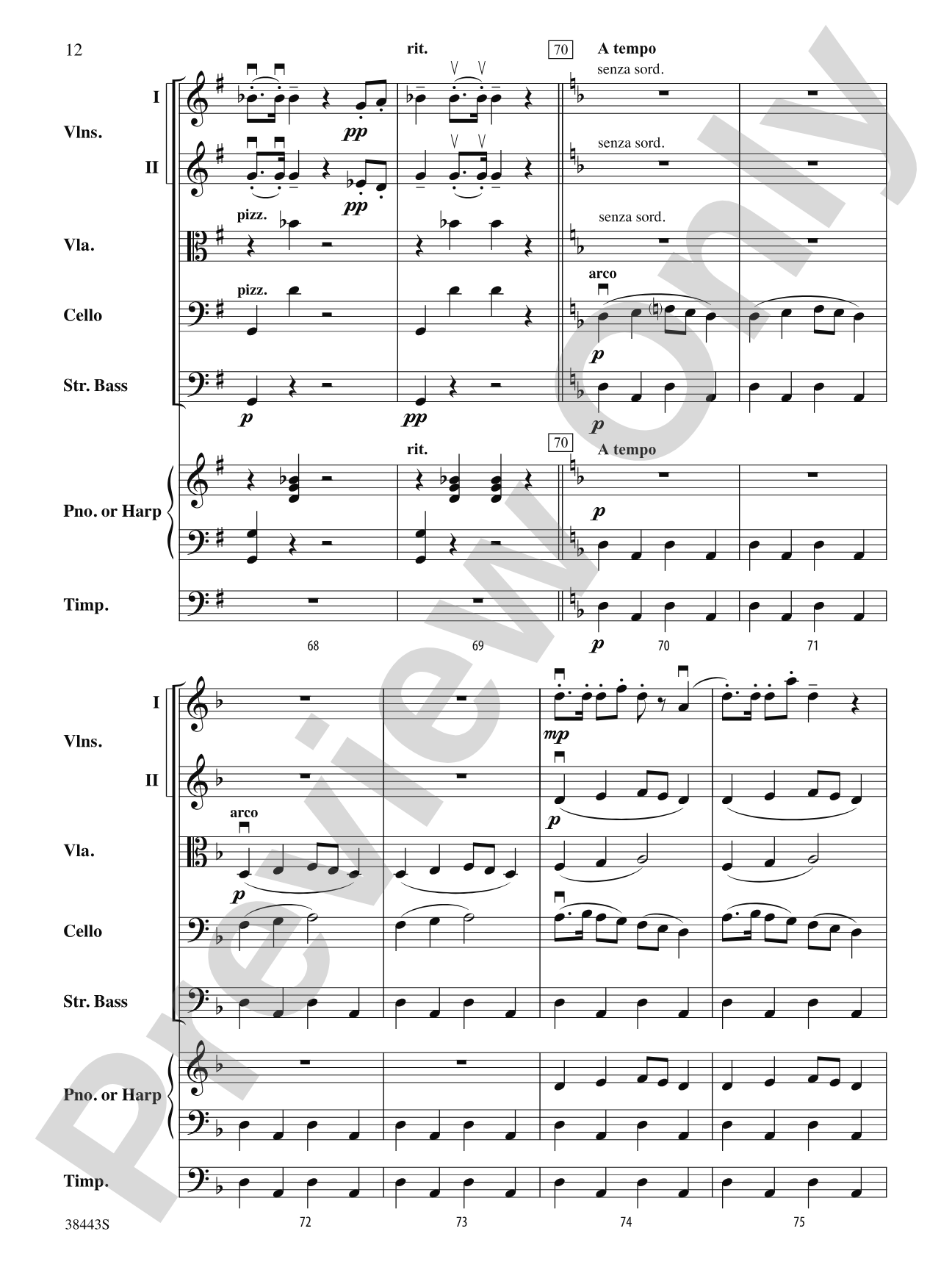
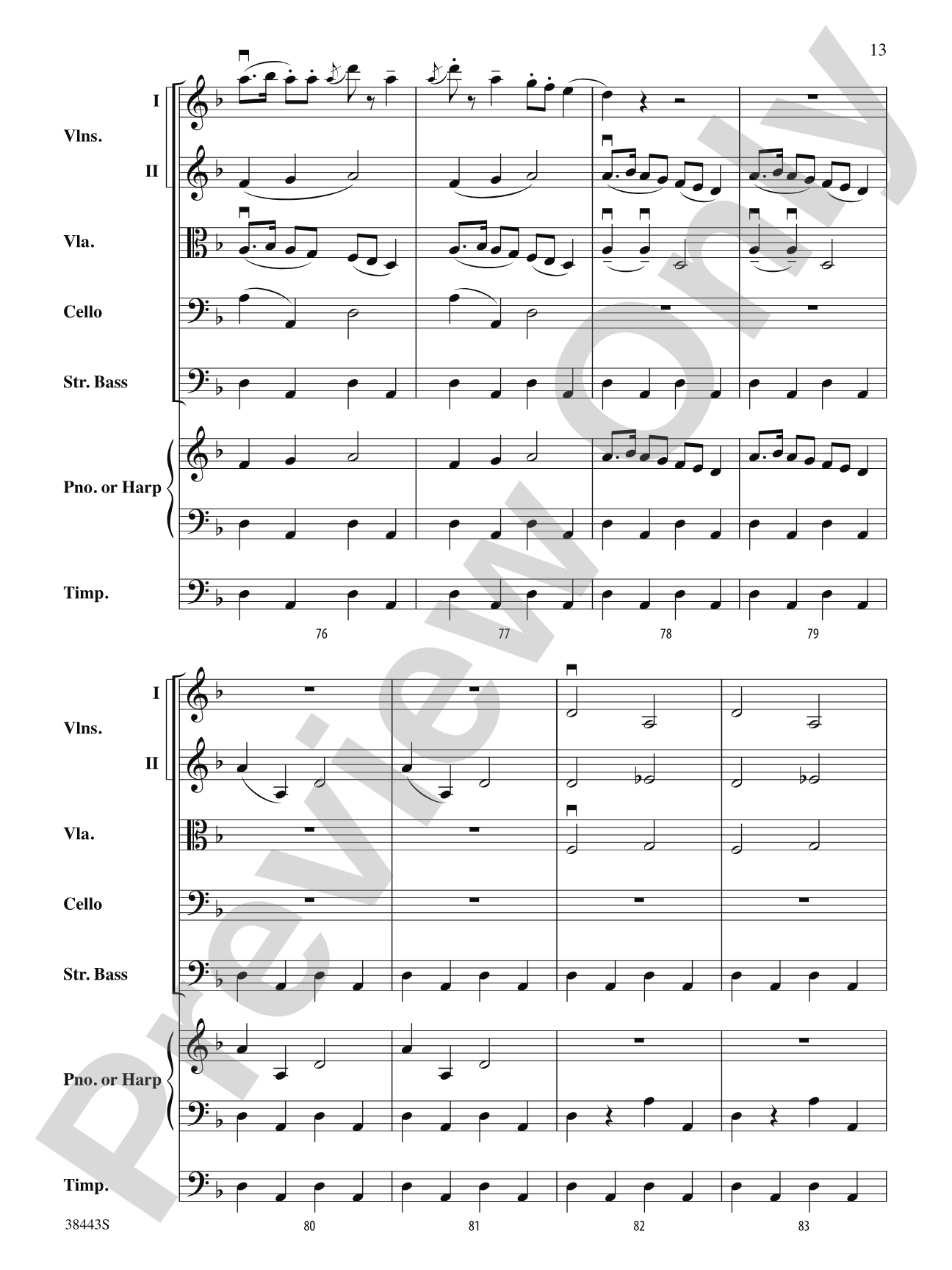
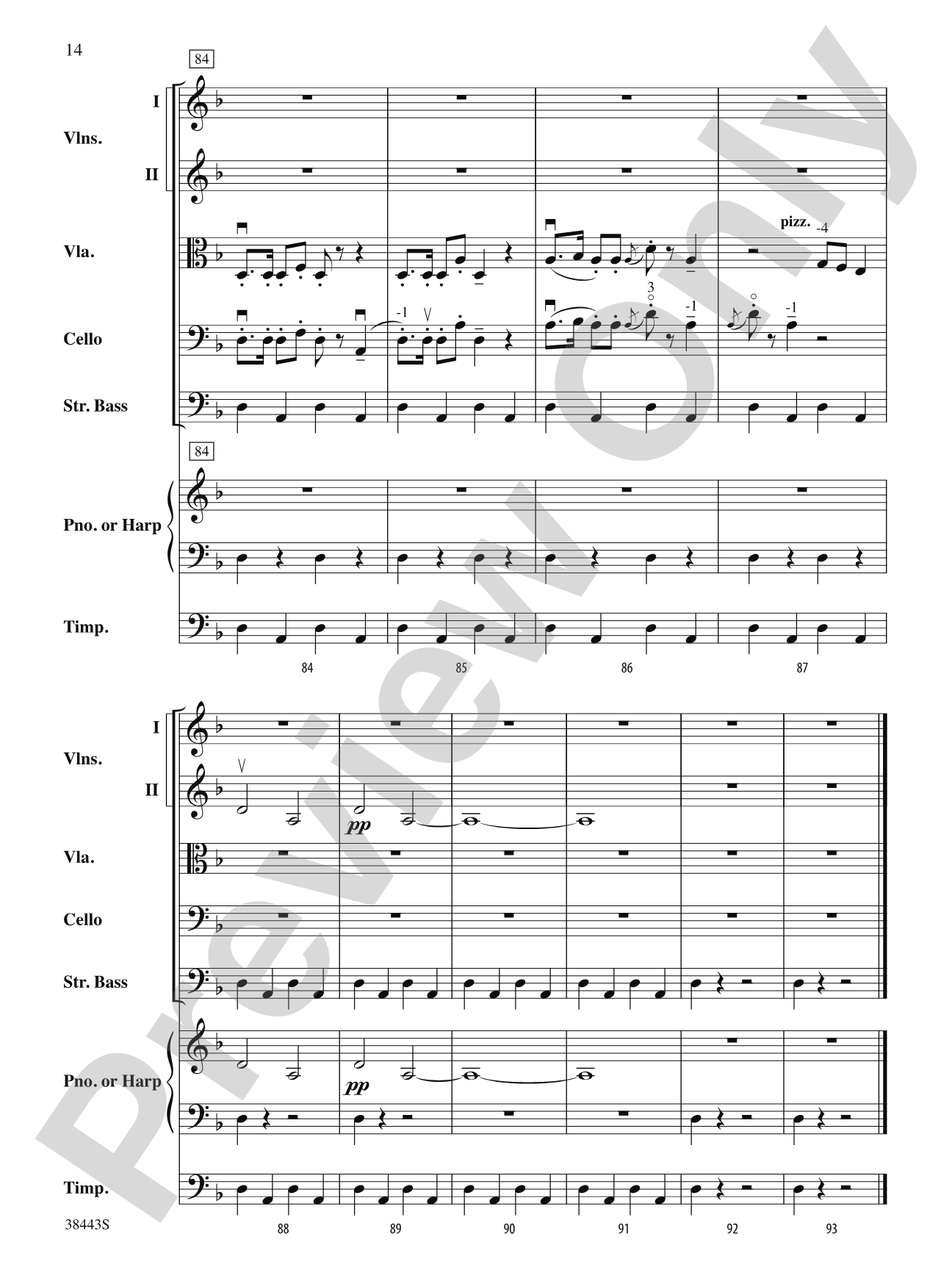



Theme from Symphony No. 1, Movement 3: Score
Bass Section Feature (Opt. Harp Feature)
By Gustav Mahler / arr. Brad Pfeil
Grade: 3
Item: 00-PR-0003813
$10.00
Pickup currently not available
Description
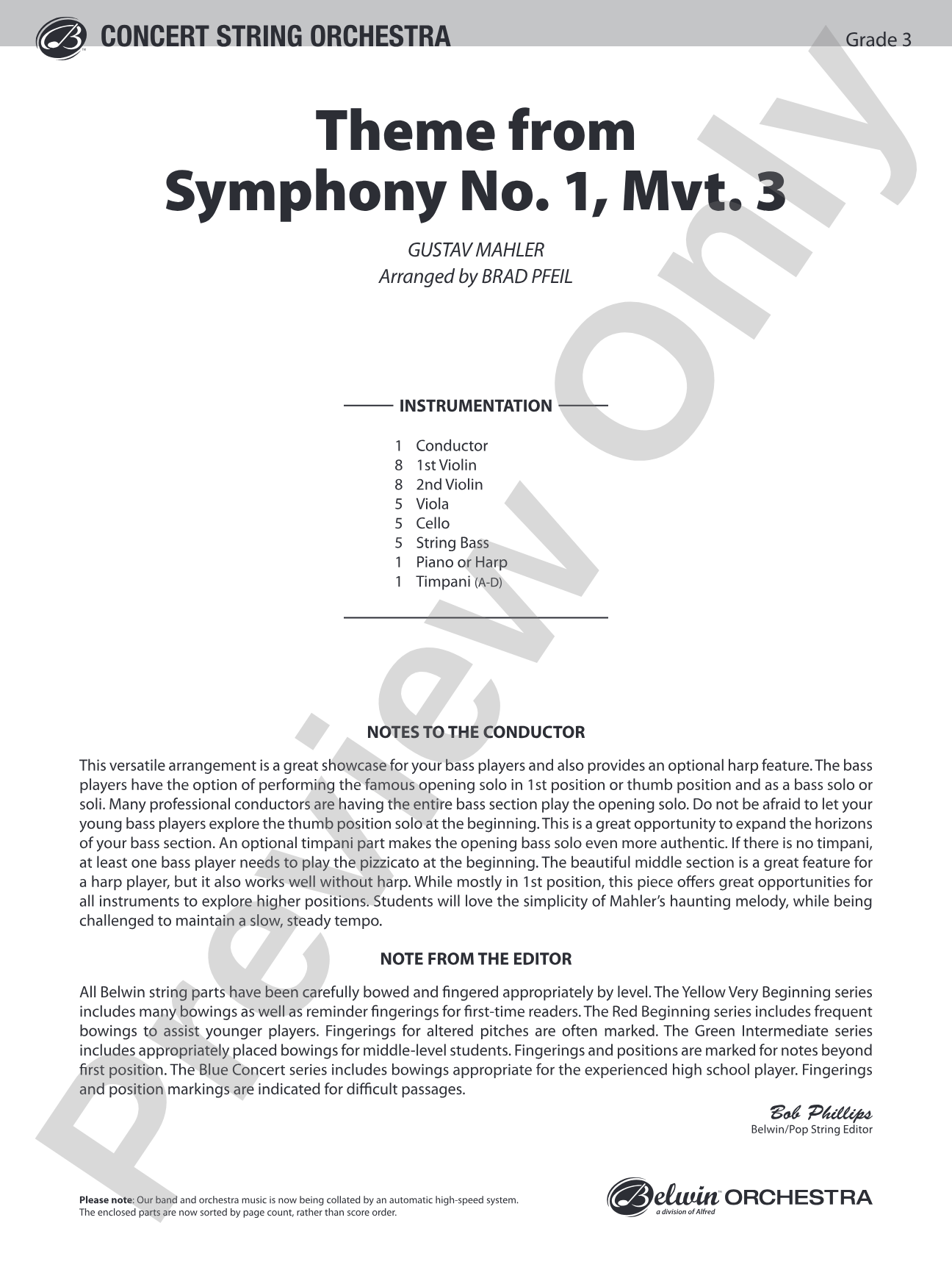
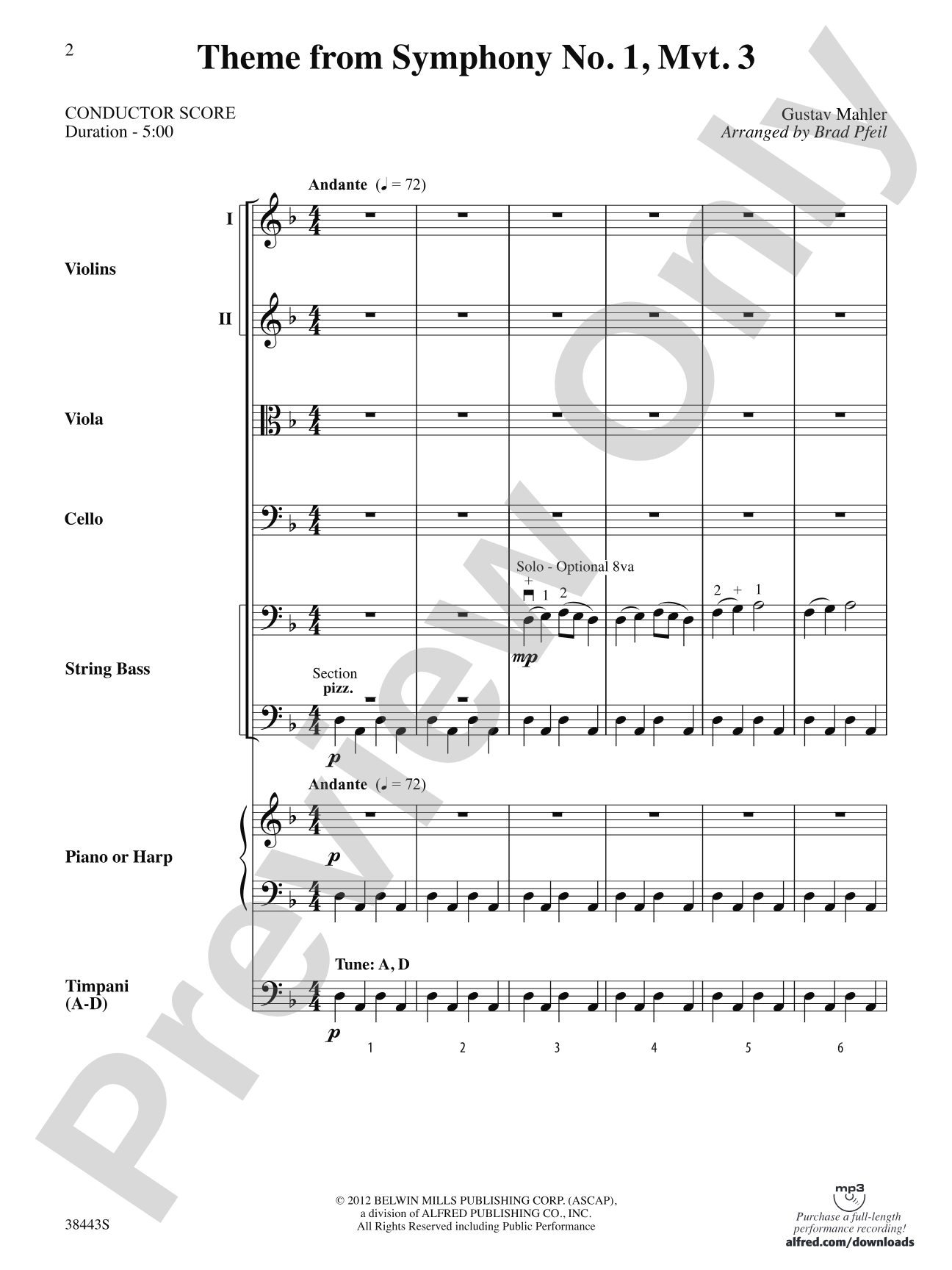
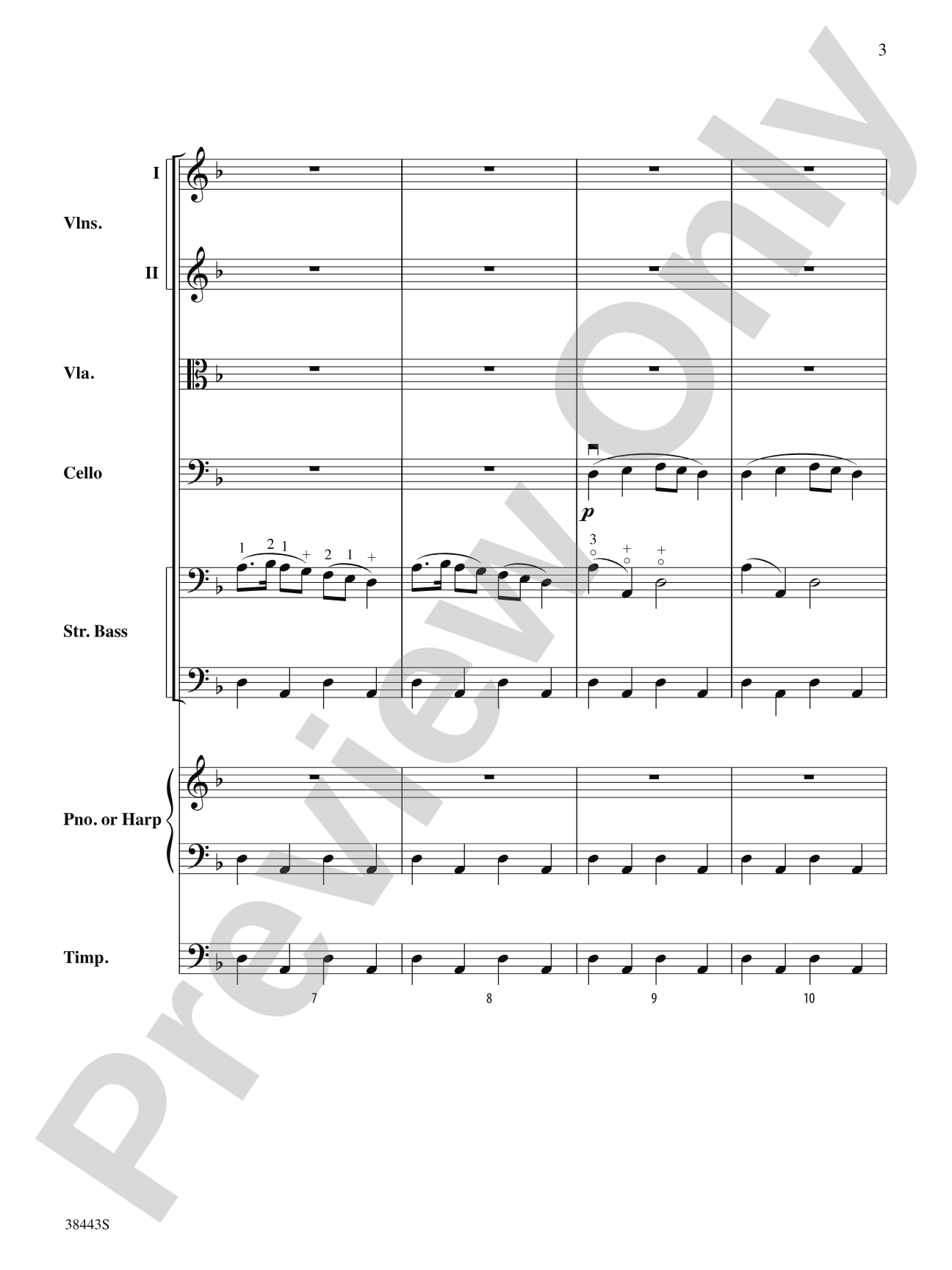
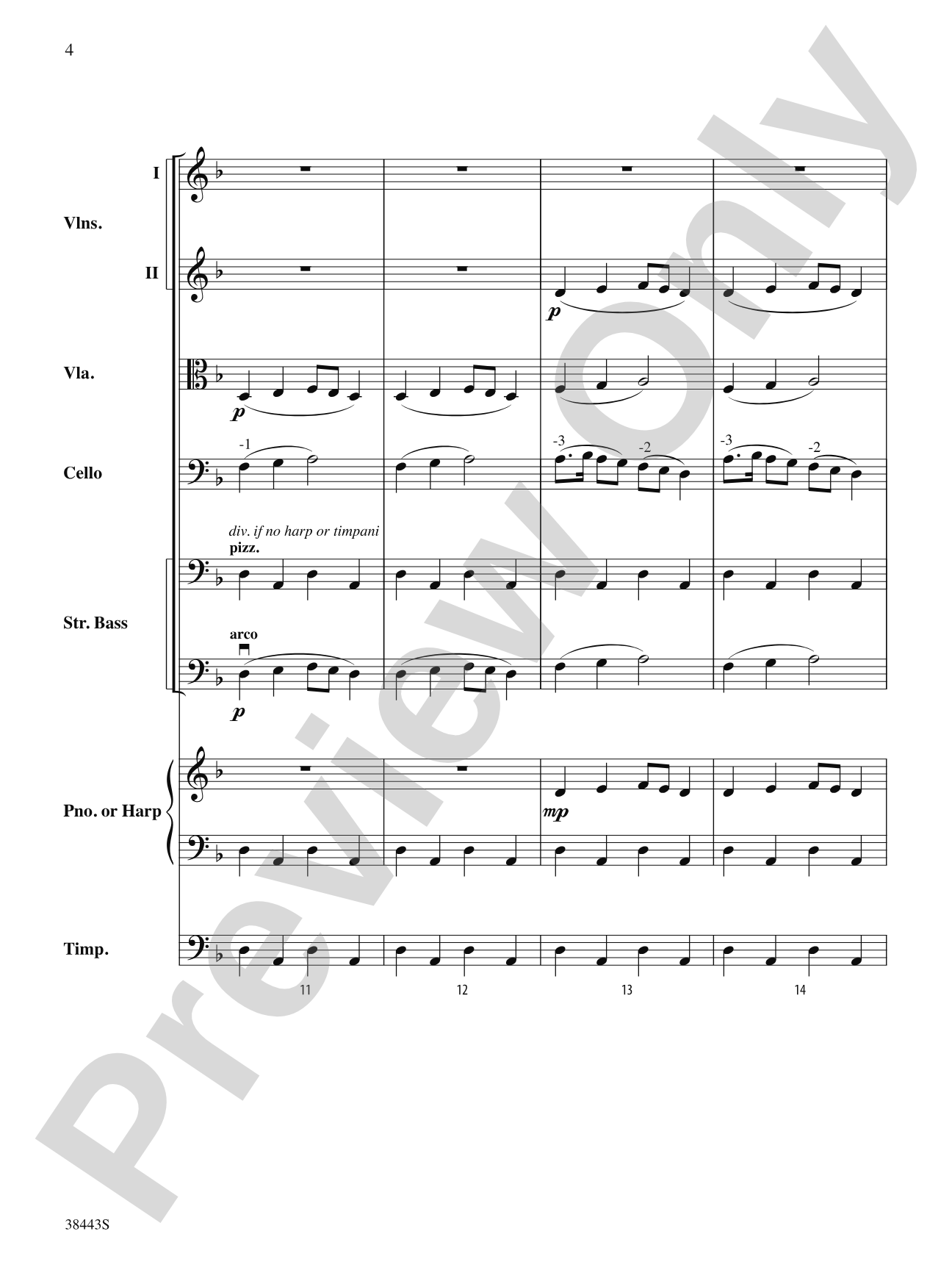
This versatile arrangement is a great showcase for your bass players and also provides an optional harp feature. The famous opening solo can be played in 1st position or thumb position and as a bass solo or soli with an optional timpani part. While mostly in 1st position, this piece offers great opportunities for all instruments to explore higher positions. Students will love the simplicity of Mahler's haunting melody, while being challenged to maintain a slow, steady tempo.


Don't just read it, hear it, play along with it, and watch your students grow with it. In MakeMusic Cloud, Theme from Symphony No. 1, Movement 3: Score comes alive with professional accompaniment, adjustable tempo, and built-in practice tools that turn solo practice into real progress.
Open in the Player
Jump straight in and assign it today.
Start Your Free Trial
Open this title and explore the full library in minutes.
Sample Audio
1
Audio File
--:--
0:00
0:00
Sample Video
Additional Details
Series:
Belwin Concert String Orchestra
Publisher:
Alfred Music
Page Count:
130
SKU:
00-PR-0003813
More about this title
About the Composer: Gustav Mahler
Gustav Mahler (1860-1911) was an Austrian composer and conductor whose symphonies redefined the genre for the twentieth century. His works blend folk melodies with sophisticated orchestration and emotional depth, often exploring themes of nature, loss, and human struggle. Mahler's music remains central to the symphonic repertoire and offers string orchestras access to some of the most lyrical and expressive themes in classical music.
Why we love this
Brad Pfeil's arrangement gives string orchestras a chance to work with one of the most memorable melodies in the orchestral canon without overwhelming younger players. The built-in flexibility (first position or thumb position, solo or soli) means your program adapts to your ensemble's strengths, while the optional harp and timpani add color and sophistication. Your bass section finally gets the spotlight they deserve on a piece students recognize and genuinely want to play.
What to expect
Mahler's melody unfolds with quiet introspection and gentle beauty, almost like overhearing a private moment in nature. The supporting strings create a soft backdrop that feels both simple and profoundly moving, inviting listeners into a contemplative space where every note matters.
Who it's for
String orchestras at the Grade 3 level looking for a piece that combines accessibility with genuine artistic substance. This works for ensembles where bass players are developing the confidence and technique to carry a solo, and where the full string section is ready to support them with mature, sustained playing.
How to get the most out of it
- Establish the tempo first without the melody; a slow, steady pulse is the foundation. Have the entire orchestra hold notes together before adding the solo line so everyone locks into the same breath and release.
- Decide early whether you want a single bass soloist or soli texture. Each choice changes the intimacy of the opening; a single voice creates vulnerability, while soli builds warmth and confidence.
- Shape the melody with long, connected phrases rather than stopping at bar lines. Ask your bass soloist to sing the line on "ah" before playing to internalize the phrasing Mahler intended.
- Use the optional timpani and harp to test your orchestra's ability to balance texture. These additions shouldn't dominate the bass line; they're enhancement, not reinforcement.
How to use it
Program this as the emotional heart of a concert; it pairs well before or after lighter fare and gives audiences a chance to experience a genuine masterwork at an accessible level. It also shines in a festival setting where judges can hear your bass section shine and your orchestra demonstrate maturity in slow-tempo ensemble playing.
Skills your students will build
- Playing extended passages in higher positions (1st through 4th position)
- Sustaining and shaping long melodic lines at slow tempos
- Balancing a featured soloist with supportive accompaniment texture
- Reading and performing optional parts (harp, timpani) without compromising ensemble focus
- Controlling tone quality and vibrato in a sustained, exposed context