
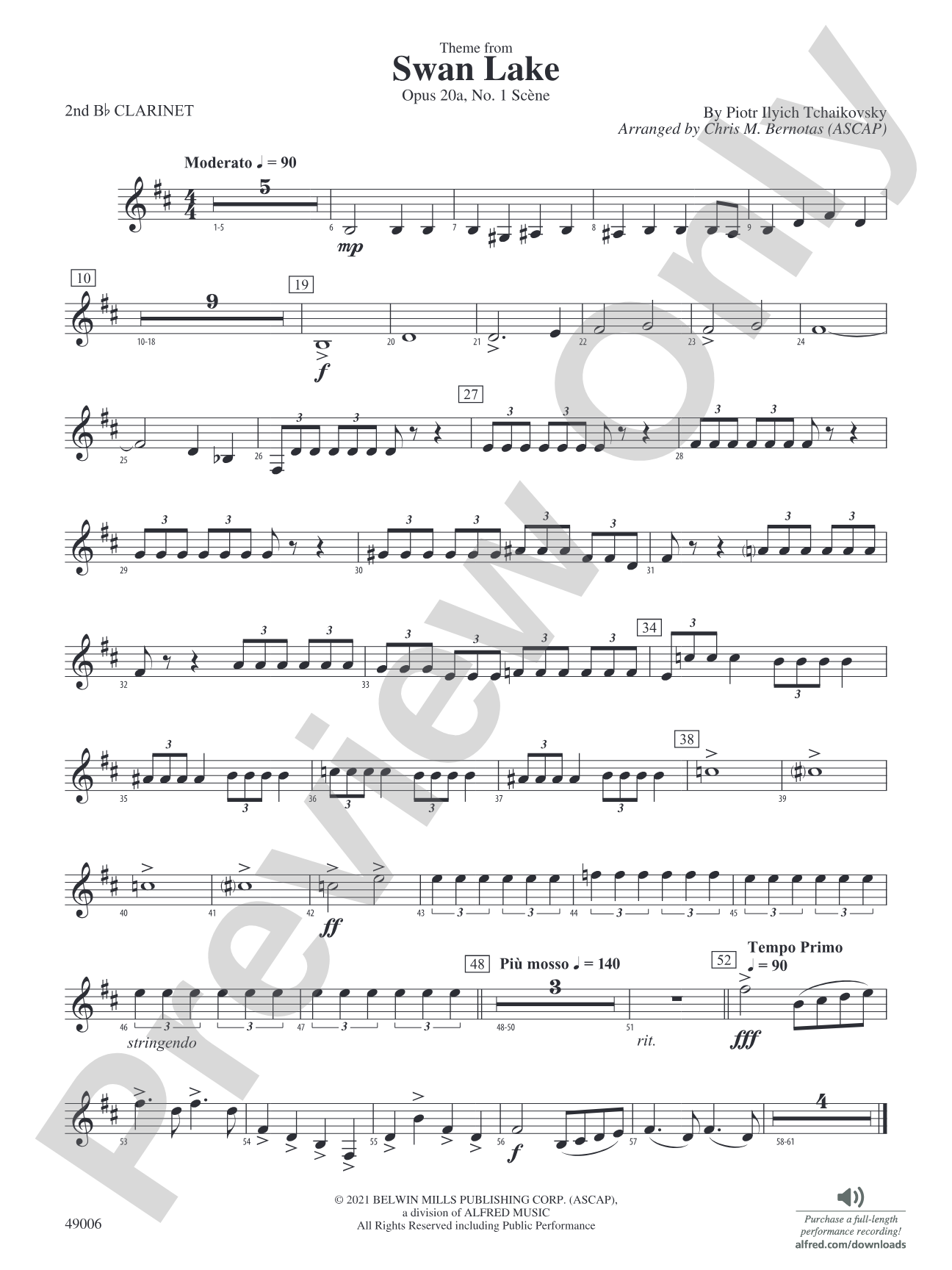

Theme from Swan Lake: 2nd B-flat Clarinet
Opus 20a, No.1 Scène
By Piotr Ilyich Tchaikovsky / arr. Chris M. Bernotas
Grade: 2.5
Item: 00-PC-0018627_C2
$3.00
Pickup currently not available
Description
Chris M. Bernotas has provided a fantastic arrangement of one of the most beautiful Tchaikovsky themes from Swan Lake, Op. 20a, No. 1 Scène. This arrangement will work perfectly for your string orchestra alone or with added winds and percussion up to a full orchestra. This hauntingly beautiful and powerful piece has many opportunities for students to develop their phrasing, tremolo, dynamic contrasts, and rhythmic understanding. (2:40)


Don't just read it, hear it, play along with it, and watch your students grow with it. In MakeMusic Cloud, Theme from Swan Lake: 2nd B-flat Clarinet comes alive with professional accompaniment, adjustable tempo, and built-in practice tools that turn solo practice into real progress.
Open in the Player
Jump straight in and assign it today.
Start Your Free Trial
Open this title and explore the full library in minutes.
Sample Audio
1
Audio File
--:--
0:00
0:00
Sample Video
Additional Details
Series:
Belwin Intermediate String/Full Orchestra
Publisher:
Alfred Music
Page Count:
105
SKU:
00-PC-0018627_C2
More about this title
About the Composer: Pytor Ilyich Tchaikovsky
Pyotr Ilyich Tchaikovsky (1840-1893) was a Russian composer whose gift for melody and orchestration shaped the Romantic era. His ballets—Swan Lake, The Sleeping Beauty, and The Nutcracker—remain cornerstones of classical dance and concert music, valued equally by performers and audiences for their emotional directness and structural sophistication.
Tchaikovsky's music feels immediate and human. He combined Russian folk idioms with Western European form, creating works that move listeners across generations. His orchestrations are models of clarity and color, making his themes ideal vehicles for student musicians learning to shape phrases and balance ensemble sound.
Why we love this
This arrangement captures the essence of one of ballet's most recognizable melodies while remaining fully accessible to Grade 2.5 ensembles. Bernotas has written parts that allow strings to carry the theme confidently while winds and percussion enhance without overwhelming, making it equally effective with a lean ensemble or full orchestra. The pacing and emotional arc mirror the original without requiring advanced virtuosity, giving students the experience of performing a masterwork that audiences genuinely love.
What to expect
Swan Lake's signature theme is plaintive and aristocratic, unfolding like a swan crossing still water. There is longing in the melody and underlying tension in the harmonic movement, yet the piece never becomes heavy. The orchestration allows the theme to soar while tremolo strings and sustained chords create a cushion of sound that feels both intimate and grand.
Who it's for
This score suits orchestras with at least basic wind and percussion sections, though it works beautifully as a string-only piece if your program requires flexibility. Directors seeking accessible repertoire that still commands genuine artistry and emotional engagement will find this immediately practical for contest programs, winter or spring concerts, or recordings.
How to get the most out of it
- Shape the opening melody with a warm, singing tone; the tremolo accompaniment should support without overshadowing the soloists or lead voice.
- Balance dynamics carefully across the ensemble. Tchaikovsky's emotional impact depends on subtle shifts between p and mp, and between f and ff, rather than extreme contrasts.
- Conduct with a steady, song-like pulse. This piece breathes like a vocal line, so allow slight flexibility at phrase endings while maintaining ensemble cohesion.
- In the exposed string passages, encourage students to listen across sections; one section's tremolo or sustained note is another section's foundation for their line.
How to use it
This works as a strong centerpiece for a classical showcase concert, pairing naturally with other Romantic or ballet-inspired selections. It also serves well as a festival piece where judges expect musicianship alongside accessibility. The 2:40 duration and balanced difficulty make it ideal for a mid-program moment that gives audiences a recognizable, emotionally satisfying break.
Skills your students will build
- Sustaining and shaping long melodic lines across phrase boundaries
- Executing tremolo technique with consistent rhythmic precision
- Creating dynamic contrast and nuance within a narrow dynamic range (pp to f)
- Balancing individual parts in relation to a prominent melody
- Reading and executing parts in full score context with multiple ensemble colors