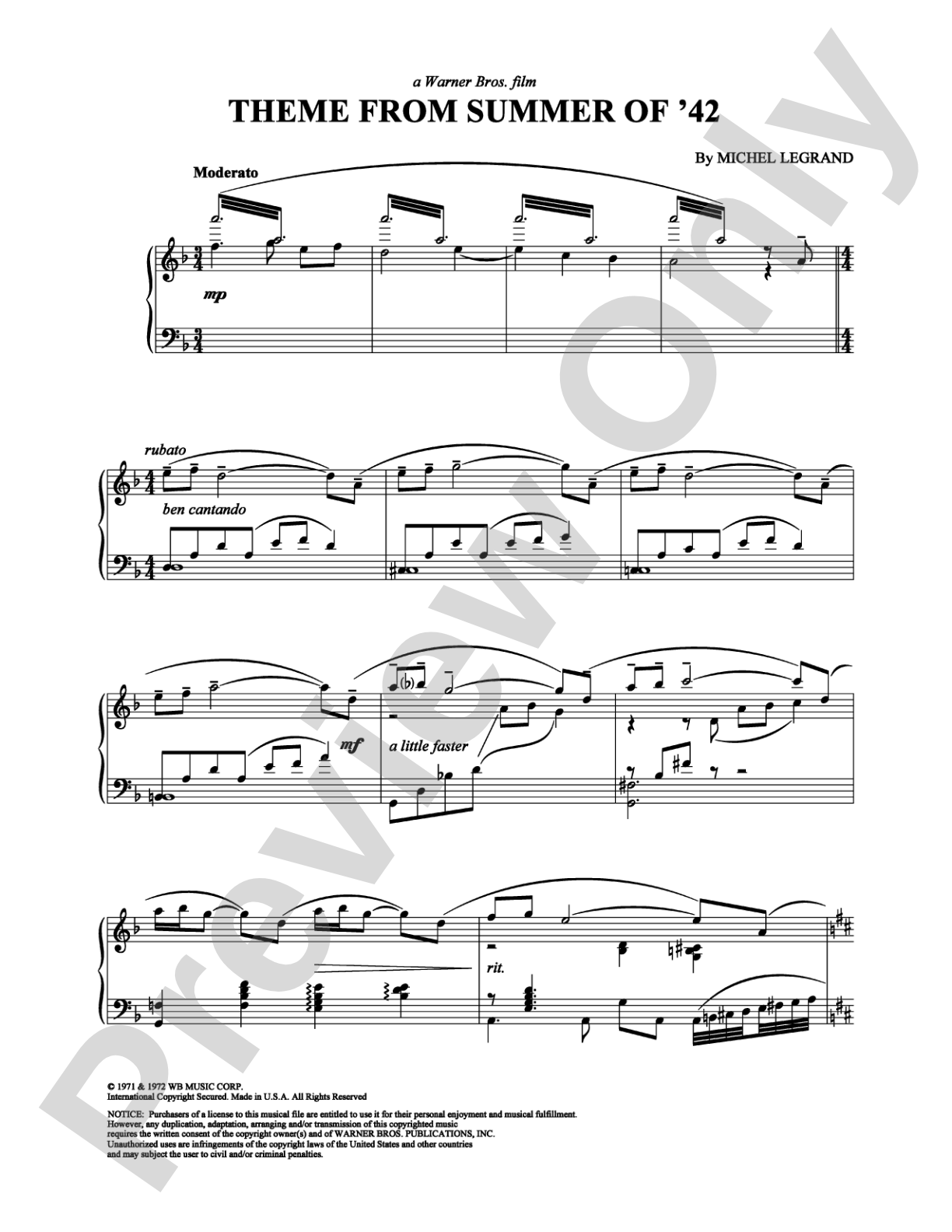
Theme from Summer of '42: Piano Digital Sheet Music

Theme from Summer of '42: Piano Digital Sheet Music

Michel Legrand, Peter Nero

Item: 00-PS-0002234

Digital Download
$3.99
Description

Theme from Summer of '42: Piano Digital Sheet Music isn't in MakeMusic Cloud just yet...but it could be. Let us know you'd like to see it, and you'll help shape what comes next. In the meantime, start a free trial and dive into thousands of interactive titles your students can play along with today.

Sample Audio
No sample audio found.
Sample Video
Additional Details
SKU: 00-PS-0002234

More about this title

About the Artist: Peter Nero

Peter Nero is a pianist and conductor known for his work in film scores and popular music arrangements. His career spans decades of performance and recording, with particular strength in adapting classical and contemporary works for solo piano.

Why we love this

This arrangement captures the nostalgic, lyrical quality of the original film score in an idiomatic piano setting. Students get to work with music that's genuinely singable at the keyboard—the melody lives, the accompaniment supports it without overwhelming—which makes it rewarding to learn and beautiful to perform.

What to expect

Warm and reminiscent, like looking through old photographs. The melody unfolds with gentle elegance, supported by understated but sophisticated harmony. There's a nostalgia here that's earned rather than forced—it's music that sounds like memory feels.

Who it's for

Intermediate to advanced pianists looking for repertoire with strong melodic appeal and film score sophistication. This works well for recitalists seeking pieces that appeal to general audiences and for students building a contemporary classical repertoire beyond the standard canon.

How to get the most out of it

  • Shape the melodic line as you would a vocal phrase; resist the temptation to rush, especially in the quieter sections.
  • Balance your hands carefully so the accompaniment never obscures the tune. The melody should carry effortlessly over the left-hand figures.
  • Pay attention to dynamic contours within phrases. Small swells and easing back will bring out the reflective quality of the piece.
  • Allow space for breathing between phrases, even though this is instrumental music. The pacing should feel natural and conversational.

How to use it

This pairs naturally with other film score arrangements or twentieth-century song arrangements in a recital program. It also works as an encore or as part of a set celebrating American popular music. The accessible melodic content makes it effective for mixed-audience concerts where you want to include contemporary work without jarring transitions.

Skills your students will build

  • Singing melody lines on the keyboard while maintaining independent accompaniment patterns
  • Shaping rubato and phrasing in romantic-era and popular song arrangements
  • Balancing treble and bass lines to highlight structure and emotion
  • Interpreting dynamic markings that support harmonic and emotional progression

You May Also Like