Ludwig van Beethoven (1770–1827) stands as the pivotal figure between classical and romantic music, a composer whose harmonic innovations and structural boldness reshaped what instrumental music could express. His late works, including the 33 Diabelli Variations, represent his most ambitious explorations of theme and transformation, where a simple waltz becomes the vehicle for profound artistic statement.
Why we love this
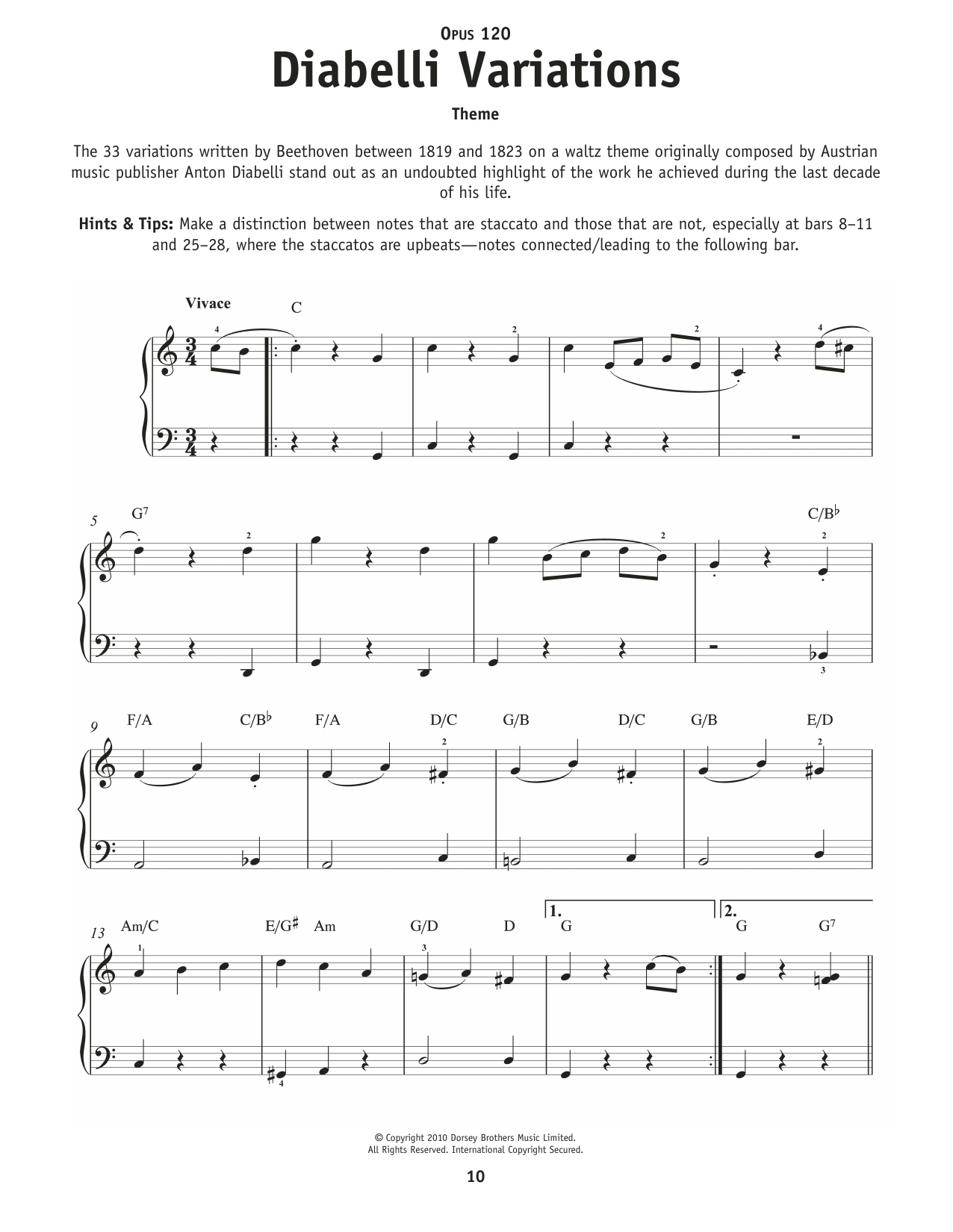
This theme serves as the perfect entry point into the Diabelli Variations without requiring students to navigate the full 33-variation cycle. The waltz melody itself is instantly memorable and sits comfortably on the keyboard, making it ideal for pianists building toward more complex variation sets. Programming it alongside single variations or as a standalone teaching piece bridges classical form with the harmonic sophistication that defines Beethoven's late period.
What to expect
A graceful, almost innocent waltz melody unfolding with unexpected harmonic refinement. The piece carries the elegance of Viennese ballroom music while hinting at the imaginative depths Beethoven will explore across the subsequent variations.
Who it's for
Pianists at the upper intermediate to early advanced level gain solid footing with Beethoven's compositional voice through this accessible but sophisticated theme. Teachers introducing students to variation form will find this melody digestible enough for confident performance while rich enough to spark discussion about how a composer transforms material.
How to get the most out of it
Shape the melody with gentle rubato in the opening phrase; Beethoven's waltz gains character through expressive timing rather than strict metronomic control.
Balance the accompaniment texture to let the tune sing without overwhelming it; the supporting voices in a waltz arrangement should frame rather than compete.
Listen for the harmonic shifts beneath the surface. Beethoven's harmonization of this deceptively simple tune contains chromatic inflections that reward careful voice leading.
Consider the context of what follows. If moving into variations, establish a clear, confident tempo in the theme that subsequent variations can both honor and reimagine.
How to use it
Use this as a standalone recital piece for pianists not yet ready for the full variation set, or program it as an introduction to a concert segment featuring selected Diabelli Variations at different difficulty levels. It also works well in chamber or mixed repertoire recitals where you want a touchstone of early 19th century keyboard writing.
Skills your students will build
Phrasing and structural clarity within a symmetrical eight-bar melody
Balancing melody and accompaniment texture
Recognizing and executing chromatic voice leading in classical harmony
Understanding the relationship between theme and variations as a compositional concept
You May Also Like
Scan to Complete Your Purchase
Use your phone's camera to scan the code below
You'll log in on your phone and the order will be added to your account