Theme and Variations from the "Trout" Quintet: Cello Sheet Music Preview

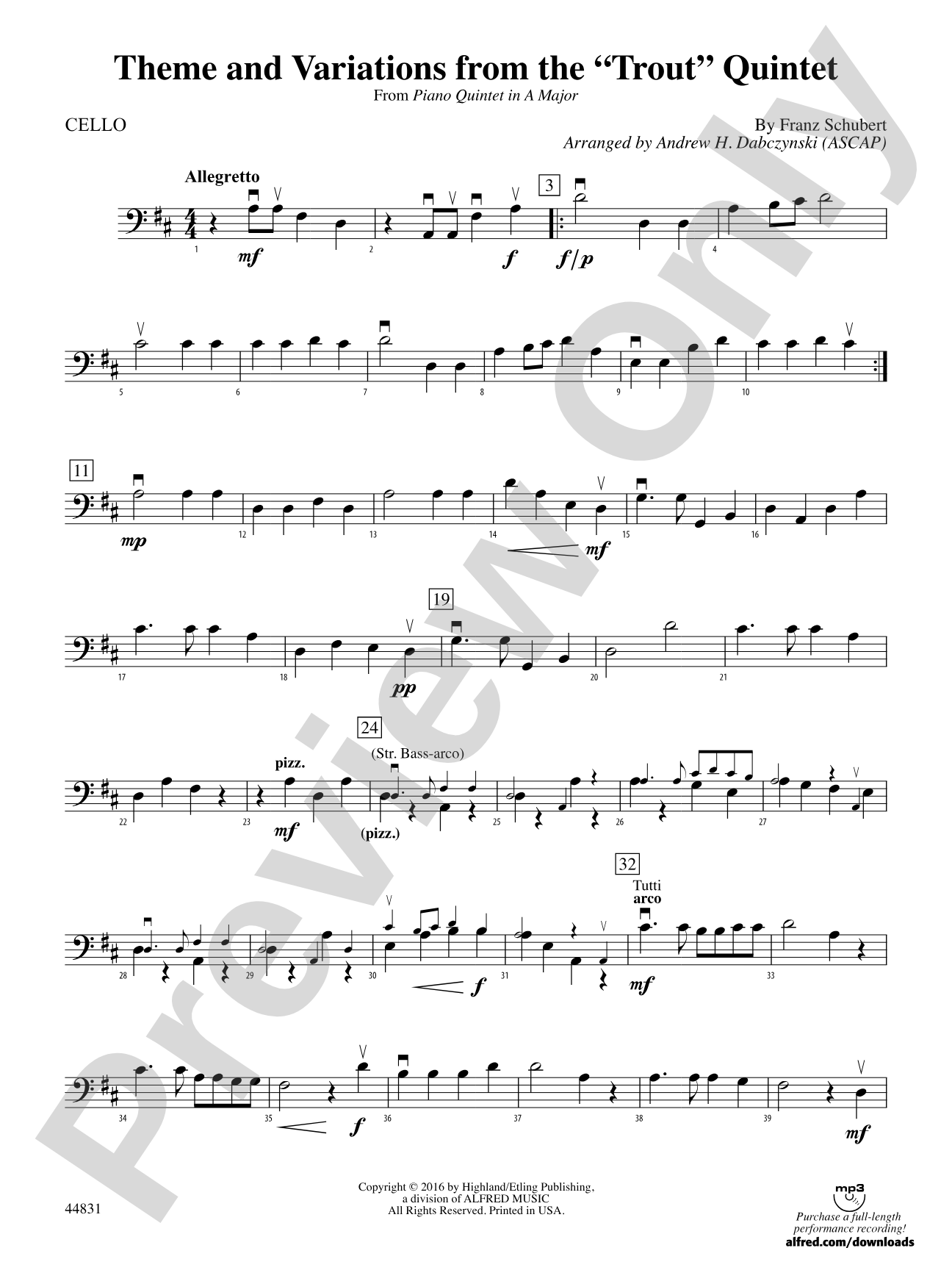
Theme and Variations from the "Trout" Quintet: Cello

From Piano Quintet in A Major

By Franz Schubert / arr. Andrew H. Dabczynski

Grade: 1.5

Item: 00-PC-0017348_VC1

Digital Download
$5.99
Description
Based on one of the most famous themes in classical literature, this arrangement by Andrew Dabczynski captures the essence of the "Trout Quintet." This music will fall under the fingers of the entire orchestra, with solos for all and special features for the basses! It provides an excellent opportunity to learn many important techniques and concepts, and is a perfect selection for introducing Shubert's glorious melodies to students and audiences alike. (3:05)

Don't just read it, hear it, play along with it, and watch your students grow with it. In MakeMusic Cloud, Theme and Variations from the "Trout" Quintet: Cello comes alive with professional accompaniment, adjustable tempo, and built-in practice tools that turn solo practice into real progress.

Sample Audio
0:00
0:00
Sample Video
Additional Details
Series: Highland/Etling String Explorer
Publisher: Alfred Music
Page Count: 140
SKU: 00-PC-0017348_VC1

More about this title

About the Composer: Franz Schubert

Franz Schubert (1797-1828) was an Austrian composer who bridged the Classical and Romantic eras, leaving behind an extraordinary catalog of symphonies, chamber works, and songs despite his short life. His gift for melody was unmatched; his themes sing with an immediacy that speaks directly to listeners, whether in a concert hall or a school orchestra rehearsal.

Schubert's chamber music, particularly his piano quintet in A major (the "Trout" Quintet), ranks among the most performed works in the repertoire. Written in 1819, it showcases his ability to combine formal structure with infectious lyricism, making it an ideal source for arrangements that introduce young musicians to the Classical masterworks.

Why we love this

Dabczynski's arrangement preserves Schubert's unforgettable melody while distributing musical responsibility across the entire string section. Every player gets a moment to shine, and the bass solos in particular transform what could be a passive role into an active, engaging one that students genuinely look forward to playing.

What to expect

The "Trout" theme emerges with serene lyricism, almost songlike in its clarity. As the variations unfold, the melody migrates through the ensemble, creating moments of dialogue and interplay that give the orchestra a sense of conversation rather than recitation.

Who it's for

This arrangement suits beginning to early-intermediate string orchestras (Grade 1.5) ready for repertoire with real structural substance. It works equally well for concert performance and festival competition because it combines accessibility with musical integrity.

How to get the most out of it

  • Shape the theme with a singing bow stroke in the first violins; let the melody breathe rather than push for volume, especially at Grade 1.5 when ensemble control is still developing.
  • Balance the bass solos carefully in rehearsal so they project without drowning out the accompaniment around them. Use sectional rehearsals to build confidence in these players.
  • Maintain a steady, unhurried tempo through the variations so the theme remains recognizable as it passes between voices. Resist the urge to rush.
  • Mark phrase endings clearly in the parts so secondary voices know when to lift and support a new melodic entrance.

How to use it

Program this as a centerpiece for a classical pops concert or as a bridge piece that introduces chamber music concepts to a broader audience. It also pairs beautifully with other Schubert arrangements or as a programming choice when you want to feature the entire orchestra's technical growth in a single, cohesive work.

Skills your students will build

  • Sustaining long, singing lines without loss of tone quality
  • Balancing melodic and accompaniment voices across the ensemble
  • Executing solo passages with confidence and musical presence
  • Recognizing and tracking a theme through various instrumental combinations
  • Coordinating ensemble transitions when the melody moves between sections

You May Also Like