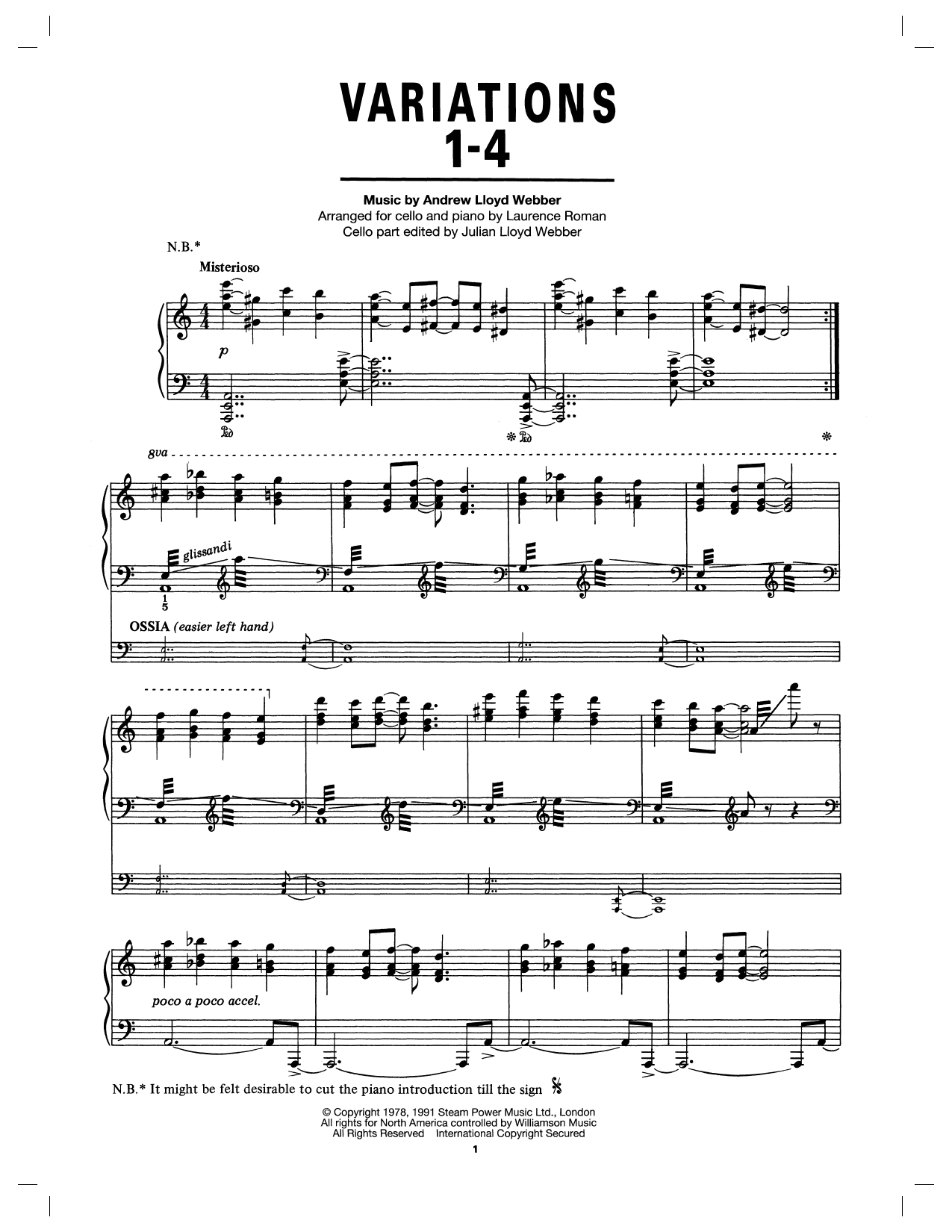
Laurence Roman is an accomplished arranger known for bringing classical works into new contexts for chamber ensembles. His arrangements prioritize clarity and accessibility without sacrificing musical substance, making canonical works available to musicians at intermediate levels.
Why we love this
Roman's treatment of these variations respects the structural logic of the original while opening the palette with piano accompaniment that feels conversational rather than subordinate. Cellists get a genuinely musical partner instead of mere harmonic filler, which changes how students engage with accompaniment.
What to expect
The journey moves between moments of classical restraint and contemporary flourishes, with the piano adding textural color that keeps the variations fresh. Rather than feeling academic or exercise-like, these pieces maintain forward motion and emotional clarity throughout.
Who it's for
Cellists at the early intermediate level who are ready to explore thematic development and stylistic variation. This works equally well for students seeking solo repertoire with piano or for programs that need cello and piano chamber material that doesn't demand extensive preparation time.
How to get the most out of it
Shape each variation's character distinctly; the piano part signals mood shifts, so use those textural changes as a guide for articulation and tone color adjustments in the cello line.
Balance the cello melody against the piano's supporting voice by practicing sections where the two instruments share material to ensure neither overwhelms.
Work through transitions between variations slowly, paying attention to tempo and harmonic rhythm shifts that Roman has written into the accompaniment.
Record yourself with the digital file to identify spots where rhythmic alignment wavers, particularly in variations with more intricate rhythmic figures.
How to use it
Pair this with other variation sets at similar difficulty levels for a thematic recital program, or use individual variations as preliminary pieces before introducing larger classical sonata forms. The ten-page length makes it approachable for sight-reading study during the first half of the academic year.
Skills your students will build
Sustaining melodic line through harmonic and textural variation
Responding to accompaniment texture and rhythmic figures
Distinguishing character and tempo marking changes across multiple sections
Coordinating with a chamber partner over longer formal structures
Balancing expressive phrasing with metric precision
You May Also Like
Scan to Complete Your Purchase
Use your phone's camera to scan the code below
You'll log in on your phone and the order will be added to your account