The Young Pianist's Library: Sonatinas for Piano, Book 2B Cover Image

The Young Pianist's Library: Sonatinas for Piano, Book 2B: Piano Book

$7.99 USD
Sale price  $7.99 USD Regular price 
Skip to product information
The Young Pianist's Library: Sonatinas for Piano, Book 2B Cover Image

The Young Pianist's Library: Sonatinas for Piano, Book 2B: Piano Book

Arranged by Denes Agay

Level: Early Advanced / Advanced

Item: 00-DA0006

$7.99
Shipped

One moment…

Description
Sonatina (B-flat Major) * Sonatina (D Major) * Sonatina (C Major) * Sonatina (G Major) Op. 151, No. 1 * Sonatina (C Major) * Little Sonatina (F Major) * Sonatina (A Minor) * Sonatina (D Major). Easy level 2-3.

The Young Pianist's Library: Sonatinas for Piano, Book 2B: Piano Book isn't in MakeMusic Cloud just yet...but it could be. Let us know you'd like to see it, and you'll help shape what comes next. In the meantime, start a free trial and dive into thousands of interactive titles your students can play along with today.

Sample Pages

No sample pages found.

Sample Audio
No sample audio found.
Sample Video
Additional Details
Series: The Young Pianist's Library
Publisher: Alfred Music
Page Count: 32
ISBN10: 0-7692-5059-9
ISBN13: 978-0-7692-5059-5
UPC: 029156196412
SKU: 00-DA0006

More about this title

About the Arranger: Denes Agay
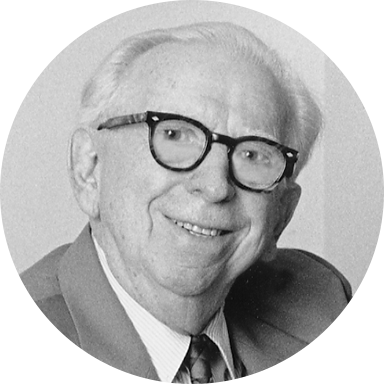
Denes Agay

Denes Agay began his musical life at age three in a small village outside Budapest, Hungary. After earning his doctorate in piano composition and performance from Liszt Ferenc Academy of Music in 1934, he gained early recognition conducting the Budapest Philharmonic in performances of his own symphonic works. He also composed and orchestrated for film, establishing himself as a versatile musician before circumstances altered his path.

When Nazism rose across Europe, Agay relocated to New York in 1939 and became an American citizen. During World War II he served in the Army, entertaining hospital patients and achieving the rank of sergeant. After the war, he returned to his core passion: teaching and publishing. He worked as conductor and arranger for NBC's "Guest Star" radio program while building an extraordinary catalog of educational collections. The Young Pianist's Library remains his most enduring legacy, a series that has introduced generations of students to diverse musical styles across multiple levels of difficulty.

Why we love this

Agay's sonatina collections strike the balance every teacher chases: genuine classical forms without unnecessary technical obstacles. These eight pieces move beyond simple five-finger exercises into actual sonata structure, allowing students to experience real compositional architecture while staying rooted in achievable pianistic writing. The variety of keys and minor-key inclusion (A Minor) prevents the collection from feeling repetitive across a full season of study.

What to expect

These sonatinas breathe with clarity and order. They unfold in logical phrases, with melodies that sit naturally under the hands and harmonic progressions that feel inevitable. The writing respects the instrument without condescension, creating little worlds of balance and purpose that students can inhabit fully without wrestling through technical complications.

Who it's for

Students who have completed early-level sonatina work and are ready to expand their formal vocabulary through multiple examples in the same collection. This book suits pianists in their second or third year of serious study who benefit from repertoire that reinforces technique without stealing focus from musical shape and design.

How to get the most out of it

  • Shape each sonatina as a complete three-movement journey rather than isolated pieces. Even at this level, the contrast between fast-slow-fast matters; let tempos reflect the formal architecture.
  • Attend to the role of dynamics in creating forward motion through Allegro movements. These sonatinas rely on phrase-level crescendos and careful voicing of accompanimental patterns rather than sudden dynamic shifts.
  • In the slower movements, resist over-pedaling the sustained harmonies. Clarity of texture and clean voice leading are more important than atmospheric resonance.
  • Explore the character differences between major and minor sonatinas in your practice; the A Minor piece in particular will sound quite different from its siblings and benefits from intentional tonal coloring.

How to use it

Sonatinas work beautifully as recital staples, either performed individually or grouped by key or character in a student showcase. A single sonatina from this collection fills a fifteen-minute student recital slot gracefully, or pair two contrasting pieces (perhaps one major, one minor) for a more substantial program contribution. The A Minor sonatina in particular stands alone as a complete statement suitable for spring competitions or formal student evaluations.

Skills your students will build

  • Understanding sonata form (exposition, development, recapitulation) through direct experience
  • Playing contrasting tempos and characters across three movements in sequence
  • Voicing accompaniment patterns (Alberti bass variations) with clarity and independence
  • Shaping longer melodic phrases with breath and direction
  • Reading and executing dynamic shaping within moderate dynamic ranges
  • Transposing and comparing harmonic movement across different major and minor keys

You May Also Like