The Young Pianist's Library: Sonatinas for Piano, Book 2A Cover Image

The Young Pianist's Library: Sonatinas for Piano, Book 2A: Piano Book

$6.95 USD
Sale price  $6.95 USD Regular price 
Skip to product information
The Young Pianist's Library: Sonatinas for Piano, Book 2A Cover Image

The Young Pianist's Library: Sonatinas for Piano, Book 2A: Piano Book

Arranged by Denes Agay

Level: Late Elementary / Early Intermediate

Item: 00-DA0005A

$6.95
Shipped

One moment…

Description
Sonatina * Early English Sonatina * Minuet from Sonatina in C * Sonatina Op. 57, No. 1 * Sonatina No. 2 (1st Movement) * Sonatina Op. 36, No. 1 * Sonatina in C (1st Movement) * Sonatina in G * Rondo from Sonatina in G, Op. 300 * First Sonatina * Sonatina in D. Beginner level 1-2.

The Young Pianist's Library: Sonatinas for Piano, Book 2A: Piano Book isn't in MakeMusic Cloud just yet...but it could be. Let us know you'd like to see it, and you'll help shape what comes next. In the meantime, start a free trial and dive into thousands of interactive titles your students can play along with today.

Sample Pages

No sample pages found.

Sample Audio
No sample audio found.
Sample Video
Additional Details
Series: The Young Pianist's Library
Publisher: Alfred Music
Page Count: 24
ISBN10: 0-7579-8001-5
ISBN13: 978-0-7579-8001-5
UPC: 654979022978
SKU: 00-DA0005A

More about this title

About the Arranger: Denes Agay
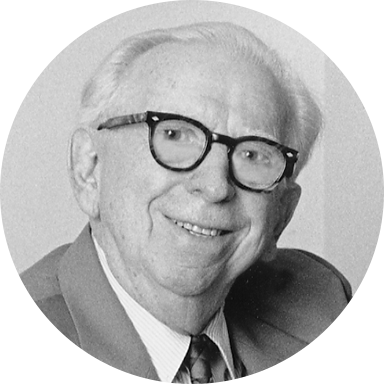
Denes Agay

Denes Agay began his musical life at age three in a small village outside Budapest, Hungary, where he would eventually study at the Liszt Ferenc Academy of Music, completing his doctorate in piano composition and performance in 1934. His early success conducting the Budapest Philharmonic in one of his own symphonies proved his father's skepticism unfounded, and Agay went on to compose and orchestrate for film while establishing himself as a musician of serious credentials.

When the political climate in Europe became untenable, Agay immigrated to the United States in 1939 and became an American citizen. He served in World War II, using his musicianship to lift spirits in hospital wards and eventually rising to the rank of sergeant. After the war, Agay devoted himself to teaching, composing, and publishing, while also conducting and arranging for NBC radio's "Guest Star" program. His most enduring contribution to music education came through his thoughtfully curated collections, including "The Young Pianist's Library," which remain essential resources for teachers navigating the transition from early elementary to intermediate repertoire.

Why we love this

Agay's hand in curating this collection means every sonatina has been selected for pedagogical clarity and musical substance. Rather than padding out a book with filler, he presents genuine miniature sonata forms that teach students the architecture of classical design without overwhelming their technical capacity.

What to expect

These sonatinas carry the elegance of classical form in concentrated doses, each piece opening a small window into the architecture of Haydn, Mozart, and their contemporaries. The writing balances technical accessibility with musical substance, allowing younger pianists to experience real classical development without the stamina demands of full-length sonatas.

Who it's for

Late elementary and early intermediate pianists working toward independence in reading and interpreting classical forms. This book serves students who have moved past simplified arrangements and are ready for genuine miniature works by established composers, yet still need the technical accommodation of the sonatina genre.

How to get the most out of it

  • Shape each movement's overall arc before diving into individual phrases; sonatinas often suffer from note-by-note playing that obscures their formal structure.
  • Balance the exposition's two themes by giving the second theme slightly different character or tempo inflection, even if the score doesn't explicitly mark it.
  • Keep the hand position stable during rapid passage work in the earlier sonatinas; tension in the forearm often emerges when students try to manage wide leaps without anchoring their hand between passages.
  • Listen carefully to how pedal affects harmonic resonance in the slow sections and rondos; younger pianists often default to holding the pedal too long out of habit.

How to use it

Position this collection as a bridge between method books and solo recital literature. Individual sonatinas work well as recital openers or closing pieces, while the variety of keys and styles makes it easy to pair movements with other elementary works without repetition of character across a program.

Skills your students will build

  • Reading and executing classical two-part and three-part form (exposition, development, recapitulation)
  • Managing tempo and character contrast between themes within a single movement
  • Playing hand-crossing and moderate range-spanning passages with stability and control
  • Recognizing and interpreting stylistic conventions of early classical keyboard writing
  • Building stamina and musical coherence across multi-movement works at this level

You May Also Like