
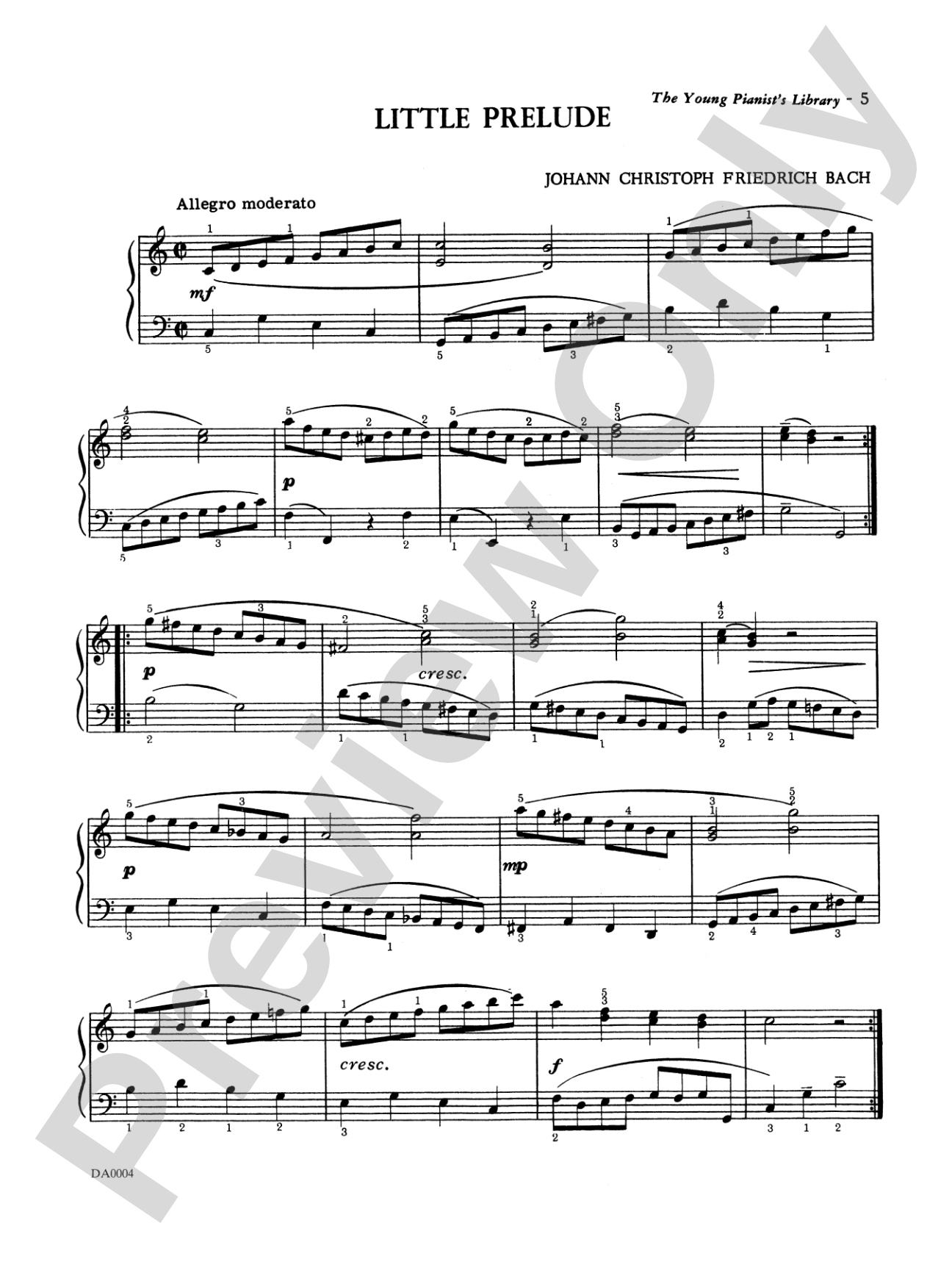
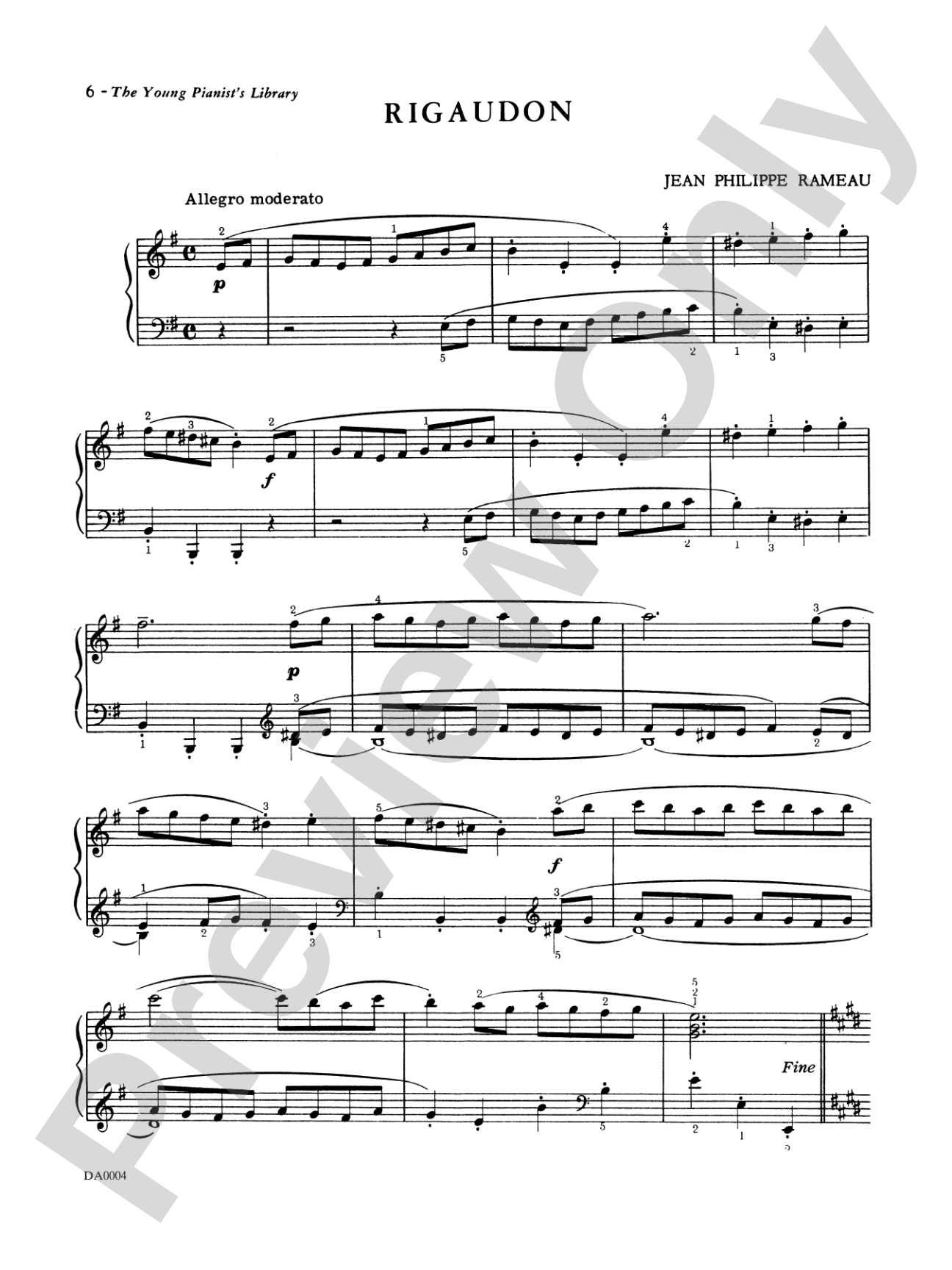
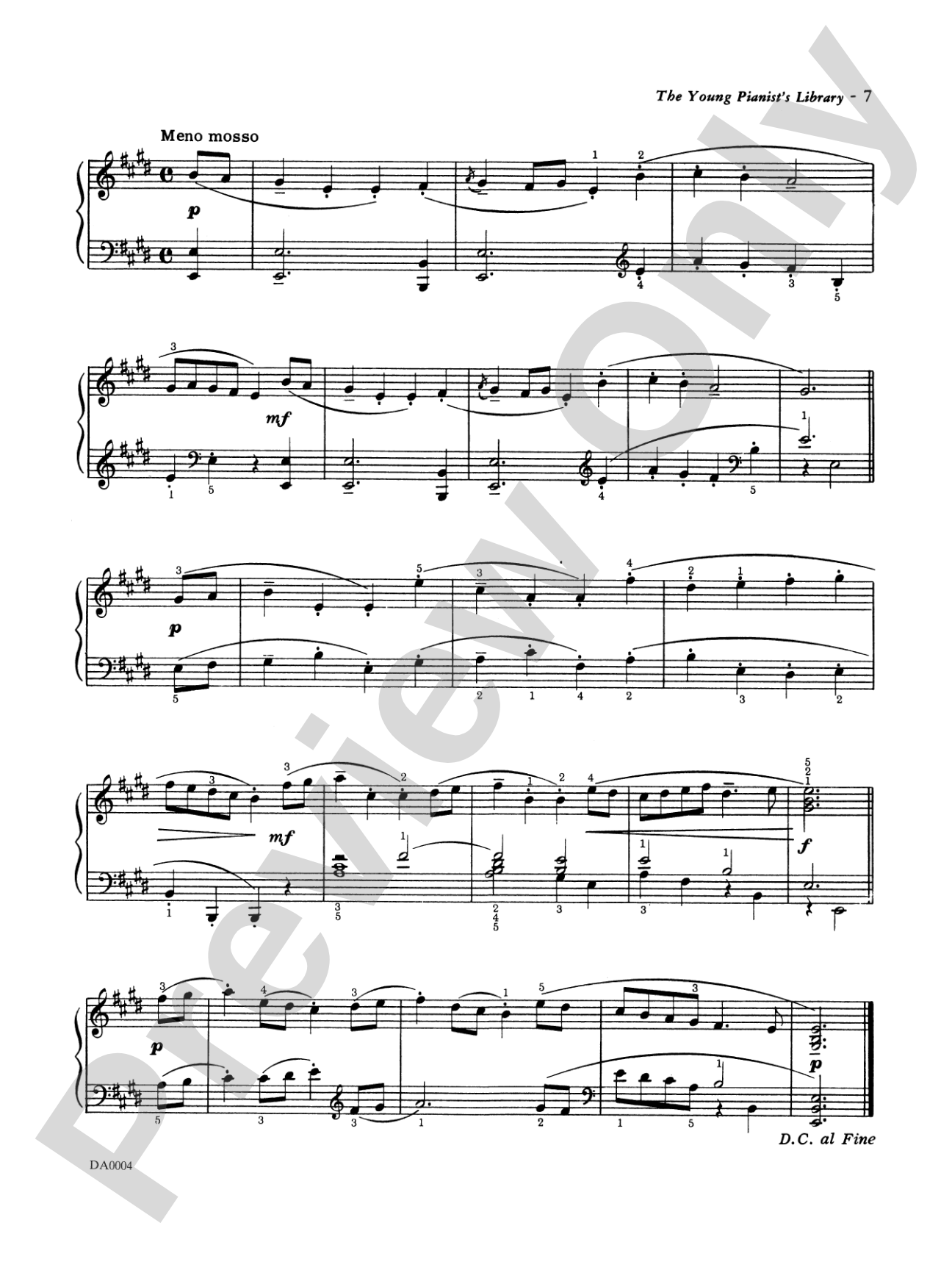

The Young Pianist's Library: From Bach to Bartók, Book 1C: Piano
Arranged by Denes Agay
Level: Late Intermediate
Item: 00-PB-0001888
$6.95
Pickup currently not available
Related Items
The Young Pianist's Library: From Bach to Bartók, Book 1C: Piano Book |
$6.95
|
View |
Description
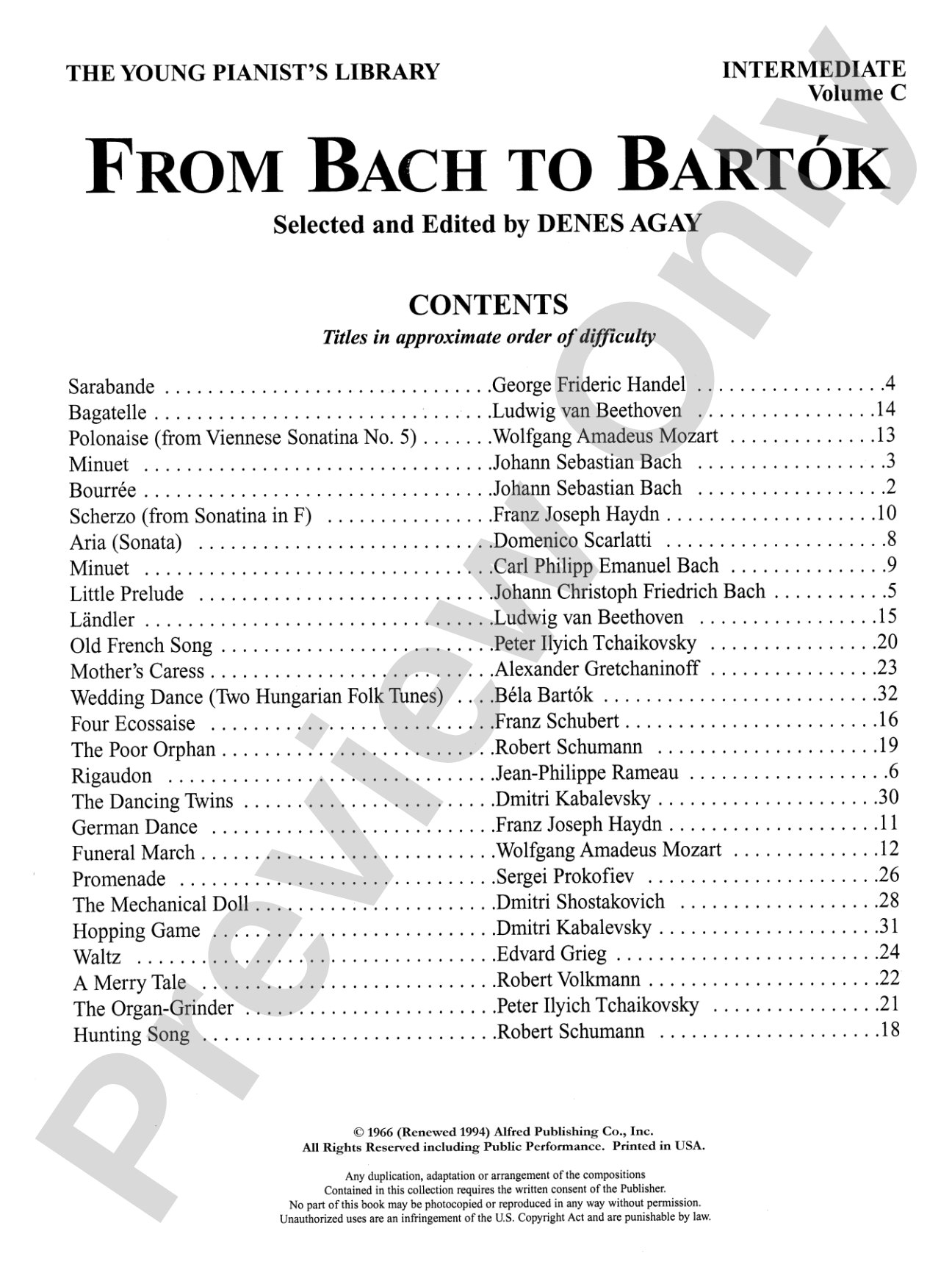
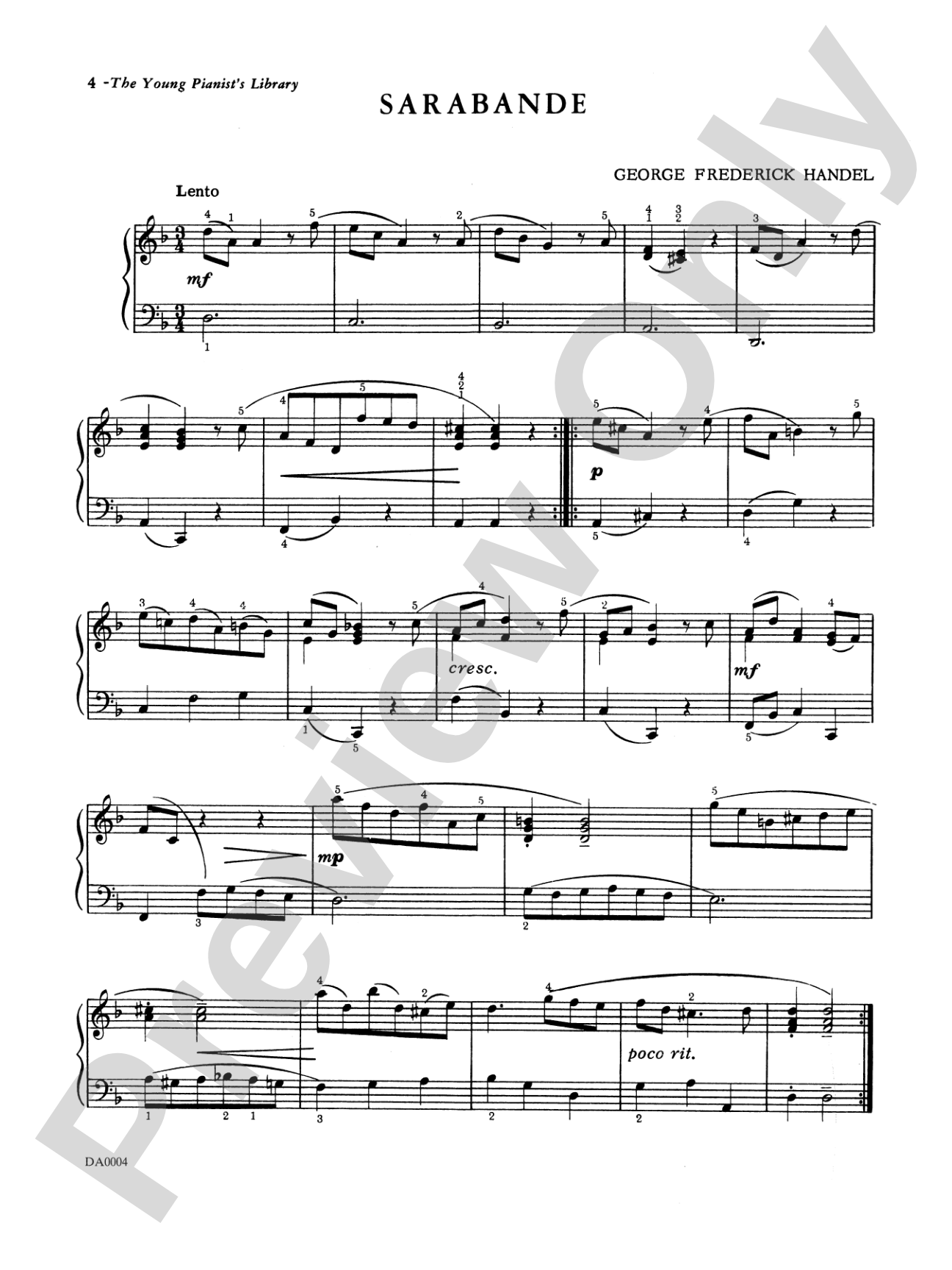
Sarabande * Bagatelle * Aria (Sonata) * Mother's Caress * Funeral March * Hopping Game * A Merry Tale * Hunting Song and more.


Discover MakeMusic Cloud: thousands of interactive titles your students can play along with today.
Sample Audio
No sample audio found.
Sample Video
No sample videos found.
Additional Details
Series:
Belwin Edition: The Young Pianist's Library
Publisher:
Alfred Music
Page Count:
32
SKU:
00-PB-0001888
More about this title
About the Arranger: Denes Agay

Denes Agay began his musical life at age three in a small village outside Budapest, Hungary. He pursued formal training at the Liszt Ferenc Academy of Music, earning his doctorate in piano composition and performance in 1934. Early recognition came when he conducted the Budapest Philharmonic in a premiere of his own symphony, establishing him as a serious composer and musician despite his father's initial skepticism about a career in music.
When political circumstances forced him to leave Hungary, Agay immigrated to the United States in 1939 and became an American citizen. He served in the Army during World War II, using his musical skills to entertain patients in hospital wards. After the war, he built a multifaceted career as a teacher, composer, arranger, and conductor for NBC radio's "Guest Star" program. His most enduring legacy stems from his pedagogical work, particularly "The Young Pianist's Library," a comprehensive series that introduces students to the breadth of piano literature across multiple compositional periods and styles.
Why we love this
Agay's curation here reflects genuine pedagogical wisdom. Rather than offering a collection of isolated etudes or simplified versions of famous pieces, he assembles works that build technical facility while establishing familiarity with genuine repertoire. The progression through Baroque, Classical, and early modern styles gives late intermediate pianists authentic musical touchstones they'll encounter throughout their musical lives.
What to expect
A genuine journey through the piano's musical heritage. Moving from the dance-like formality of Baroque sarabandes through character pieces and lyrical interludes creates a sense of discovery. The variety in scope and mood means no two pieces demand identical musical expression, keeping practice sessions engaging while building interpretive flexibility.
Who it's for
Late intermediate pianists who have moved beyond method book progressions and are ready to explore actual works by established composers. This collection suits students preparing for auditions, competitions, or simply those developing a working knowledge of repertoire across multiple historical periods and national traditions.
How to get the most out of it
- Approach the Baroque selections with attention to articulation and voice independence. The counterpoint requires clarity that digital piano students often rush; take time in practice to hear each line distinctly before bringing them to tempo.
- Characterize each piece before drilling technique. A Merry Tale and Hopping Game invite playful, rhythmic energy that can energize passages requiring finger work; connect the technical challenge to the emotional content of the music.
- Balance the emotional weight of the Funeral March and Mother's Caress pieces with the lighter fare. Programming or practicing these in sequence teaches students how composers use contrasting moods, not just different technical challenges.
How to use it
These selections work beautifully as recital pieces, either singly in mixed programs or grouped thematically by period or character. The shorter works fit naturally into student studio recitals, while the inclusion of well-known forms like the Sarabande and Sonata give young performers context within larger musical traditions. Use them as stepping stones between method books and standard intermediate collections.
Skills your students will build
- Reading and executing Baroque dance forms and articulation patterns
- Transitioning smoothly between contrasting musical characters and tempos
- Balancing melody and accompaniment across varying textures
- Developing interpretive choices within shorter, bounded forms
- Sight-reading exposure to multiple compositional styles and periods