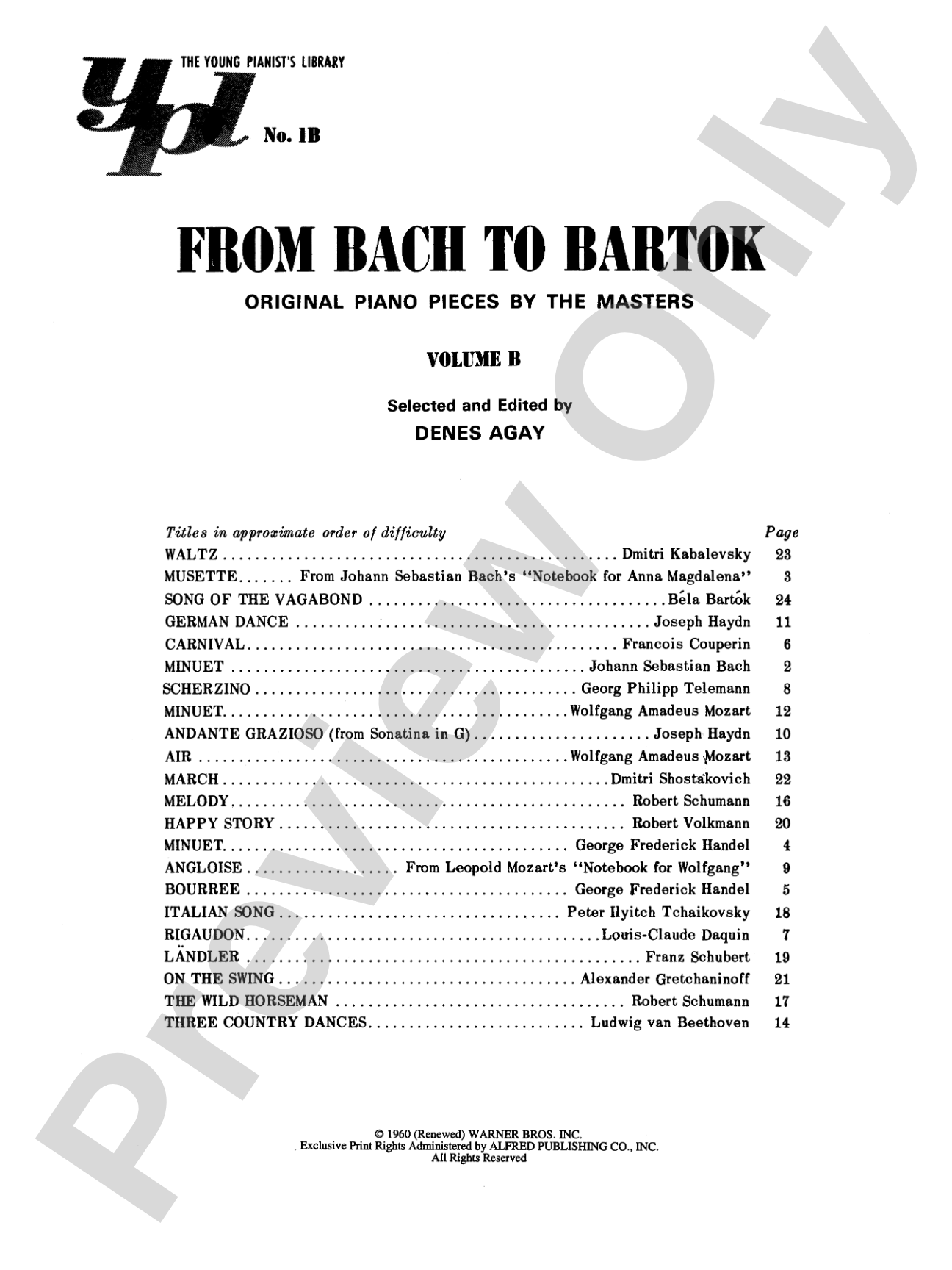
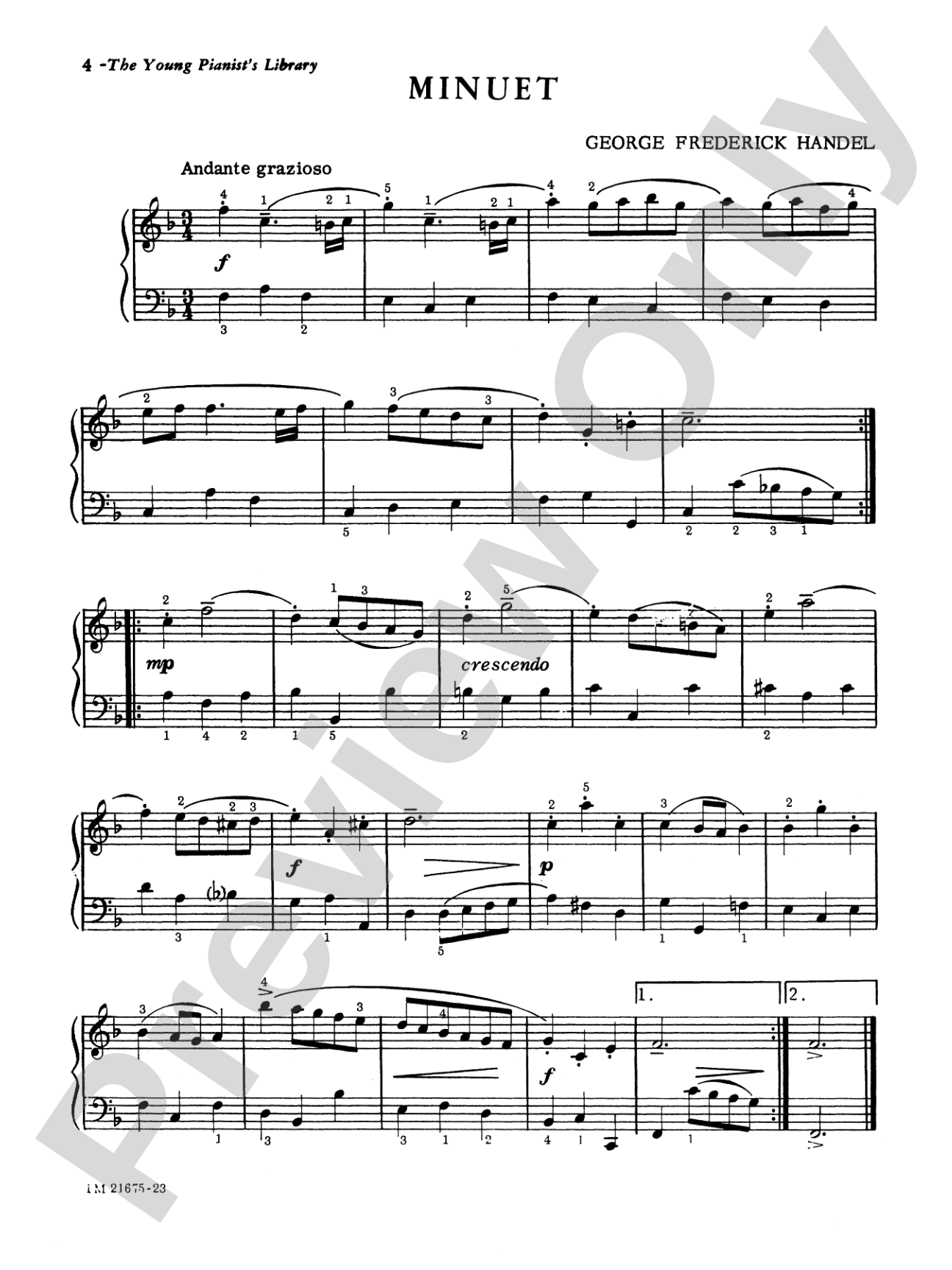
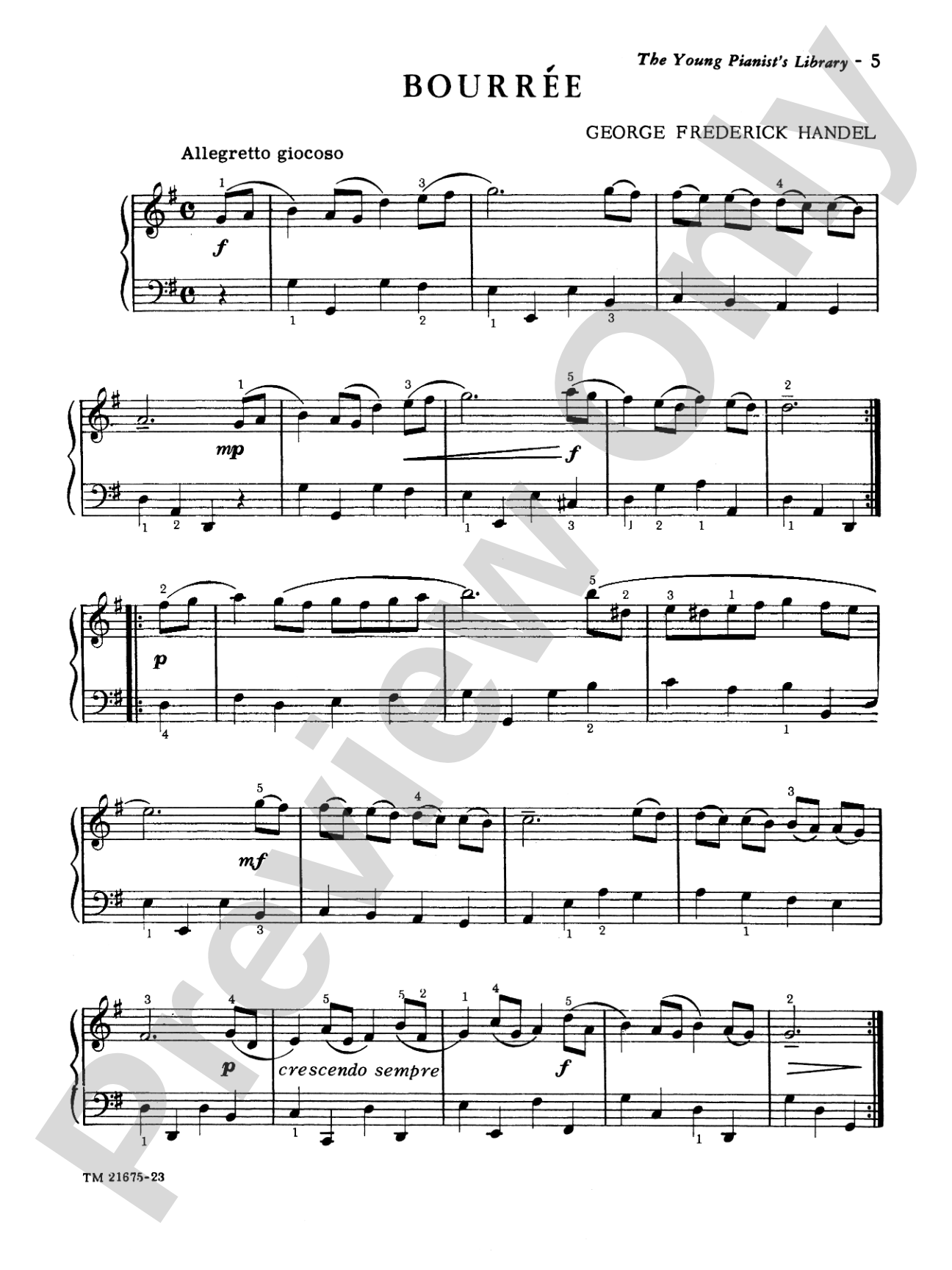
Series:Belwin Edition: The Young Pianist's Library
Publisher:Alfred Music
Page Count:24
SKU:00-PB-0001887
More about this title
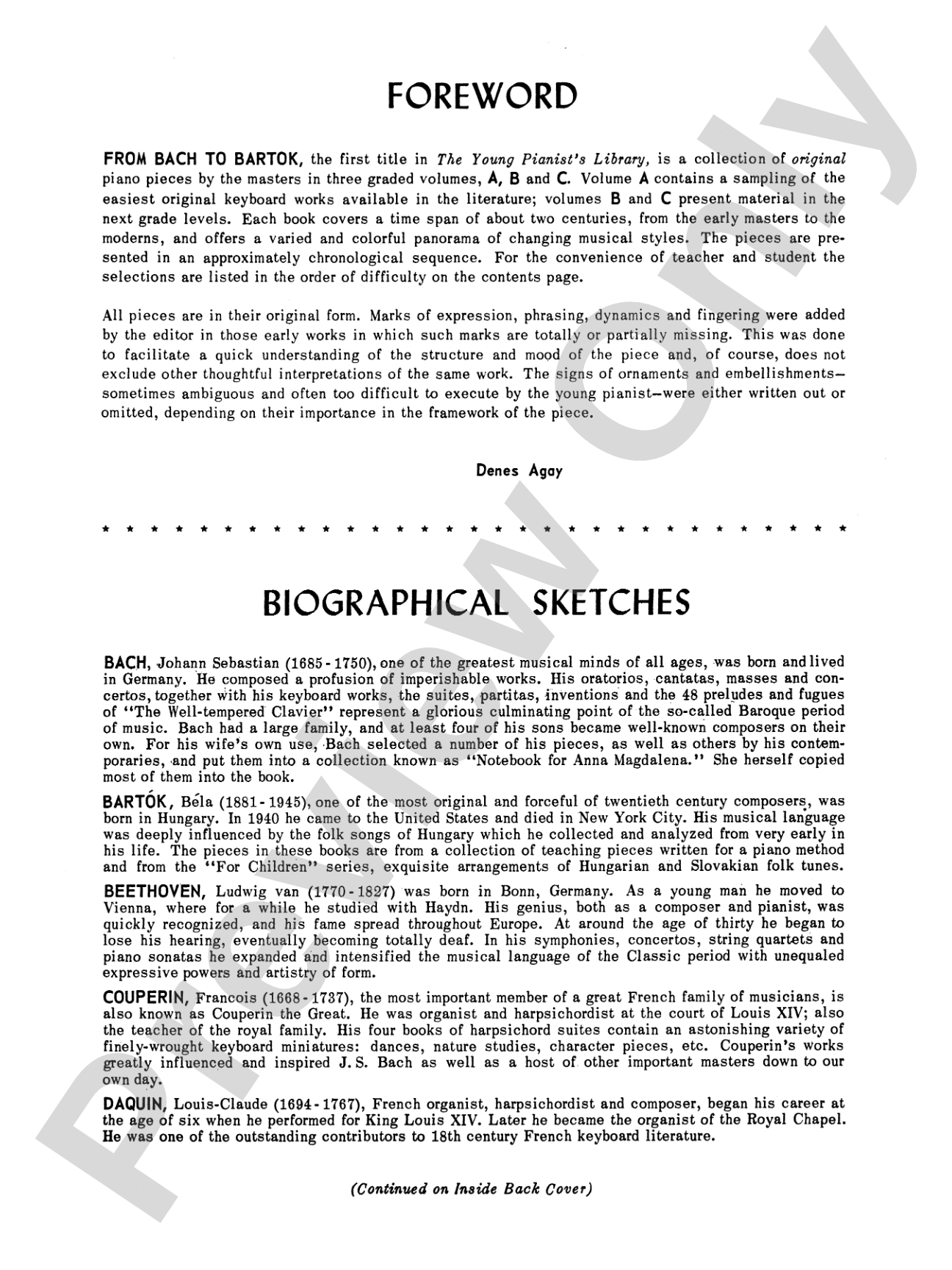
About the Arranger: Denes Agay
Denes Agay began his musical life at age three in a small Hungarian village and eventually studied composition and performance at the Liszt Ferenc Academy of Music in Budapest, where he earned his doctorate in 1934. His early success included conducting the Budapest Philharmonic in performances of his own symphonies and composing for film, but the rise of Nazism forced him to emigrate to New York in 1939. After serving in World War II, Agay built a prolific career as a teacher, composer, and arranger, working on NBC's "Guest Star" radio program while simultaneously developing the pedagogical collections that would define his legacy.
Agay's "Young Pianist's Library" stands as one of his most enduring contributions to music education. These carefully curated anthologies introduced generations of intermediate pianists to the masterworks of Western classical music, arranged with an ear for what students could genuinely perform and enjoy rather than watered-down approximations of the originals.
Why we love this
Agay understood that intermediate pianists need access to real musical literature, not exercises dressed up as pieces. This collection delivers authentic encounters with Bach, Bartók, and the styles between them, each arrangement preserving the character of the original while remaining playable for hands still developing their technical facility. The variety of forms and moods means students encounter genuine stylistic breadth within a single book.
What to expect
A musical journey spanning centuries without ever feeling didactic. One moment you're navigating a Baroque dance, the next you're in a lyrical song or a spirited country reel. The pieces carry genuine personality rather than generic "intermediate" character.
Who it's for
Intermediate pianists working through a foundational method who need exposure to legitimate repertoire across multiple centuries and styles. This book suits students ready to move beyond exercises but still consolidating technique through guided literature.
How to get the most out of it
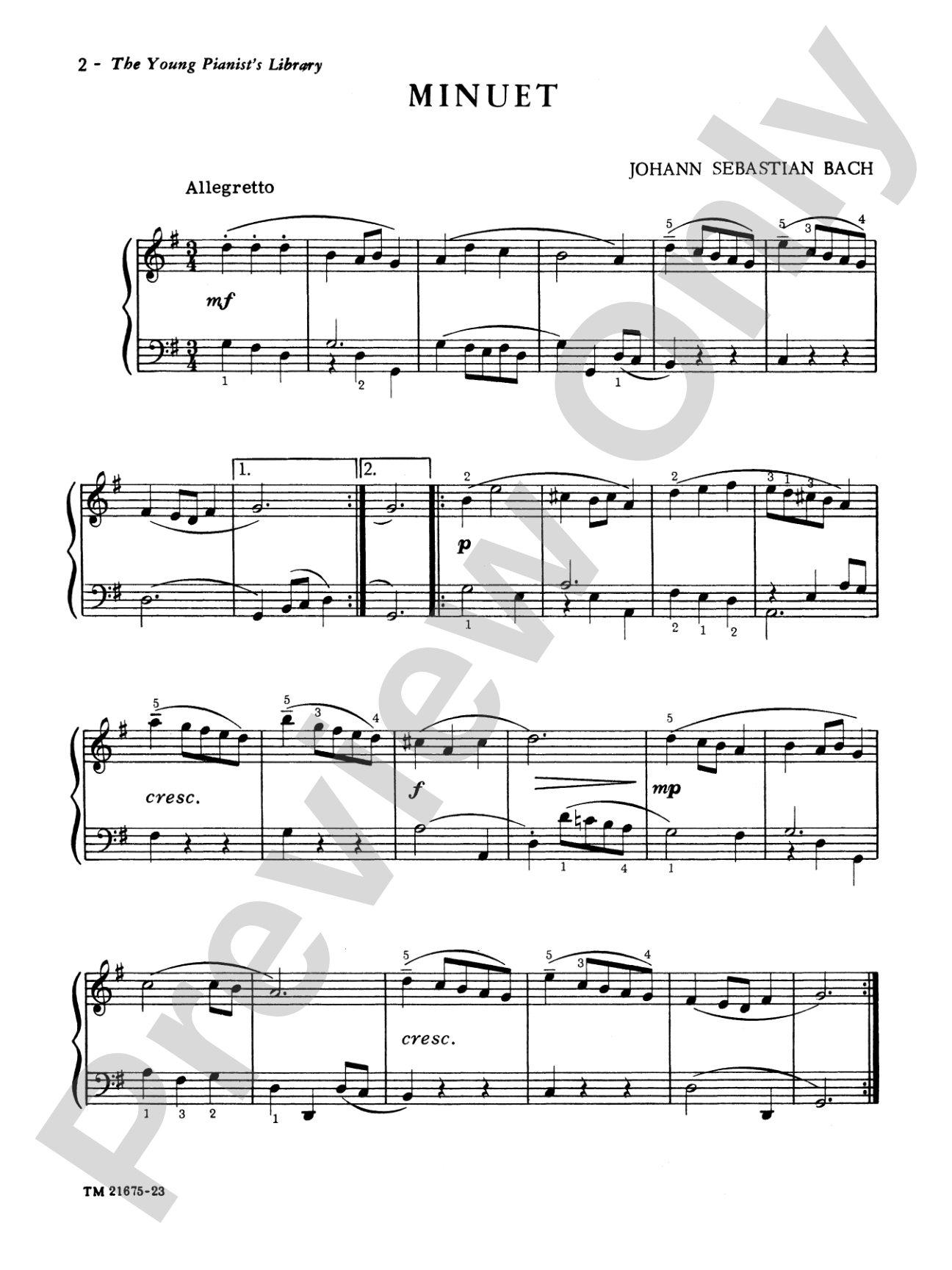
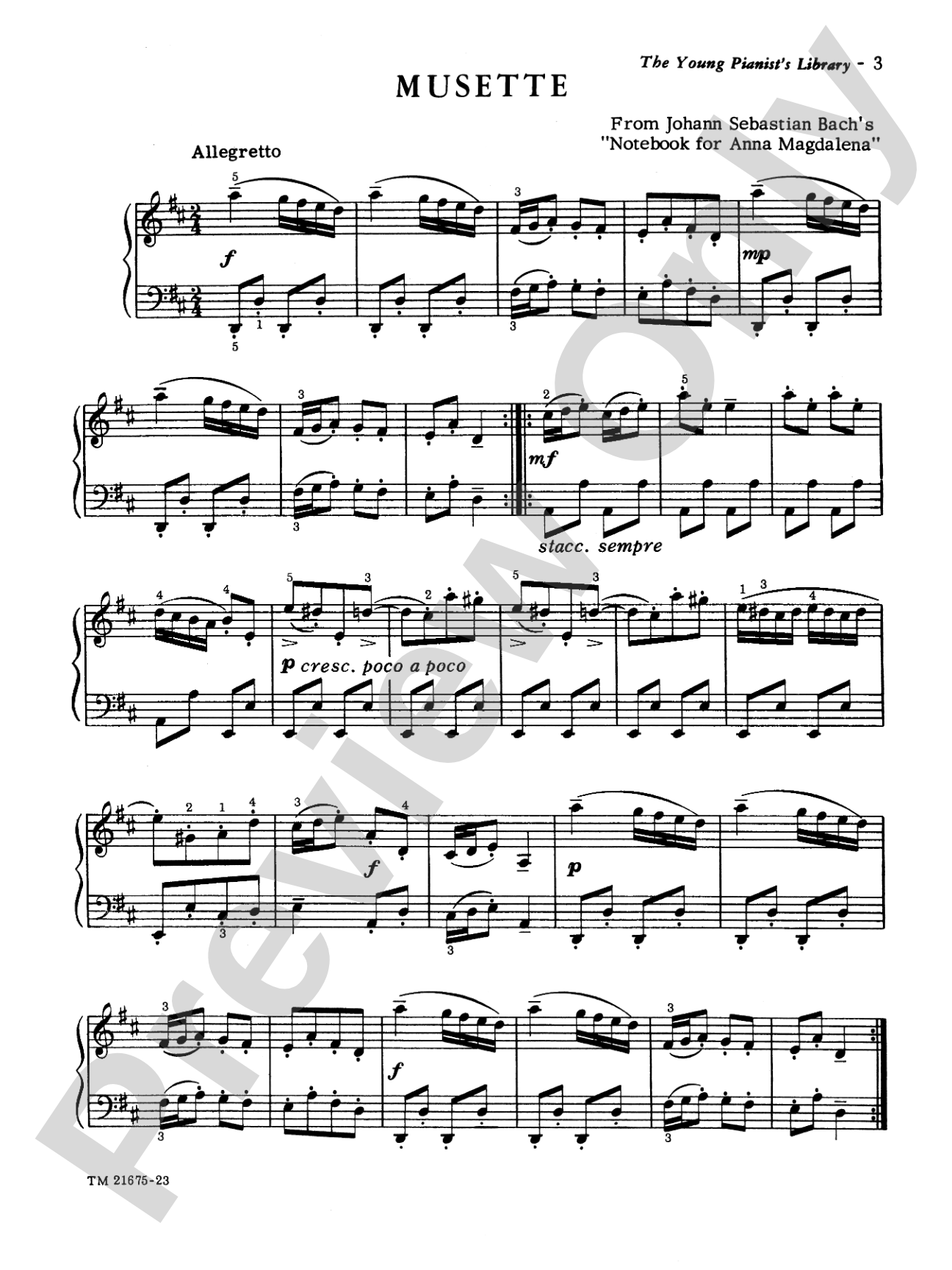
Treat the Baroque pieces with clarity and precise articulation; resist the urge to add weight that belongs to later periods. The ornamentation in pieces like the Musette gains character from lightness, not pedal.
In the character dances (Waltz, March, Angloise), anchor the accompaniment pattern early so it becomes second nature. This frees your attention for melodic phrasing and keeps the dance forms from dragging.
For the Italian Song and other lyrical pieces, work the phrase structure into your practice from the start. Mark where you breathe musically, not just where you happen to turn the page.
How to use it
Assign selections throughout a year of study so students build familiarity with different compositional styles at their own pace. A single Waltz or March works beautifully on a studio recital; sequence several pieces from the collection for a longer student showcase that demonstrates range.
Skills your students will build
Ornamentation and articulation in Baroque style
Rhythmic precision in dance forms (waltz, march, angloise)
Phrasing in lyrical and song-like contexts
Coordination of melody and accompaniment at intermediate level
Recognition of compositional style across different historical periods
You May Also Like
Scan to Complete Your Purchase
Use your phone's camera to scan the code below
You'll log in on your phone and the order will be added to your account