The Young Pianist's Library: Duet Recital Book, Book 6A Cover Image

The Young Pianist's Library: Duet Recital Book, Book 6A: Piano Duet (1 Piano, 4 Hands) Book

$7.99 USD
Sale price  $7.99 USD Regular price 
Skip to product information
The Young Pianist's Library: Duet Recital Book, Book 6A Cover Image

The Young Pianist's Library: Duet Recital Book, Book 6A: Piano Duet (1 Piano, 4 Hands) Book

Arranged by Denes Agay

Level: Late Elementary / Early Intermediate

Item: 00-DA0017

$7.99
Shipped

One moment…

Description
Titles: Paper of Pins * Alouette * Down in the Valley * Cradle Song * Polka * The Happy Farmer * Mexican Hand Clapping Song (Chiapanecas) * That's an Irish Lullaby (Too-ra-loo-ra-loo-ral) * Rondo a capriccio (Rage Over a Lost Penny) * The Bagpipers' Parade (Theme from the "London" Symphony) * Country Gardens * The Thunderer * The Hungarian Folk Tunes * The "Sleeping Beauty " Waltz * March * Song of the Bells (from "The Magic Flute") * Having Fun! (Teacher and Student). Beginner level 1-2.

The Young Pianist's Library: Duet Recital Book, Book 6A: Piano Duet (1 Piano, 4 Hands) Book isn't in MakeMusic Cloud just yet...but it could be. Let us know you'd like to see it, and you'll help shape what comes next. In the meantime, start a free trial and dive into thousands of interactive titles your students can play along with today.

Sample Pages

No sample pages found.

Sample Audio
No sample audio found.
Sample Video
Additional Details
Series: The Young Pianist's Library
Publisher: Alfred Music
Page Count: 32
ISBN10: 0-7692-3439-9
ISBN13: 978-0-7692-3439-7
UPC: 029156142105
SKU: 00-DA0017

More about this title

About the Arranger: Denes Agay
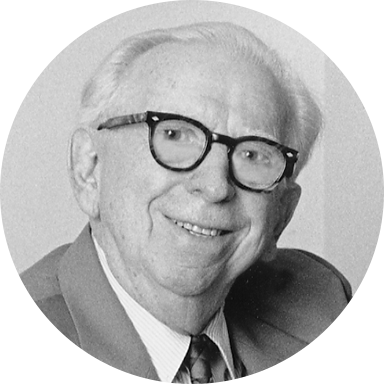
Denes Agay

Denes Agay came to piano at age three in a small village outside Budapest and eventually earned his doctorate in piano composition and performance from Liszt Ferenc Academy of Music in 1934. His early success included conducting the Budapest Philharmonic in performances of his own symphonic works, as well as composing and orchestrating for film. When Nazism rose in Europe, Agay immigrated to America in 1939, became a citizen, and served in the U.S. Army during World War II, where he organized musical programs for hospital patients. After the war, he built a prolific career as a teacher, composer, and publisher, including work as conductor and arranger for the NBC radio program "Guest Star."

Agay's legacy rests primarily on his pedagogical collections and anthologies, which have shaped piano study for generations of students. The Young Pianist's Library series, spanning multiple levels and styles, remains one of his most enduring contributions to music education.

Why we love this

This collection gives late elementary and early intermediate pianists a genuinely playable duet experience without sacrificing musical substance. Agay's selections balance familiar folk melodies, character pieces, and classical excerpts in arrangements that make four-hand playing feel natural rather than awkward, and the variety across 17 pieces means you'll find something for nearly every student pairing and recital context.

What to expect

A journey through beloved melodies and light classical moments, from rollicking folk traditions (Irish lullabies, Mexican hand clapping songs, Hungarian dances) to charming character pieces and waltz excerpts. The arrangements feel accessible and unrushed, allowing each player to focus on their own part while contributing to a complete, satisfying musical whole.

Who it's for

Piano students at the late elementary to early intermediate level who are ready for duet experience but need carefully scaled accompaniments that build confidence in ensemble playing. Teachers can use this book to introduce students to playing with partners, managing shared tempo control, and navigating the physical logistics of 1-piano, 4-hand performance.

How to get the most out of it

  • Establish clear hand positioning before the first rehearsal; the primo player (usually the student) sits slightly to the right, with both players' arms angled to avoid collision during passage work.
  • Work the rhythm section (accompaniment) into secure muscle memory before full ensemble rehearsals, since the secondo part anchors the ensemble's pulse and stability.
  • Record yourselves playing through at least two of the longer pieces (Rondo a capriccio, The Sleeping Beauty Waltz) during practice to catch ensemble timing issues that feel different in playback than in real time.
  • Balance tone production between primo and secondo; the accompaniment should never overpower the melody, even when the secondo part has harmonic or textural interest.

How to use it

Feature duet selections as lighter, interactive moments in a spring recital or informal student showcase, pairing them with solo repertoire from the same level to demonstrate range and ensemble readiness. The shorter, folk-based pieces (Paper of Pins, Alouette, Down in the Valley) work particularly well as opening or closing numbers when you want approachable, audience-friendly material.

Skills your students will build

  • Ensemble balance and listening (tracking a partner's tempo and dynamics in real time)
  • Hand position management in shared keyboard space (primo and secondo coordination)
  • Sustained rhythm section playing (maintaining steady accompaniment patterns under melodic gestures)
  • Reading music that spans two staves in different registers simultaneously
  • Stylistic awareness across folk, classical, and character piece idioms

You May Also Like