
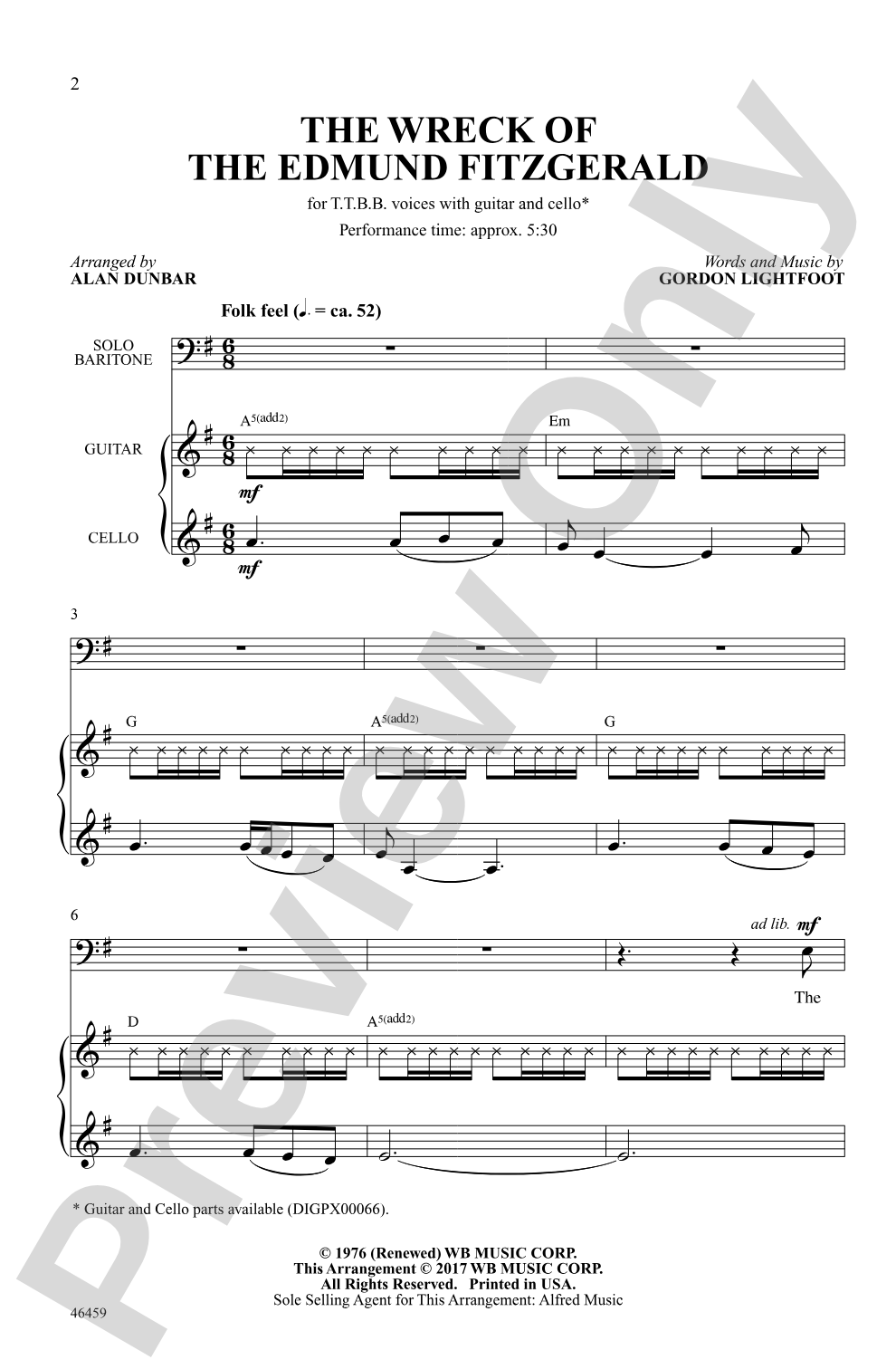
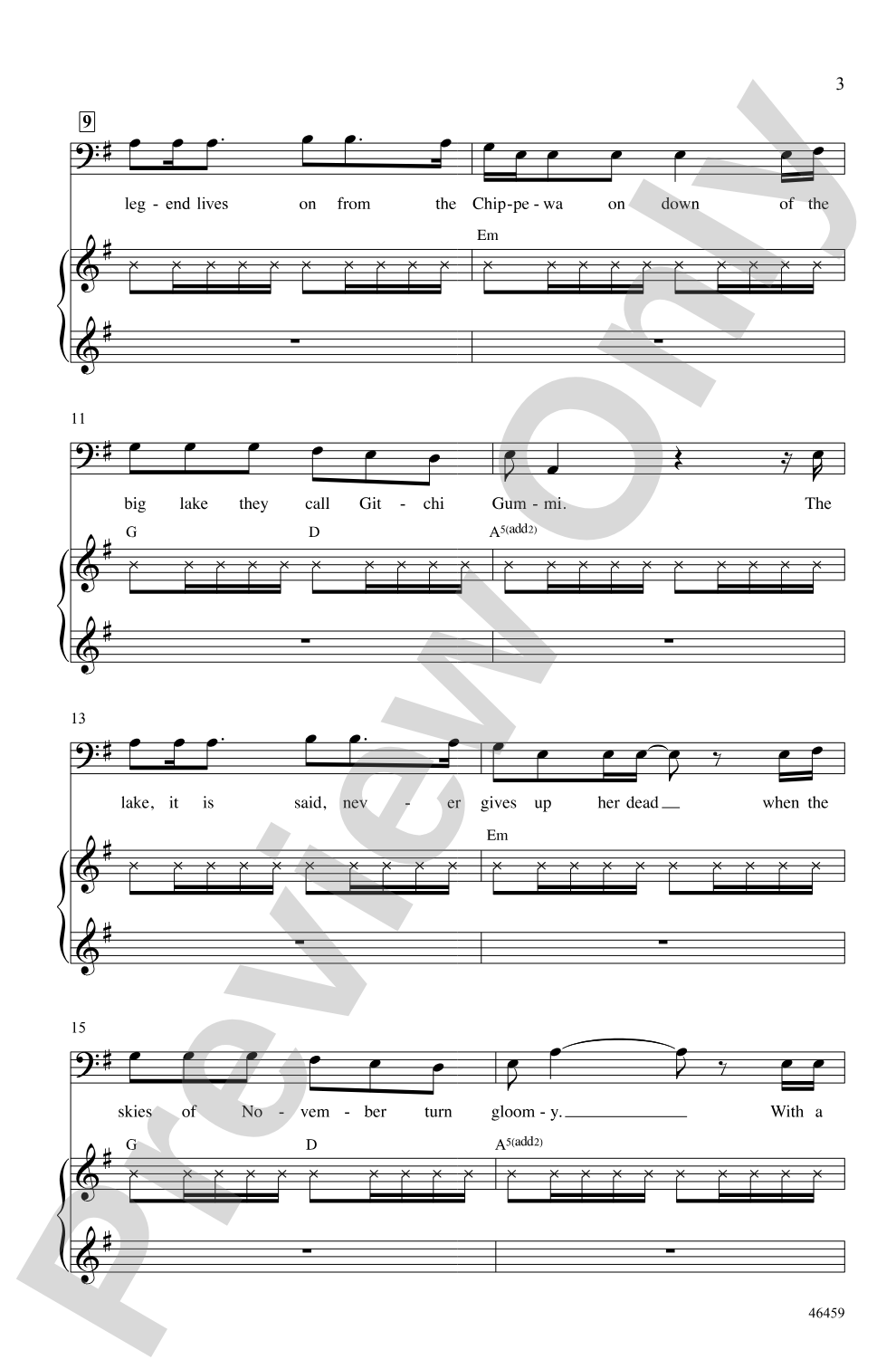
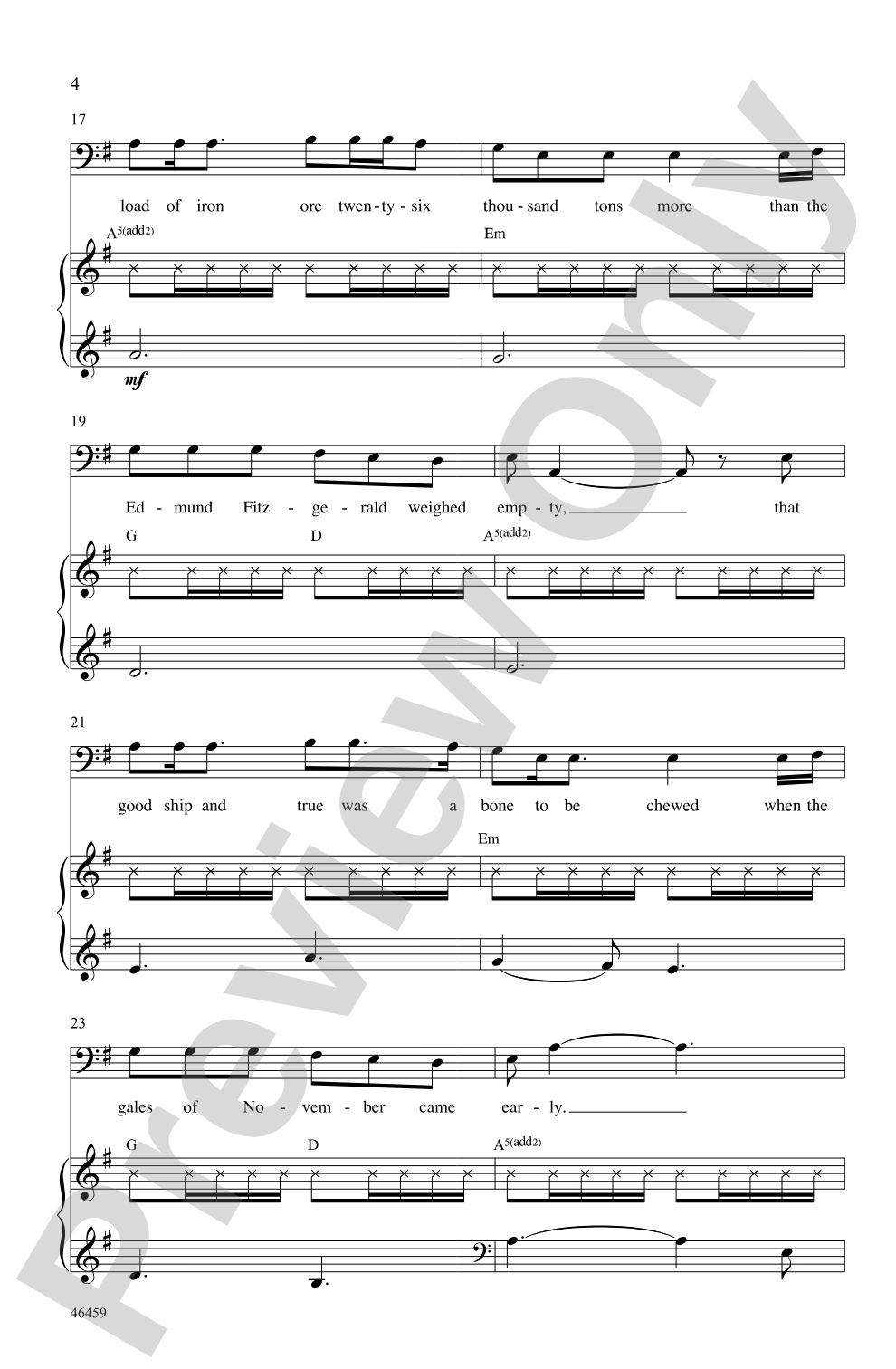
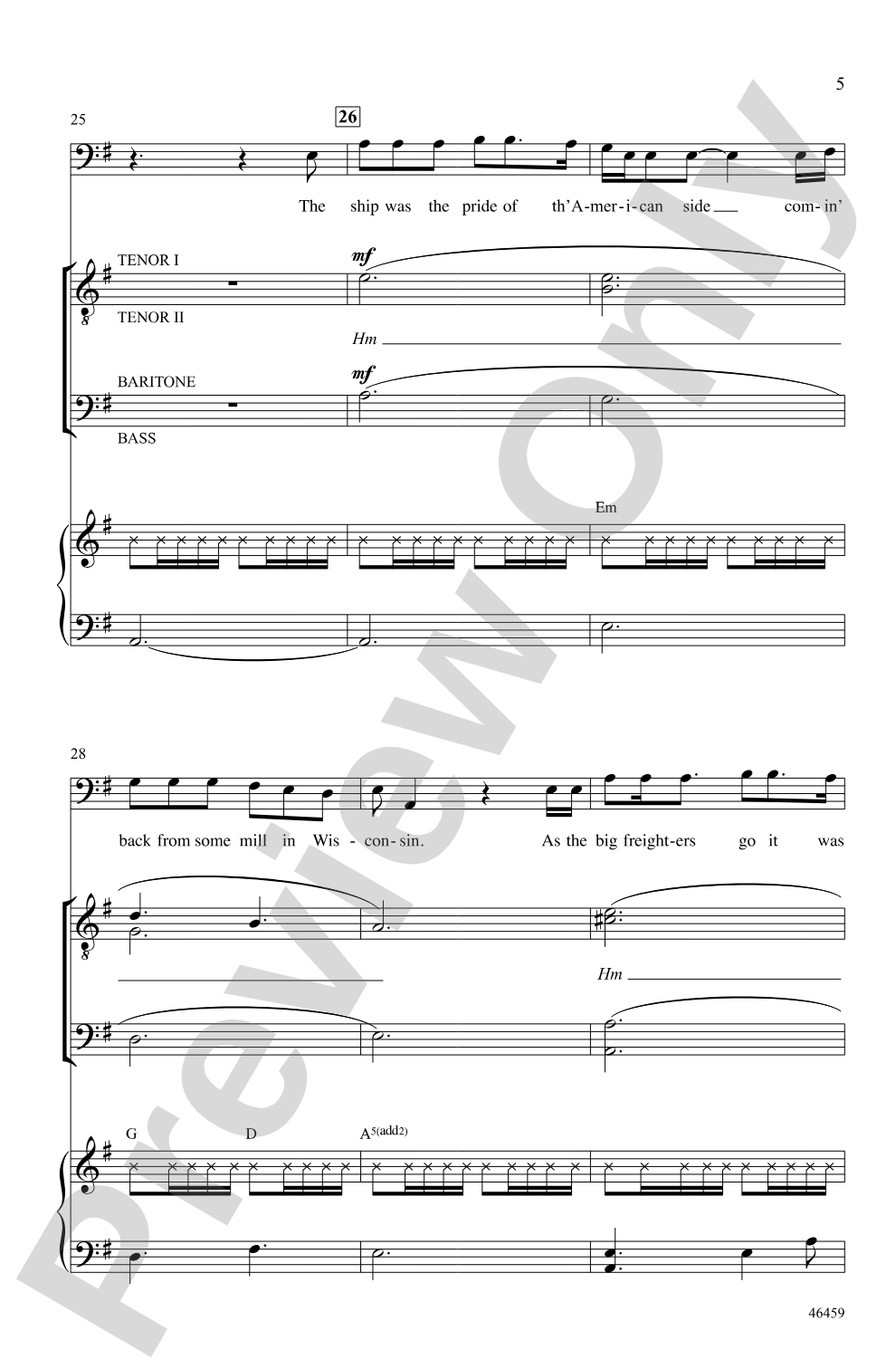

The Wreck of the Edmund Fitzgerald: TTBB Choral Octavo
Words and music by Gordon Lightfoot / arr. Alan Dunbar
Item: 00-PO-0005682
$2.25
Minimum order quantity: 20 copies
One moment…
Description
Written and originally recorded by Gordon Lightfoot a year after the sinking of the SS Edmund Fitzgerald, this now classic pop ballad was number two on the Billboard Hot 100 chart. This arrangement was originally created for the internationally known ensemble CANTUS.


The Wreck of the Edmund Fitzgerald: TTBB Choral Octavo isn't in MakeMusic Cloud just yet...but it could be. Let us know you'd like to see it, and you'll help shape what comes next. In the meantime, start a free trial and dive into thousands of interactive titles your students can play along with today.
Request This Title
Tell us you want it.
Start Your Free Trial
Explore everything that's ready to play right now.
Sample Audio
1
Audio File
--:--
0:00
0:00
Sample Video
Additional Details
Series:
Alfred Pop Choral Series
Publisher:
Alfred Music
Page Count:
20
SKU:
00-PO-0005682
More about this title
About the Composer: Gordon Lightfoot
Gordon Lightfoot is a Canadian singer-songwriter whose narrative ballads have defined folk-pop music since the 1960s. His gift for storytelling set to memorable melodies earned him induction into the Canadian Music Hall of Fame and numerous Grammy nominations. "The Wreck of the Edmund Fitzgerald" stands as one of his most enduring compositions, a work that transformed a tragedy into a cultural landmark through unflinching detail and emotional restraint.
Why we love this
This arrangement captures what made Lightfoot's original recording so compelling: a clear narrative arc, a melody that lodges in listeners' minds, and respect for the historical moment it commemorates. TTBB voicing sits naturally for male choirs, and the Alfred Pop Choral Series arrangement preserves the song's folk-ballad integrity while giving singers real harmonic material to work with. Programming it offers choirs a chance to engage repertoire their audiences actually know and care about, which opens doors for meaningful conversations about musicianship, storytelling, and historical consciousness.
What to expect
The piece unfolds like a documentary told in song, with moments of ominous calm giving way to the brutal reality of loss at sea. Harmonically it sits somewhere between folk tradition and pop sensibility, creating space for human voices to matter more than orchestral color. The restraint throughout feels respectful and haunting, never maudlin.
Who it's for
This arrangement suits TTBB choirs with solid music-reading skills and an interest in repertoire beyond traditional choral standards. It works equally well for high school men's choirs, college groups, and community ensembles looking to expand beyond show tunes and classical choruses. Singers benefit most when they understand the historical context of the song and approach it as a tribute rather than a novelty.
How to get the most out of it
- Treat the narrative as your primary job. Each verse moves the story forward; shape phrases so listeners follow the progression from warning signs to catastrophe to remembrance without getting lost in harmonic shifts.
- Support the melody line with restrained dynamics in the lower voices. The tune needs to cut through, but the arrangement works only when all parts lock into the natural phrasing of speech and song rather than pushing for volume.
- Drill the rhythmic figures that sit beneath the melody. Much of the power comes from the accompaniment staying rock-solid and unrushed, which allows the text to breathe and the story to land.
- Work the ending carefully. Lightfoot wrote a conclusion that asks singers to hold back and let silence have its say; resist the urge to swell into a big finish.
How to use it
This works powerfully as a centerpiece for a concert that explores storytelling in music, or as part of a set that moves between classical and contemporary repertoire without losing artistic cohesion. Consider pairing it with other narrative-driven choral work, or placing it as an emotional anchor in a program that otherwise leans toward lighter material. It also serves as an excellent bridge piece for choirs introducing pop and folk arrangements to audiences who may expect only concert spirituals and classical works.
Skills your students will build
- Narrative phrasing and interpretive choices that serve text over technique
- TTBB voicing balance with melody in the top line and independent harmonic parts below
- Sustained tone and breath control across longer melodic phrases
- Historical context and cultural literacy as tools for musical understanding
- Ensemble blend in a pop idiom that values clarity over classical blend