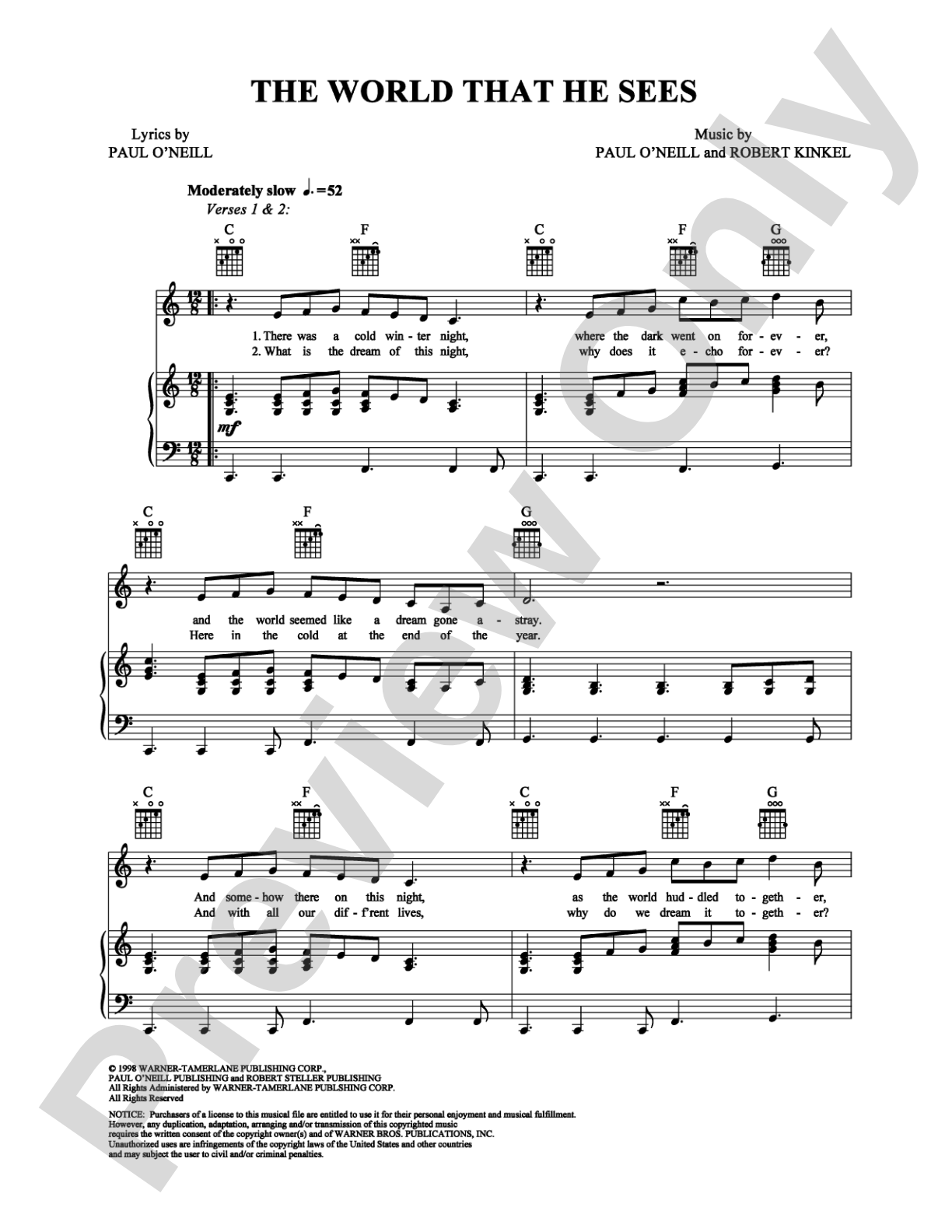
The World That He Sees: Piano/Vocal/Chords Digital Sheet Music

The World That He Sees: Piano/Vocal/Chords Digital Sheet Music

Paul O'Neill, Trans-Siberian Orchestra, Robert Kinkel

Item: 00-PS-0001484

Digital Download
$3.99
Description

The World That He Sees: Piano/Vocal/Chords Digital Sheet Music isn't in MakeMusic Cloud just yet...but it could be. Let us know you'd like to see it, and you'll help shape what comes next. In the meantime, start a free trial and dive into thousands of interactive titles your students can play along with today.

Sample Audio
No sample audio found.
Sample Video
Additional Details
SKU: 00-PS-0001484

More about this title

About the Artist: Trans-Siberian Orchestra

Trans-Siberian Orchestra is a rock band known for blending classical instrumentation with progressive rock and metal elements. Founded in the 1990s, the ensemble has built a devoted following through elaborate live productions and concept albums that treat rock storytelling with symphonic ambition. Their work appeals across age groups and musical backgrounds, making them a relevant artist for contemporary music education.

Why we love this

This piece gives pianists and vocalists access to contemporary rock repertoire with real harmonic substance. The combination of piano foundation with vocal melody and chord symbols creates flexibility for different skill levels and ensemble configurations, whether performed as a solo recital piece, in a vocal jazz or contemporary music class, or adapted for small ensemble.

What to expect

The piece carries the emotional weight and orchestral ambition characteristic of Trans-Siberian Orchestra's style, with sweeping melodic content and harmonic richness that elevates it beyond typical pop rock. It feels substantial enough for concert performance while remaining accessible to singers and pianists at intermediate and advancing levels.

Who it's for

Vocalists working in contemporary, pop rock, or musical theatre styles will find this a rewarding addition to their recital or classroom repertoire. Pianists seeking modern accompaniment material that respects both the vocalist and the instrumental voice will appreciate the thoughtful arrangement.

How to get the most out of it

  • Balance the vocal line over the piano part by keeping the melody forward without drowning out the harmonic movement beneath it.
  • Use the chord symbols to inform your harmonic voicings; they guide expressive choices in how you voice the accompaniment rather than just playing the written notes mechanically.
  • Pay attention to dynamics and phrasing as written; rock ballads depend on restraint and buildup to land their emotional moments effectively.
  • If performing with a live accompanist, run through transitions and any tempo changes multiple times to ensure the vocalist and pianist stay locked together through the song's arc.

How to use it

Include this in a contemporary music recital or vocal jazz concert to showcase modern songwriting alongside classical or jazz standards. It works equally well in a high school or college ensemble class exploring 21st-century repertoire, or as a solo recital piece that connects with student performers interested in rock and popular music traditions.

Skills your students will build

  • Reading and interpreting chord symbols in a pop/rock context
  • Balancing vocal melody with piano accompaniment
  • Performing with dynamic control and emotional phrasing in contemporary styles
  • Understanding harmonic movement in non-classical progressions

You May Also Like