
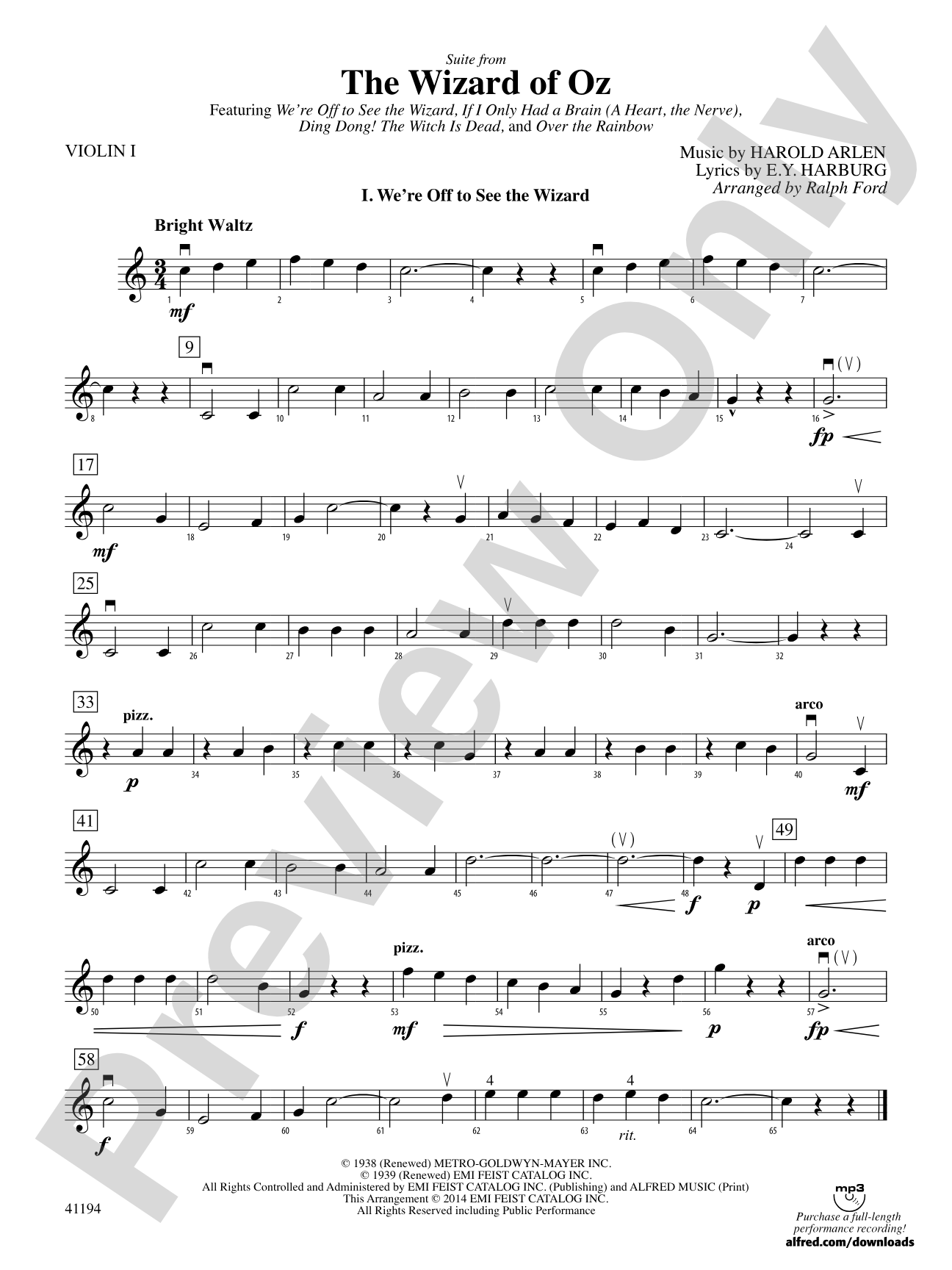

The Wizard of Oz, Suite from: 1st Violin
Featuring: We're Off to See the Wizard / If I Only Had a Brain (A Heart, the Nerve) / Ding Dong! The Witch Is Dead / Over the Rainbow
Music by Harold Arlen, lyrics by E. Y. Harburg / arr. Ralph Ford
Grade: 2
Item: 00-PC-0016322_VN1
$5.99
Pickup currently not available
Description
Celebrate 75 years of wizarding! "We're Off to See the Wizard," "If I Only Had a Brain (A Heart, the Nerve)," "Ding Dong! The Witch Is Dead," and "Over the Rainbow" will delight all generations. (4:50) This title is available in MakeMusic Cloud.


Don't just read it, hear it, play along with it, and watch your students grow with it. In MakeMusic Cloud, The Wizard of Oz, Suite from: 1st Violin comes alive with professional accompaniment, adjustable tempo, and built-in practice tools that turn solo practice into real progress.
Open in the Player
Jump straight in and assign it today.
Start Your Free Trial
Open this title and explore the full library in minutes.
Sample Audio
1
Audio File
--:--
0:00
0:00
Sample Video
No sample videos found.
Additional Details
Series:
Pop Beginning String Orchestra
Publisher:
Alfred Music
Page Count:
152
SKU:
00-PC-0016322_VN1
More about this title
About the Composer: Harold Arlen
Harold Arlen (1905-1986) composed some of the most enduring melodies in American popular music, with a gift for writing songs that lodge themselves in memory across generations. His collaboration with lyricist E. Y. Harburg on The Wizard of Oz produced a score that redefined what film music could accomplish, blending sophisticated harmonic language with melodies so direct and singable that they've become part of American cultural life.
Arlen's approach to melody was distinctive: he could write a tune that felt simple and inevitable while containing surprising harmonic turns and rhythmic subtlety. For music educators, his work offers students a masterclass in how melody, harmony, and orchestration work together to create emotional impact. These songs have proven their staying power not because they're simplistic, but because they're perfectly crafted.
Why we love this
This suite captures four of the score's most iconic moments in an arrangement that respects both the melodic richness and the emotional arc of the story. Ford's orchestration balances accessibility with genuine musical sophistication, giving young string players the chance to shape phrases that audiences genuinely want to hear. A Grade 2 piece that doesn't feel like filler is rare; this one earns its place on a concert program through sheer musical integrity.
What to expect
There's a sense of journey woven through these four songs, moving from determination and humor to wonder and yearning. Arlen's melodies feel both nostalgic and immediately present, familiar enough that audiences sing along while fresh enough to keep players engaged. The orchestration sparkles without overwhelming, giving strings the chance to carry genuine emotional weight.
Who it's for
Beginning to early intermediate string orchestras looking for repertoire with immediate appeal and proven musical substance. This suite works equally well for spring concerts, family-friendly programming, or as part of a pops series, and the grade level makes it accessible for programs with younger players who still need rewarding material.
How to get the most out of it
- Build the drama in "Ding Dong! The Witch Is Dead" by treating the articulation with clarity and precision; clean attacks will bring out Ford's orchestration without requiring excessive volume.
- Shape "Over the Rainbow" with attention to the natural phrasing of Arlen's melody. Let younger players hear and feel where the phrase breathes rather than treating it as a reading exercise.
- Balance the transition between "If I Only Had a Brain" and the following sections by maintaining consistent tempo and texture through key changes.
- Use the opening section to establish the playful character of the piece; setting that tone early makes the more lyrical passages land with greater impact.
How to use it
Program this as an opener to set a joyful tone for a concert, or use it as a crowd-pleasing finale that sends audiences out smiling. It pairs naturally with other light orchestral fare or can anchor a movie-music themed concert. Many directors use it strategically when building mixed programs to reach families and younger listeners while maintaining artistic credibility.
Skills your students will build
- Phrasing within accessible melodic lines
- Dynamic control across contrasting sections (playful vs. lyrical)
- Maintaining ensemble balance with prominent melodies
- Responding to harmonic movement within a tonal framework
- Coordinating rhythm section with upper voices in a Grade 2 context