The Wizard of Oz Meets The Wiz: 1st Percussion Sheet Music Preview

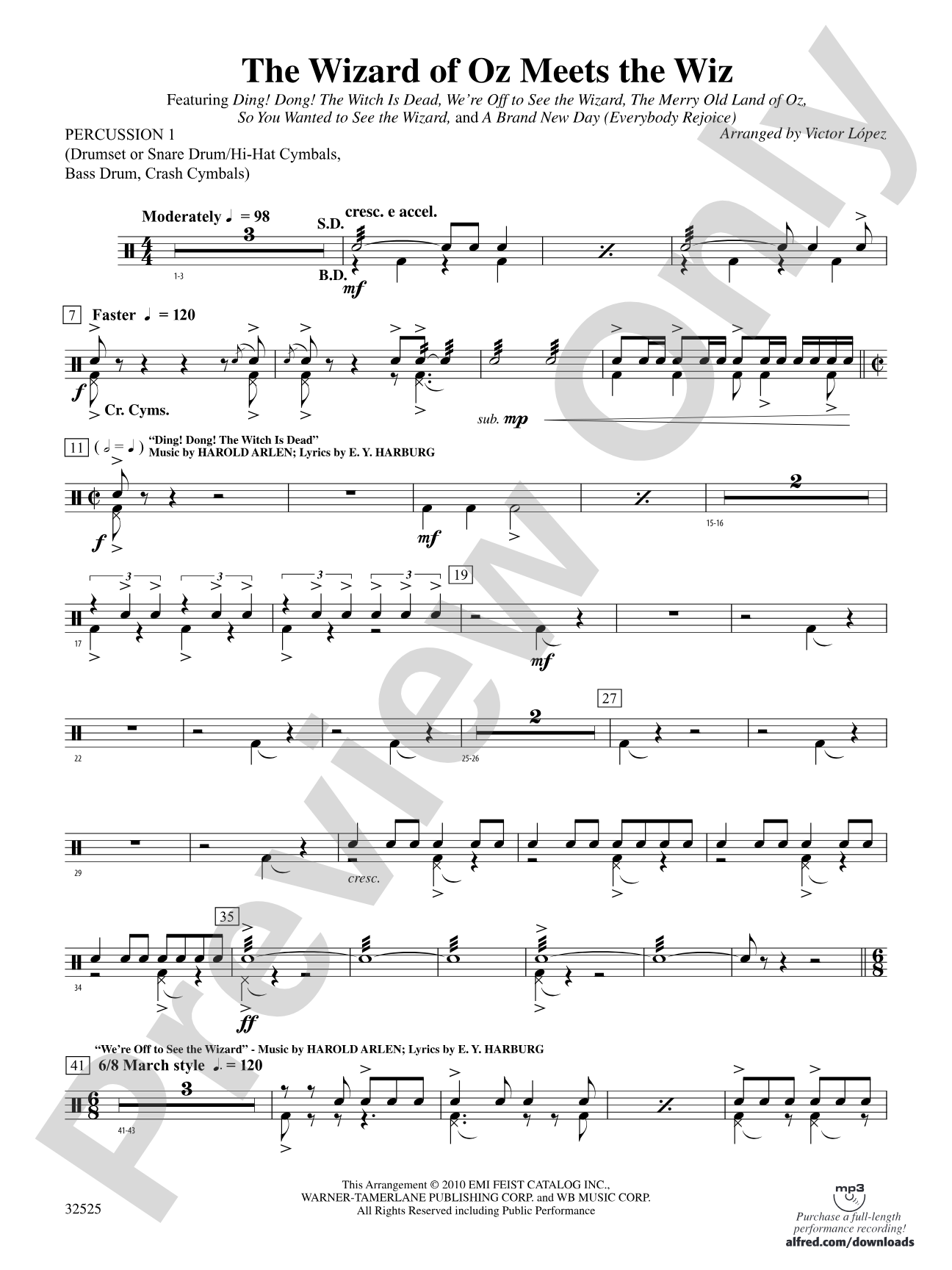
The Wizard of Oz Meets The Wiz: 1st Percussion

Featuring: Ding! Dong! The Witch Is Dead / We're Off to See the Wizard / The Merry Old Land of Oz / So You Wanted to See the Wizard / A Brand New Day (Everybody Rejoice)

Arr. Victor López

Grade: 3 (Medium Easy)

Item: 00-PC-0015747_PC1

Digital Download
$3.00
Description
Something old and something new---but the story is the same. Hailed as the first original American fairy tale, The Wizard of Oz inspired countless sequels and imitations, as well as the classic American musical film and the Broadway musical, The Wiz. Taking selections from both productions, this arrangement takes you on a musical journey that connects the countryside of American heartland fantasy and the pride of urban African Americans.

Don't just read it, hear it, play along with it, and watch your students grow with it. In MakeMusic Cloud, The Wizard of Oz Meets The Wiz: 1st Percussion comes alive with professional accompaniment, adjustable tempo, and built-in practice tools that turn solo practice into real progress.

Sample Audio
0:00
0:00
Sample Video
Additional Details
Series: Pop Concert Band
Publisher: Alfred Music
Page Count: 272
SKU: 00-PC-0015747_PC1

More about this title

About the Arranger: Victor López

Victor López is a prolific arranger and composer whose work spans concert band, jazz ensemble, and orchestral literature. His arrangements are known for making popular music accessible to student musicians while preserving the character and energy of the original compositions.

Why we love this

This arrangement bridges two beloved American musicals across nearly a century of cultural history, giving your band a chance to explore how the same story resonates differently through different lenses. The Grade 3 scoring keeps the arrangements playable without sacrificing the recognizable melodies and orchestral color that make both productions iconic. Programming both shows together creates a natural narrative arc that audiences will follow with genuine interest.

What to expect

The music carries a sense of wonder and discovery, shifting between the pastoral Americana of the original Wizard of Oz and the urban vitality and cultural pride of The Wiz. Audiences will recognize the melodies and feel the emotional weight of both stories, while your students play arrangements that feel fresh and purposeful rather than reduced.

Who it's for

Concert bands at the middle school through early high school level will find this music immediately engaging and playable. Directors seeking a thematic program that connects American musical theater history, celebrates diverse cultural perspectives, and showcases student musicianship on familiar repertoire will find the scoring and scope here well matched to their ensemble.

How to get the most out of it

  • Balance the melody line carefully between sections. The familiar tunes from both productions will carry the performance, but they need clear projection without drowning out the harmonic foundation underneath.
  • Pay attention to style shifts between the Oz and Wiz selections. Each production has a distinct musical vocabulary, and your band will need to adjust articulation, vibrato, and phrasing to honor both without blending them into one generic sound.
  • Use the full dynamic range available at this grade level. The contrast between intimate character moments and full ensemble passages will deepen the audience's engagement with the storytelling.
  • Lock in the rhythmic foundation early in rehearsal. Consistent ensemble pulse matters more than individual precision when you're carrying recognizable melodies that the audience wants to sing along with.

How to use it

Program this as a complete thematic concert that stands on its own, or use selections from it to bookend a broader American music showcase. The dual narrative also works well as a spring concert feature that celebrates how a single story can speak across generations and communities.

Skills your students will build

  • Maintaining consistent articulation and style across extended melodic passages
  • Balancing melody and accompaniment in mixed texture writing
  • Responding to subtle dynamic and tempo shifts that serve storytelling rather than technical display
  • Reading and performing across both traditional and popular music idioms within a single program

You May Also Like