The Wizard of Oz, Highlights from: Baritone T.C. Sheet Music Preview

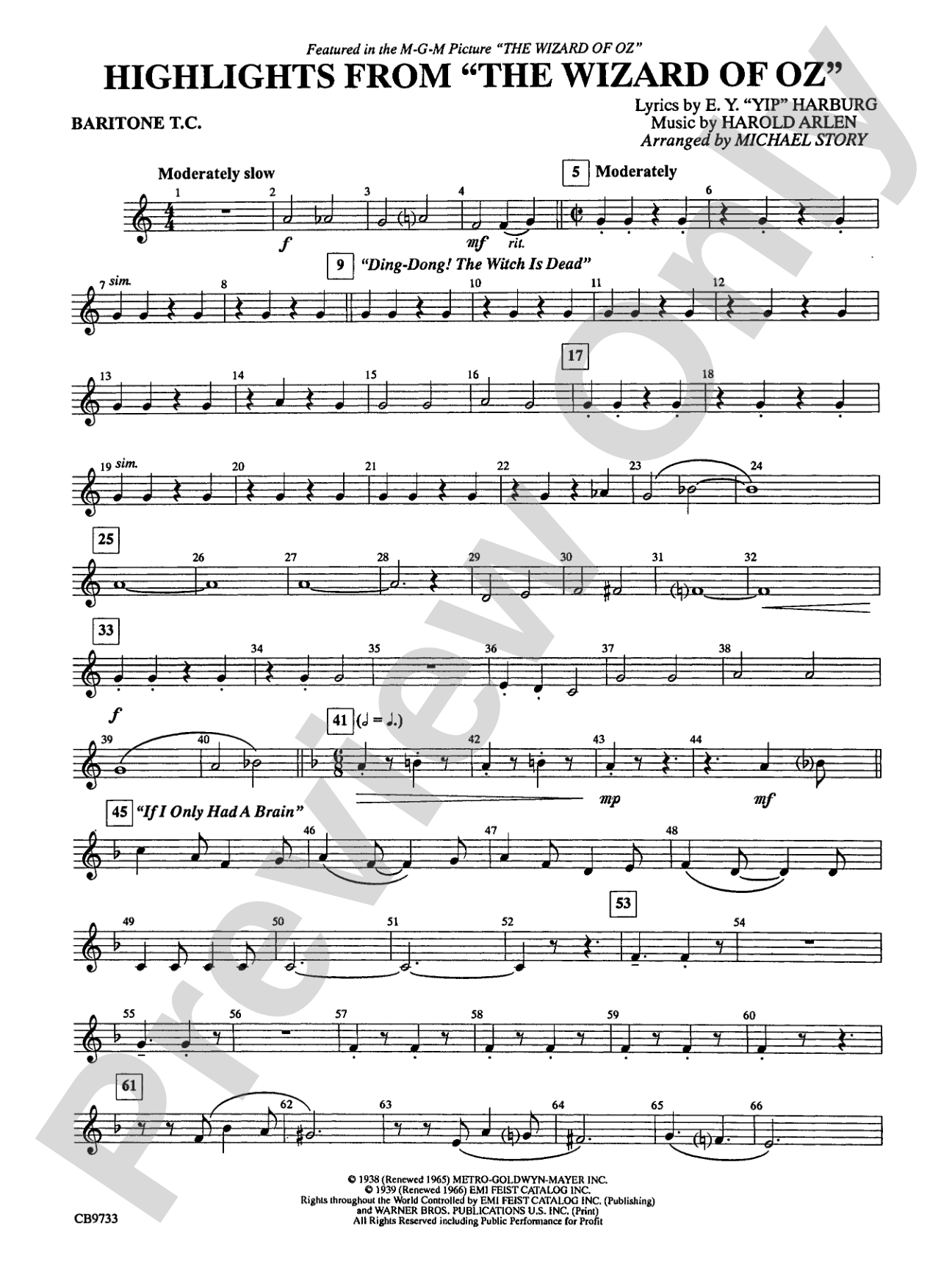
The Wizard of Oz, Highlights from: Baritone T.C.

Lyrics by E. Y. "Yip" Harburg, music by Harold Arlen / arr. Michael Story

Grade: 2 (Easy)

Item: 00-PC-0016065_BTC1

Digital Download
$3.00
Description
Although The Wizard of Oz was written nearly sixty years ago, the story remains fresh and alive and the music is just as contemporary as one could wish. We visit these marvelous melodies from the mythical land of Oz: "If I Only Had a Brain," "We're Off to See the Wizard," "Ding-Dong! The Witch is Dead," and, of course, "Over the Rainbow." It's a quick-rehearsing, solidly musical medley that will thrill your audiences at each and every performance. (duration 4:05)

Don't just read it, hear it, play along with it, and watch your students grow with it. In MakeMusic Cloud, The Wizard of Oz, Highlights from: Baritone T.C. comes alive with professional accompaniment, adjustable tempo, and built-in practice tools that turn solo practice into real progress.

Sample Audio
No sample audio found.
Sample Video
Additional Details
Series: Pop Young Band
Publisher: Alfred Music
Page Count: 250
SKU: 00-PC-0016065_BTC1

More about this title

About the Composer: Harold Arlen

Harold Arlen (1905-1986) composed some of the most enduring melodies in American popular music, with a gift for writing songs that bridge theatrical sophistication and immediate accessibility. His work on The Wizard of Oz created a soundtrack that has outlasted countless film scores, proving that strong harmonic writing and memorable vocal lines never go out of style.

Arlen's approach to melody prioritized singability and emotional directness. For music educators, his work demonstrates how professional composition can serve both artistic integrity and genuine audience connection, making his songs ideal teaching vehicles for students learning to balance musical craft with communicative power.

Why we love this

Michael Story's arrangement captures the theatrical flair of these classic melodies while keeping rehearsal time reasonable and parts manageable for Grade 2 players. The medley structure allows you to program recognizable, beloved music that connects with audiences of all ages without requiring an extended rehearsal commitment. Your students will feel the satisfaction of performing music that audiences genuinely care about.

What to expect

Stepping into the magic of Oz feels both whimsical and grand. The opening has an impish, almost mischievous quality before building into the triumphant march toward the emerald city. By the time "Over the Rainbow" arrives, you've traveled through the emotional arc of the story, arriving at hope and determination.

Who it's for

This arrangement works for intermediate concert bands looking for repertoire that energizes rehearsal and guarantees an engaged audience response. It's ideal for spring concerts, community performances, or any program where you want to include music your players will enjoy learning and your listeners will absolutely recognize.

How to get the most out of it

  • Balance the melodic line clearly against harmonic accompaniment, especially in the opening of "If I Only Had a Brain." Even at Grade 2, these melodies deserve to sing through the full band texture.
  • Treat each song in the medley as a distinct moment with its own character. The transition from the whimsical opening to the more triumphant "We're Off to See the Wizard" should feel like a shift in mood, not just a tempo change.
  • Lock the rhythm section (bass and drums, or whatever low reed and percussion combinations you have) so the harmonic foundation stays steady beneath the melodic line.
  • Mark your breath points and cutoffs carefully so transitions between selections feel intentional and polished, not rushed or uncertain.

How to use it

Program this as a centerpiece of a lighter-themed concert or pair it with other accessible classics to create a "greatest hits" concert that draws families and casual listeners. Its 4:05 duration makes it substantial enough to anchor a set without dominating rehearsal time, leaving room for contrasting repertoire in your program.

Skills your students will build

  • Maintaining clear melodic line in multi-part textures
  • Responding to character and mood shifts within a single piece
  • Coordinating ensemble precision in transitions between sections
  • Balancing sustained harmonic accompaniment with forward-moving melody

You May Also Like