The Winds of Change Sheet Music Preview

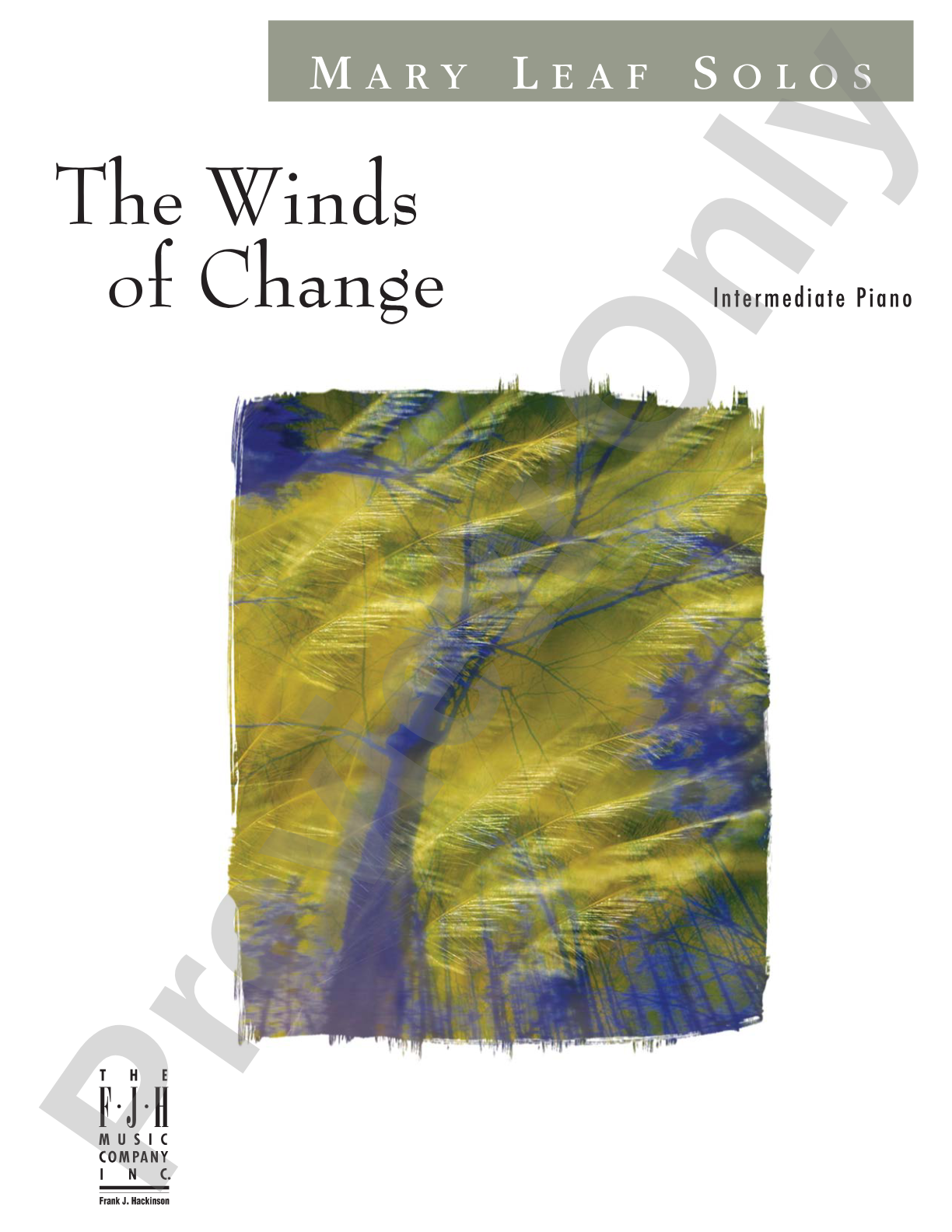
The Winds of Change: Piano

By Mary Leaf

Item: 98-DW9205

Digital Download
$5.95
Description
This piece features a hauntingly, lovely melody in E minor followed by running eighth notes, ascending and descending throughout the B section. Containing a singing right-hand melody and many gradual dynamic changes, The Winds of Change also includes (artistic) pedaling and subtle changes in tempo.

The Winds of Change: Piano isn't in MakeMusic Cloud just yet...but it could be. Let us know you'd like to see it, and you'll help shape what comes next. In the meantime, start a free trial and dive into thousands of interactive titles your students can play along with today.

Sample Audio
No sample audio found.
Sample Video
Additional Details
Series: Written For You
Publisher: The FJH Music Company, Inc.
SKU: 98-DW9205

More about this title

Why we love this

Mary Leaf writes for the intermediate pianist with real compositional sophistication. The piece balances accessibility with artistic depth through its attention to pedaling, tempo nuance, and dynamic shaping rather than technical pyrotechnics. Students get to interpret a piece that rewards thoughtful musicianship.

What to expect

A contemplative journey that opens with a haunting E minor melody before restless eighth notes sweep upward and downward through the middle section. The overall effect is introspective yet searching, with subtle shifts in tempo and dynamics that invite the listener into the pianist's emotional world.

Who it's for

Intermediate pianists ready to balance technical fluency with interpretive maturity. This piece suits students who thrive on exploring tone color, pedal technique, and dynamic storytelling rather than rapid passagework.

How to get the most out of it

  • Treat the pedaling markings as integral to the piece's emotional arc, not decoration. Experiment with partial pedal changes to keep the haunting melody clear while sustaining harmonic color.
  • Map out the gradual dynamic changes before you play. Mark specific measures where intensity shifts so transitions feel inevitable rather than abrupt.
  • The running eighth notes in the B section should propel forward without losing the piece's introspective mood. Maintain a sense of restlessness without rushing the tempo.
  • Explore the subtle tempo variations as opportunities to breathe and shape phrases, not as obstacles. Small ritardandos and accelerandos can deepen the piece's emotional journey.

How to use it

Program this as a recital opener or closer to frame a concert emotionally. Its moderate length and reflective character also make it suitable for student recitals, competitions, or intimate performance settings where artistic maturity matters more than showmanship.

Skills your students will build

  • Artistic pedaling and pedal notation reading
  • Interpreting gradual dynamic changes and shaping long phrases
  • Balancing right-hand singing melody with accompanying figures
  • Executing running sixteenth note passages with clarity and control in E minor
  • Responding to subtle tempo markings and making tasteful interpretive choices

You May Also Like