

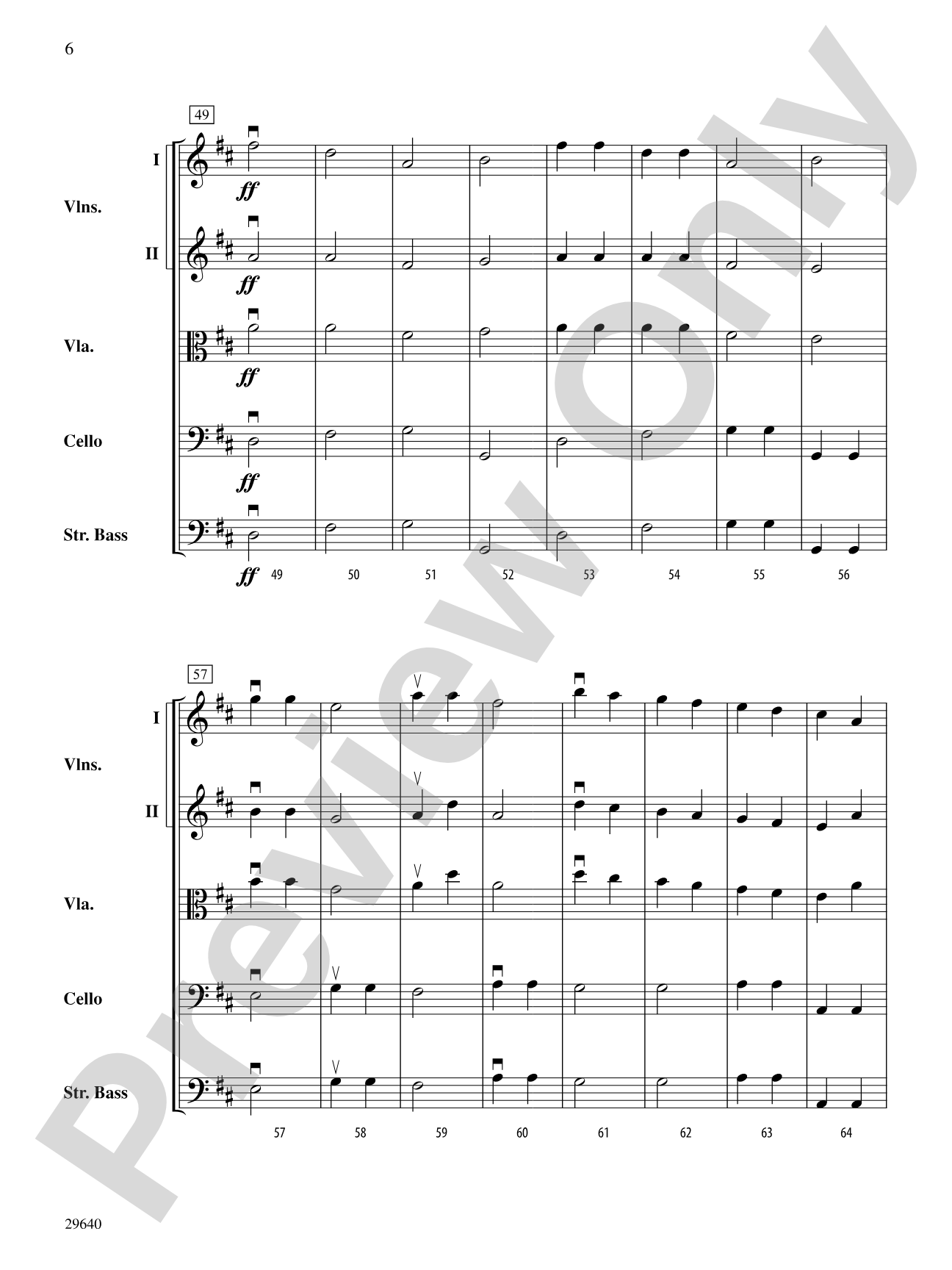
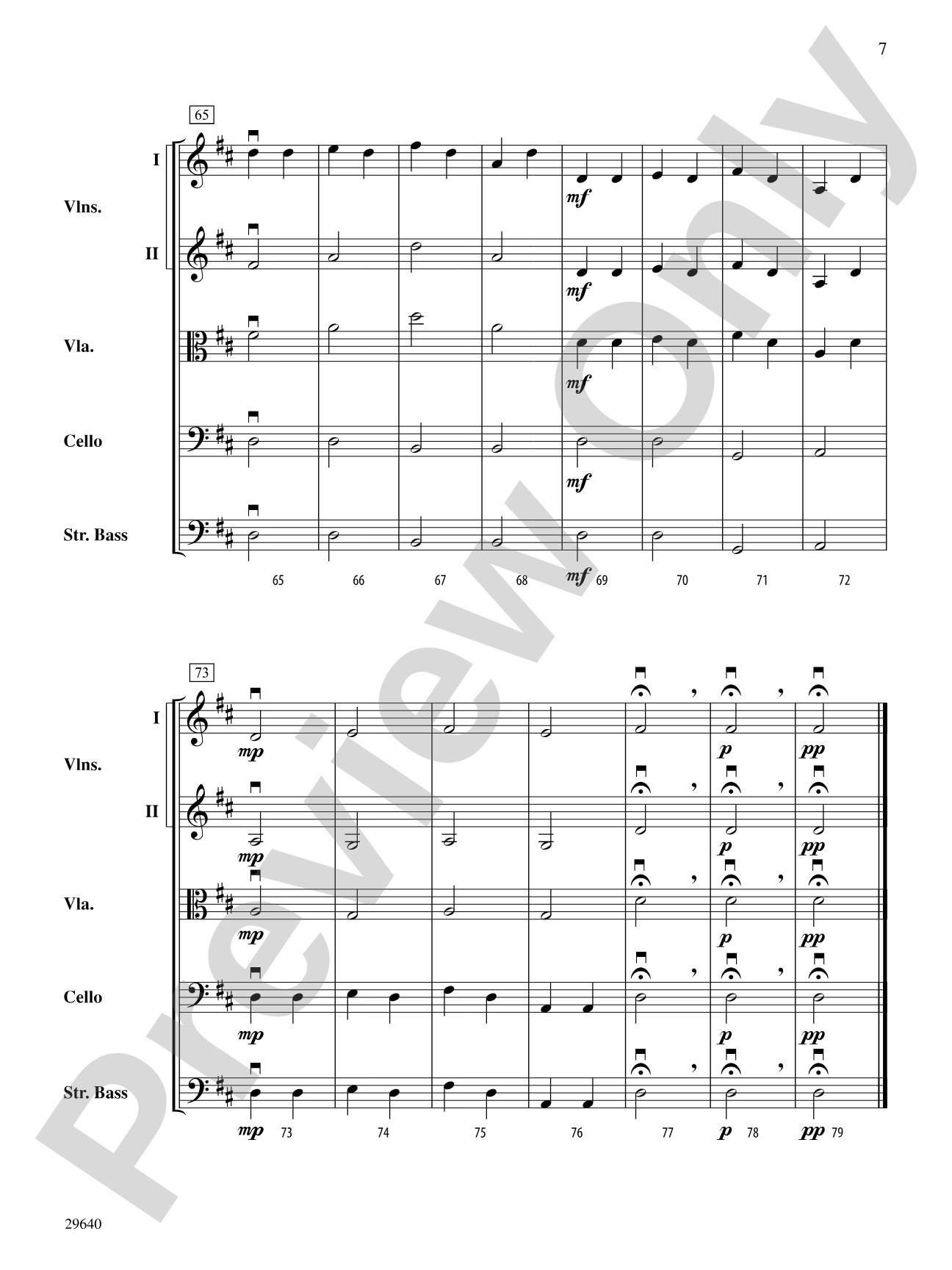


The Winds of Autumn: Score
By Michael Hopkins
Grade: 1
Item: 00-PR-0001498
$8.00
Pickup currently not available
Description
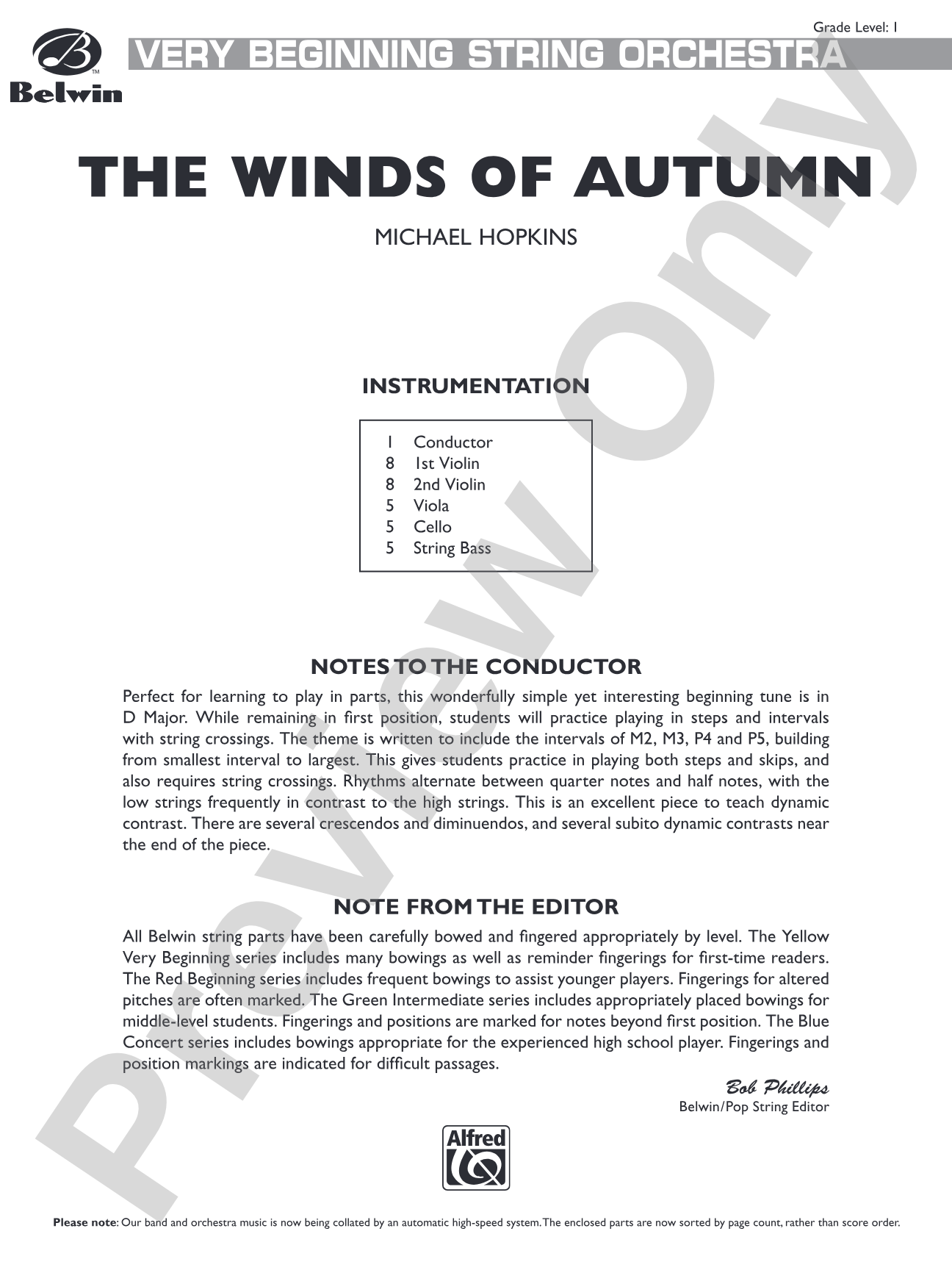
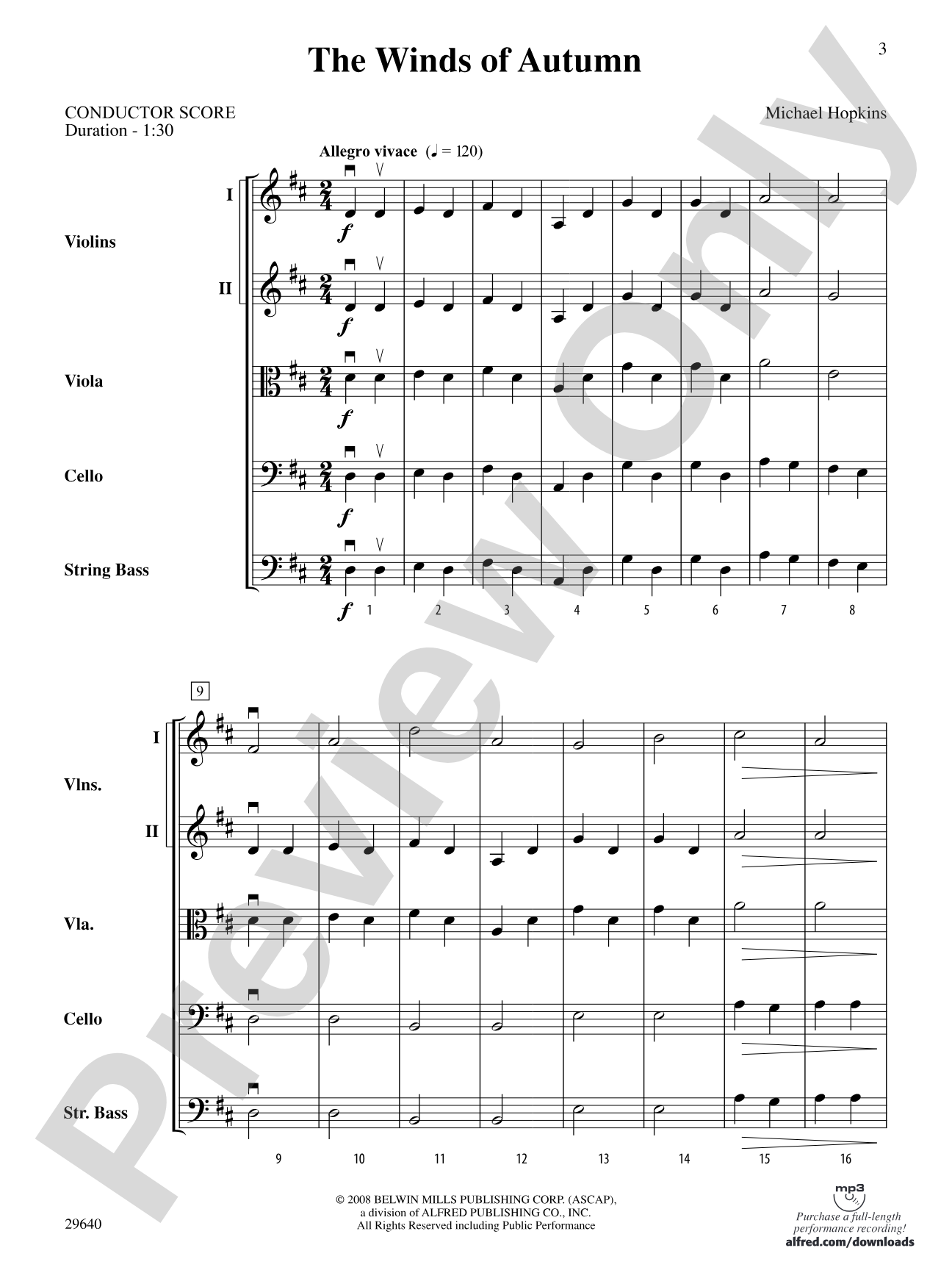
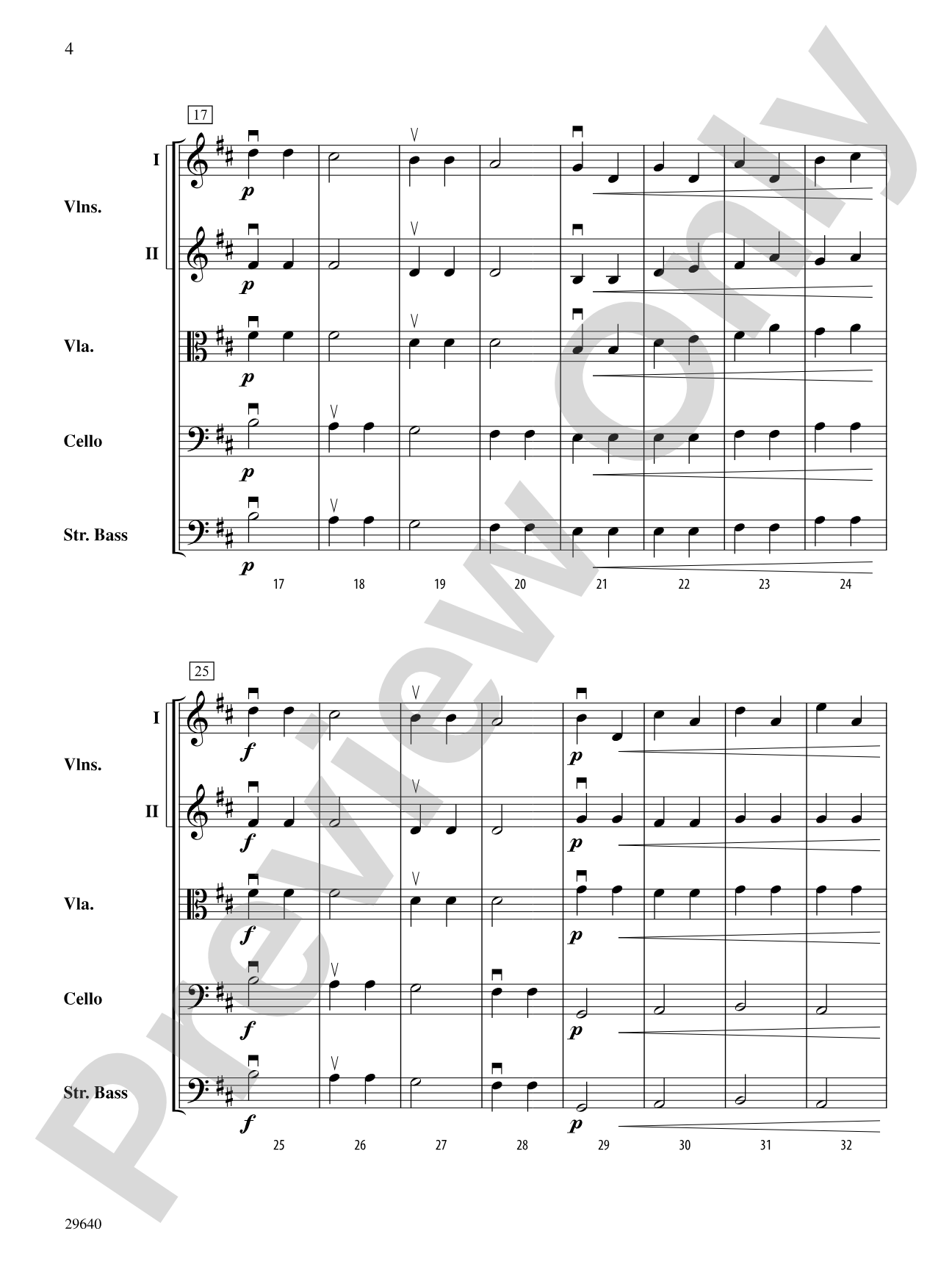
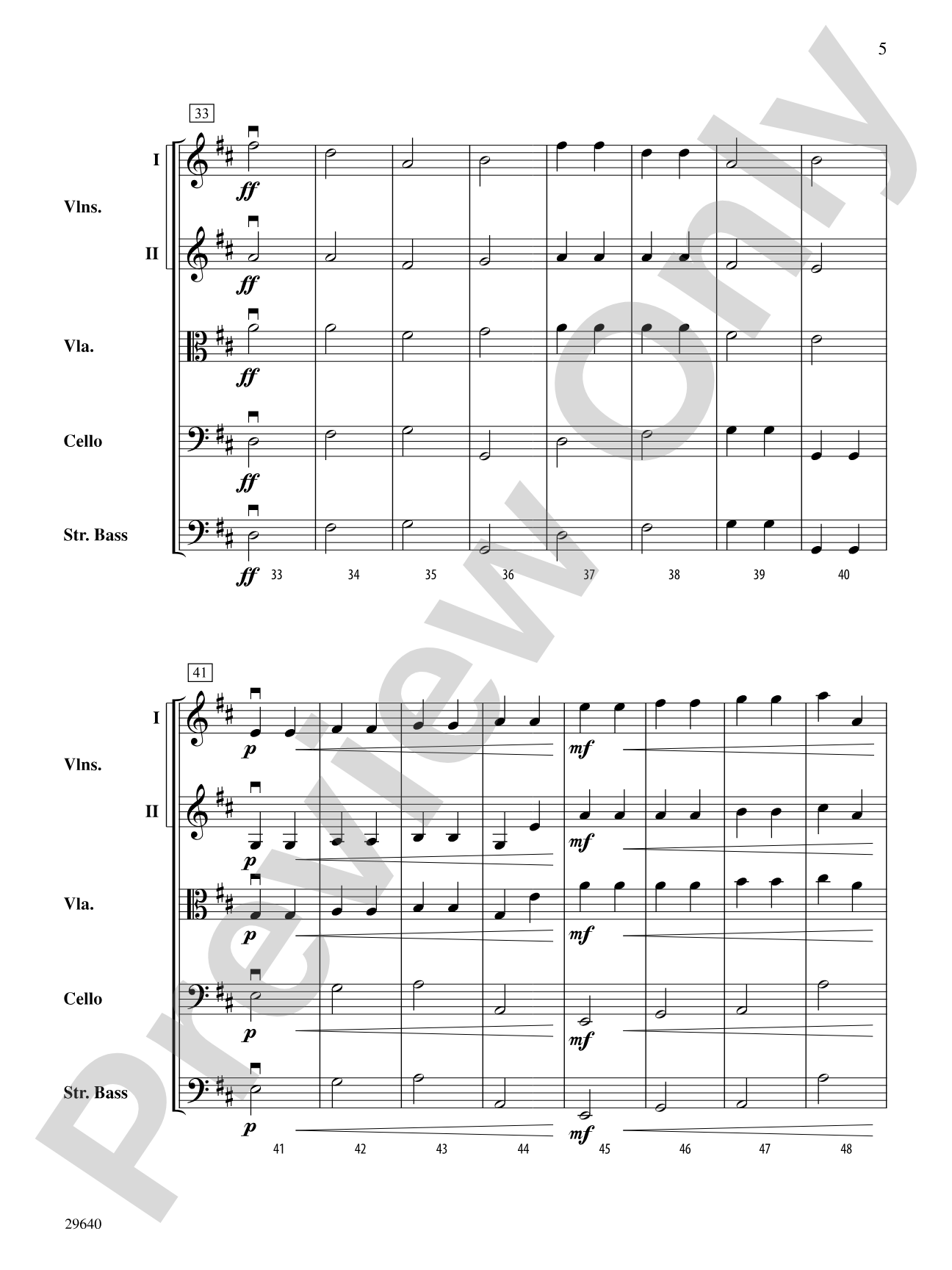
Perfect for learning to play in parts, this wonderfully simple yet interesting beginning tune is in D major. While remaining in first position, students will practice playing in steps and intervals with string crossings. An excellent piece to teach dynamics and playing in contrasting quarter and half-note rhythms!


Don't just read it, hear it, play along with it, and watch your students grow with it. In MakeMusic Cloud, The Winds of Autumn: Score comes alive with professional accompaniment, adjustable tempo, and built-in practice tools that turn solo practice into real progress.
Open in the Player
Jump straight in and assign it today.
Start Your Free Trial
Open this title and explore the full library in minutes.
Sample Audio
1
Audio File
--:--
0:00
0:00
Sample Video
Additional Details
Series:
Belwin Very Beginning String Orchestra
Publisher:
Alfred Music
Page Count:
62
SKU:
00-PR-0001498
More about this title
About the Composer: Michael Hopkins

Michael Hopkins leads the music education program at the University of Michigan, where he specializes in string pedagogy, orchestra methods, and music technology. His teaching career spans three decades as both a conductor and educator; he previously led orchestras at the University of Vermont and directed middle and high school ensembles across Colorado, Michigan, and Vermont.
Hopkins has established himself as a thoughtful voice in string education through his scholarship, published research in peer-reviewed journals, and his book The Art of String Teaching (GIA Publications), which serves teachers across private studios, group classes, and university conducting programs. He has guest conducted at over 100 festivals and clinics nationwide and composed and arranged more than 70 works for orchestra.
Why we love this
Hopkins writes for beginners with real pedagogical clarity. This piece teaches genuine musical concepts like dynamics and rhythmic contrast without overwhelming young players, and the straightforward D major tonality with simple string crossings means students focus on what matters: listening to each other and shaping phrases together. For conductors of brand-new ensembles, it bridges the gap between exercises and actual repertoire.
What to expect
Crisp autumn air and changing leaves. The piece moves with natural ease, never rushed, and the interplay between quarter-note motion and longer half-note lines creates a gentle ebb and flow. There's enough musical substance to feel like real ensemble playing, even at this early stage.
Who it's for
Beginning string orchestras in grades 4-6 and younger ensembles still building confidence in reading and listening. Teachers leading first-year players who are comfortable in first position and ready to play simple two and three-part writing.
How to get the most out of it
- Establish a consistent pulse before introducing dynamics. Let the rhythm section find the beat together first, then layer in expressive contrasts between the quarter-note and half-note sections.
- Guide players to listen across parts rather than only within their own line. Stop frequently in early rehearsals to isolate two-part combinations and celebrate when they lock.
- Mark the string crossings clearly in parts during your first read-through so students anticipate the shift rather than being surprised by it.
- Shape the dynamic changes deliberately. Exaggerate the difference between soft and full tone in rehearsal so students understand that dynamics communicate the season and mood of the piece.
How to use it
Program this for a fall concert or Thanksgiving assembly where young ensembles need repertoire that sounds polished without requiring advanced technical skills. It also works well as a confidence-building piece early in the school year, giving new orchestras an achievable goal by October.
Skills your students will build
- Playing in multiple parts while maintaining rhythmic independence
- String crossings in first position
- Step and interval reading in D major
- Dynamic control and contrast between sections
- Listening to and balancing with other orchestral voices