
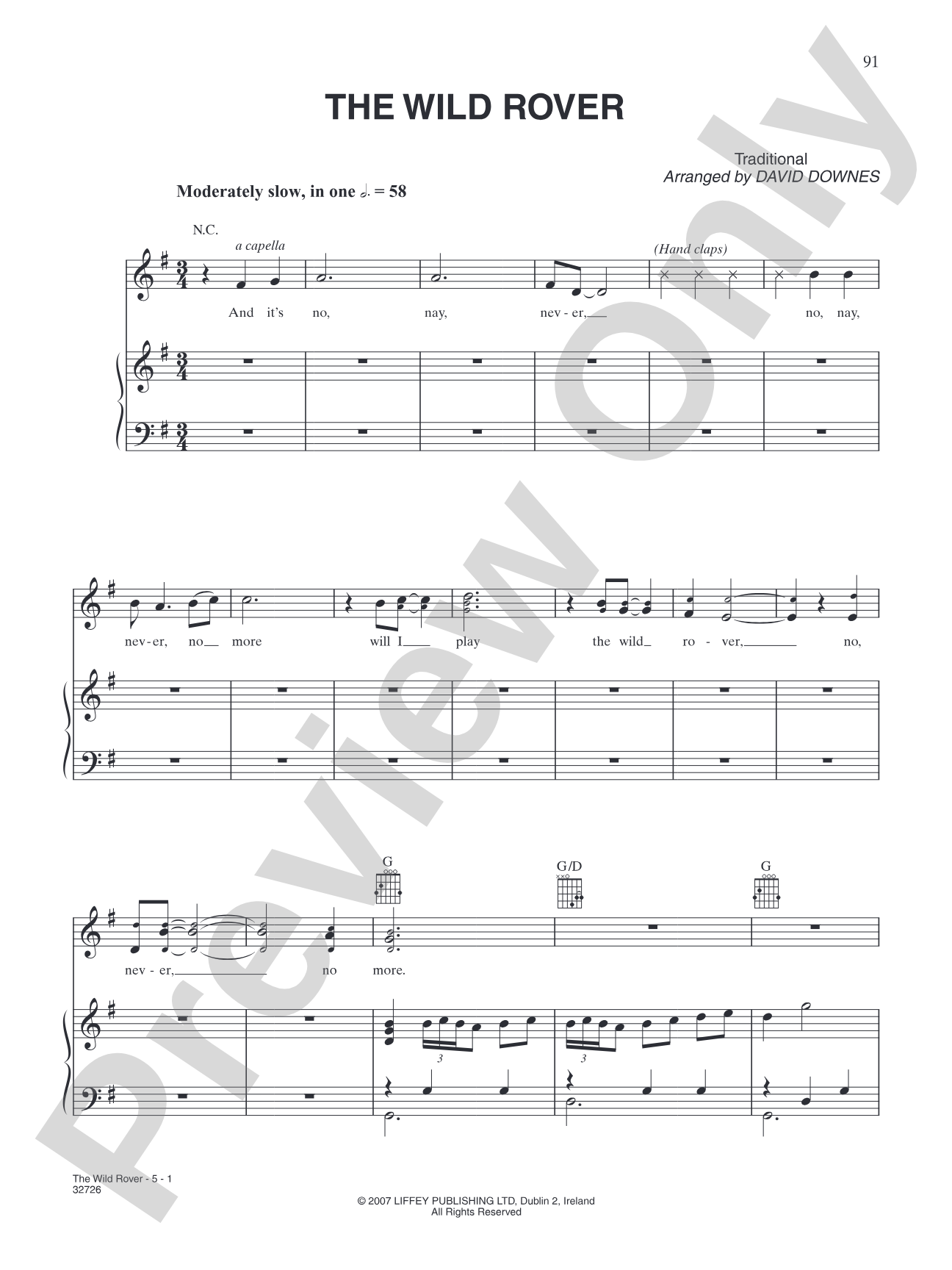

The Wild Rover: Piano/Vocal/Chords
The High Kings
Item: 00-PS-0011095
$4.99
Pickup currently not available
Related Items
Paddy's Green Shamrock Shore: Piano/Vocal/Chords |
$5.99
|
View | |
Will Y Go Lassie, Go?: Piano/Vocal/Chords |
$5.99
|
View | |
The Black Velvet Band: Piano/Vocal/Chords |
$9.99
|
View | |
The Rocky Road to Dublin: Piano/Vocal/Chords |
$5.99
|
View | |
Marie's Wedding: Piano/Vocal/Chords |
$9.99
|
View | |
The Little Beggerman: Piano/Vocal/Chords |
$9.99
|
View | |
The Beggerman Jig: Piano/Vocal/Chords |
$5.99
|
View | |
Ar Éireann Ní Neosainn Cé Hí: Piano/Vocal/Chords |
$4.99
|
View | |
The Parting Glass: Piano/Vocal/Chords |
$5.99
|
View | |
Fields of Glory: Piano/Vocal/Chords |
$5.99
|
View | |
The High Kings: Piano/Vocal/Chords Book |
$21.95
|
View |
Description
This album-matching piano/vocal/chords songbook contains music from The High Kings, renowned vocalists and musicians of Irish folk songs and ballads. The music is a harmonious combination of traditional Irish songs and some new classics you'll be sure to love. Titles: Ar Éireann Ní Neosainn Cé hÍ * The Auld Triangle and the Parting Glass * The Black Velvet Band * Fields of Glory * Galway to Graceland * The Little Beggarman * The Beggarman Jig * Marie's Wedding * Paddy's Green Shamrock Shore * The Rocky Road to Dublin * The Wild Rover (live version) * Will Ye Go Lassie, Go?


The Wild Rover: Piano/Vocal/Chords isn't in MakeMusic Cloud just yet...but it could be. Let us know you'd like to see it, and you'll help shape what comes next. In the meantime, start a free trial and dive into thousands of interactive titles your students can play along with today.
Request This Title
Tell us you want it.
Start Your Free Trial
Explore everything that's ready to play right now.
Sample Audio
No sample audio found.
Sample Video
No sample videos found.
Additional Details
Publisher:
Alfred Music
Page Count:
96
SKU:
00-PS-0011095
More about this title
About the Artist: The High Kings
The High Kings are an Irish vocal ensemble dedicated to preserving and performing traditional Irish folk songs and ballads. Formed to celebrate the rich heritage of Irish music, the group combines authentic interpretations of time-honored classics with carefully curated contemporary songs that honor the folk tradition. Their recordings and live performances have introduced Irish folk repertoire to audiences worldwide, making them key ambassadors for this vital musical heritage.
Why we love this
This collection gives singers and pianists direct access to The High Kings' interpretation of essential Irish folk material, complete with professional piano arrangements and chord symbols for flexible performance. The mix of beloved traditional songs ("The Wild Rover," "The Rocky Road to Dublin") with lesser-known gems and contemporary folk songs creates a program book that serves both beginners exploring the genre and experienced performers seeking fresh arrangements.
What to expect
These songs carry the warmth of a pub session and the emotional depth of ballads passed through generations. Whether you're playing a spirited dance tune or a poignant narrative song, the arrangements support both the joy and the storytelling that define Irish folk music.
Who it's for
Singers preparing for recitals, cabaret programs, or folk-focused concerts who want professional arrangements grounded in authentic Irish tradition. Pianists accompanying vocalists in studio or performance settings, and ensemble directors seeking accessible, high-quality repertoire that introduces students to world music traditions.
How to get the most out of it
- Pay attention to the lyrical phrasing marked in the vocal line; Irish folk melodies often follow speech rhythms rather than strict metric divisions, and honoring those natural phrases will make the text land.
- Use the chord symbols to explore simple piano voicings that complement the vocal melody without overwhelming it, allowing the story in the lyrics to remain front and center.
- Study the live version of "The Wild Rover" to hear how arrangement and pacing can shift between studio and performance contexts, then adapt the piano part to match your own interpretive choices.
How to use it
Build a full evening program around these titles, or extract individual songs to anchor thematic concerts (story songs, dance tunes, emigration narratives). This collection works especially well for programs exploring cultural music traditions or pairing with other world music repertoire.
Skills your students will build
- Reading piano/vocal scores with chord symbols
- Interpreting folk melodies with appropriate phrasing and rubato
- Understanding harmonic progressions common to Irish traditional music
- Coordinating vocal and piano parts with flexibility in rhythm and timing
- Building familiarity with Irish language pronunciation and song context