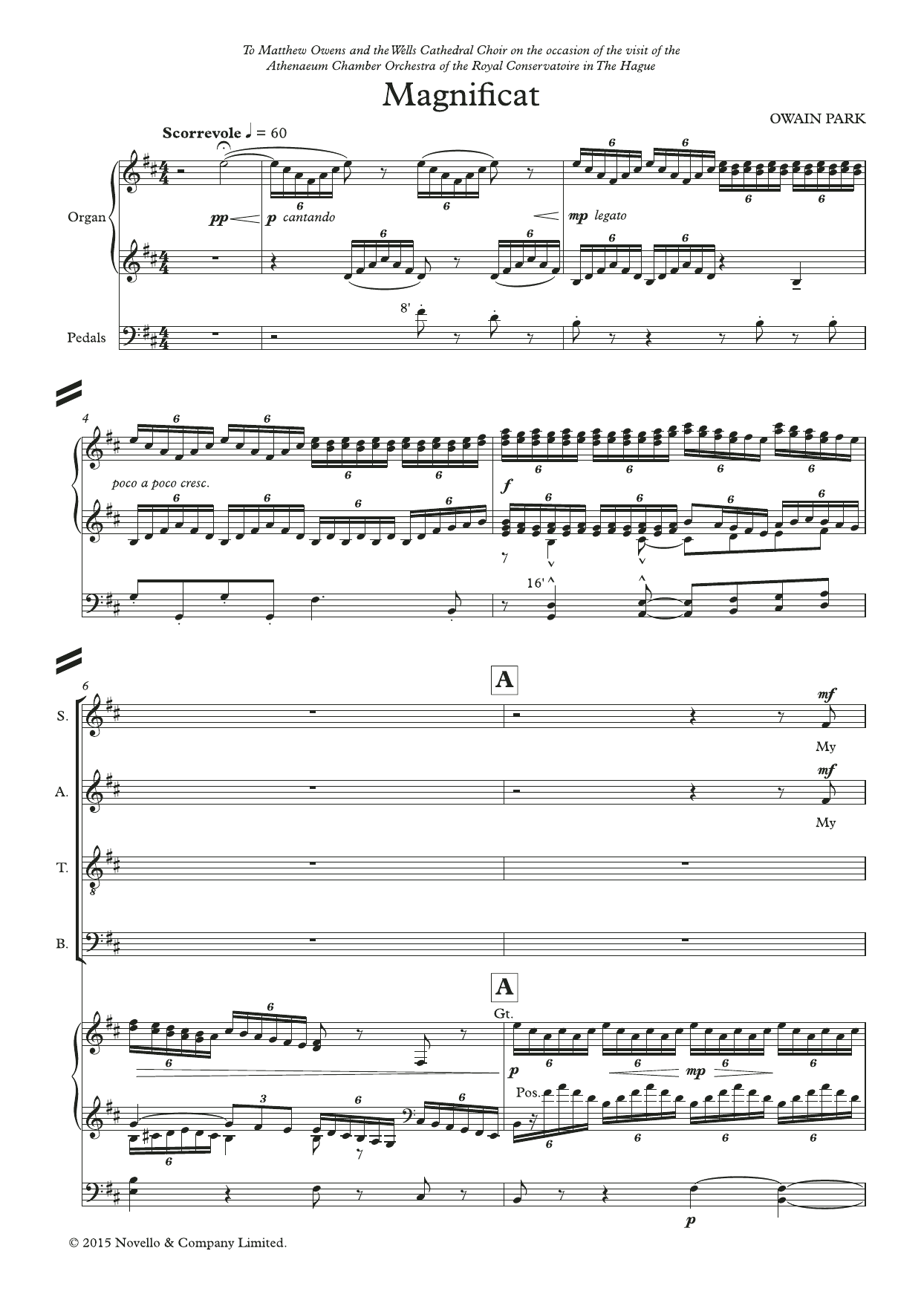
Owain Park is a Welsh composer whose work spans choral, orchestral, and chamber music with particular strength in writing for voices. His compositions are known for their lyrical melodic lines and thoughtful harmonic language, grounded in both contemporary and traditional Welsh musical sensibilities. Park's choral works have been performed by ensembles across the UK and beyond, earning recognition for their accessibility without sacrificing musical substance.
Why we love this
Park writes for choirs with genuine understanding of voice leading and ensemble balance. The Wells Service avoids the trap of either oversimplifying or overcomplicating the mixed choir texture; instead, it creates genuine musical satisfaction for singers while remaining performable by choirs at intermediate levels. This is the kind of piece that sounds better every rehearsal as singers discover the layering within the voicing.
What to expect
The Wells Service carries a contemplative quality, balancing warmth with a certain restraint that invites singers to listen to one another. It has the character of music that takes its own time, neither rushing nor dragging, with a clarity that comes from careful voice leading rather than elaborate orchestration.
Who it's for
This octavo works well for mixed choirs with some rehearsal time available to build precision without requiring advanced musicianship across all sections. Directors seeking contemporary sacred or secular choral repertoire that sits comfortably between lightweight pieces and demanding concert works will find this a solid addition.
How to get the most out of it
Shape each phrase as a complete musical thought rather than resting at every bar line; this reveals Park's harmonic progressions more clearly.
Balance the inner voices carefully, particularly in passages where they carry supporting material. A soprano or alto line can dominate unintentionally if the men's section isn't given permission to sing through.
Find the text naturally. Park's setting supports good diction without requiring forced articulation; let the musical line guide your phrasing choices.
Pay attention to dynamic changes even when they seem subtle. A shift from mf to mp often marks a harmonic turning point worth highlighting.
How to use it
Consider pairing this with other contemporary British choral works to create a cohesive program section, or use it as a centerpiece piece that gives your choir something substantive to work toward without consuming your entire rehearsal schedule. It also works well as a concert opener that establishes a thoughtful mood for the evening.
Skills your students will build
Voice independence within harmonic textures
Sustained singing with clear diction
Balancing blend and balance across four-part writing
Phrasing longer melodic lines across multiple phrases
Reading and interpreting dynamic and expressive markings in contemporary notation
You May Also Like
Scan to Complete Your Purchase
Use your phone's camera to scan the code below
You'll log in on your phone and the order will be added to your account