
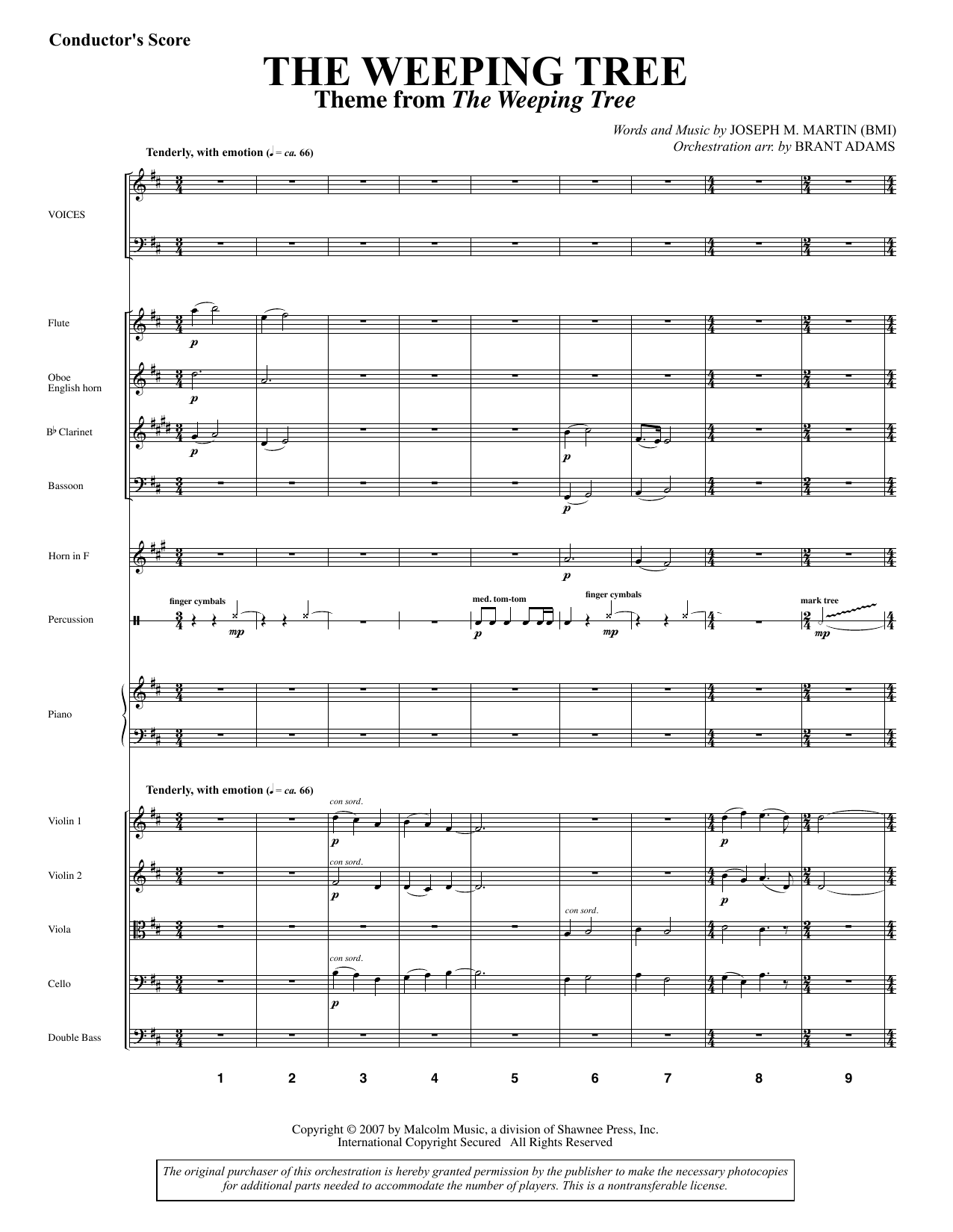

The Weeping Tree (Theme from "The Weeping Tree"): Choral Instrumental Pak
By Joseph M. Martin
Item: 35-PK00363394
$60.00
Pickup currently not available
Buy Extra Parts (Digital PDF Download)
Parts Added to Cart!
Description
Uses: Holy Week, Scripture: Mark 15:30, I Corinthians 1:18, I Peter 2:24. The main theme from the best-selling cantata "The Weeping Tree" is now available as a standalone anthem. With a heart-affirming portrait of the crucifixion and a gentle celebration of grace, the simple folk-like melody carries the weighty message of redemption in the sensitive arms of expressive music. A chamber orchestration option offers directors a way to incorporate this piece into a concert or passion pageant. Profoundly moving!


The Weeping Tree (Theme from "The Weeping Tree"): Choral Instrumental Pak isn't in MakeMusic Cloud just yet...but it could be. Let us know you'd like to see it, and you'll help shape what comes next. In the meantime, start a free trial and dive into thousands of interactive titles your students can play along with today.
Request This Title
Tell us you want it.
Start Your Free Trial
Explore everything that's ready to play right now.
Sample Audio
No sample audio found.
Sample Video
No sample videos found.
Additional Details
Publisher:
Hal Leonard
SKU:
35-PK00363394
More about this title
About the Composer: Joseph M. Martin

Joseph M. Martin studied piano performance at Furman University and earned his master's degree from the University of Texas at Austin, where he later taught in the Piano Pedagogy Department for five years. A concert pianist who has performed solo recitals across the United States and Mexico, and a competition winner who performed with the Guadalajara Symphony Orchestra, Martin has built a career that spans both the concert hall and the church sanctuary. His works now reach audiences from Carnegie Hall to thousands of worship services across North America, and he continues to compose and arrange while based in Austin, Texas.
Martin's dual expertise in classical piano training and sacred music has shaped his compositional voice. Whether writing original pieces or arrangements, he demonstrates a gift for crafting music that serves both artistic and liturgical purposes. His prolific output reveals a composer unafraid to move between idioms, always writing with performers and congregations in mind.
Why we love this
Martin extracts the thematic heart of his best-selling cantata and reframes it as a standalone work that doesn't require knowledge of the larger work to land with full impact. The folk-like melody paired with orchestral sensitivity creates a piece that feels both accessible and substantive, making it genuinely useful for directors who want thoughtful Holy Week programming without extensive rehearsal demands.
What to expect
The piece settles into a contemplative space where grief and grace coexist without resolve into false comfort. Its folk-inflected melody suggests something ancient and archetypal rather than doctrinally specific, allowing the music to hold complexity: weight alongside tenderness, suffering alongside redemption, the particular historical moment alongside timeless spiritual truth.
Who it's for
This work serves directors programming Holy Week and Lenten services, as well as those seeking sacred repertoire for concert performances or passion presentations. Musicians at intermediate to advanced levels will find the piece direct enough to learn quickly while remaining musically substantial enough to reward careful interpretation.
How to get the most out of it
- Balance the vocal line with restraint in the chamber orchestration; the melody's folk quality can disappear if instruments overshadow the singers.
- Shape the phrases with attention to the text underlay, allowing natural speech rhythms to guide your approach rather than imposing strict metric regularity.
- Consider the intimacy this piece requires; even in a larger venue, the emotional geography suggests a close, confessional space rather than grand proclamation.
- Explore the optional chamber orchestration for concert settings where a passion pageant or passion narrative context makes fuller instrumentation appropriate.
How to use it
Anchor a Good Friday liturgy or Maundy Thursday service with this piece as your central musical focus, using the optional chamber orchestration to elevate it as a concert moment within worship. Alternatively, program it as a contemplative interlude in a larger passion pageant, where its gentle restatement of core themes offers space for reflection between dramatic scenes.
Skills your students will build
- Singing with expressive restraint; avoiding over-sentimentality in devotional music
- Coordinating vocal line with optional chamber instrumentation
- Interpreting text that carries theological weight with musical clarity
- Shaping a folk-derived melody with contemporary harmonic sensibility