
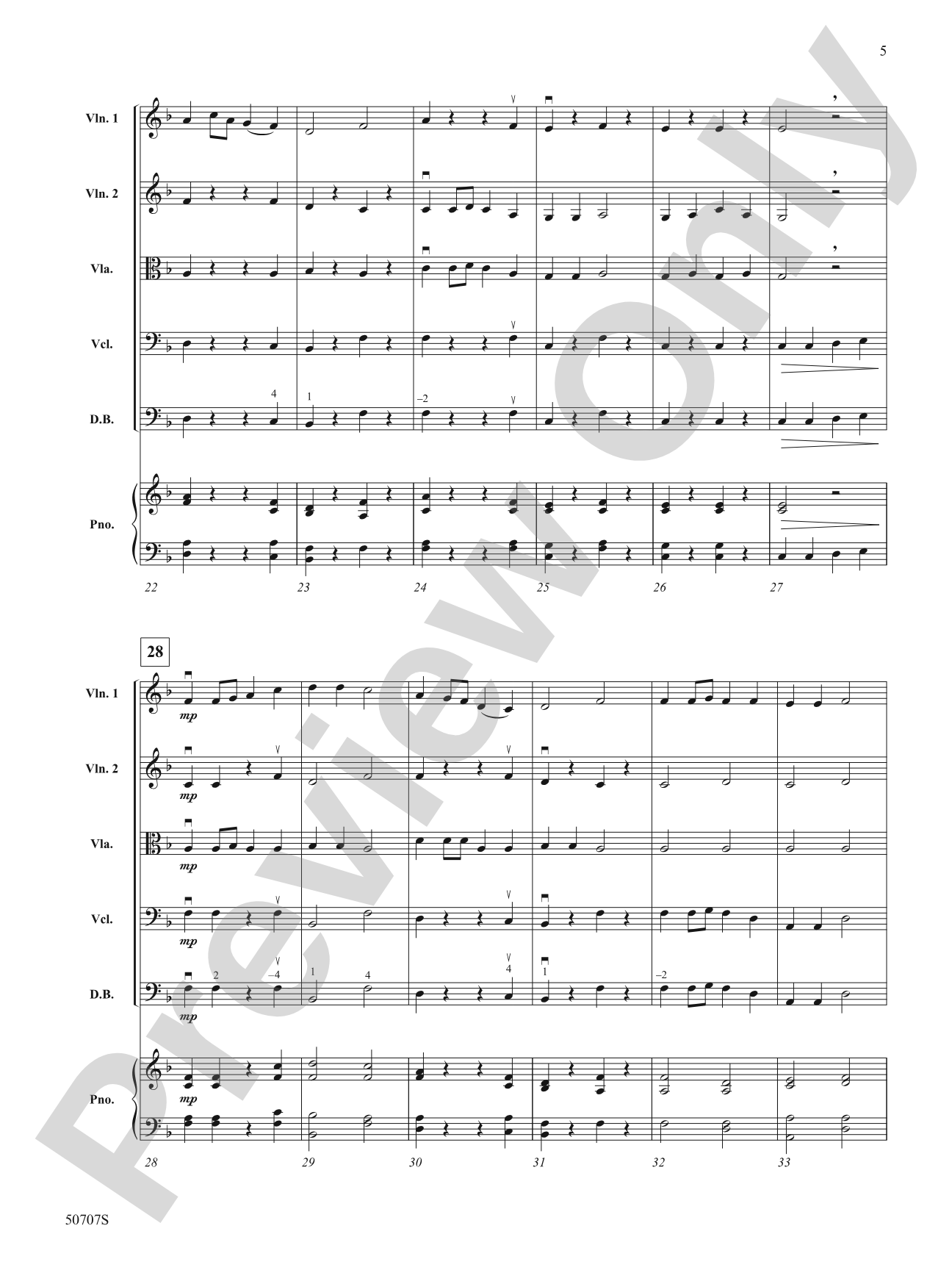
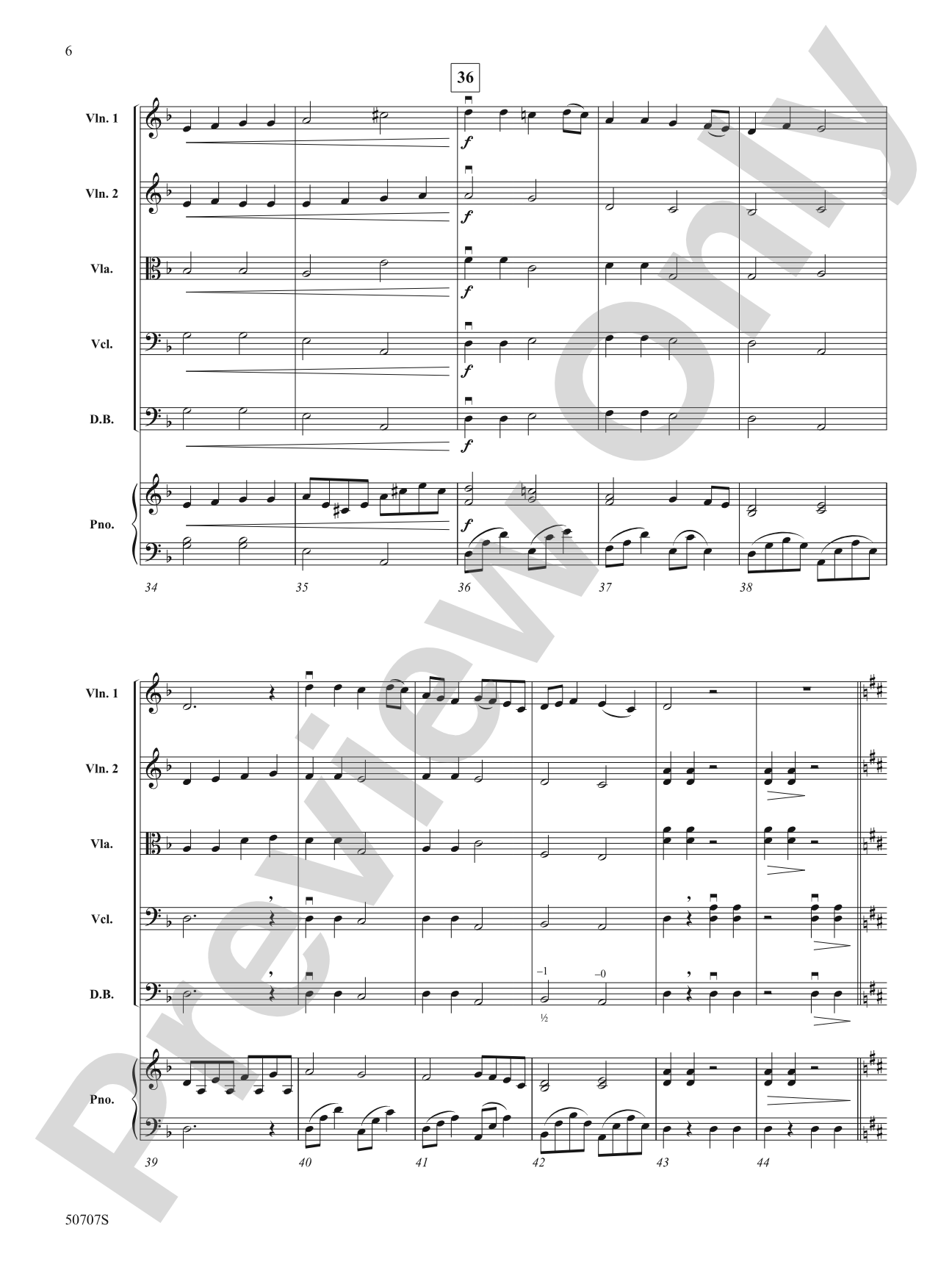
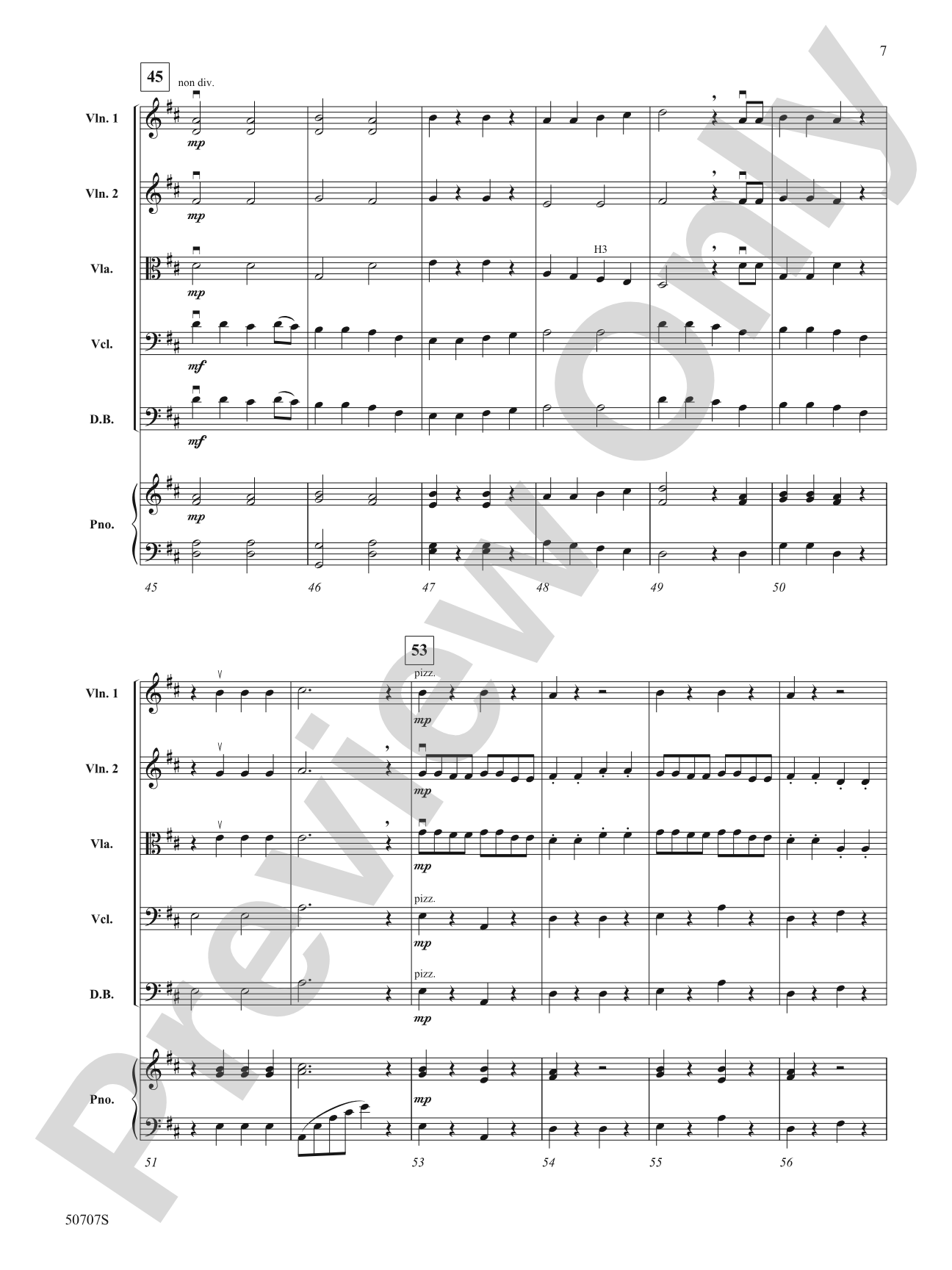
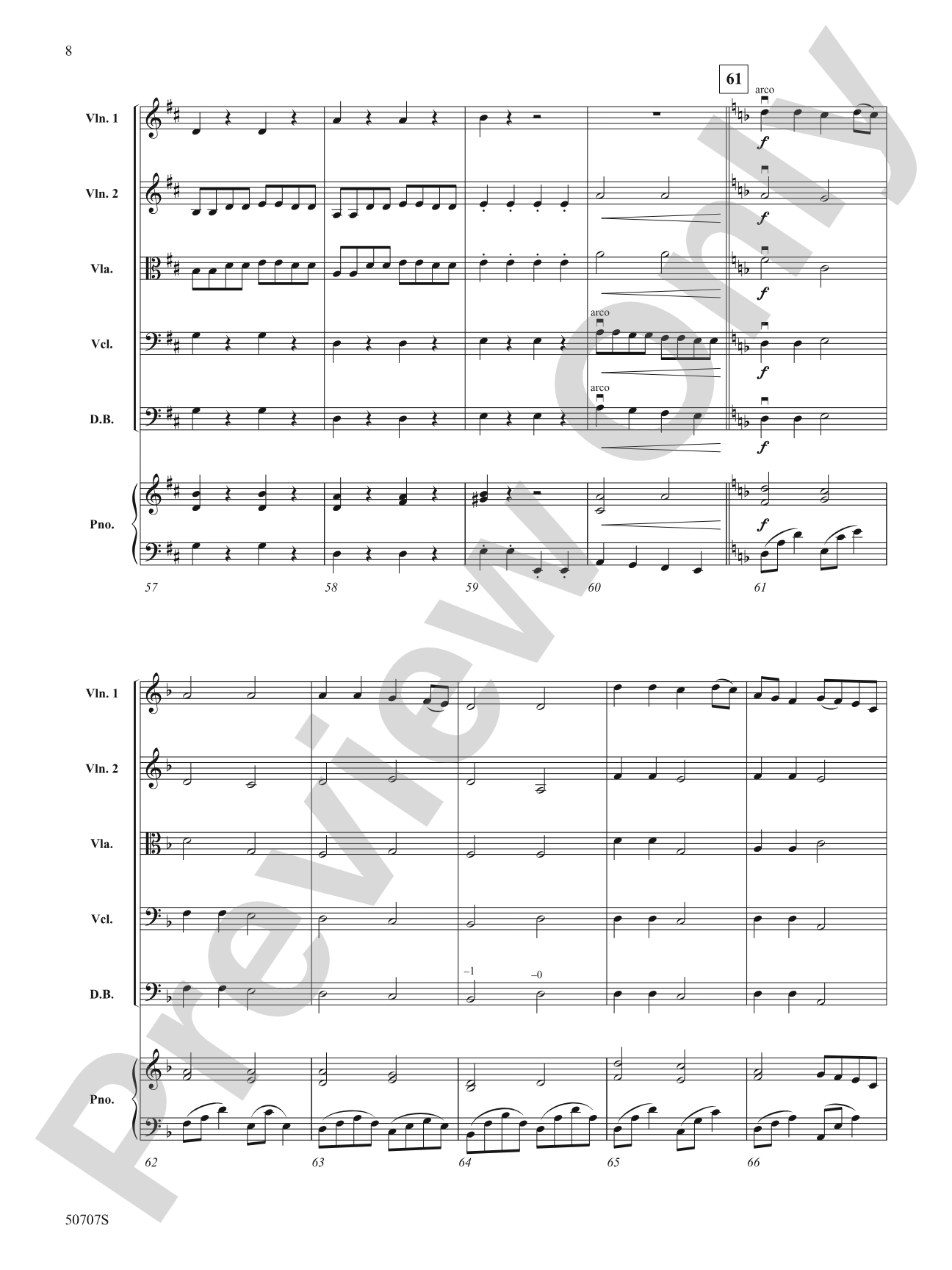

The Wayfarer: String Orchestra Conductor Score & Parts
By Neridah Oostenbroek
Grade: 2
Item: 00-PK-0008717

$55.00
One moment…
Description
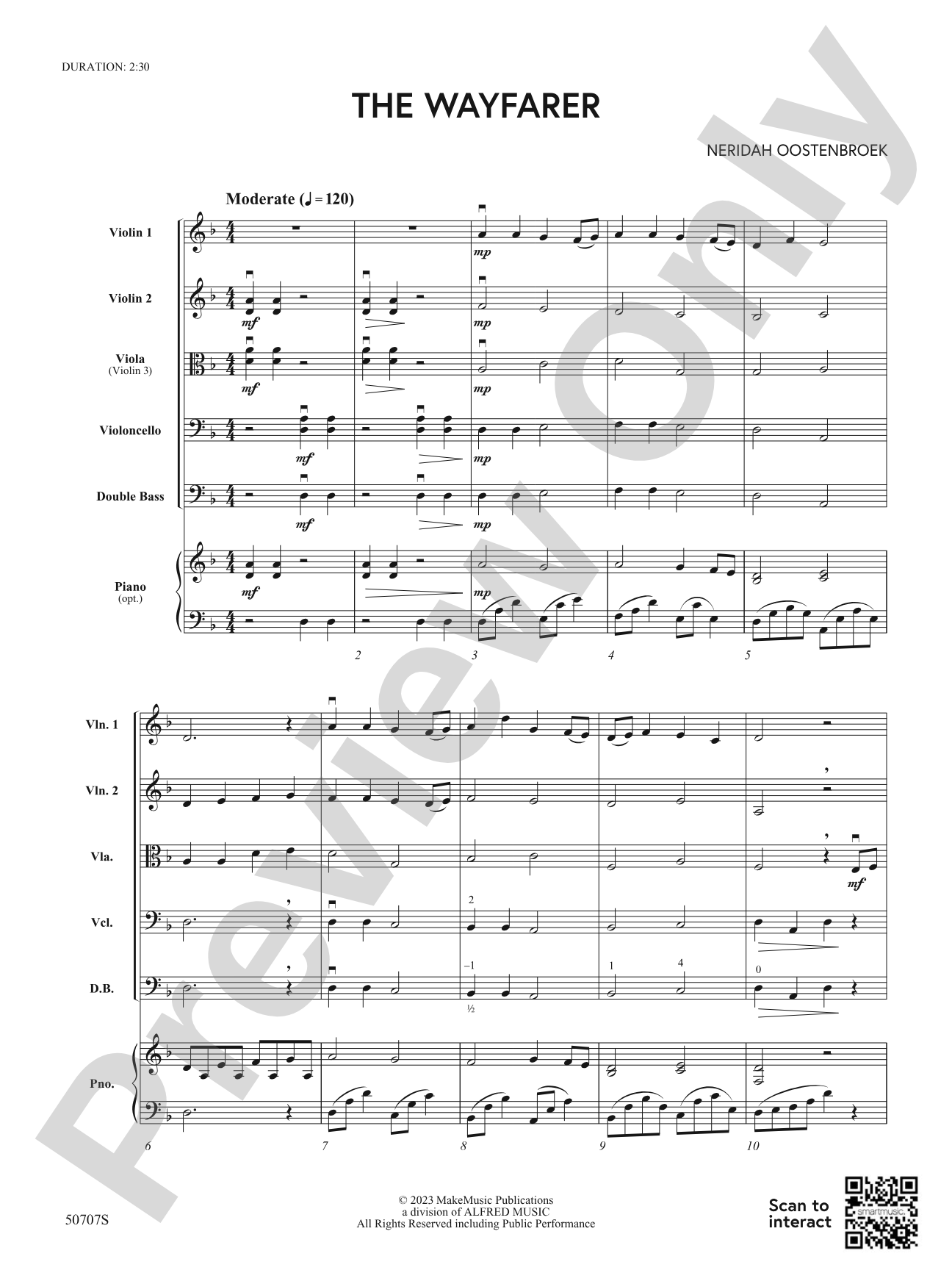
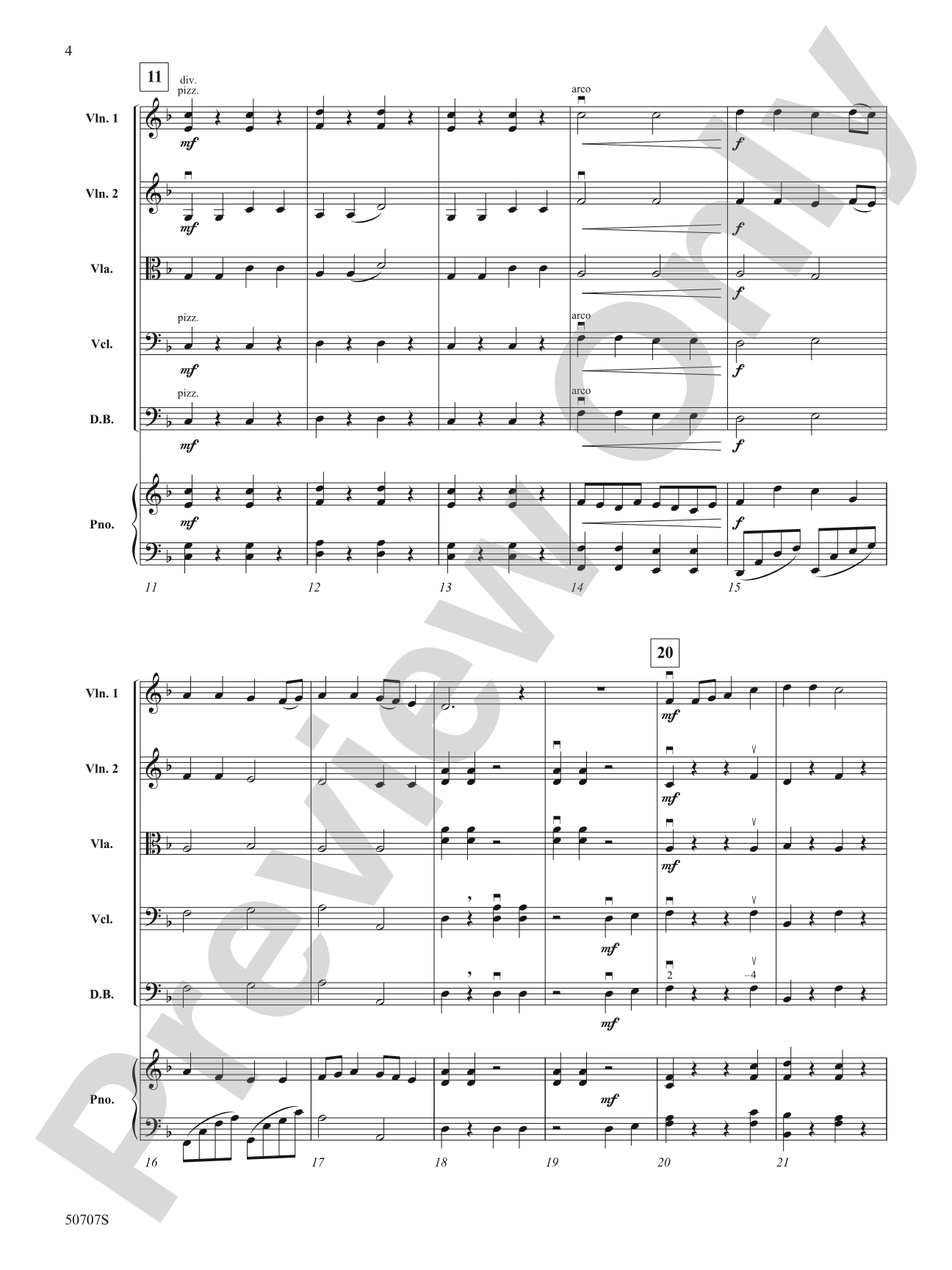
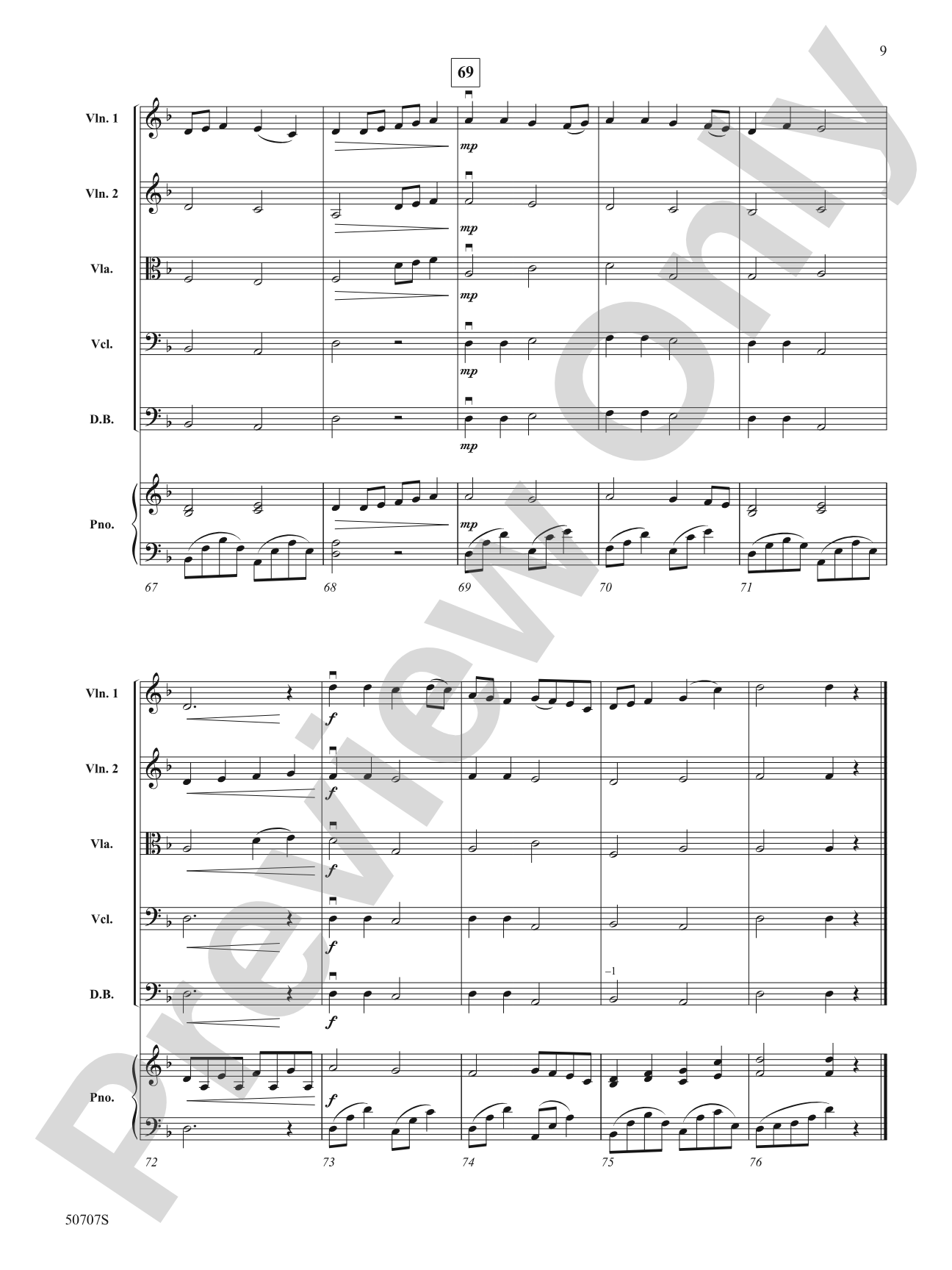
Introduce your orchestra to D minor with no extension fingerings needed! Instead of focusing on fingerings for B-flat, students can enjoy the experience of playing minor tonality. The Wayfarer uses a simple, folk-like melody, taking the listener on a beautiful journey through the countryside. A brief interlude in D major creates contrast and allows the low strings to shine. Neridah Oostenbroek draws on her vast teaching experience in a work that has as much pedagogical value as it is musical! (2:30)


Don't just read it, hear it, play along with it, and watch your students grow with it. In MakeMusic Cloud, The Wayfarer: String Orchestra Conductor Score & Parts comes alive with professional accompaniment, adjustable tempo, and built-in practice tools that turn solo practice into real progress.
Open in the Player
Jump straight in and assign it today.
Start Your Free Trial
Open this title and explore the full library in minutes.
Sample Audio
1
Audio File
--:--
0:00
0:00
Sample Video
Additional Details
Series:
MakeMusic Intermediate Strings
Publisher:
MakeMusic Publications
SKU:
00-PK-0008717
More about this title
About the Composer: Neridah Oostenbroek

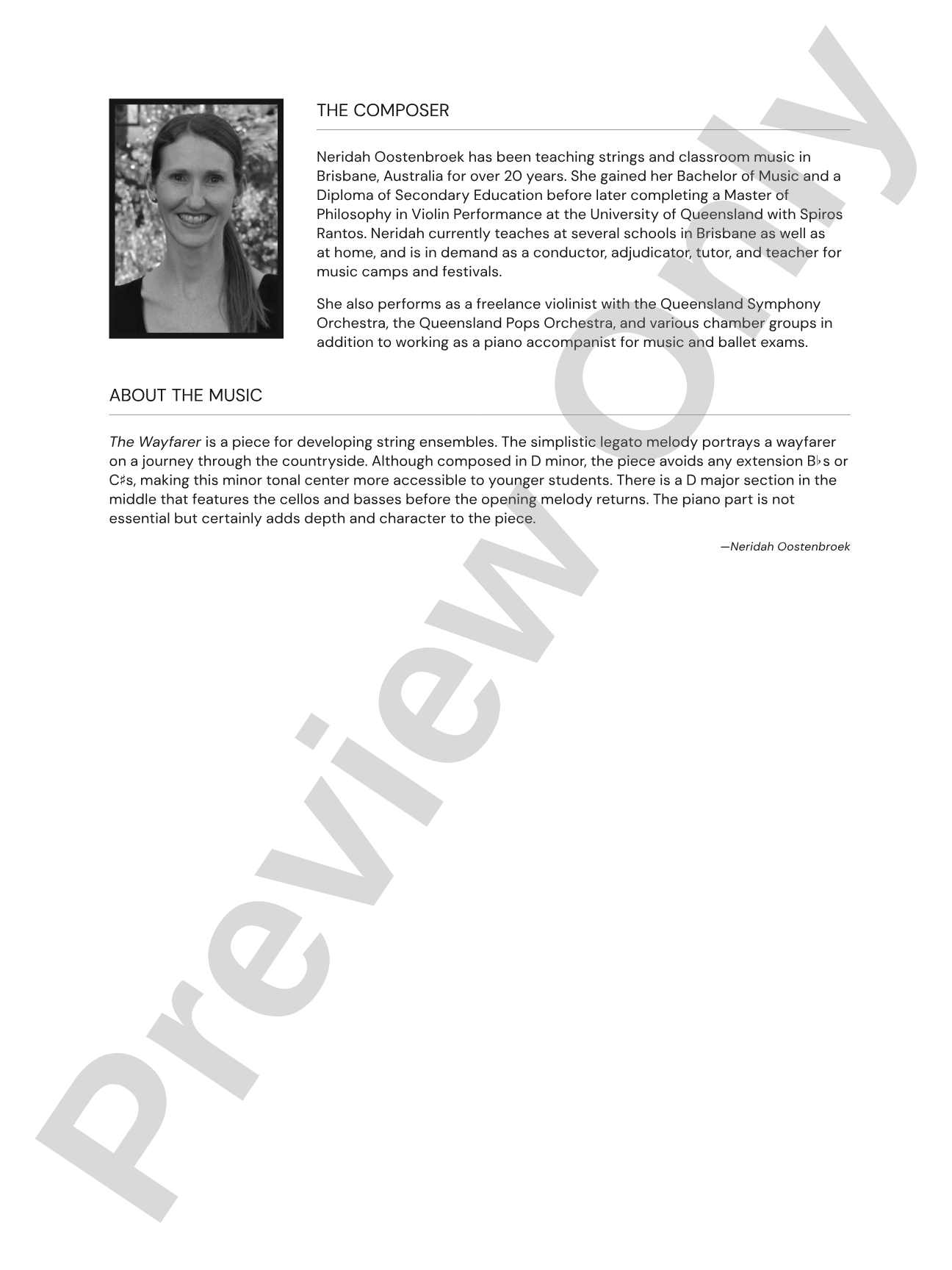
Neridah Oostenbroek brings two decades of string teaching experience from Brisbane, Australia, to her composition work. She holds a Bachelor of Music and Diploma of Secondary Education, and completed a Master of Philosophy in Violin Performance at the University of Queensland under the mentorship of Spiros Rantos.
Beyond the classroom, Oostenbroek remains active as a freelance violinist with the Queensland Symphony Orchestra and Queensland Pops Orchestra, performs in chamber ensembles, and works as a piano accompanist for music and ballet examinations. Her work as a conductor, adjudicator, and instructor at music camps and festivals keeps her deeply connected to the needs and growth of student musicians at all levels.
Why we love this
Oostenbroek writes with a clear-eyed understanding of what Grade 2 orchestras actually need: a piece that sounds cohesive and musical while avoiding fingering complications that slow down learning. The strategic choice to explore D minor without extension fingerings frees students to focus on tone production and ensemble balance rather than technical struggle.
What to expect
A gentle pilgrimage through minor key terrain, marked by the unhurried pace of a folk wanderer. The journey builds quietly through melodic storytelling, then opens briefly into warmth and light before returning to the contemplative minor landscape.
Who it's for
Grade 2 string orchestras ready to experience minor tonality without the technical barrier of extended fingerings. Conductors looking for a musical entry point into modal exploration will appreciate how naturally the D minor context integrates into student learning.
How to get the most out of it
- Shape the folk melody with gentle phrase arcs; let the simplicity of the line speak through clear articulation and consistent vibrato rather than aggressive dynamics.
- Use the D major interlude as an opportunity to balance the sound between sections. The low strings' moment in the sun deserves attention from the full ensemble so they can be heard without the melody overpowering.
- Pay attention to the transition back to D minor after the major key section. A clean shift in character helps the piece maintain forward momentum across the full 2:30 timeframe.
- Encourage sustained tone in the sustained sections; Grade 2 players often rush when notes sit still, so gentle reminders about breath support will improve the overall musical line.
How to use it
Program this as a concert centerpiece for a Grade 2 showcase, pairing it with pieces in major keys to highlight the tonal contrast. The work's modest length and clear structure also make it a strong choice for festivals or adjudicated events where musicality matters as much as technical display.
Skills your students will build
- Playing in D minor and understanding minor tonality without relying on extended fingerings
- Sustaining longer melodic lines with consistent tone and phrasing
- Listening to and balancing between section roles, especially supporting low string passages
- Responding to key modulation and the emotional shift between relative major and minor