
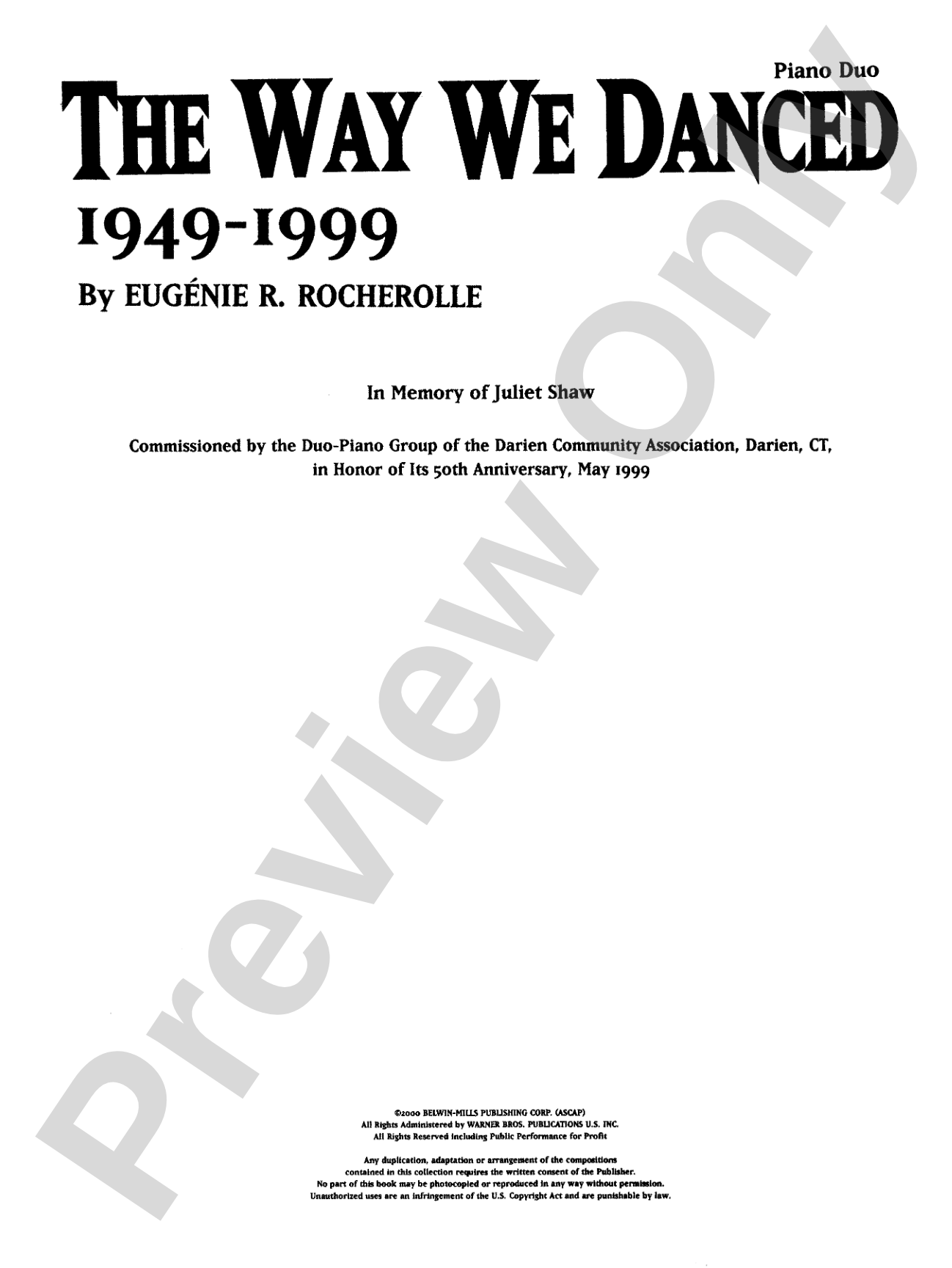
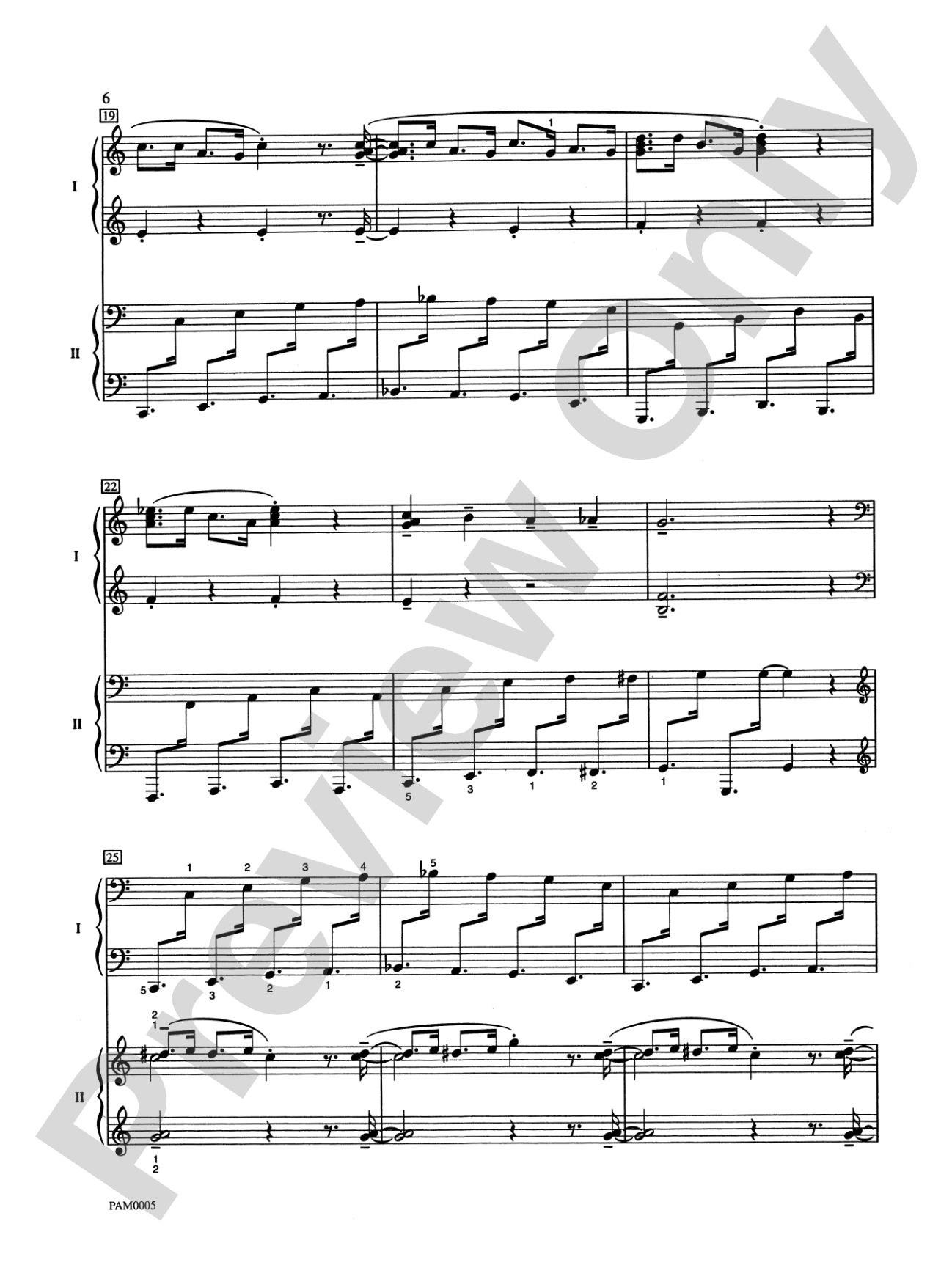
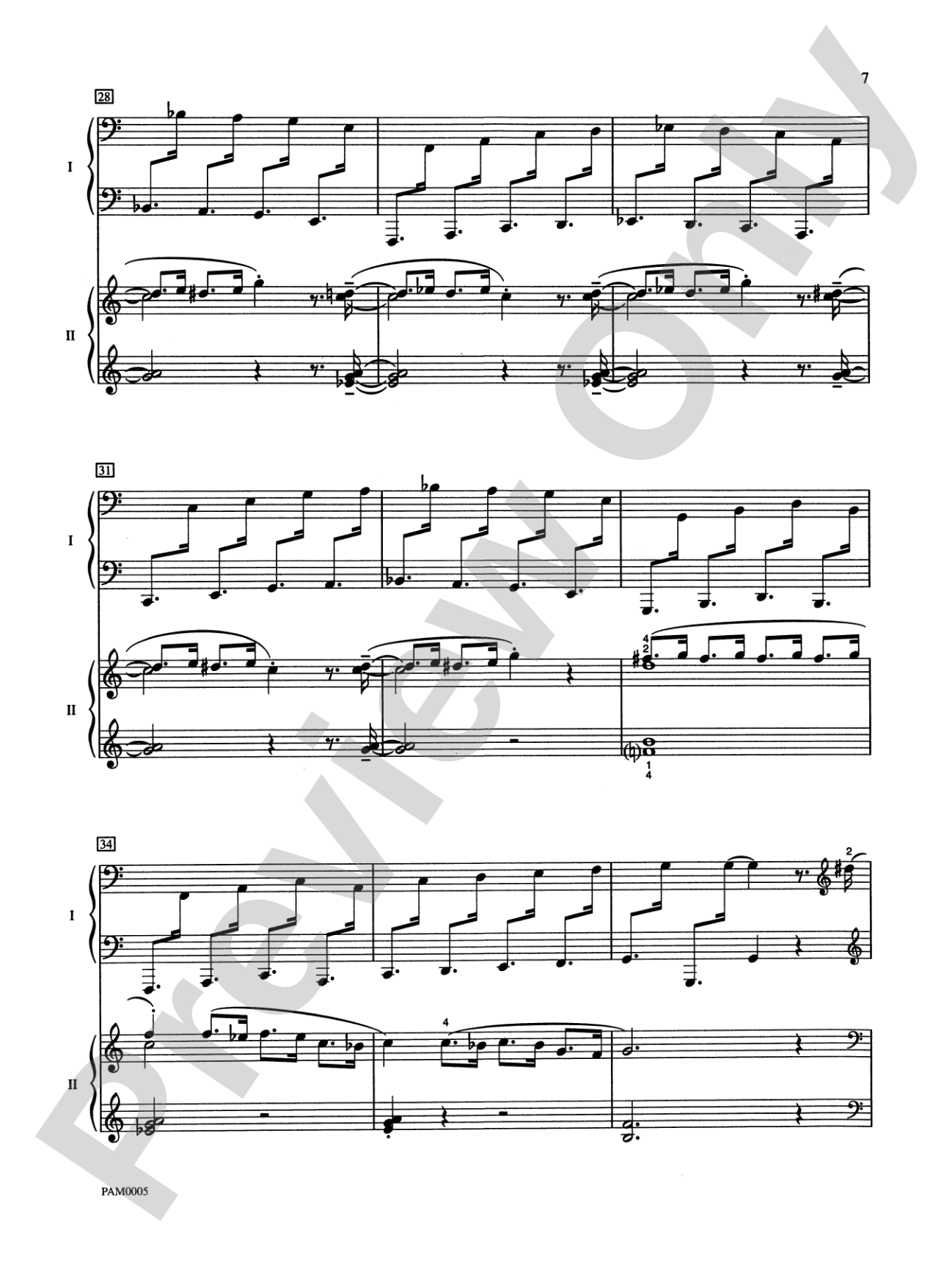
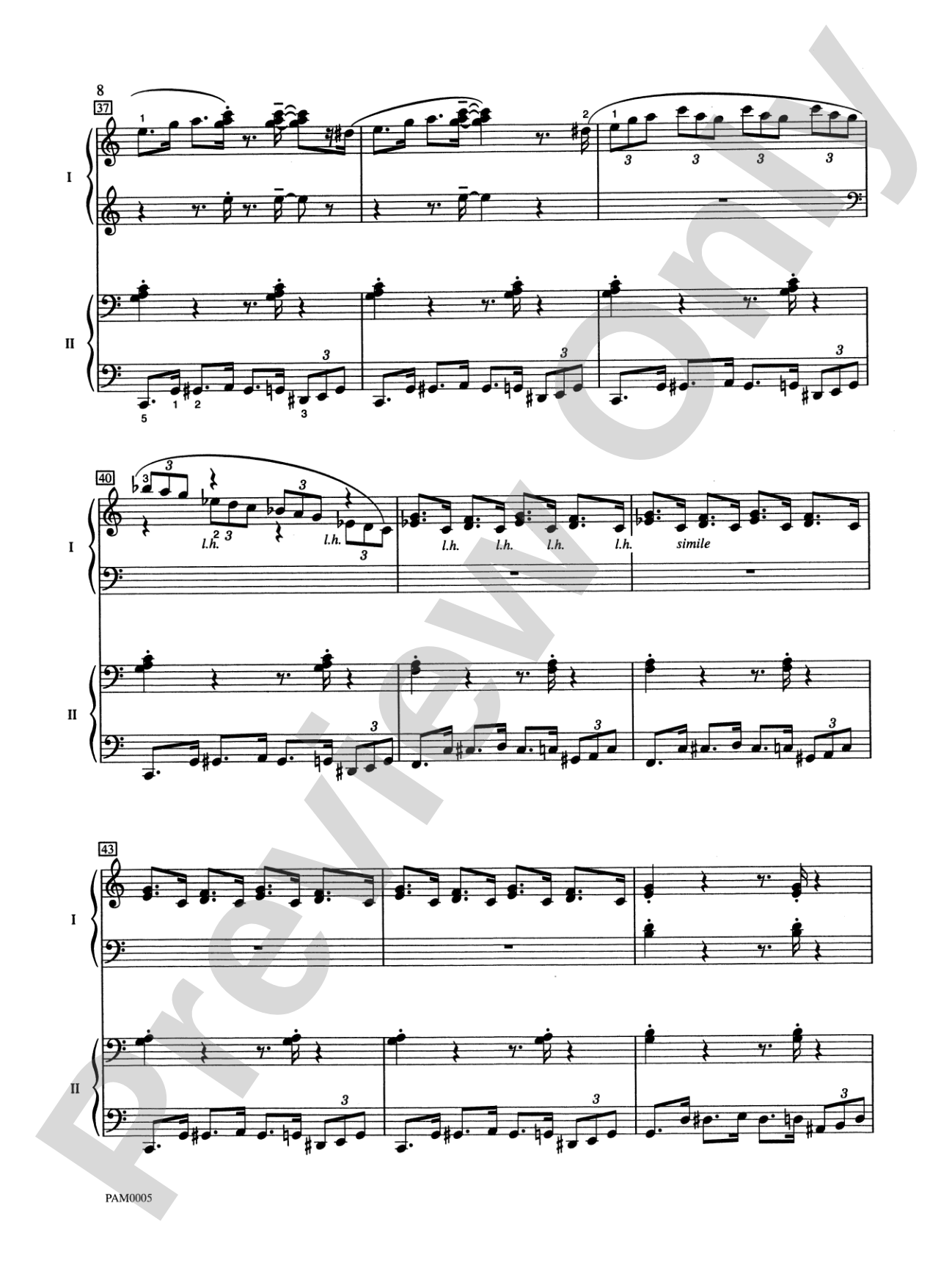
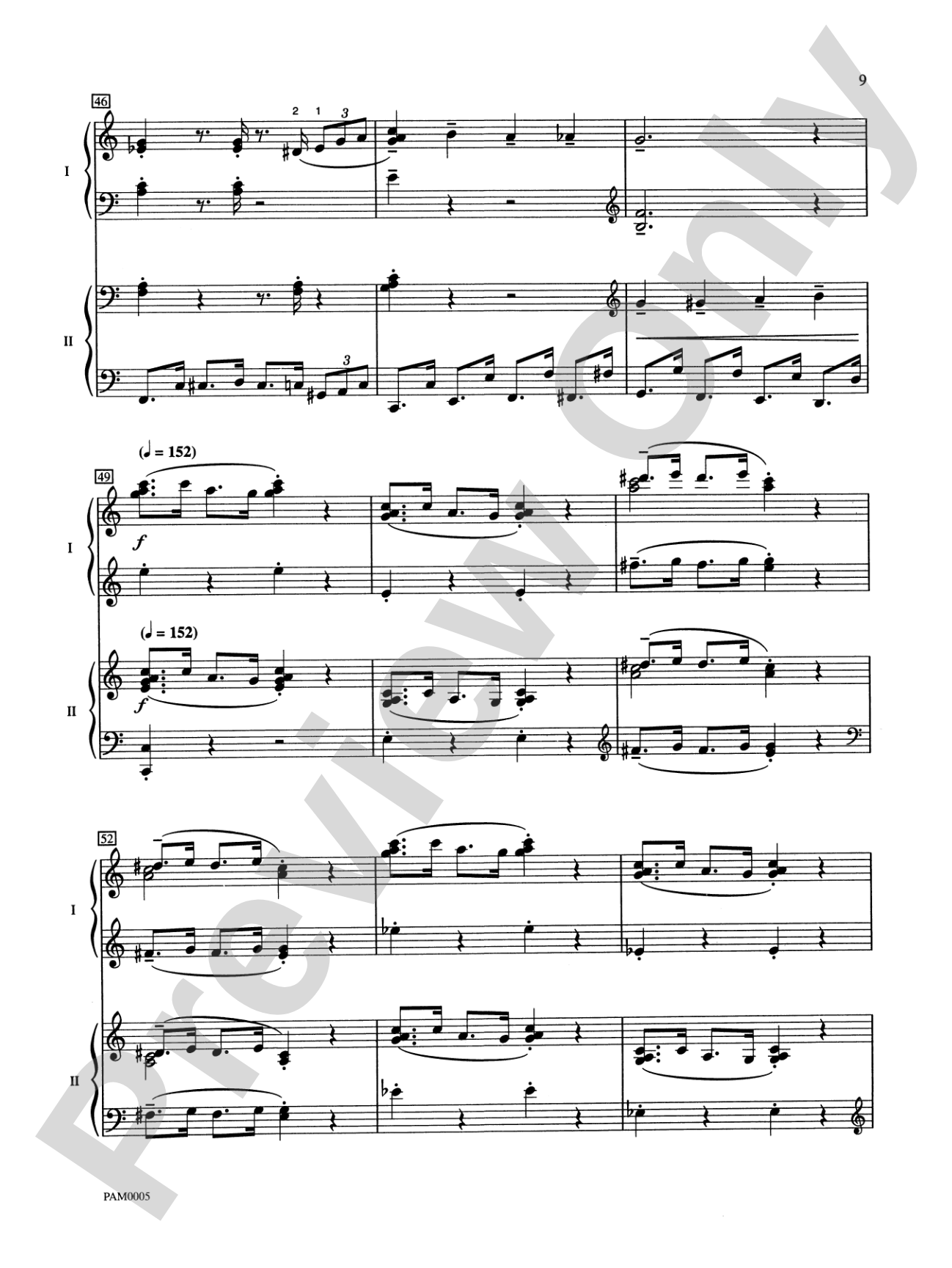

The Way We Danced, 1949--1999 - Piano Duo (2 Pianos, 4 Hands): Piano Duets & Four Hands
By Eugénie R. Rocherolle
Level: Late Intermediate
Item: 00-PB-0000612

$12.95
Pickup currently not available
Related Items
The Way We Danced, 1949--1999: Piano Duo (2 Pianos, 4 Hands) Book (2 copies included) |
$12.95
|
View |
Description
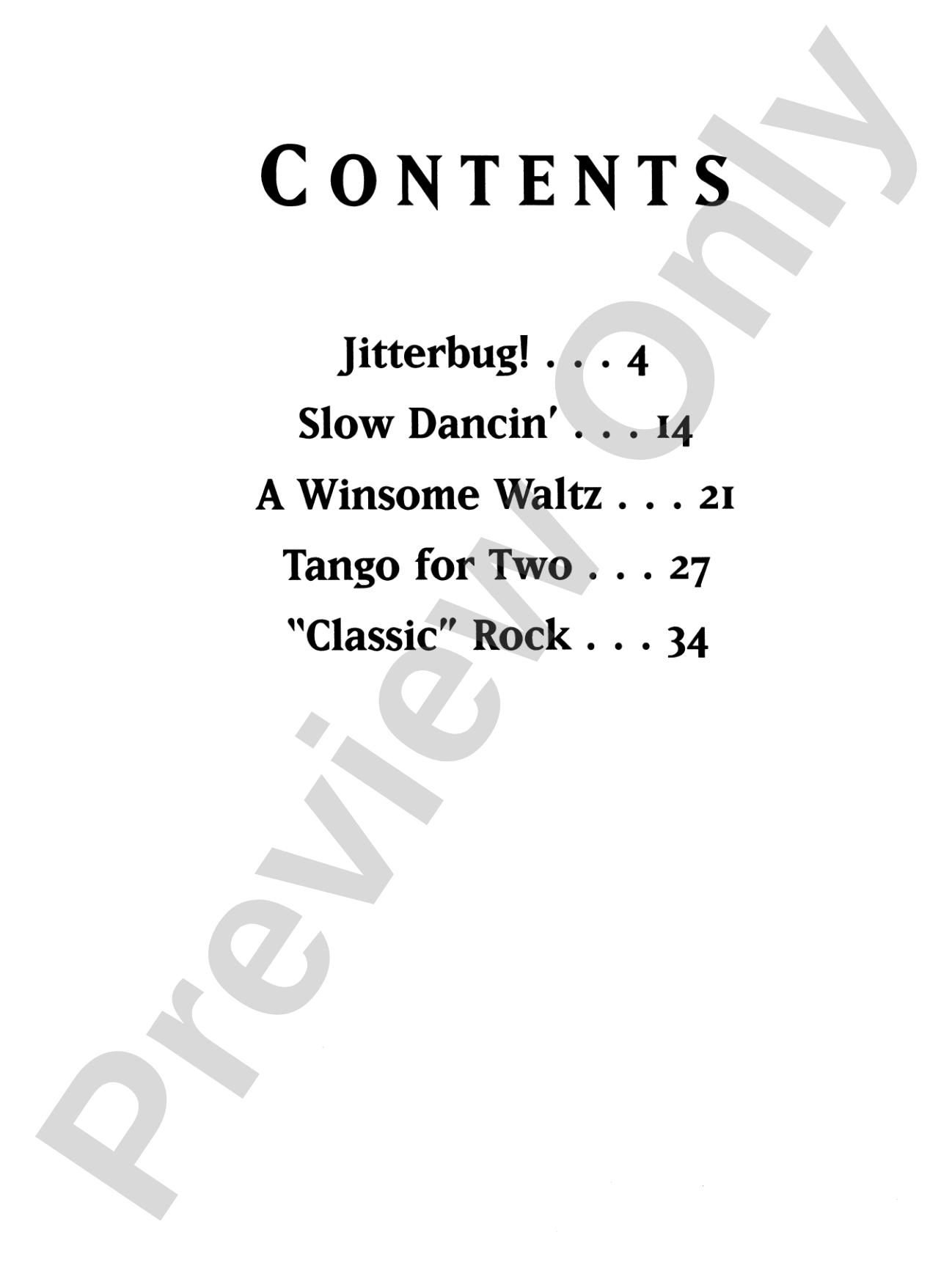
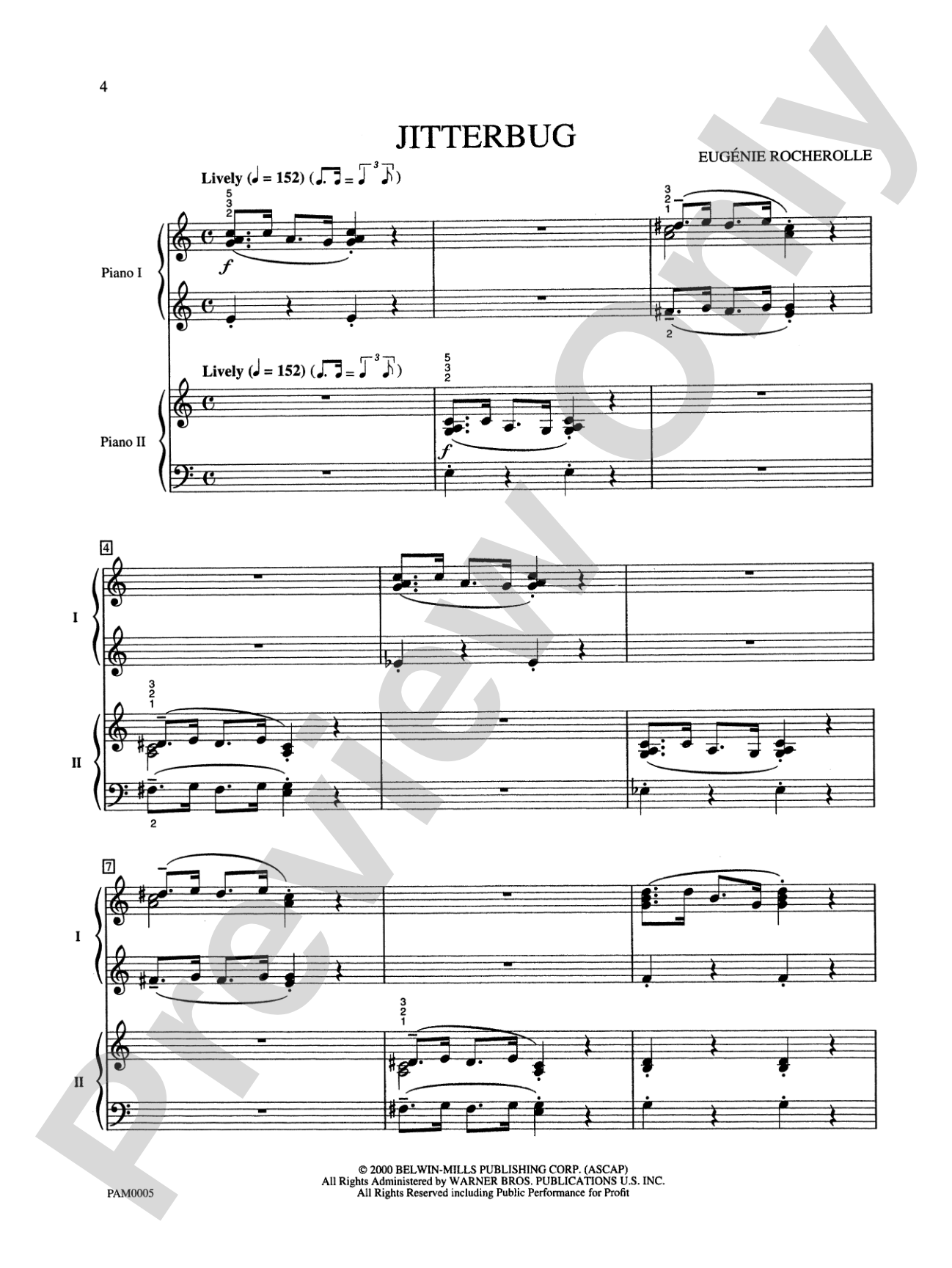
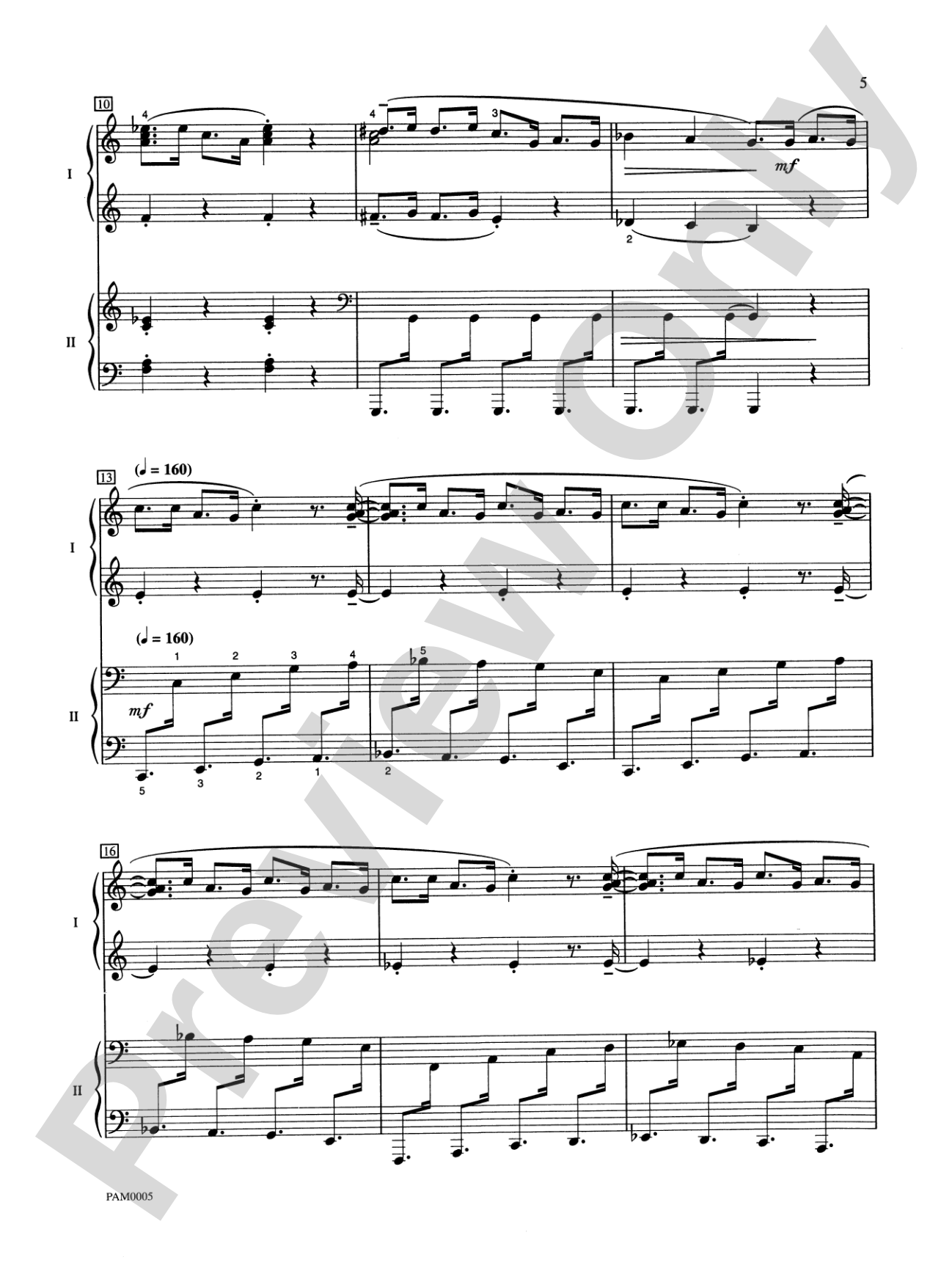
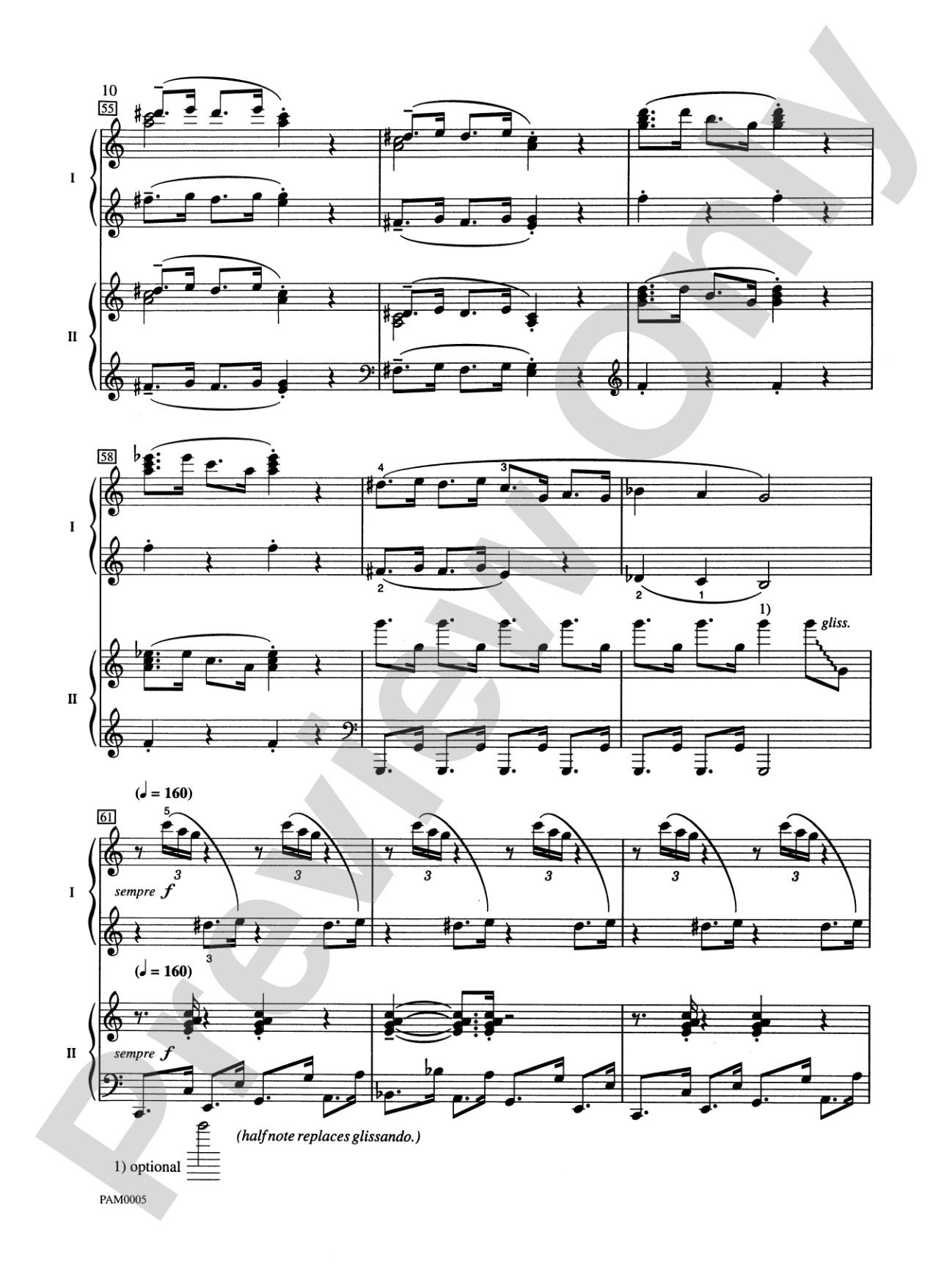
Piano duo teams will thrill at this new suite of dances composed by Eugénie Rocherolle. The five dances are: Tango for Two * "Classic" Rock * Slow Dancin' * A Winsome Waltz * Jitterbug! This late-intermediate level piece is easy to put together, and will bring cheers from the audience. Dances can be used individually, or play the suite as a complete set. A Federation Festivals 2024-2028 selection.


Don't just read it, hear it, play along with it, and watch your students grow with it. In MakeMusic Cloud, The Way We Danced, 1949--1999 - Piano Duo (2 Pianos, 4 Hands): Piano Duets & Four Hands comes alive with professional accompaniment, adjustable tempo, and built-in practice tools that turn solo practice into real progress.
Open in the Player
Jump straight in and assign it today.
Start Your Free Trial
Open this title and explore the full library in minutes.
Sample Audio
No sample audio found.
Sample Video
No sample videos found.
Additional Details
Publisher:
Alfred Music
Page Count:
88
SKU:
00-PB-0000612
More about this title
About the Composer: Eugénie R. Rocherolle
Eugénie Rocherolle has built a reputation as a composer who understands exactly what pianists want to play. Her gift for melody and rhythmic vitality comes through consistently in her pedagogical works, which span from early intermediate through advanced levels.
Rocherolle's compositional voice is rooted in accessibility without sacrificing musical substance. She writes idiomatically for piano, drawing on jazz, popular song, and dance forms to create pieces that engage both performer and listener.
Why we love this
Five distinct dance styles strung together as a cohesive suite gives you tremendous flexibility in programming while maintaining a clear narrative arc across five decades of American dance culture. The late-intermediate level hits that sweet spot where technically engaged students can still make an immediate musical impact, and the writing is clean enough that rehearsal time translates directly into performance readiness.
What to expect
A tour through a century of movement, each section landing squarely in its own era before pivoting to the next. The writing captures the essence of each dance form, from the sultry elegance of tango through the nostalgic swing of jitterbug, with moments of genuine melodic warmth alongside rhythmic vitality.
Who it's for
Pairs of intermediate pianists looking for contemporary music that sounds sophisticated without requiring virtuosic technique. This works equally well for festival competitions, concert recitals, or as a showcase piece that demonstrates both technical control and stylistic range.
How to get the most out of it
- Each dance has its own rhythmic DNA. Spend rehearsal time identifying what makes the tango's articulation different from the rock section, so both pianists can lock into the style rather than just the notes.
- Balance between primo and secondo parts shifts throughout the suite. Map these transitions early so each pianist knows when they're carrying the melody and when they're anchoring the foundation.
- The jitterbug finale rewards energy and precision. Nail the rhythmic unison passages first, then layer in the character and drive that will get the applause.
- Consider running the entire suite once through at tempo during the final week of rehearsals. This builds stamina and reminds both players how the individual pieces tell a larger story together.
How to use it
Open a concert with the complete suite to set an energetic, accessible tone, or extract individual dances to space throughout a longer recital. The suite also serves as a perfect mid-season competition selection when you need a piece that shows musicality, ensemble precision, and crowd appeal in equal measure.
Skills your students will build
- Stylistic awareness across multiple dance genres (tango, rock, waltz, swing rhythms)
- Coordinating rhythmic independence between two pianists
- Reading and executing varied articulations and touch within a single piece
- Balancing melody and accompaniment roles while maintaining ensemble cohesion
- Managing tempo stability across five connected movements