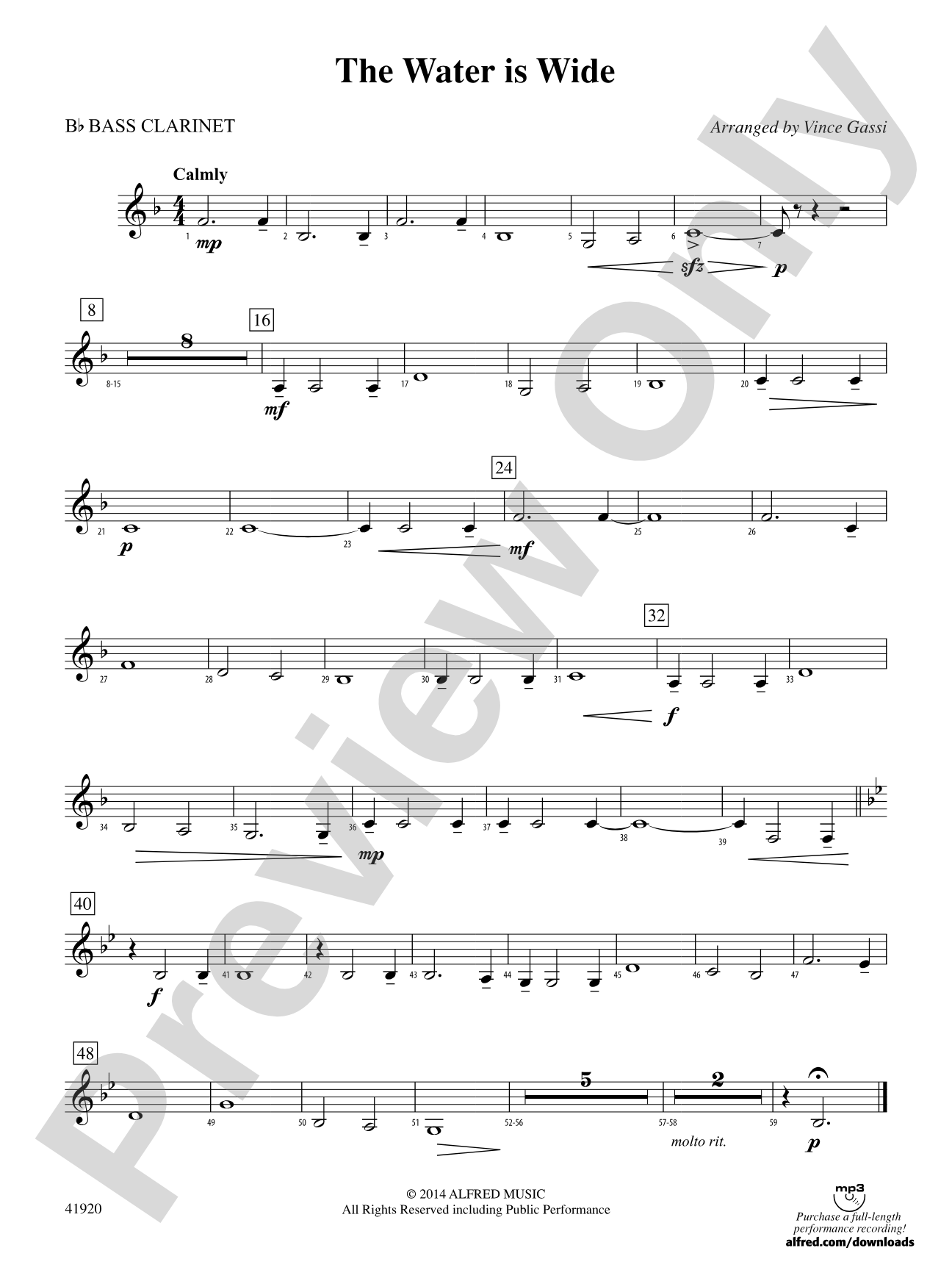
The Water Is Wide: B-flat Bass Clarinet Sheet Music Preview

The Water Is Wide: B-flat Bass Clarinet

Arr. Vince Gassi

Grade: 1.5 (Easy)

Item: 00-PC-0016402_BC

Digital Download
$3.00
Description
Although the lyrics for this folk song date back to the 1600s, it wasn't until 1906 that the song was published in Folk Songs from Somerset. The simple melody and placid harmony provide a great opportunity for your young musicians to explore expressiveness in their performance. This poignant arrangement will lift your audience emotionally. (2:30)

Don't just read it, hear it, play along with it, and watch your students grow with it. In MakeMusic Cloud, The Water Is Wide: B-flat Bass Clarinet comes alive with professional accompaniment, adjustable tempo, and built-in practice tools that turn solo practice into real progress.

Sample Audio
0:00
0:00
Sample Video
Additional Details
Series: Challenger Band Series
Publisher: Alfred Music
Page Count: 118
SKU: 00-PC-0016402_BC

More about this title

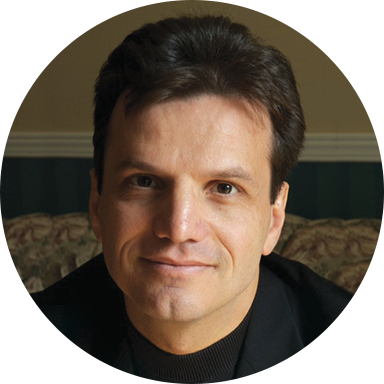
About the Arranger: Vince Gassi

Vince Gassi

Vince Gassi has been publishing with Alfred Music since 2006 and has become a prolific voice in concert band repertoire, with more than 100 compositions and arrangements in circulation. His works balance accessibility with musicality, earning frequent performances at regional contests and the Midwest Clinic in Chicago. Gassi holds a Bachelor of Music from the University of Western Ontario, studied composition and arranging at the Dick Grove School of Music in Los Angeles, and completed a Ph.D. at York University in Toronto.

For over two decades, Gassi taught instrumental music at elementary and secondary levels while building a reputation as a guest conductor, adjudicator, and clinician across North America. His seminars on creative engagement and digital workflows for music directors reflect his commitment to supporting both student musicians and their teachers. His pieces have been recorded and performed throughout North America, Europe, and Japan.

Why we love this

Gassi captures the emotional core of this centuries-old tune without overwhelming young players. The Grade 1.5 scoring respects the folk song's natural simplicity while giving each section meaningful moments, making it equally effective as a concert opener or a teaching piece on phrasing and dynamic control.

What to expect

The arrangement wraps the folk melody in warm, straightforward harmony that feels both intimate and timeless. Performers sense the weight of centuries in a simple tune, and the poignant scoring invites them to find depth in restraint rather than virtuosity.

Who it's for

Young concert bands (Grade 1.5 level) looking for repertoire that builds expressive musicianship without technical barriers. Directors seeking a piece that moves audiences while remaining accessible to developing ensembles, whether performing in concert or contest settings.

How to get the most out of it

  • Shape the melody with subtle dynamic waves rather than sudden changes; the placid harmony supports gradual crescendos and decrescendos that let the tune breathe.
  • Balance the parts so the folk melody stays in focus; young ensembles often tend to over-voice countermelodies, which clouds the poignant character.
  • Take time with rubato in the exposed passages; a slight flexibility in tempo gives the arrangement space to settle into its emotional weight.
  • Use the full two-minute-thirty runtime to your advantage by resisting the urge to rush; pacing this arrangement thoughtfully distinguishes a mature performance from a quick run-through.

How to use it

Open a concert with this piece to set a reflective mood, or program it as a palate-cleanser between more energetic works. Its emotional honesty and brief runtime (2:30) make it ideal for a festival appearance, where judges appreciate musicianship over complexity.

Skills your students will build

  • Dynamic control and phrasing in exposed melodies
  • Balancing parts to support rather than obscure the primary line
  • Sustaining tone quality and intonation in slow, lyrical passages
  • Understanding rubato and flexible pacing in folk arrangements
  • Interpreting emotional intent on the page through conductor leadership

You May Also Like