
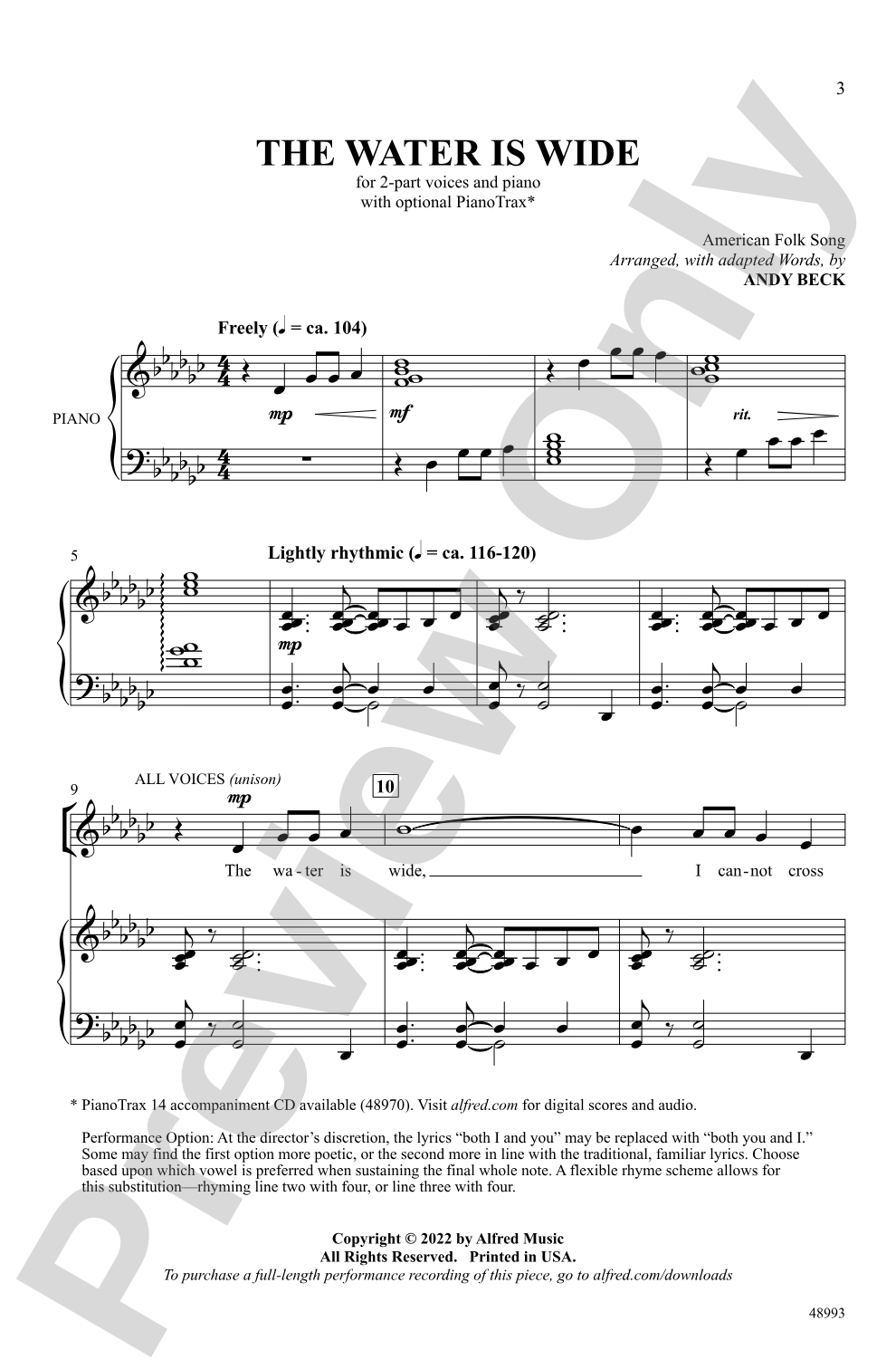
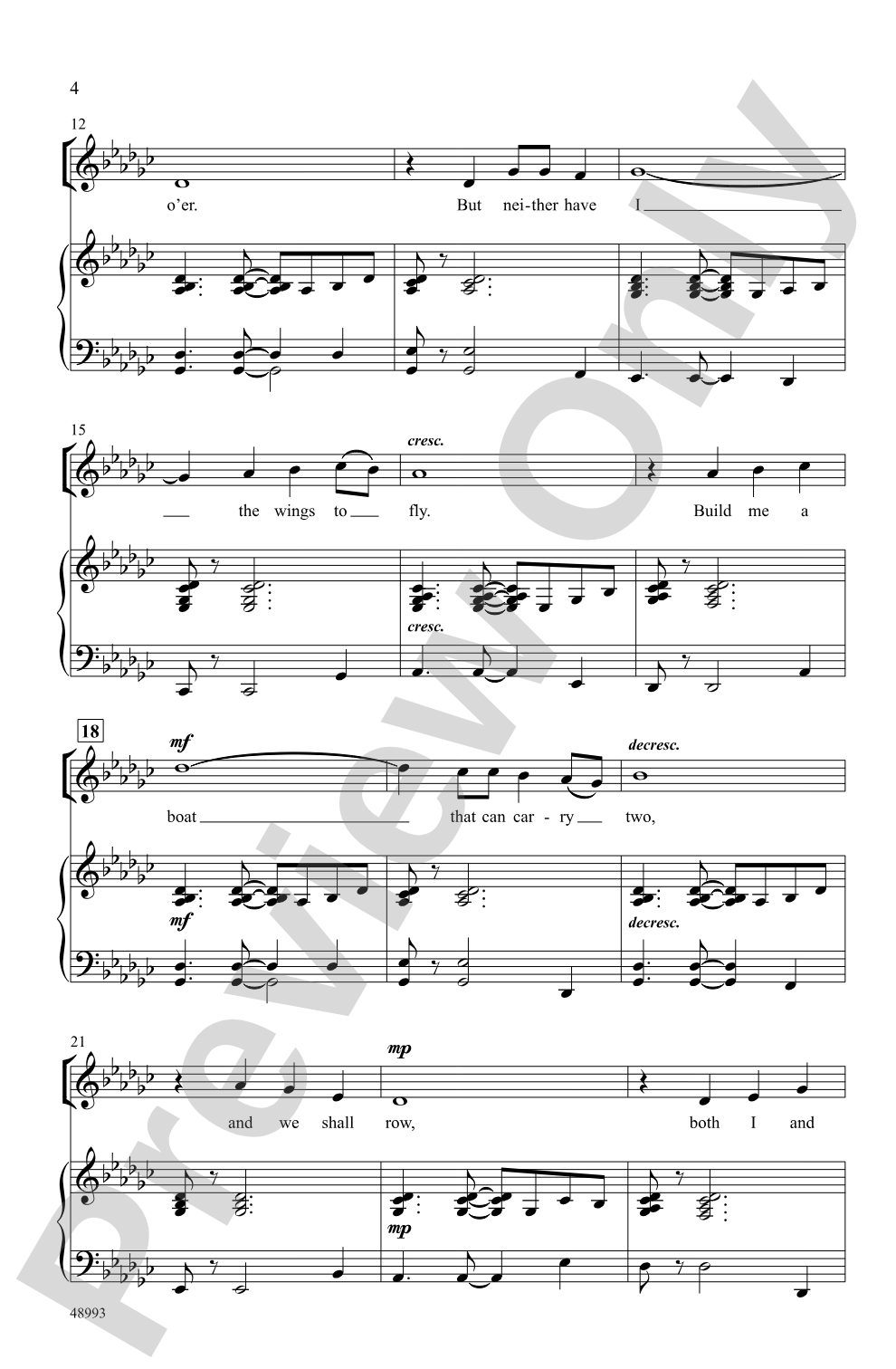

The Water Is Wide: 2-Part Choral Octavo
American Folk Song / arr., with adapted words, by Andy Beck
Item: 00-PO-0006874

$2.05
Minimum order quantity: 10 copies
Please note: Under U.S. copyright law, you must purchase the exact number of copies needed for your ensemble. Printing, duplicating or sharing additional copies is strictly prohibited.
Pickup currently not available
Description
Thoughtfully crafted to make your 2-part singers sound their best, this Andy Beck arrangement reads like a solid choral lesson plan, with built-in teaching tools. The lyrical tune is sung first in unison, then in canon, a gentle call and response bridge introduces a new key, eventually some parallel harmonies arrive, and an optional middle note at the end offers one three-part chord. Adapted lyrics honor "the bond of friend to friend."


Don't just read it, hear it, play along with it, and watch your students grow with it. In MakeMusic Cloud, The Water Is Wide: 2-Part Choral Octavo comes alive with professional accompaniment, adjustable tempo, and built-in practice tools that turn solo practice into real progress.
Open in the Player
Jump straight in and assign it today.
Start Your Free Trial
Open this title and explore the full library in minutes.
Sample Audio
1
Audio File
--:--
0:00
0:00
Sample Video
1 / 2
Additional Details
Series:
Alfred Choral Designs
Publisher:
Alfred Music
Page Count:
12
SKU:
00-PO-0006874
More about this title
About the Arranger: Andy Beck

Andy Beck directs choral publications at Alfred Music and has established himself as one of the most prolific voices in contemporary choral writing, with over 450 works for choirs, vocalists, and young singers currently available. His influence extends far beyond the catalog; he guest conducts honor choirs nationwide, adjudicates festivals, and has been commissioned by all-state groups throughout the Southeast. Beck holds degrees in Music Education from both Ithaca College and Northwest Missouri State University, grounding his prolific output in genuine pedagogical expertise.
Beyond his work as an arranger and composer, Beck performs as a tenor and maintains an active role directing musical theatre and singing with the North Carolina Master Chorale Chamber Choir. His dual commitment to choral artistry and music literacy shapes everything he curates for Alfred's catalog, resulting in publications that challenge singers while remaining genuinely teachable. Since 1992, he has also contributed his voice to Alfred's own studio recordings, bringing insider knowledge of what actually works in rehearsal and performance.
Why we love this
Beck's arrangement transforms a familiar melody into a mini curriculum for 2-part singers, unfolding organically from unison through canon to parallel harmony without ever feeling preachy. The bridge modulation and optional three-part moment at the close give singers real harmonic depth to experience, not just read through. Programming this piece signals to your singers that you're serious about building their musicianship within repertoire that actually sounds beautiful.
What to expect
The piece breathes like a conversation between friends, opening in warm unison before voices gently weave around each other through canon and bridge. Its adjusted lyrics celebrating friendship give the arrangement emotional clarity, and the journey from simple to complex feels earned rather than arbitrary.
Who it's for
This octavo works for middle school and high school choirs developing 2-part voicing and harmonic awareness. Singers comfortable reading their part independently will find the structure scaffolds them toward more sophisticated choral concepts without overwhelming rehearsal time.
How to get the most out of it
- Shape the unison opening with gentle phrasing; this section establishes the melody's character and gives singers confidence before harmonic complexity arrives.
- Bring out the call and response bridge by clearly defining the key change and letting each phrase breathe, creating genuine contrast from the canon section.
- Balance the two parts throughout the parallel harmonies by listening for blend rather than forcing equal volume; the second part often carries inner movement that matters musically.
- If you use the optional three-part moment at the end, assign a small group of your strongest singers to the middle note so the chord doesn't muddy.
How to use it
Use this in a concert celebrating folk traditions or community themes, pairing it with other secular choral works that show harmonic development. It also serves as an excellent assessment piece mid-year, since the structured progression reveals exactly where singers need support with part independence.
Skills your students will build
- Sustaining a melodic line while listening to a different part (canon technique)
- Reading and singing parallel harmonies in 2-part texture
- Understanding modulation through performance (call and response bridge)
- Blend and balance in close harmonic intervals
- Part independence without a doubling instrument