

The Water Is Wide: SATB Choral Octavo
American Folk Song / arr. Greg Gilpin
Item: 00-PO-0006097
$2.05
Minimum order quantity: 20 copies
Pickup currently not available
Description
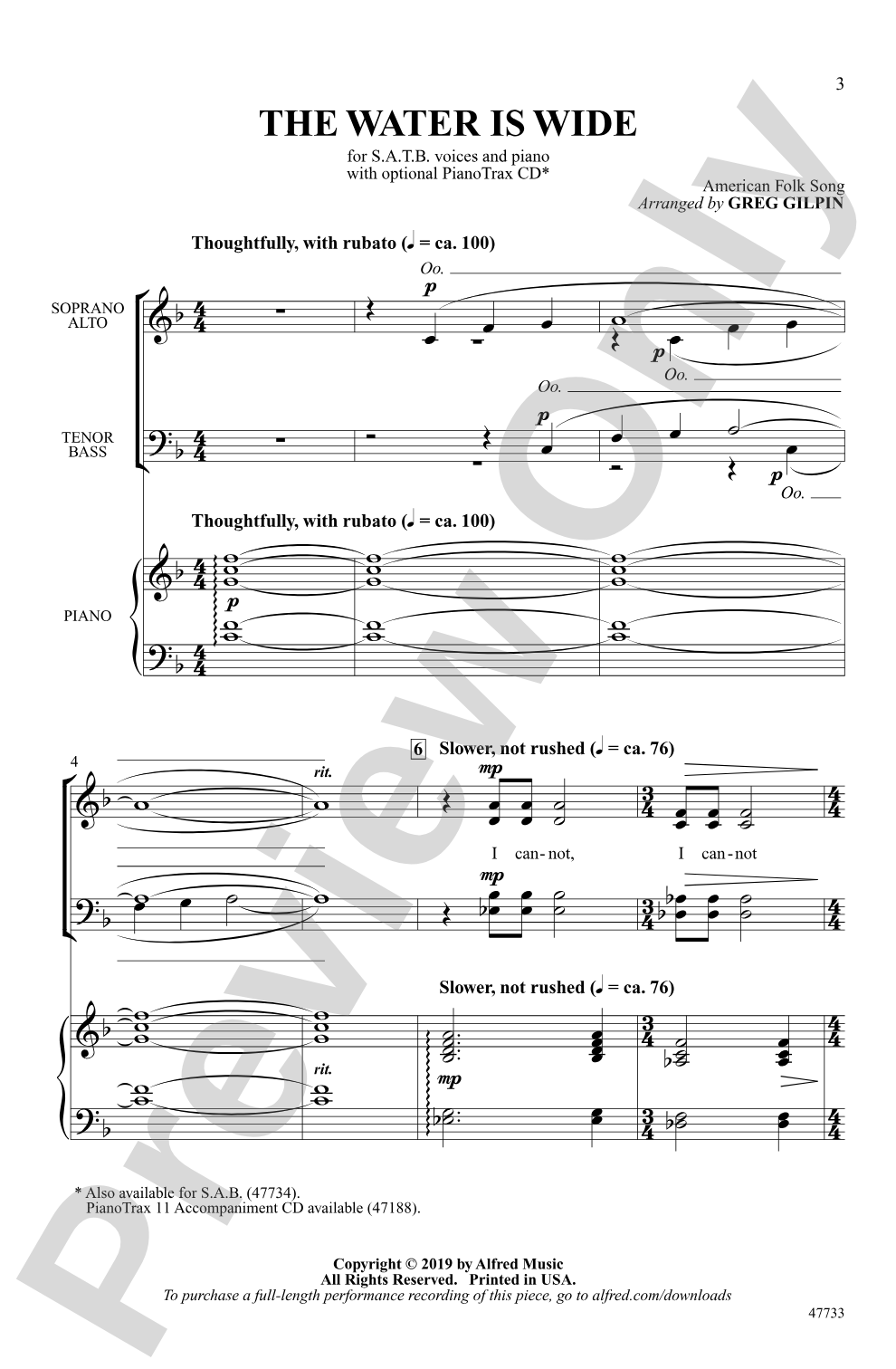
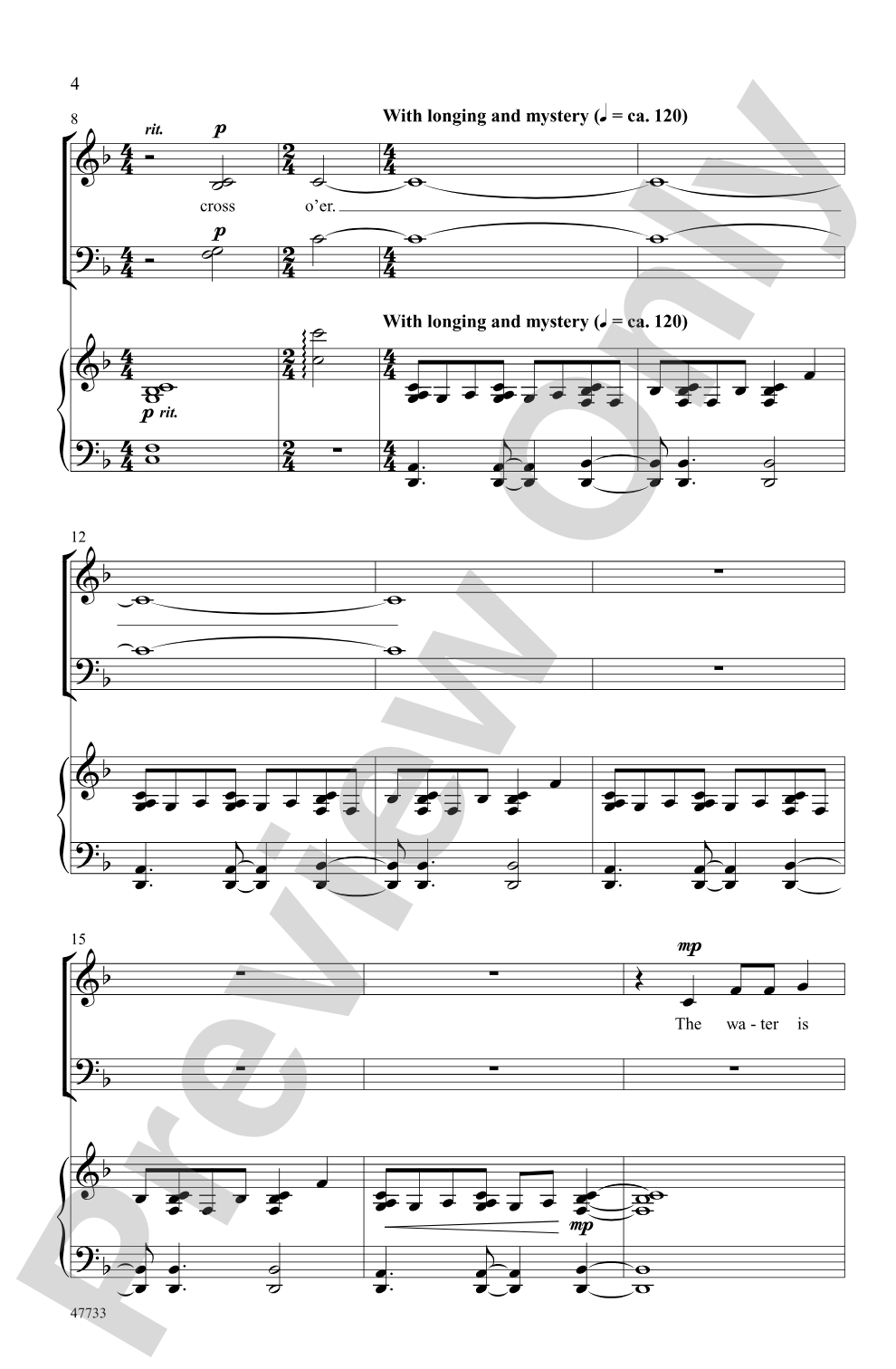
Greg suggests performing his moody setting of the enduring folk song “with longing and mystery”---a fitting approach for this creative re-harmonization. A hushed layering of the first four melodic notes provides the gentle introduction and pensive closing for this uniquely wistful arrangement. Rich choral sonorities, with just a touch of dissonance, emerge when the piece arrives at its “love is handsome” peak.


The Water Is Wide: SATB Choral Octavo isn't in MakeMusic Cloud just yet...but it could be. Let us know you'd like to see it, and you'll help shape what comes next. In the meantime, start a free trial and dive into thousands of interactive titles your students can play along with today.
Request This Title
Tell us you want it.
Start Your Free Trial
Explore everything that's ready to play right now.
Sample Audio
1
Audio File
--:--
0:00
0:00
Sample Video
Additional Details
Series:
Alfred Choral Designs
Publisher:
Alfred Music
Page Count:
12
SKU:
00-PO-0006097
More about this title
About the Arranger: Greg Gilpin

Greg Gilpin brings a distinctive voice to choral music as both a composer and arranger, holding ASCAP awards and a prominent role as Director of Educational Choral Publications for Shawnee Press. His conducting has taken him to renowned concert halls across the globe, from Carnegie Hall and Lincoln Center to the Sydney Opera House, Royal Festival Hall, and venues throughout North America and beyond. He serves on the boards and memberships of ACDA, NAfME, and Phi Mu Alpha Sinfonia.
Beyond the concert hall, Gilpin has expanded his creative reach into film scoring, winning Best Score for the short film "Rosie's Rescue" in 2021. He has collaborated with accomplished artists including soprano Angela Brown on new arrangements for concert stages, and he continues to balance his music career with other professional pursuits, including work in organizing and consulting. His output reflects an arranger deeply invested in both the artistry of choral music and the practical needs of music educators.
Why we love this
Gilpin's approach to this folk standard respects its narrative power while refusing to settle for conventional harmonic treatment. The re-harmonization introduces genuine harmonic color and tension without obscuring the melody, and his structural choice to frame the piece with that hushed four-note introduction and echo creates a contemplative arc that rewards careful rehearsal and pays dividends in performance.
What to expect
Contemplative and intimate, with an undercurrent of longing that emerges through Gilpin's careful harmonic choices. The piece unfolds like a memory held close; moments of gentle consonance give way to subtle tension, and the overall effect is one of mystery and emotional restraint rather than overt sentiment.
Who it's for
Intermediate to advanced high school, college, and community choirs seeking repertoire that honors folk tradition while offering harmonic and textural sophistication. This arrangement suits choirs comfortable with four-part writing and interested in concert or festival programming that showcases ensemble blend and interpretive maturity.
How to get the most out of it
- Establish the exact dynamic balance in the opening layered notes; these four pitches set the entire emotional landscape, so clarity of voice independence matters more than volume.
- Shape the buildup toward "love is handsome" with patience, resisting the urge to rush as the harmony deepens, so the moment of arrival feels earned rather than sudden.
- Let the dissonant moments breathe slightly; these chords will land with greater impact if singers understand where they sit harmonically and voice them with intention rather than anxiety.
How to use it
This works beautifully as a standalone concert piece, particularly in programs exploring folk song arrangements or featuring a theme around love and loss. Its moderate length and accessible-yet-sophisticated musical language also make it suitable for festival competition where interpretive nuance and ensemble balance are valued.
Skills your students will build
- Balancing part independence within a four-part texture
- Singing through dissonant harmony with secure intonation
- Responding to subtle dynamic and textural shifts
- Interpreting harmonic color and emotional subtext in arrangement