
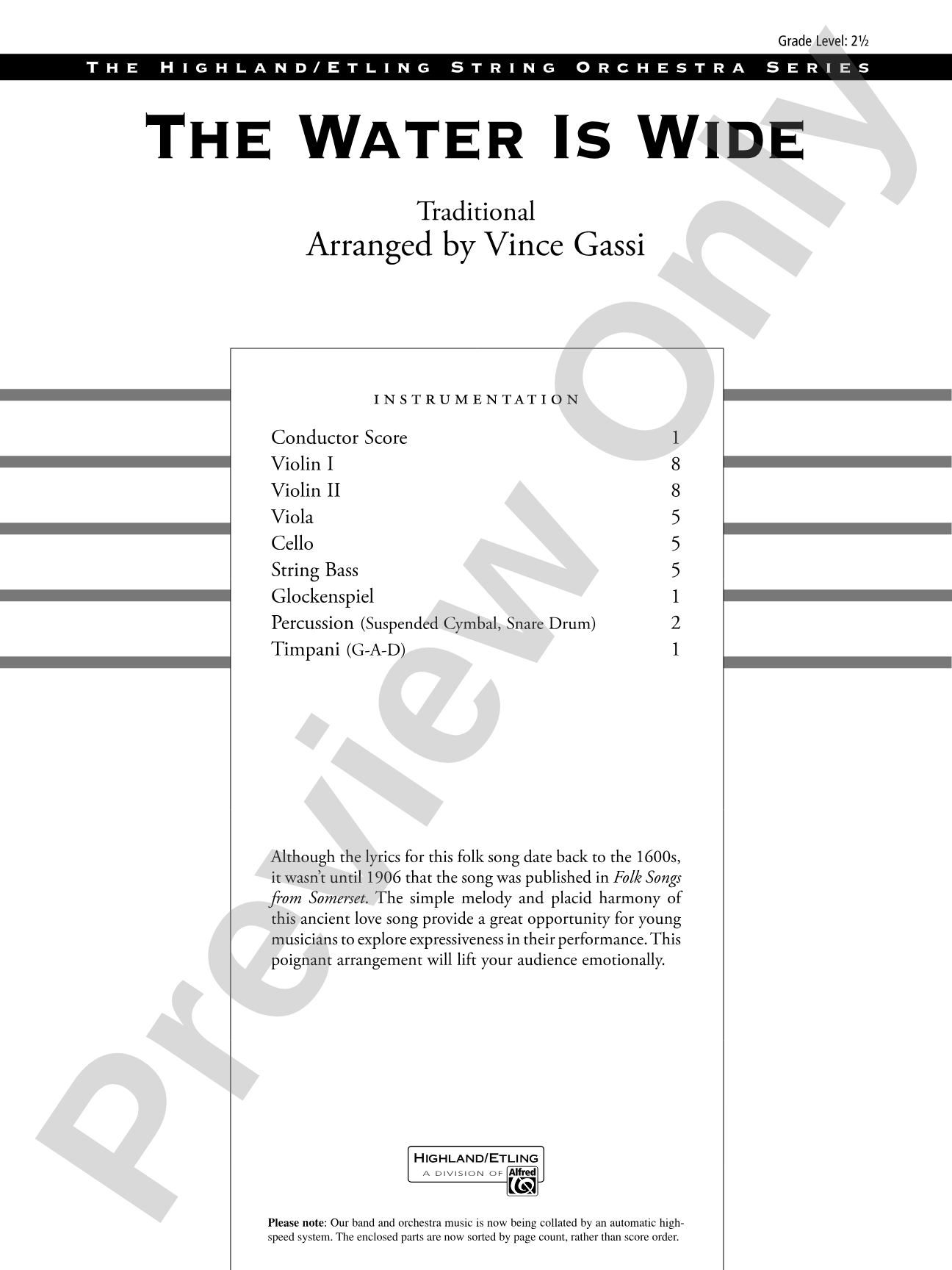
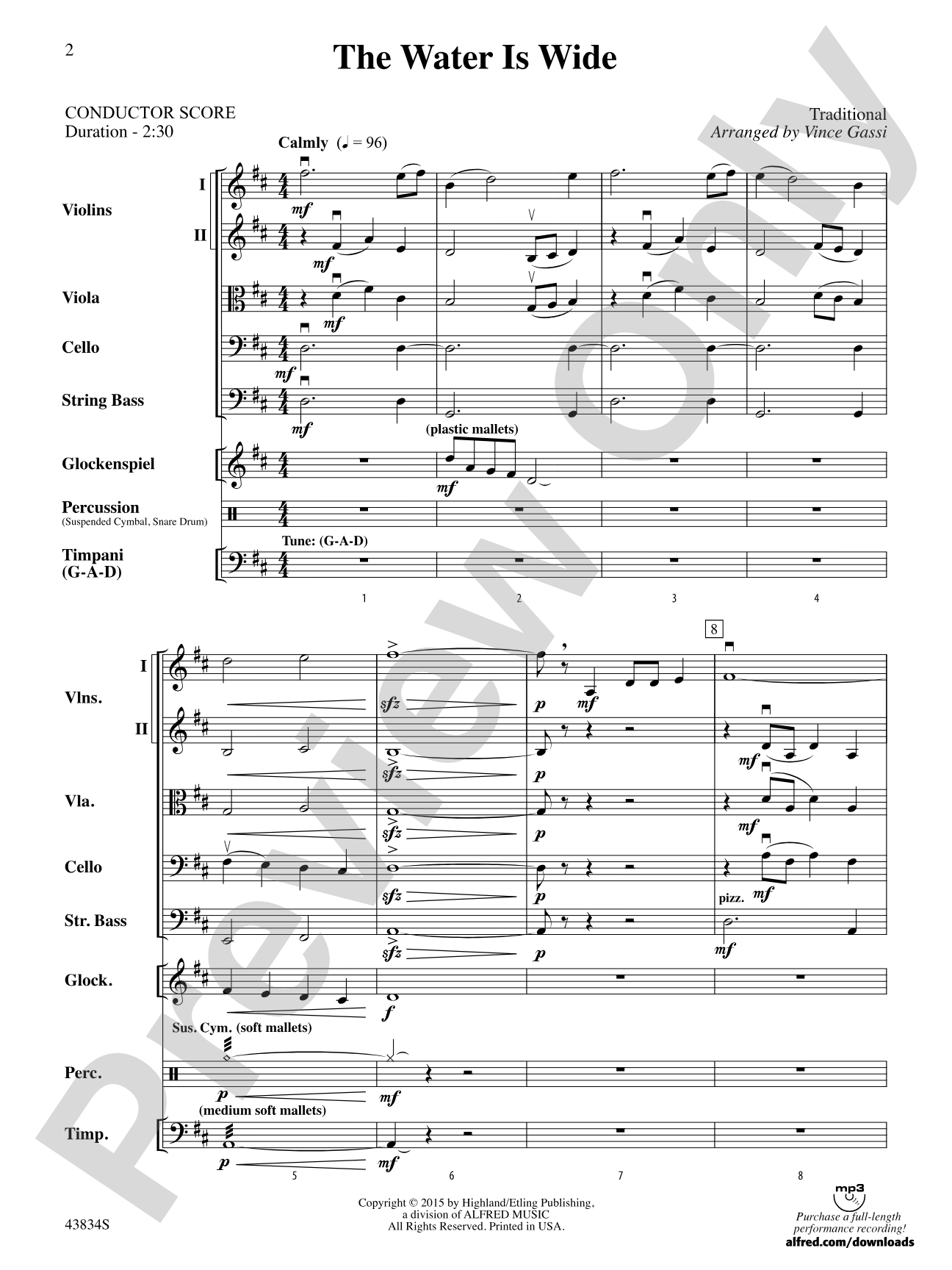
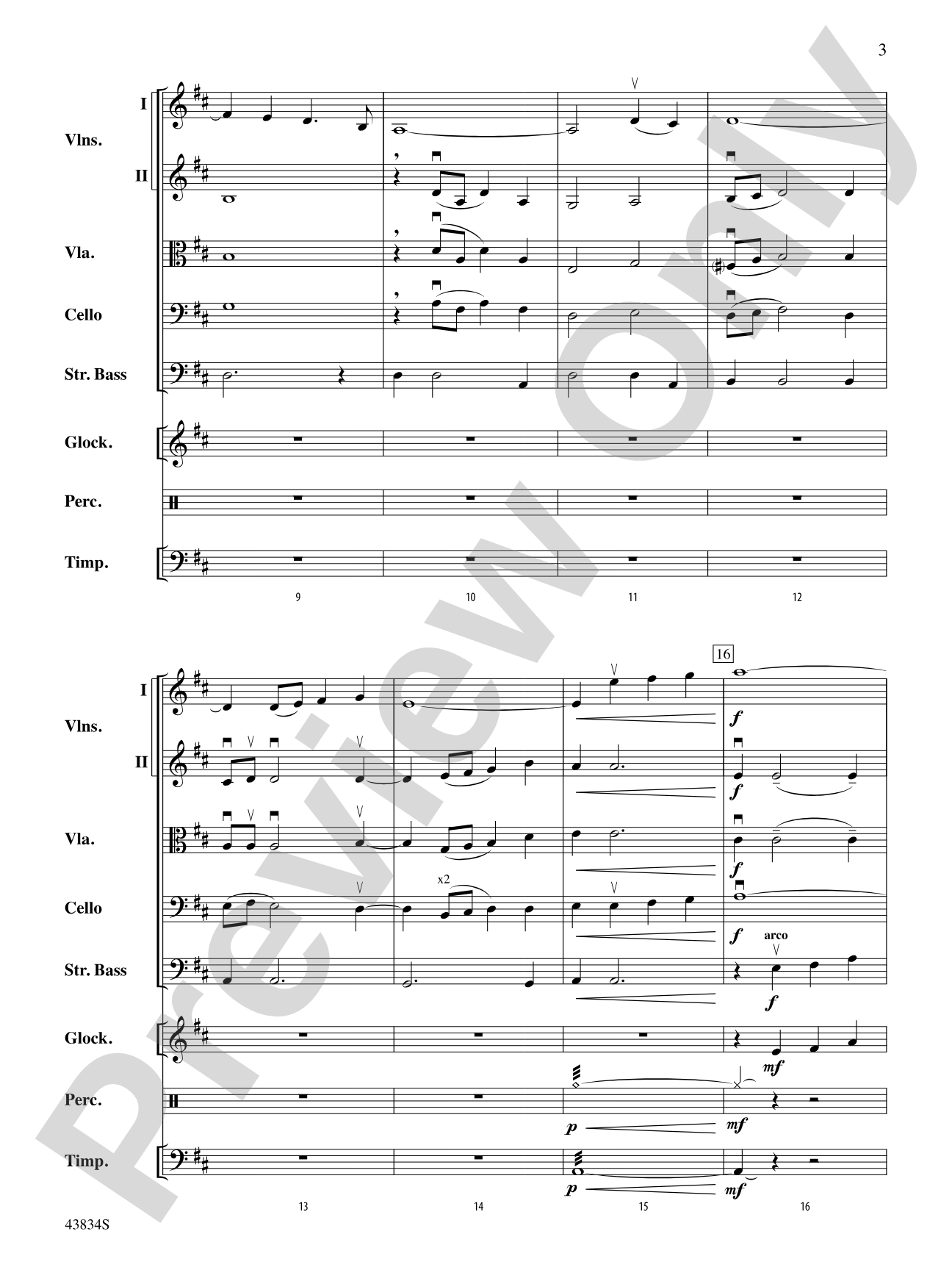
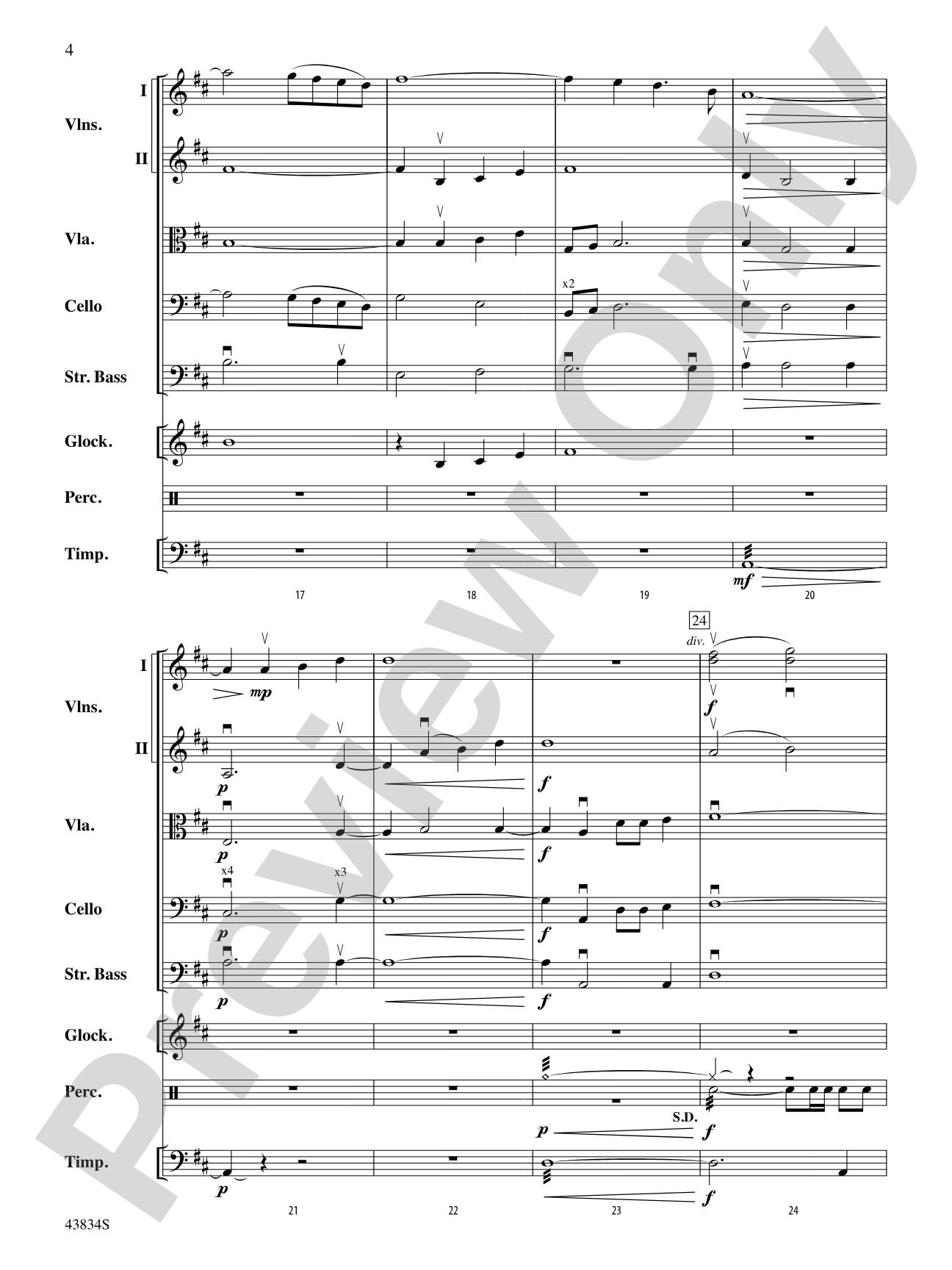
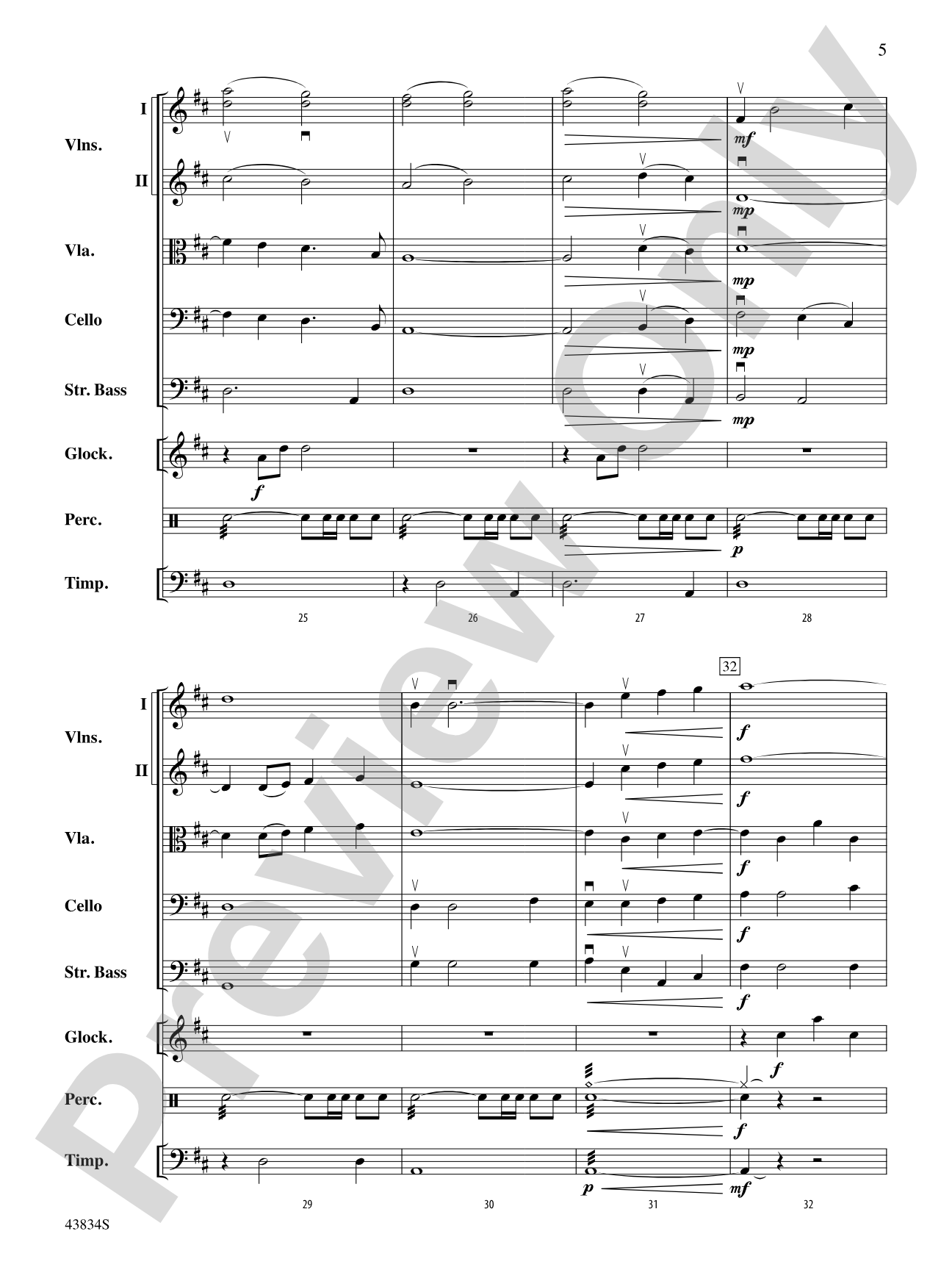
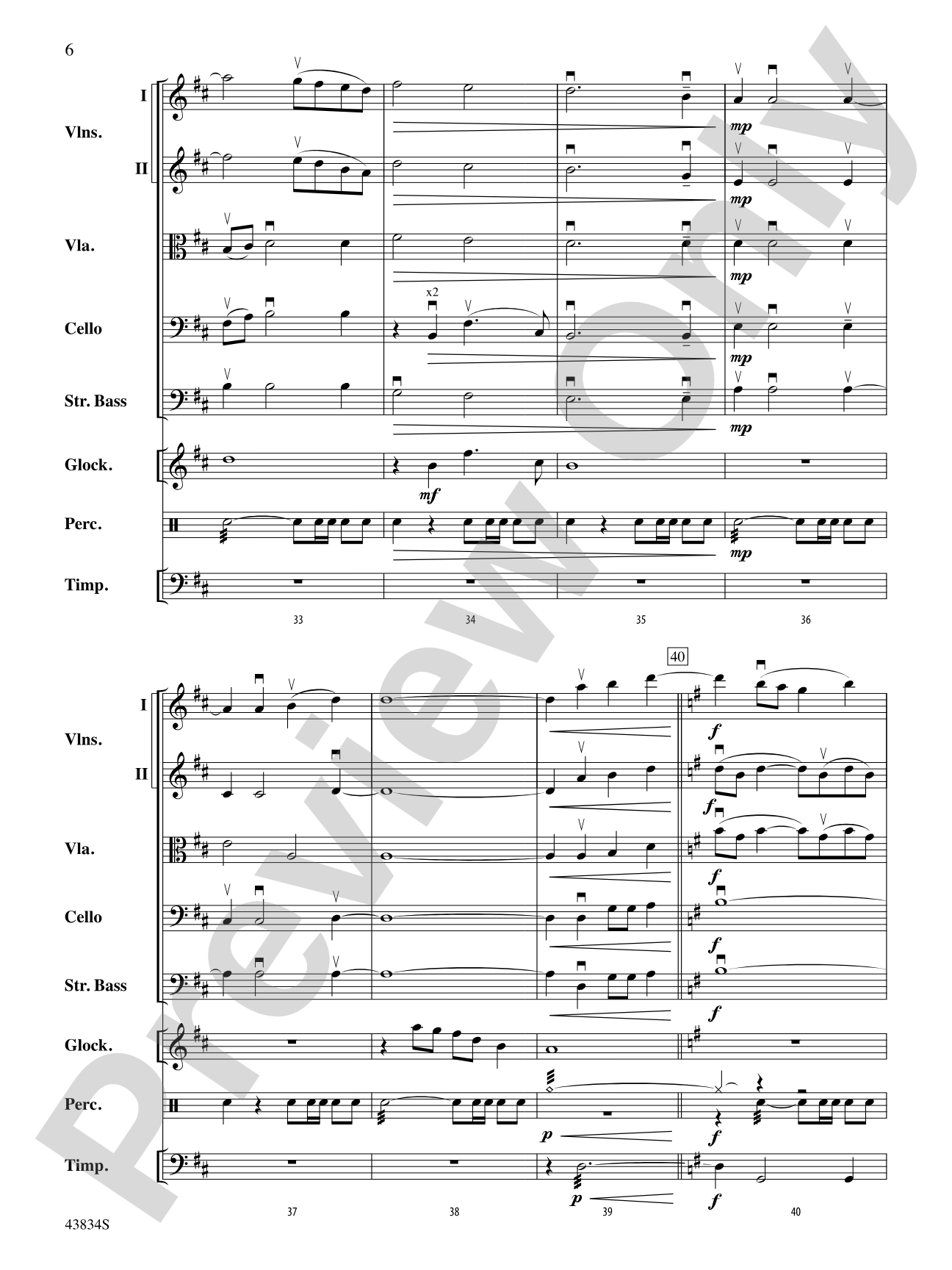
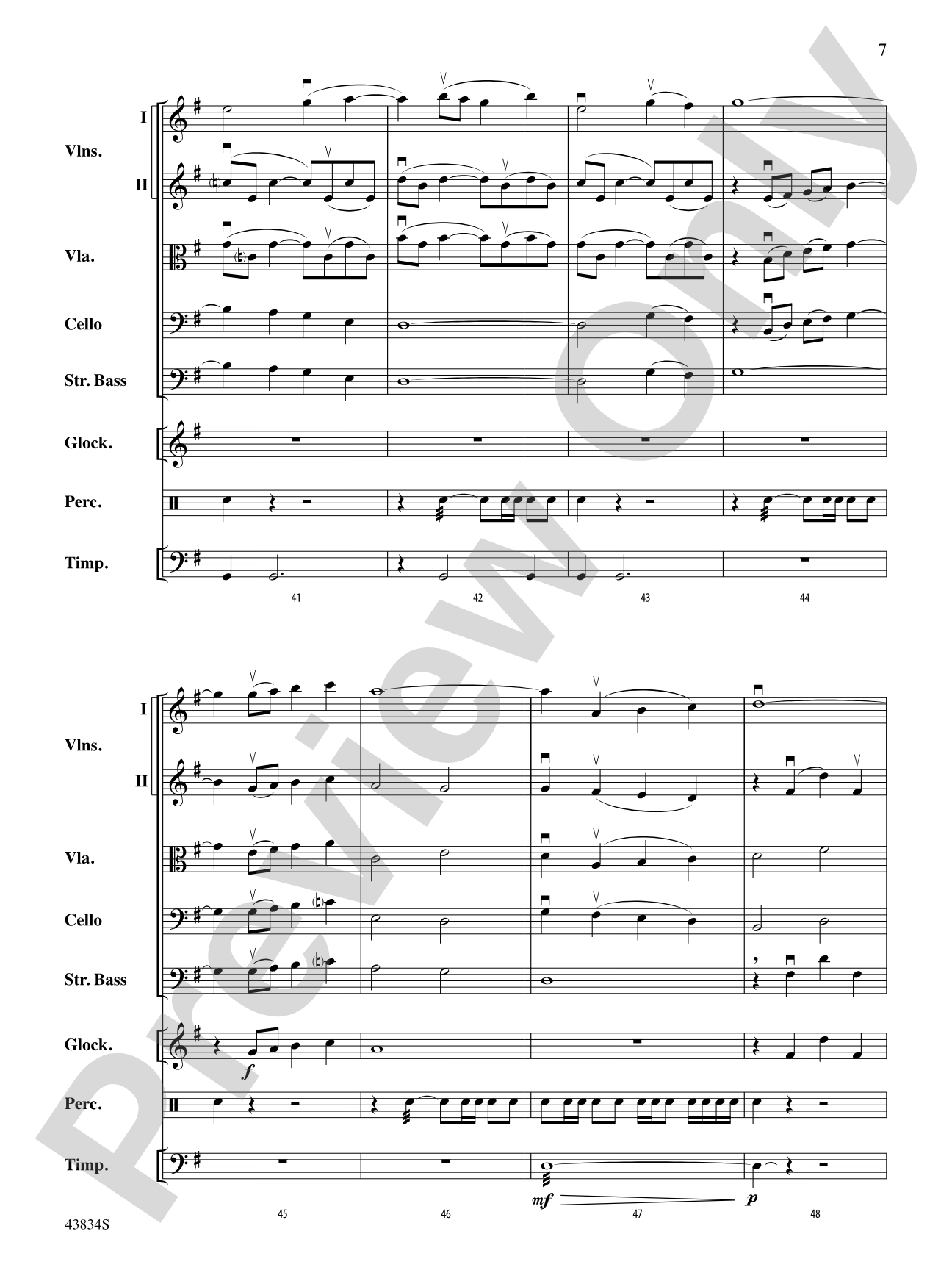
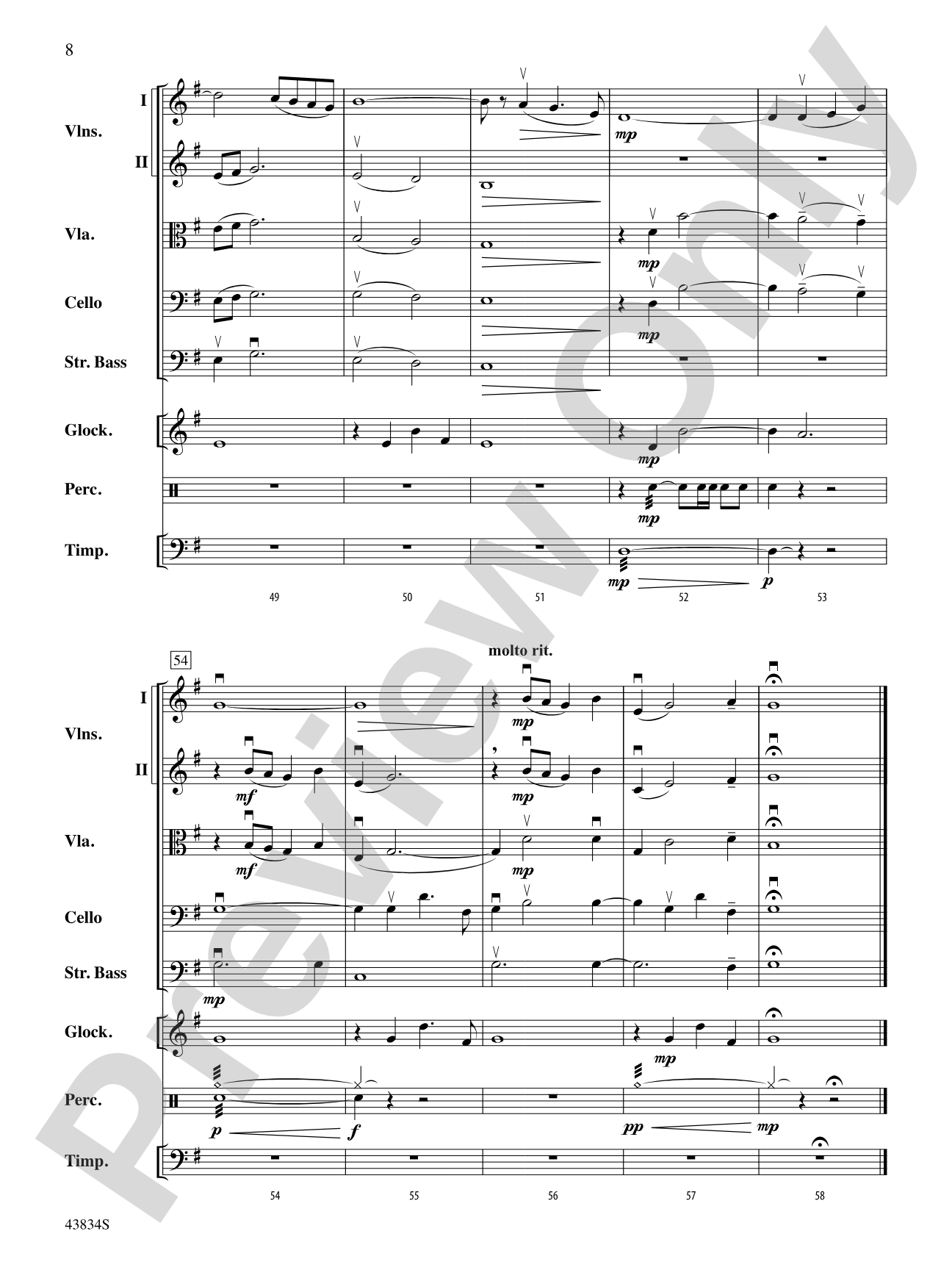

The Water Is Wide: String Orchestra Conductor Score & Parts
Traditional / arr. Vince Gassi
Grade: 2.5
Item: 00-PK-0006683

$46.00
Pickup currently not available
Buy Extra Parts (Digital PDF Download)
| Product | Price | Quantity |
|---|---|---|
| The Water Is Wide: Score | $9.00 | |
| The Water Is Wide: Timpani | $5.99 | |
| The Water Is Wide: 1st Violin | $5.99 | |
| The Water Is Wide: 2nd Violin | $5.99 | |
| The Water Is Wide: Viola | $5.99 | |
| The Water Is Wide: Cello | $5.99 | |
| The Water Is Wide: String Bass | $5.99 | |
| The Water Is Wide: 1st Percussion | $5.99 | |
| The Water Is Wide: Glockenspiel | $5.99 |
Parts Added to Cart!
Description
The simple melody and placid harmony of this ancient love song provide a great opportunity for young musicians to explore expressiveness in their performance. This poignant arrangement will lift your audience emotionally. (2:30)


Don't just read it, hear it, play along with it, and watch your students grow with it. In MakeMusic Cloud, The Water Is Wide: String Orchestra Conductor Score & Parts comes alive with professional accompaniment, adjustable tempo, and built-in practice tools that turn solo practice into real progress.
Open in the Player
Jump straight in and assign it today.
Start Your Free Trial
Open this title and explore the full library in minutes.
Sample Audio
1
Audio File
--:--
0:00
0:00
Sample Video
No sample videos found.
Additional Details
Series:
Highland/Etling String Orchestra
Publisher:
Alfred Music
Page Count:
70
SKU:
00-PK-0006683
More about this title
About the Arranger: Vince Gassi
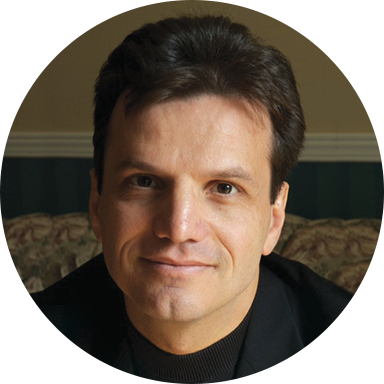
Vince Gassi has shaped instrumental music education across North America for over two decades, working directly with students at elementary and secondary levels while building an impressive catalog of more than 100 published compositions and arrangements. His training spans the University of Western Ontario, the Dick Grove School of Music in Los Angeles, and a Ph.D. from York University in Toronto, giving him both practical classroom experience and rigorous training in composition and orchestration.
As a clinician and guest conductor, Gassi is known for his seminars on creative engagement and digital workflows for music directors. His arrangements and original works appear regularly on festival and contest programs internationally, and his pieces have been performed and recorded across North America, Europe, and Japan. He has been a contributing author to Alfred Music since 2006.
Why we love this
Gassi's arrangement honors the song's tender simplicity while giving young string players genuine interpretive work to do. Rather than overshadowing the melody with busy accompaniment, he creates space for musicians to discover how restraint and sensitivity communicate emotion. At Grade 2.5, this sits in that sweet spot where students have the technical foundation to sustain long lines and shape phrases without fighting difficult passage work.
What to expect
The arrangement unfolds with quiet dignity, letting the ancient melody breathe through clean, uncomplicated harmony. There's a contemplative beauty here that asks listeners and performers alike to sit with emotion rather than be dazzled by technical display, making the piece feel more grown-up than its grade level might suggest.
Who it's for
String orchestras at the intermediate level who are ready to move beyond technically driven repertoire and explore what musical intention sounds like. This works for ensembles preparing for contests or festivals, as well as those building their concert programming with repertoire that showcases growth in musicianship rather than difficulty alone.
How to get the most out of it
- Shape the opening phrase as a continuous breath, avoiding the trap of rhythmic stiffness. Young string players often fragment simple melodies; conduct and rehearse with phrasing in mind before worrying about bow changes.
- Balance the sustained harmony voices so the melody emerges naturally. A common mistake is allowing the first violins to overshadow everyone; instead, let the violas and cellos sing through their supporting lines.
- Experiment with slight tempo rubato in the middle section to heighten emotional impact. The simplicity of the arrangement allows you room to shape the tempo expressively without losing clarity.
- Record a rehearsal and listen back as an ensemble. Young musicians often don't hear their own collective sound, and playback helps them recognize where the expression is landing and where it needs adjustment.
How to use it
Program this early in a concert to establish an emotional tone and show your ensemble's maturity. It pairs well alongside one or two more energetic works, creating contrast and demonstrating that your orchestra can handle both technical demands and interpretive depth. The 2:30 length makes it an ideal festival selection where time slots are tight but impact matters.
Skills your students will build
- Sustaining long phrases with consistent tone quality across bow changes
- Balancing melody and harmony parts to create transparent texture
- Shaping rubato and tempo flexibility in service of musical expression
- Listening critically to ensemble blend and adjusting dynamics and intonation accordingly
- Interpreting a historically rooted melody with period-appropriate sensitivity