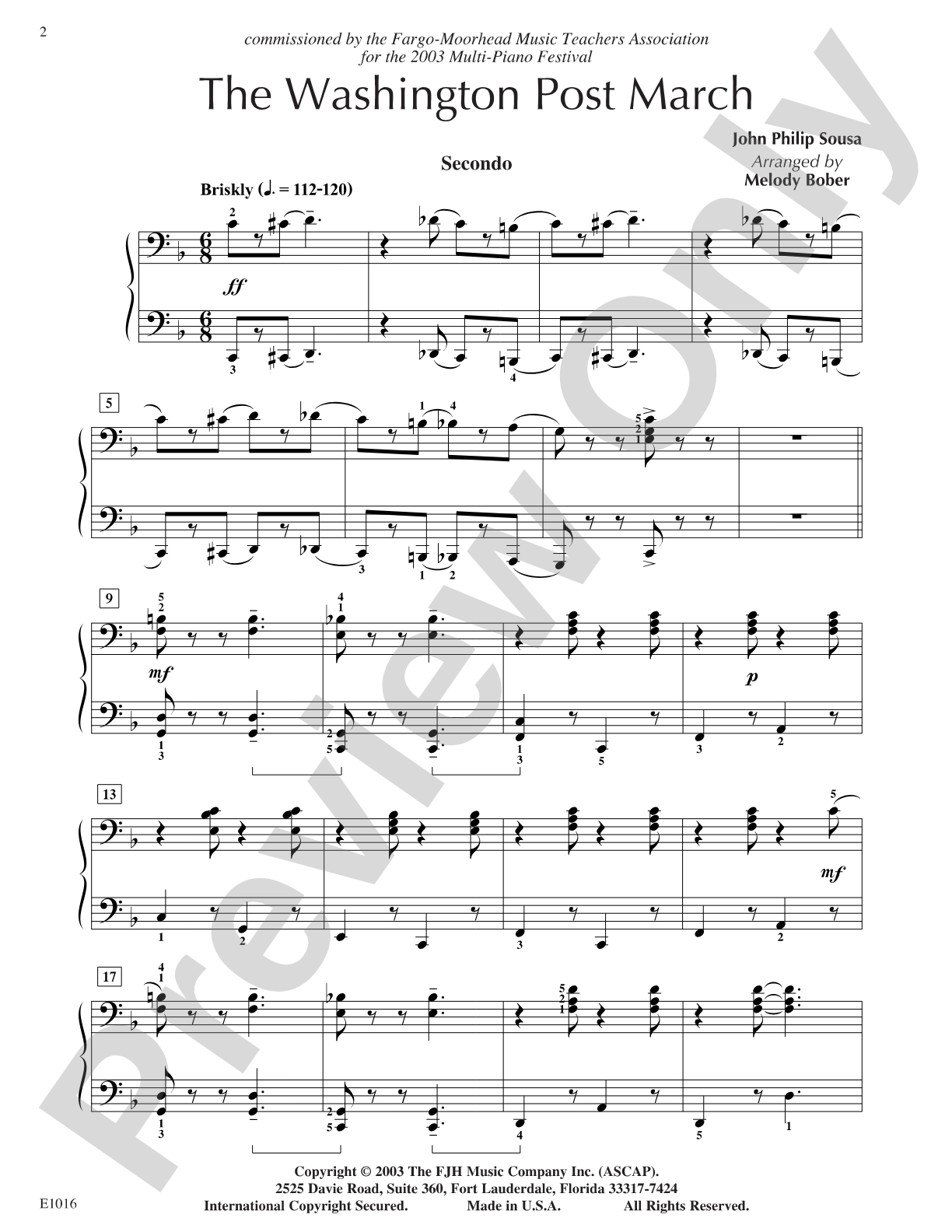
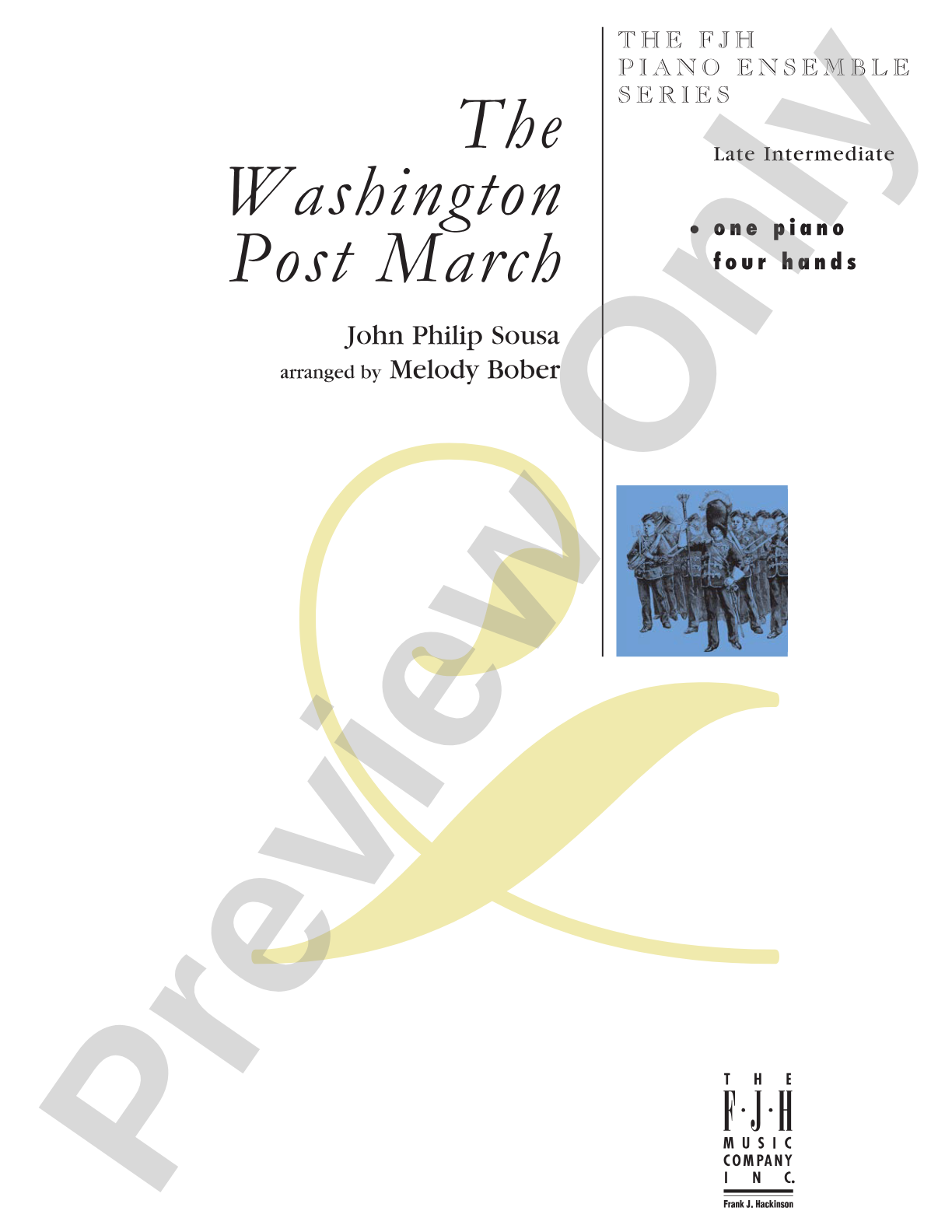
The Washington Post March Sheet Music Preview

The Washington Post March: Piano

By John Philip Sousa / arr. Melody Bober

Item: 98-DE1016

Digital Download
$8.50
Description
Impressive, traditional arrangement features a rich texture and a bright 6/8 tempo in the key of F major. Covering a wide range of the keyboard, this spectacular piece is perfect for any recital or patriotic celebration.

The Washington Post March: Piano isn't in MakeMusic Cloud just yet...but it could be. Let us know you'd like to see it, and you'll help shape what comes next. In the meantime, start a free trial and dive into thousands of interactive titles your students can play along with today.

Sample Audio
No sample audio found.
Sample Video
Additional Details
Series: The FJH Piano Ensemble Series
Publisher: The FJH Music Company, Inc.
SKU: 98-DE1016

More about this title

About the Composer: John Philip Sousa

John Philip Sousa (1854–1932) shaped American band music and patriotic repertoire like no other composer of his era. Known as the "March King," Sousa composed over 130 marches that became the sonic backbone of American civic life, from military ceremonies to parades to concert halls. His melodies combined accessibility with genuine musical craft, and his orchestrations demonstrated sophisticated harmonic thinking that rewarded both ensemble and solo performers.

Sousa's influence extended beyond composition. He led the United States Marine Band and later his own ensemble, championing American music at home and abroad. His marches remain central to band and orchestra curricula because they balance technical demands with musical satisfaction. For pianists, Sousa's work offers the chance to engage with music that shaped a nation's identity.

Why we love this

Bober's arrangement captures what makes this march endure: the bright, propulsive energy of 6/8 time, the clean harmonic language, and enough keyboard texture to keep intermediate players engaged without becoming fussy. The piece projects confidence and patriotic spirit without sentimentality, making it ideal for building a student's sense of accompaniment texture and rhythmic momentum. Sousa's melodies are instantly memorable, which frees pianists to focus on the arranging details and the joy of playing something genuinely festive.

What to expect

Bright, buoyant, and purposeful. The 6/8 meter bounces forward with military precision and patriotic warmth, while the F major key opens the keyboard invitingly. Fingers feel engaged across the full range, and the march rhythm propels rather than labors.

Who it's for

Late intermediate pianists ready to tackle full-keyboard writing and the rhythmic clarity required of march time. This piece suits students preparing for recitals who want something spirited and recognizable, as well as ensemble pianists strengthening their sense of rhythmic drive and accompaniment style.

How to get the most out of it

  • Maintain the forward momentum of 6/8 time. The subdivision feels naturally grouped in twos (dotted quarter beats), not threes. Think "two beats per measure" rather than "six," which clarifies phrasing and prevents the piece from feeling sluggish.
  • Shape dynamic contrasts between sections. The opening and main theme benefit from clear articulation and brightness; when thematic material returns, vary dynamics subtly to maintain interest across the keyboard range.
  • Balance left and right hand textures. The arrangement spans a wide keyboard range, so listen carefully to whether accompanying figures should support or step back from the melodic line.

How to use it

Program this during July recitals, patriotic celebrations, or any concert where a confident, recognizable finale is welcome. It pairs naturally with lighter classical repertoire and offers a bright tonal contrast to romantic or contemporary pieces. Consider it as an encore or closing number for its crowd-pleasing energy and clear sense of arrival.

Skills your students will build

  • Maintaining steady tempo in 6/8 meter
  • Hand independence across keyboard range
  • Dynamic shaping and phrasing in accompaniment patterns
  • Articulation and rhythmic clarity in march style
  • Balance between melody and harmonic texture

You May Also Like