
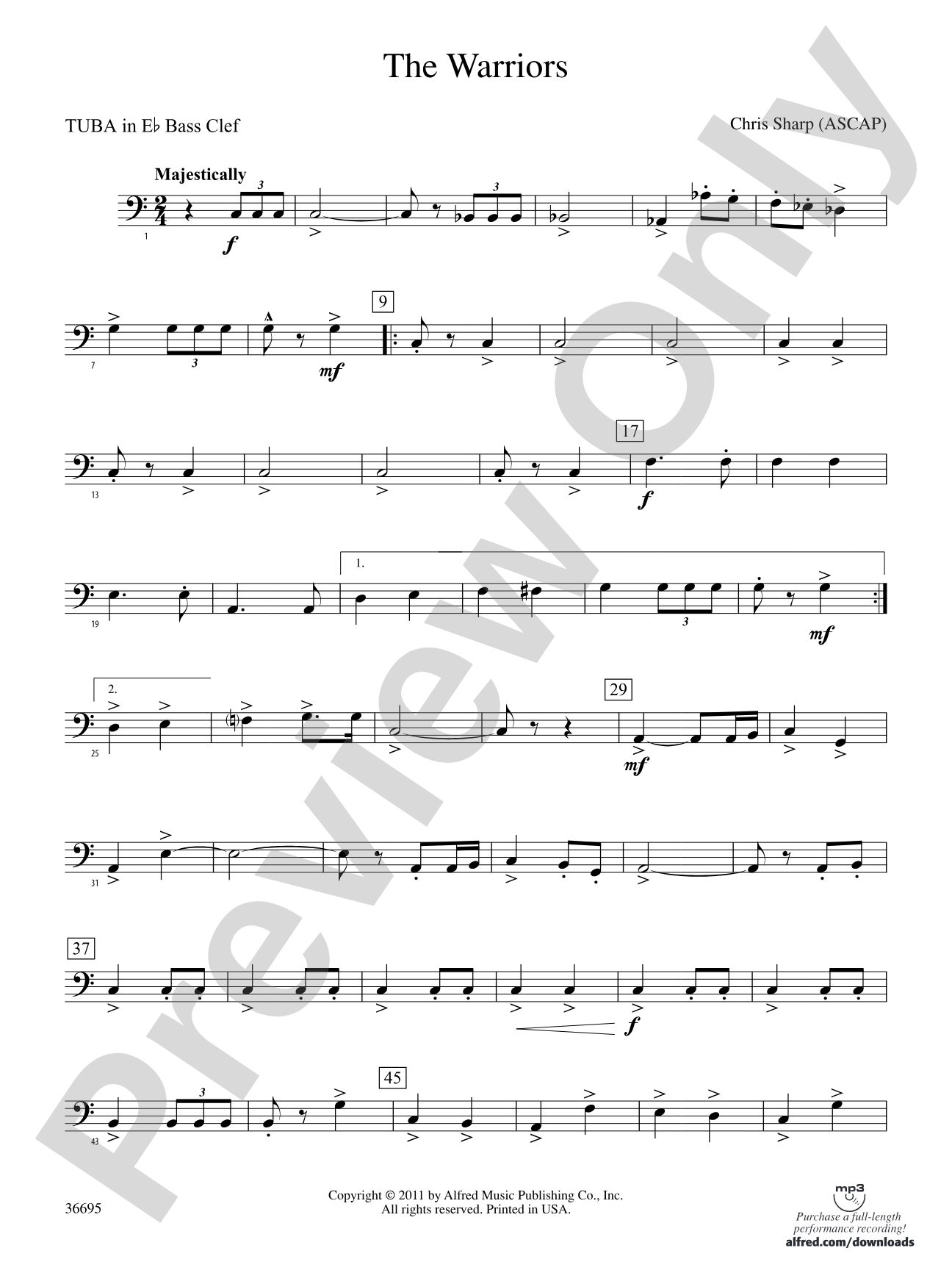
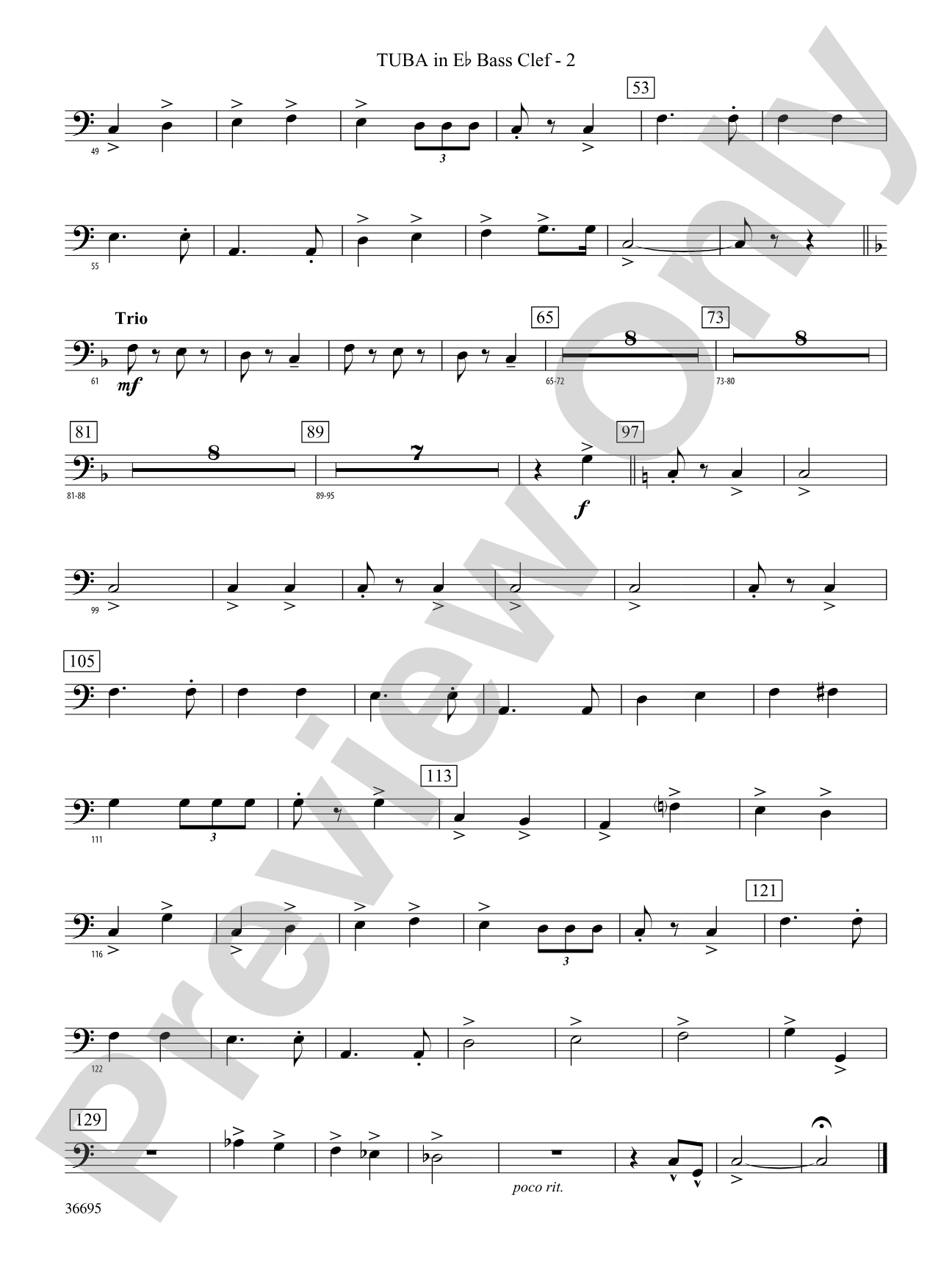

The Warriors: (wp) E-flat Tuba B.C.
By Chris Sharp
Grade: 2 (Medium Easy)
Item: 00-PC-0015123_wpTBEBC
$3.00
Pickup currently not available
Description
"The Warriors" is a processional march suitable for festival performances or ceremonial purposes, such as a graduation. Written in the style of the noted English composers of the early 20th century, this piece could be a good introduction to the more involved works of Holst, Vaughan Williams, Jacob or Grainger.


Don't just read it, hear it, play along with it, and watch your students grow with it. In MakeMusic Cloud, The Warriors: (wp) E-flat Tuba B.C. comes alive with professional accompaniment, adjustable tempo, and built-in practice tools that turn solo practice into real progress.
Open in the Player
Jump straight in and assign it today.
Start Your Free Trial
Open this title and explore the full library in minutes.
Sample Audio
1
Audio File
--:--
0:00
0:00
Sample Video
No sample videos found.
Additional Details
Series:
Young Symphonic
Publisher:
Alfred Music
Page Count:
244
SKU:
00-PC-0015123_wpTBEBC
More about this title
About the Composer: Chris Sharp
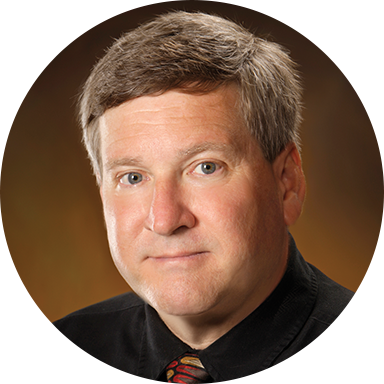
Chris Sharp holds a Ph.D. and has built a career balancing performance, composition, and education. As a trombonist, he spent eleven years performing and leading ensembles at Walt Disney World, then transitioned into arranging and orchestrating for Disney parks globally, creating music for live entertainment and broadcast since 1984. His freelance work spans Universal Studios, the Ringling Brothers and Barnum & Bailey Circus, the Boston Pops, and prestigious military ensembles including the USAF Airmen of Note.
Sharp has taught at middle, high school, and college levels, and currently directs bands at Polk State College in Winter Haven, Florida, where he also instructs music theory, technology, and arranging. His compositions and arrangements for concert and jazz band have earned regular performances at the Midwest Clinic and multiple ASCAP Plus awards. He serves frequently as a clinician, guest conductor, and adjudicator for organizations including Bands of America and Drum Corps International.
Why we love this
Sharp captures the ceremonial grandeur of early 20th century English composers while keeping the writing accessible. Grade 2 bands can sound genuinely polished performing this march, and the processional character works equally well at graduations, festivals, or concert finales. It's a confident entry point to the compositional language that defines Holst and Vaughan Williams, without the technical demands that make their major works challenging for emerging ensembles.
What to expect
Stately and confident, with the formal elegance of a procession. The harmonic language evokes early 20th century English sensibility without sounding archaic, and the march rhythm propels the ensemble forward while the melodic writing invites listeners into a ceremonial moment. There's dignity in the sound, built from clear part writing and traditional instrumentation.
Who it's for
Grade 2 concert bands ready to move beyond simple arrangements into music with genuine musical substance. Directors seeking a piece that sounds sophisticated and works for ceremonial events such as graduations, processionals, or festival programming will find this ideal. Students benefit from performing in the compositional idiom of respected English masters without facing the advanced technical demands of their larger works.
How to get the most out of it
- Emphasize the steady pulse and march character throughout. This style depends on a solid, unwavering foundation in the low brass and bass line; lock tempo early in rehearsals.
- Pay attention to dynamic shape in the melody. Even in a processional march, phrasing should breathe; avoid playing every section at the same volume level.
- Balance the harmonic color across the ensemble. The orchestration carries the English compositional tradition; make sure all sections hear and support the voice leading, not just the dominant melody.
- Plan for clear articulation in the ensemble passages. Precision in tonguing and releases will enhance the formal, ceremonial character of the piece.
How to use it
Program this as a concert opener or closer to frame a ceremony with gravitas. Its processional nature suits graduations, academic celebrations, or festival performances where a formal opening statement sets the tone. It also works as a bridge piece between lighter fare and more substantial concert works, proving to young musicians that Grade 2 literature can sound genuinely professional.
Skills your students will build
- Marching articulation and ensemble precision in symmetrical phrases
- Balance and blend in four-part harmonic progressions
- Phrasing within a steady, processional tempo
- Awareness of part writing and voice independence across instrument families