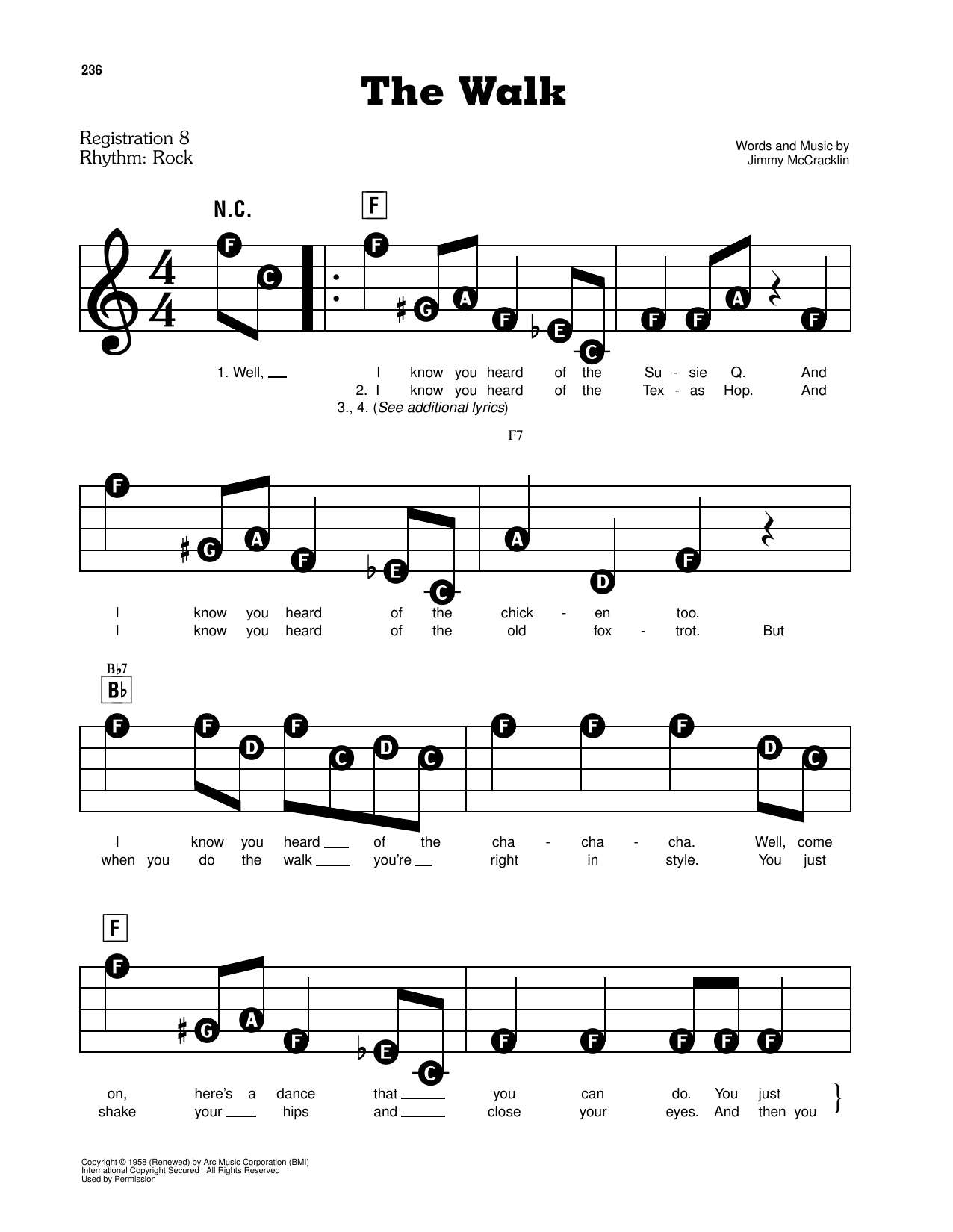
The Walk Sheet Music Preview

The Walk: E-Z Play Today

As performed by Jimmy McCracklin

Item: 35-DS00460039

Digital Download
$4.99
Description

The Walk: E-Z Play Today isn't in MakeMusic Cloud just yet...but it could be. Let us know you'd like to see it, and you'll help shape what comes next. In the meantime, start a free trial and dive into thousands of interactive titles your students can play along with today.

Sample Audio
No sample audio found.
Sample Video
Additional Details
Publisher: Hal Leonard
Page Count: 2
SKU: 35-DS00460039

More about this title

About the Artist: Jimmy McCracklin

Jimmy McCracklin (1911-1999) was a pianist and bandleader whose influence on rhythm and blues extended well into rock and roll territory. His 1950 recording of "The Walk" became an iconic instrumental that crossed genre lines, earning respect from musicians across multiple traditions and establishing McCracklin as a significant figure in post-war American popular music.

Why we love this

This E-Z Play arrangement opens the door to a piece with genuine historical weight and infectious groove without requiring advanced technique. The straightforward layout lets pianists focus on feel and articulation, which is where "The Walk" actually lives.

What to expect

Relaxed and propulsive at once. "The Walk" has the casual confidence of someone who knows exactly where the beat is and takes pleasure in laying back just slightly behind it. The melody sits naturally under the fingers, and the harmonic simplicity lets the groove do the talking.

Who it's for

Student pianists ready for popular standards with character, and teachers building repertoire that connects jazz, rock, and rhythm and blues traditions. This arrangement works equally well for supplementary solo repertoire or as a band feature.

How to get the most out of it

  • Commit to a steady, relaxed tempo rather than rushing; the tune's appeal depends on a confident pocket, not speed.
  • Keep the left hand crisp and conversational. This isn't about filling the space with thick comping; clean, punchy responses work best.
  • Pay attention to the rhythmic lift in the melody. Small variations in attack and release make the difference between mechanical and swinging.

How to use it

Pair this with other mid-century standards to show students how jazz and rock idioms intersected in the 1950s. It works as a solo piece in a recital or as a change-of-pace feature in a larger concert context.

Skills your students will build

  • swing eighth-note feel and rhythmic pocket
  • blues and rock vocabulary
  • left-hand independence and rhythmic comping
  • stylistic interpretation of a classic instrumental melody

You May Also Like