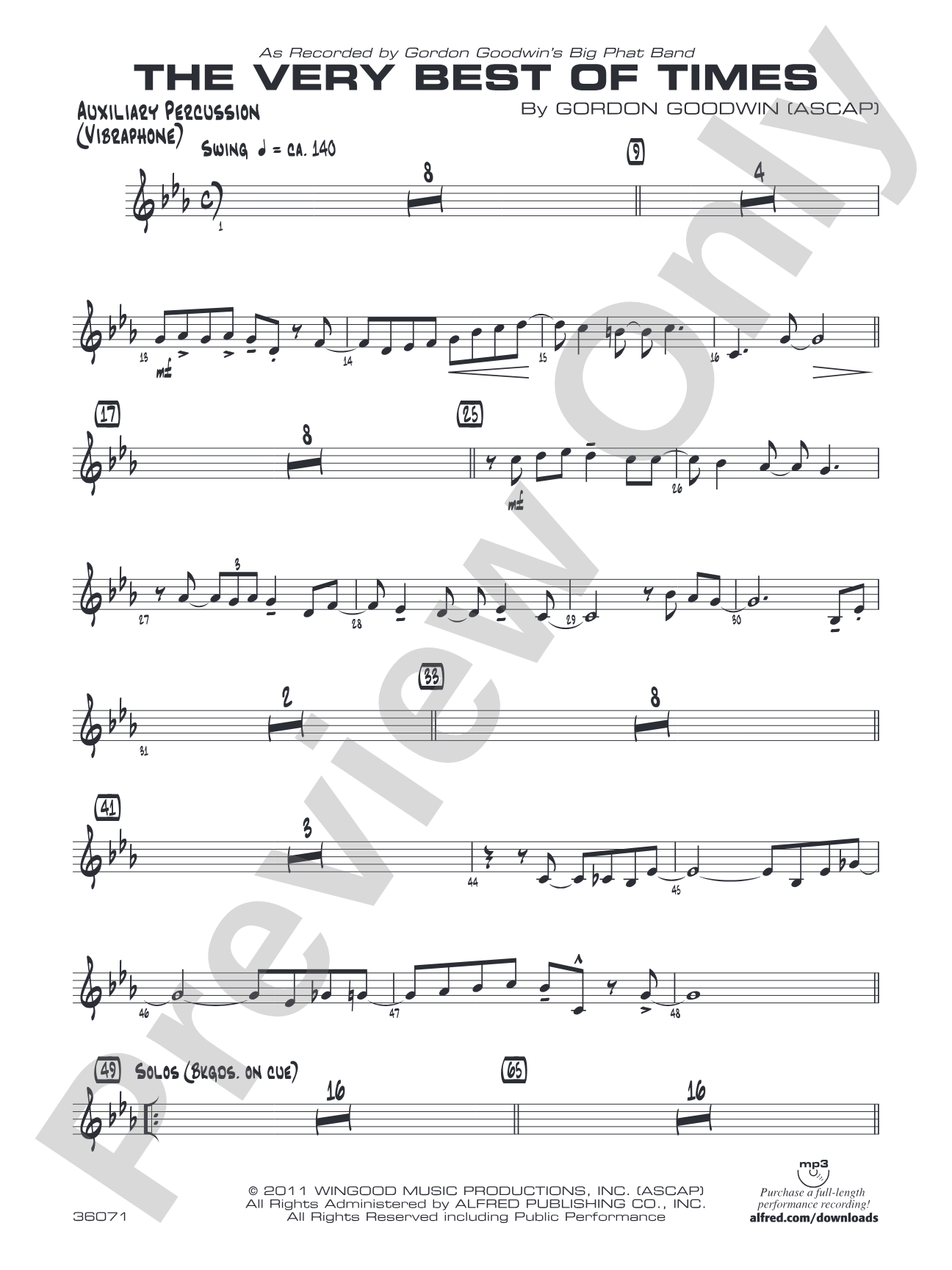
(The) Very Best of Times: Auxiliary Percussion Sheet Music Preview

(The) Very Best of Times: Auxiliary Percussion

By Gordon Goodwin

Grade: 5 (Advanced / Difficult)

Item: 00-PC-0017207_APC

Digital Download
$3.00
Description
This very playable swing chart at 140 BPM has solo space for alto, tenor, trumpet, trombone and/or piano. The auxiliary percussion part is for vibes. Lead trumpet range is to written high E. A tasty Basie-style chart that is accessible to a good high school band. (8:07)

Don't just read it, hear it, play along with it, and watch your students grow with it. In MakeMusic Cloud, (The) Very Best of Times: Auxiliary Percussion comes alive with professional accompaniment, adjustable tempo, and built-in practice tools that turn solo practice into real progress.

Sample Audio
0:00
0:00
Sample Video
Additional Details
Series: Gordon Goodwin Series
Publisher: Alfred Music
Page Count: 98
SKU: 00-PC-0017207_APC

More about this title

About the Composer: Gordon Goodwin

Gordon Goodwin

Gordon Goodwin has been composing since childhood, writing complete orchestral works by ear before his teens. His big band chart "Hang Loose," composed at thirteen, launched a career that would eventually span film scoring, television production, and world-class jazz performance. Three Emmy Awards and multiple Grammy nominations recognize his work on major films including "Bad Boys II," "Remember the Titans," "Armageddon," and "Con Air."

Beyond Hollywood, Goodwin has arranged and performed with artists ranging from Quincy Jones to Christina Aguilera, and conducted leading symphony orchestras across North America and Europe. Since 2000, he has led Gordon Goodwin's Big Phat Band, a Los Angeles-based ensemble that redefined contemporary big band jazz through Grammy-nominated recordings and innovative audio formats.

Why we love this

Goodwin writes for the players you actually have, not the dream section. The solos are genuinely fun to improvise, the horn parts sit comfortably without being soft, and the rhythm section gets real work to do. At 140 BPM, this swings hard enough to feel like a "real" jazz performance while remaining playable for a strong high school band.

What to expect

Sophisticated swing with roots in the Count Basie tradition. The chart bounces with infectious energy and space for genuine improvisation, delivering that satisfying moment when the ensemble locks into the groove and the soloists can actually play jazz instead of just hitting notes.

Who it's for

Advanced high school jazz ensembles and college rehearsal bands looking for a chart that delivers a professional sound without unrealistic demands. This works equally well for community jazz groups and small professional big bands seeking accessible, engaging repertoire.

How to get the most out of it

  • Build the groove from the rhythm section outward. Lock the kick drum and bass into the pocket before layering horns, then let the piano comping breathe naturally.
  • Give soloists space to breathe between their improvised choruses. A half-beat of silence lands harder than rushing into the next section.
  • Balance lead trumpet visibility with the section underneath. The high E should cut through, but not at the expense of tuning and blend in the sax section.
  • Shape the written melody with light articulation on the upbeats. Goodwin's phrasing rewards slight space and precision rather than a heavy approach.

How to use it

Pair this with two ballad selections to create a complete jazz concert set that showcases both lyrical and swinging sides of the ensemble. The length (8:07) and approachable difficulty make it ideal for community engagement concerts where audiences want recognizable swing jazz without overly complex harmony.

Skills your students will build

  • Groove and pulse in medium swing at 140 BPM
  • Improvisation over blues and jazz chord progressions
  • Solo trading and section interplay across trumpet, alto, tenor, and piano
  • High register security on lead trumpet (to written high E)
  • Comping and accompaniment sensitivity in the rhythm section
  • Balancing ensemble blend while maintaining soloist clarity

You May Also Like