The Varsity Drag (from Good News) Sheet Music Preview

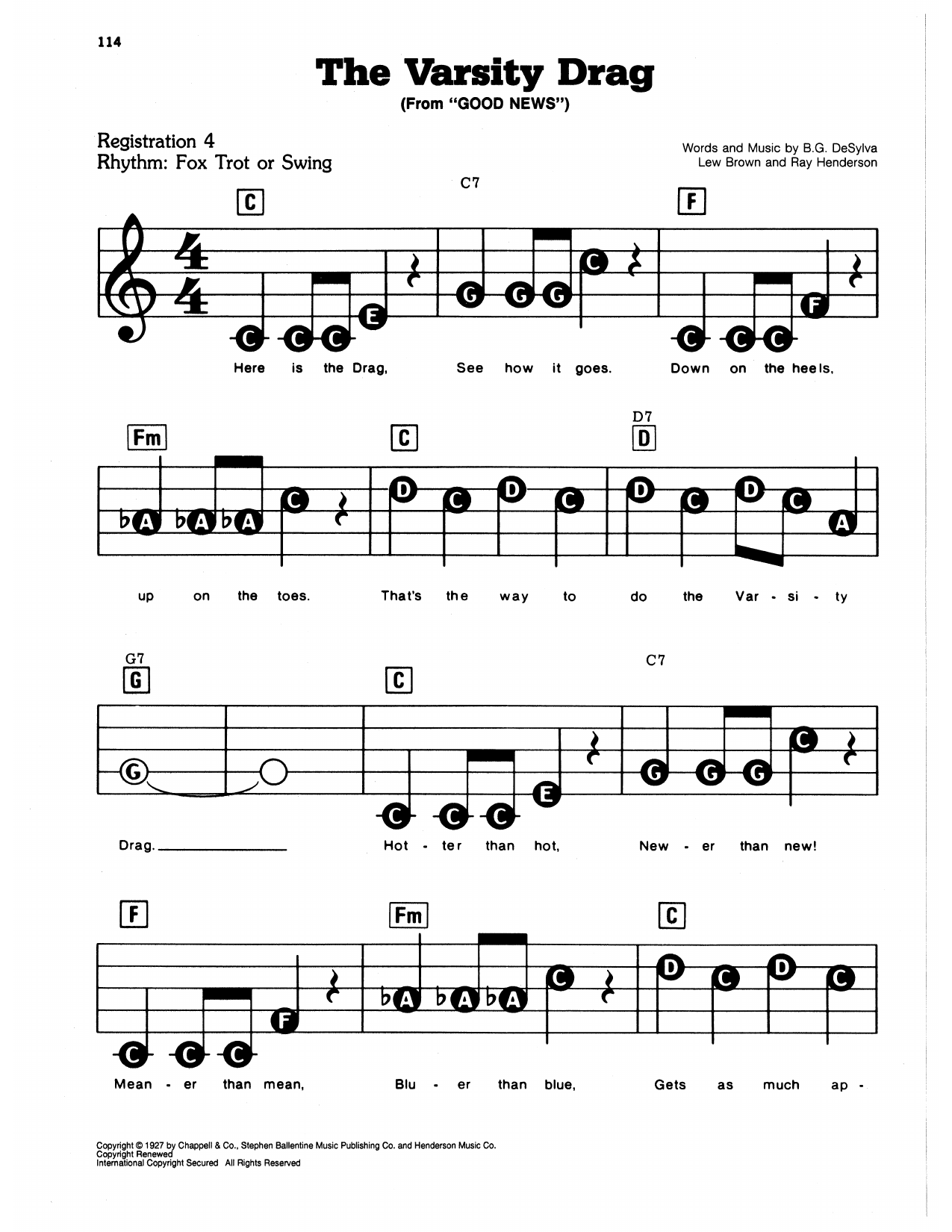
The Varsity Drag (from Good News): E-Z Play Today

As performed by B.G. DeSylva

Item: 35-DS01881246

Digital Download
$4.99
Description

The Varsity Drag (from Good News): E-Z Play Today isn't in MakeMusic Cloud just yet...but it could be. Let us know you'd like to see it, and you'll help shape what comes next. In the meantime, start a free trial and dive into thousands of interactive titles your students can play along with today.

Sample Audio
No sample audio found.
Sample Video
Additional Details
Publisher: Hal Leonard
Page Count: 2
SKU: 35-DS01881246

More about this title

About the Artist: B.G. DeSylva

B.G. DeSylva was a prolific lyricist and composer who defined the sound of 1920s Broadway and early film musicals. Working across decades with collaborators like Lew Brown and Ray Henderson, he crafted songs that balanced sophisticated harmony with infectious, singable melodies. His work shaped how American musical theater audiences understood the relationship between lyric, melody, and dance.

Why we love this

This arrangement captures the playful energy of a classic college musical without requiring advanced technical chops. The two-page format makes it approachable for intermediate pianists while the swing rhythm and jazz harmonies keep things musically honest and rewarding to perform.

What to expect

A burst of collegiate joy and theatrical flair. The melody bounces with youthful confidence while the harmony winks with knowing sophistication. It's the sound of students in crisp sweaters doing high kicks and believing the world is theirs to claim.

Who it's for

Student pianists working through jazz and Broadway styles who want real repertoire without steep technical demands. Teachers building units around early musical theater or introducing swing rhythms in a fun, contextual way.

How to get the most out of it

  • Keep the tempo buoyant and steady; rushing the drag rhythm flattens its charm. Use a metronome if the syncopation feels slippery at first.
  • Voice the jazz chords clearly rather than drowning them in pedal. Each sonority should speak distinctly, especially in the left hand.
  • Accent the offbeat figures that drive the rhythm. This rhythmic lift is what makes the piece dance.
  • Balance melody and accompaniment so the tune sits above the groove without sounding detached from it.

How to use it

Pair this with other songs from Good News or similar 1920s musical theater repertoire for a concert celebrating American songwriting's golden age. It works equally well as a solo recital encore or as part of a jazz appreciation curriculum that traces swing style back to its theatrical roots.

Skills your students will build

  • Reading and executing swing rhythms and syncopated figures
  • Voicing jazz chord extensions and alterations
  • Balancing independent melodic and harmonic lines
  • Maintaining steady tempo across syncopated accompaniment patterns

You May Also Like