The Unfinished Symphony (Theme) Sheet Music Preview

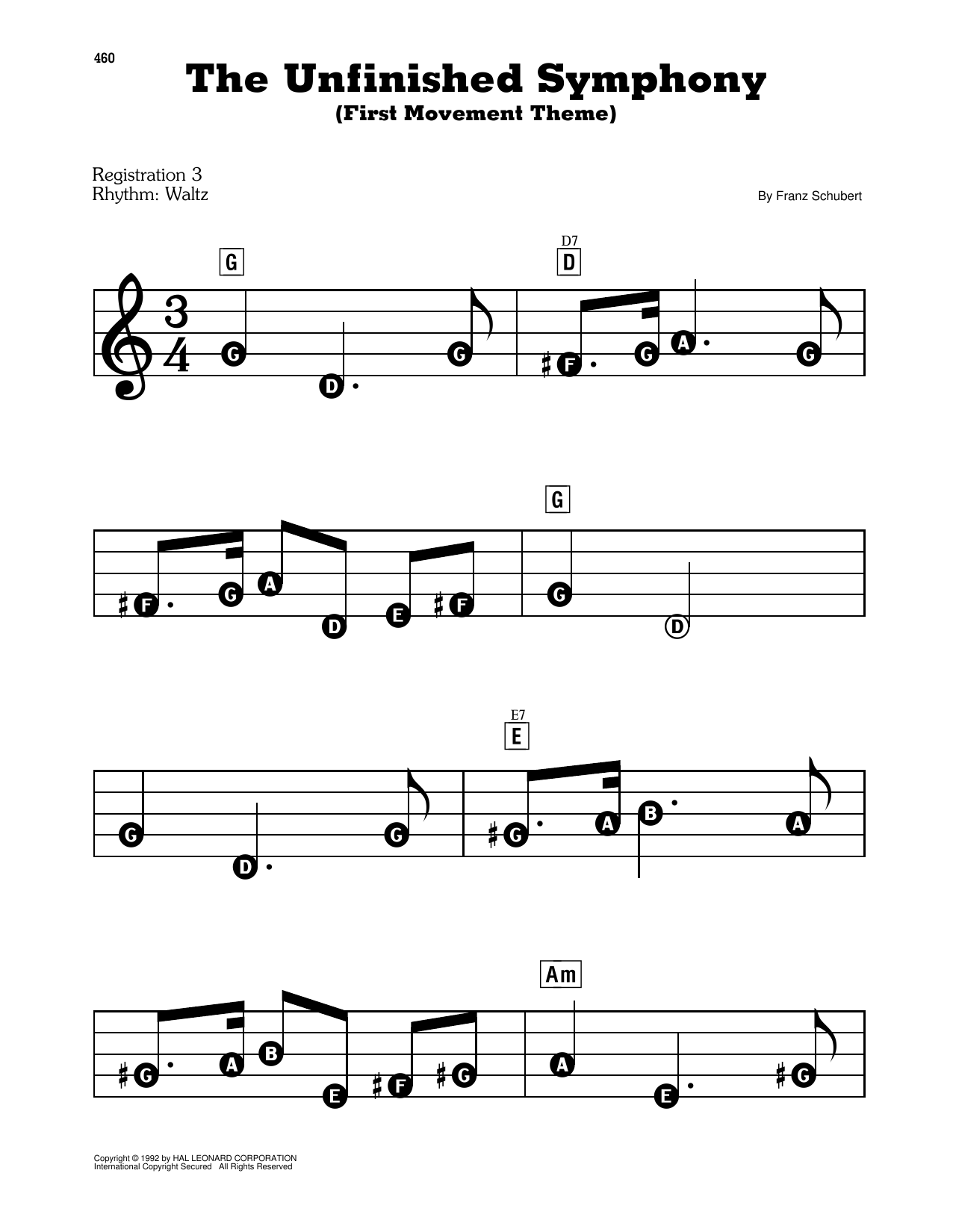
The Unfinished Symphony (Theme): E-Z Play Today

As performed by Franz Schubert

Item: 35-DS01826858

Digital Download
$4.99
Description

The Unfinished Symphony (Theme): E-Z Play Today isn't in MakeMusic Cloud just yet...but it could be. Let us know you'd like to see it, and you'll help shape what comes next. In the meantime, start a free trial and dive into thousands of interactive titles your students can play along with today.

Sample Audio
No sample audio found.
Sample Video
Additional Details
Publisher: Hal Leonard
Page Count: 2
SKU: 35-DS01826858

More about this title

About the Artist: Franz Schubert

Franz Schubert (1797–1828) composed some of the 19th century's most enduring melodies despite a tragically short life. His gift for songwriting shaped the Lied tradition, and his instrumental works reveal an instinctive understanding of how to write idiomatically for each instrument. The B minor Symphony No. 8, known as the Unfinished, remains one of classical music's most recognizable works, its opening theme instantly memorable to audiences and pianists alike.

Schubert's themes have long served as models for music education. Their clear melodic contours, balanced phrasing, and emotional directness make them ideal for students learning to shape a line and understand formal structure. This particular theme distills what makes his writing so teachable: it sits comfortably under the hands while demanding genuine musicality from the performer.

Why we love this

This E-Z Play arrangement captures one of music's most universally recognized melodies in a format that lets intermediate pianists experience a authentic classical masterwork without years of technical preparation. The theme's profound beauty and Schubert's harmonic sophistication shine through even in this simplified voicing, giving students something genuinely substantial to work toward rather than a dumbed-down version.

What to expect

The opening carries an aching, introspective beauty, as if Schubert is reflecting on something just beyond reach. The melody unfolds with inevitability, each phrase leading naturally to the next, creating a sense of gentle forward motion tempered by quiet resignation. Playing it well requires control and restraint; the power lies in what you allow to resonate rather than in dramatic assertion.

Who it's for

Pianists working through early intermediate repertoire who want exposure to genuine classical material without the technical demands of the full orchestral score. Teachers seeking a two-page arrangement that demonstrates both the architecture of Schubert's writing and the importance of lyrical, sustained playing.

How to get the most out of it

  • Shape the opening phrase with a gentle swell toward the middle, then allow it to recede; this single gesture transforms the melody from merely played into something that breathes.
  • Listen to historical recordings to hear how different pianists approach the tempo. Some favor a walking pace that emphasizes the unfolding nature of the melody; others move with slightly more forward momentum.
  • Balance the accompaniment carefully so it supports rather than competes. The harmonic foundation matters, but Schubert's theme deserves space.
  • Notice where the melody shifts into a lower register in the second phrase. Maintain consistent tone quality as the notes descend rather than letting them drop away.

How to use it

Pair this with other simplified classical themes to introduce students to the Romantic era's melodic sensibility in a recital or student showcase. It works equally well as a bridge between elementary method books and more demanding classical repertoire, or as an introduction to Schubert in a musicology or music history class focused on 19th-century composers.

Skills your students will build

  • Sustaining legato phrasing across longer melodic arcs
  • Dynamic shaping within a limited range (avoiding both flatness and overdoing contrast)
  • Recognizing and executing classical formal structures (introduction, primary theme, harmonic movement, restatement)
  • Voice independence between melody and accompaniment
  • Interpreting expressive markings while maintaining steady pulse

You May Also Like