
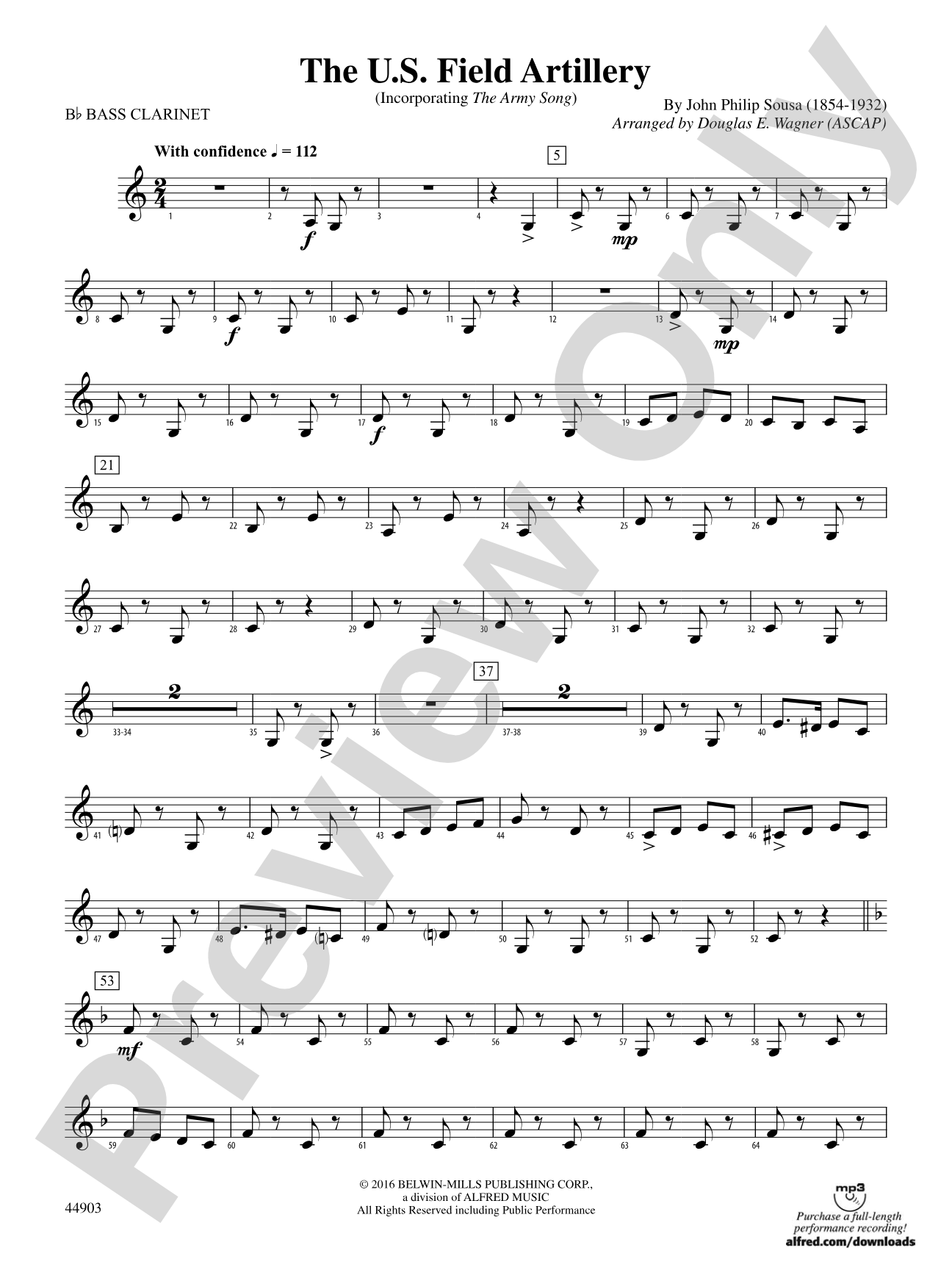

The U.S. Field Artillery: B-flat Bass Clarinet
Incorporating "The Army Song"
By John Philip Sousa / arr. Douglas E. Wagner
Grade: 2 (Easy)
Item: 00-PC-0017394_BC
$3.00
Pickup currently not available
Description
Composed in 1917, "the official march of the United States Army" is one of Sousa's most frequently performed titles. It's unique in that it uses a familiar tune for the trio theme; in this case, "The Army Song." The original thematic material has been diligently preserved while scored to be accessible to the developing band. (2:30)


Don't just read it, hear it, play along with it, and watch your students grow with it. In MakeMusic Cloud, The U.S. Field Artillery: B-flat Bass Clarinet comes alive with professional accompaniment, adjustable tempo, and built-in practice tools that turn solo practice into real progress.
Open in the Player
Jump straight in and assign it today.
Start Your Free Trial
Open this title and explore the full library in minutes.
Sample Audio
1
Audio File
--:--
0:00
0:00
Sample Video
Additional Details
Series:
Belwin Young Band
Publisher:
Alfred Music
Page Count:
236
SKU:
00-PC-0017394_BC
More about this title
About the Composer: John Philip Sousa
John Philip Sousa (1854-1932) shaped American concert band music as few composers have. His marches defined the genre and remain central to wind band repertoire across school, civic, and military ensembles. Beyond his prolific output of over 140 marches, Sousa was a bandmaster, conductor, and fierce advocate for live music performance.
Sousa's ability to write memorable melodies supported by rich harmonic textures and clear orchestration made his work accessible to performing ensembles at every level. His marches have sustained their popularity for more than a century precisely because they balance musical integrity with performability, a principle that continues to guide educators selecting repertoire for developing bands.
Why we love this
This Grade 2 arrangement preserves the character and structure of Sousa's iconic march while opening it to younger and less experienced ensembles. Wagner's orchestration respects the original without oversimplifying; students play recognizable thematic material and experience the satisfaction of performing a genuinely important piece of American musical history. For summer concerts and patriotic programming, this title builds band morale and audience connection in equal measure.
What to expect
This march carries the unmistakable swagger and pride of American military tradition. The melodies are buoyant and forward-moving, the harmonic changes straightforward and clear. When the familiar trio arrives, the effect is almost ceremonial, grounding the piece in shared musical heritage while maintaining the propulsive energy that makes Sousa's marches so engaging to perform and hear.
Who it's for
Band directors seeking accessible yet substantive repertoire for Grade 2 ensembles will find this arrangement ideal for mixed-level groups and younger bands. The piece works equally well for developing high school bands or advanced middle school programs. Students at this level experience the rewards of performing authentic Sousa while building foundational skills in march style and musical phrasing.
How to get the most out of it
- Balance the trio melody between upper and lower voices. Since 'The Army Song' is the emotional center of the piece, ensure it sings over the accompaniment without forcing volume.
- Maintain crisp articulation in the march sections to bring out the military character. Tonguing clarity matters more than speed here.
- Shape phrases across the harmonic progressions rather than resting at barlines. Let the underlying harmony guide your conducting pulse.
- Bring out the counter-melodies in the full sections. Wagner's arrangement includes supportive lines that add texture when balanced correctly.
How to use it
Program this on Independence Day concerts, military appreciation events, or any patriotic celebration. It pairs well with other accessible marches and works as an effective concert opener or closer depending on your program flow. The 2:30 duration fits neatly into balanced concert programming without overwhelming a Grade 2 ensemble's stamina.
Skills your students will build
- March style and phrasing conventions
- Balancing melody and accompaniment voices
- Reading standard concert band transpositions
- Sustaining rhythmic precision in repetitive sections
- Performing with appropriate articulation and expression in patriotic music