
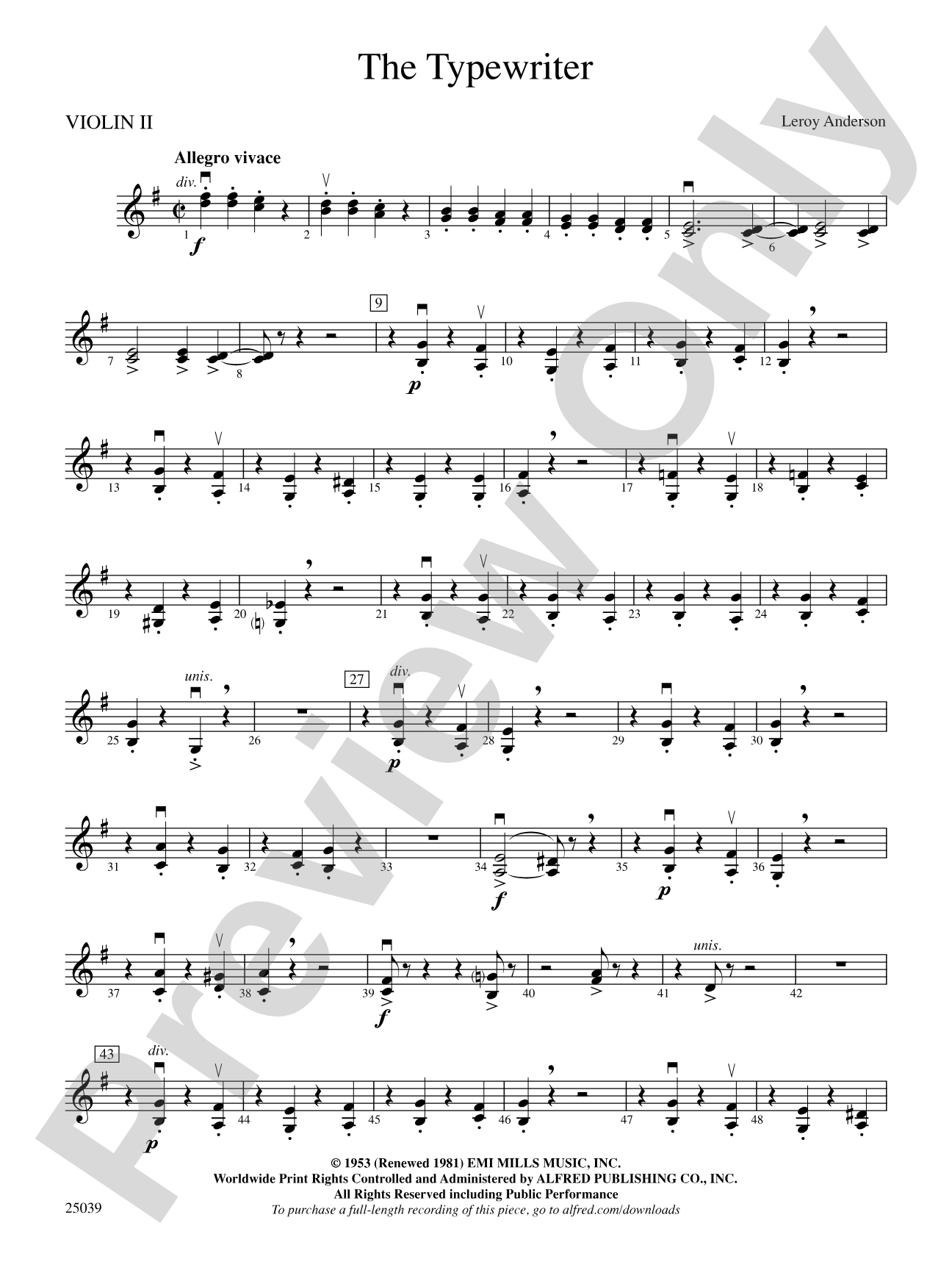

The Typewriter: 2nd Violin
By Leroy Anderson
Grade: 5
Item: 00-PC-0001010_VN2
$3.00
Pickup currently not available
Description
An enduring classic, this release from the pen of Leroy Anderson will once again become a staple of the orchestra library. "The Typewriter" has been reprinted with full score and bowed parts so that it may be enjoyed once more. The sounds of the typewriter may be duplicated on the wood block and the gourd. A great opportunity for high school orchestras to experience the music of Leroy Anderson! A Belwin Classic Orchestra piece. (1:44)


Don't just read it, hear it, play along with it, and watch your students grow with it. In MakeMusic Cloud, The Typewriter: 2nd Violin comes alive with professional accompaniment, adjustable tempo, and built-in practice tools that turn solo practice into real progress.
Open in the Player
Jump straight in and assign it today.
Start Your Free Trial
Open this title and explore the full library in minutes.
Sample Audio
1
Audio File
--:--
0:00
0:00
Sample Video
Additional Details
Series:
Belwin Concert Full Orchestra
Publisher:
Alfred Music
Page Count:
94
SKU:
00-PC-0001010_VN2
More about this title
About the Composer: Leroy Anderson
Leroy Anderson (1908-1975) was an American composer and conductor whose gift for orchestration and melodic wit made him one of the most performed composers in the mid-20th century. Trained at Harvard, Anderson developed a distinctive voice in light concert music, blending classical craftsmanship with accessible charm and clever instrumental color. His works remain essential to orchestra libraries precisely because they balance genuine musicianship with the kind of inventive humor that audiences of all ages find irresistible.
Why we love this
Anderson's orchestration at this grade level teaches young musicians how to listen across sections and how color and texture carry narrative as effectively as melody. The wood block and gourd parts invite non-traditional percussionists into the ensemble while keeping the piece genuinely fun to perform, which matters for high school motivation and retention.
What to expect
The piece captures the rhythm and urgency of office work with affection rather than satire, combining a bouncy, optimistic main theme with the unmistakable sound of keys striking paper. It's playful without being trivial, lively without being chaotic, and designed to make audiences smile while musicians engage in real musical problem-solving.
Who it's for
High school orchestra directors looking for a Grade 5 piece that combines orchestral sophistication with genuine entertainment value. Students benefit from the opportunity to play a recognizable classic while developing their ability to balance soloistic percussion effects with ensemble texture.
How to get the most out of it
- Balance the typewriter effects carefully with the orchestral texture so they remain clearly audible without drowning out the melodic lines; rehearse with the actual wood block and gourd if possible before switching to alternatives.
- Shape the main theme with subtle phrasing rather than mechanical precision, even though the piece evokes a typewriter; Anderson's melody deserves the same musical attention you'd give any theme.
- Establish clear coordination between the percussion effects and the ensemble at key moments so the rhythmic "typing" enhances rather than interrupts the musical flow.
- Use the recorded accompaniment as a reference for tempo and ensemble blend, but allow your orchestra's interpretation to breathe naturally within Anderson's harmonic structure.
How to use it
This works beautifully as a concert opener or a contrasting piece between heavier repertoire, particularly in a program that includes other light concert or pops-style works. The humor and accessibility also make it an excellent choice for community performances or young people's concerts where you want to engage listeners who are encountering the orchestra for the first time.
Skills your students will build
- Balancing solo percussion effects with ensemble texture
- Performing at a steady, relentless tempo while maintaining musical phrasing
- Coordinating rhythmic precision across multiple sections
- Reading and executing a piece with written percussion ad lib parts
- Understanding orchestration and how timbral contrast serves musical narrative