The Typewriter: Piano Digital Sheet Music

The Typewriter: Piano Digital Sheet Music

Leroy Anderson

Item: 00-PS-0002470

Digital Download
$3.99
Description

The Typewriter: Piano Digital Sheet Music isn't in MakeMusic Cloud just yet...but it could be. Let us know you'd like to see it, and you'll help shape what comes next. In the meantime, start a free trial and dive into thousands of interactive titles your students can play along with today.

Sample Audio
No sample audio found.
Sample Video
Additional Details
SKU: 00-PS-0002470

More about this title

Why we love this

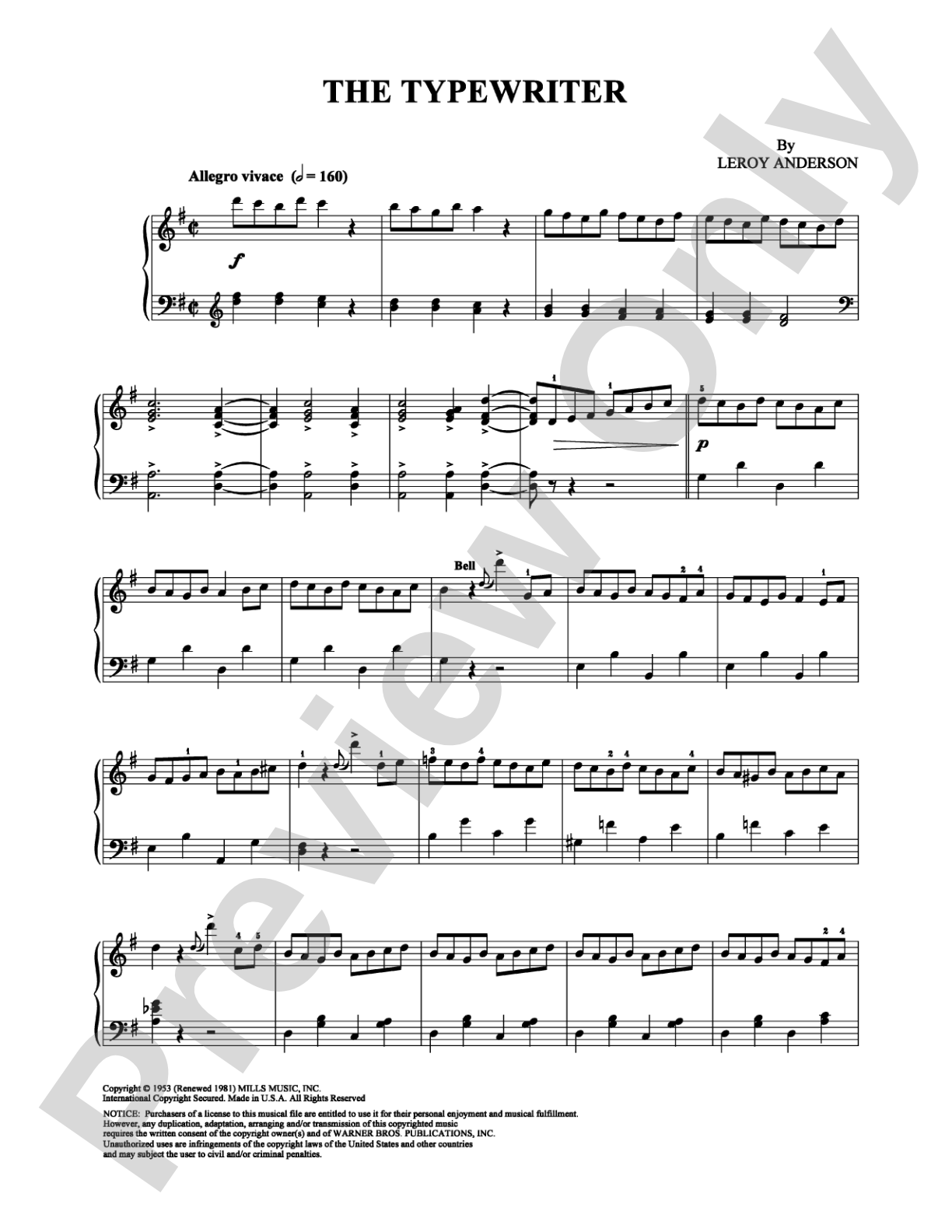
The Typewriter captures that distinctive percussive charm without requiring any special equipment or extended techniques. It's an immediate crowd-pleaser that lands equally well in a casual recital or a more formal concert setting, giving pianists a chance to show off rhythmic precision and playful musicality.

What to expect

The rapid, mechanical repetition evokes the click-clack of typewriter keys, transporting the listener to another era while maintaining a genuinely musical arc. There's a nostalgic warmth beneath the percussive surface, blending whimsy with structural integrity.

Who it's for

Pianists drawn to character pieces with a clear narrative and contemporary flair will find this accessible and rewarding. Students at early intermediate levels and beyond enjoy the technical satisfaction of executing the rhythmic patterns cleanly while building their interpretive range beyond lyrical repertoire.

How to get the most out of it

  • Keep the rhythmic pattern clean and mechanical; the charm comes from crisp articulation rather than pedal wash. A light, consistent touch on the repeating notes creates the authentic typewriter voice.
  • Shape the melodic material above the steady pulse so the listener hears both the percussive foundation and the musical story unfolding on top.
  • Maintain steady tempo throughout. Any rubato should be subtle and intentional; the piece's appeal depends on its rhythmic predictability.

How to use it

Include this as a lighter piece on a recital to provide contrast with more serious or romantic material. It works especially well in programs exploring 20th-century character pieces or as an opener that engages an audience immediately through familiar, playful imagery.

Skills your students will build

  • Rhythmic precision and mechanical articulation
  • Coordination between steady repetitive patterns and melodic shapes
  • Balancing tone color to create distinct musical layers
  • Maintaining steady tempo under technical demands

You May Also Like