

The Turtle Dove: SSA Choral Octavo
English Folk Song / arr. Victor C. Johnson
Item: 00-PO-0006435
$2.05
Minimum order quantity: 20 copies
Pickup currently not available
Description
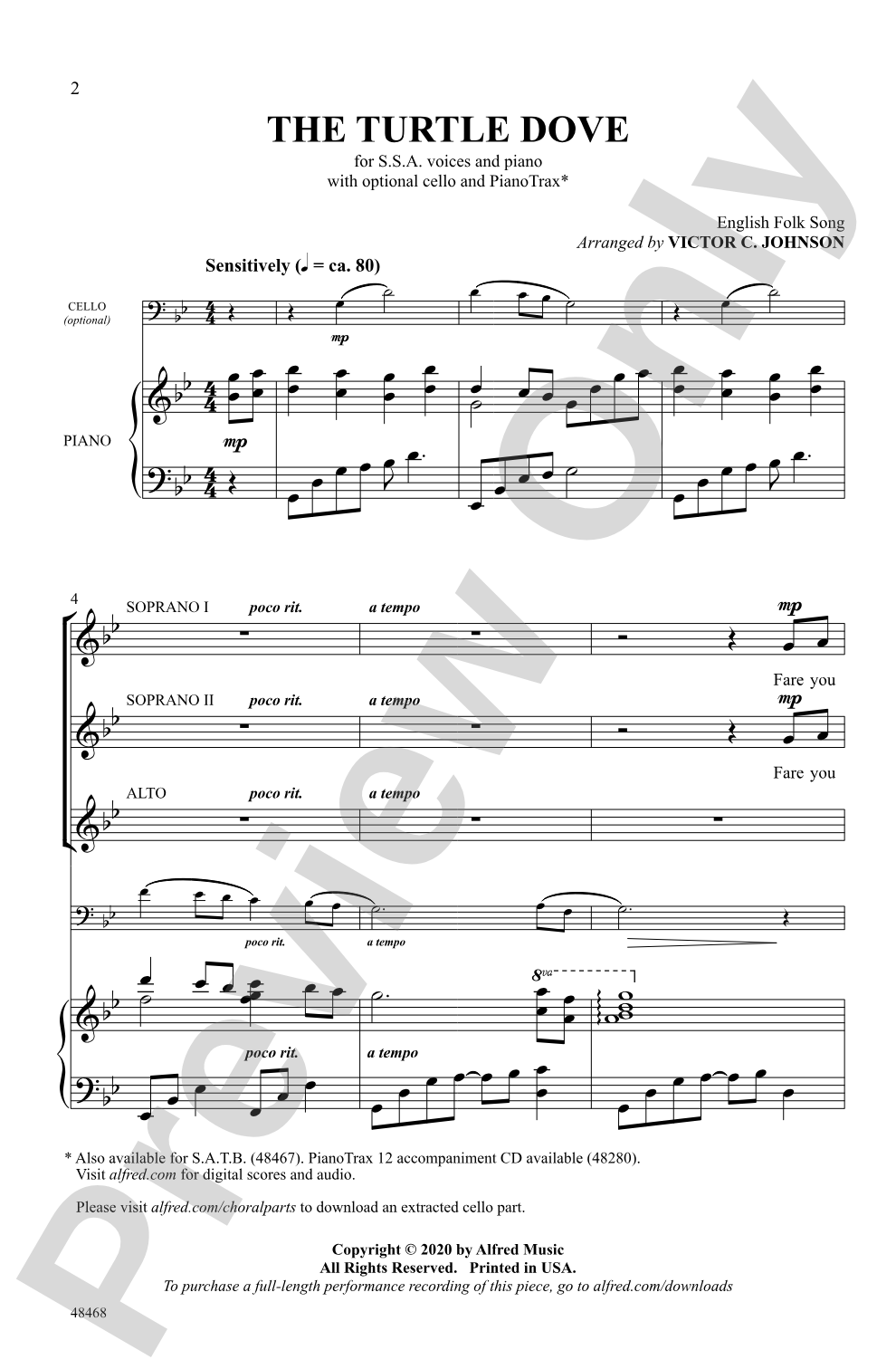
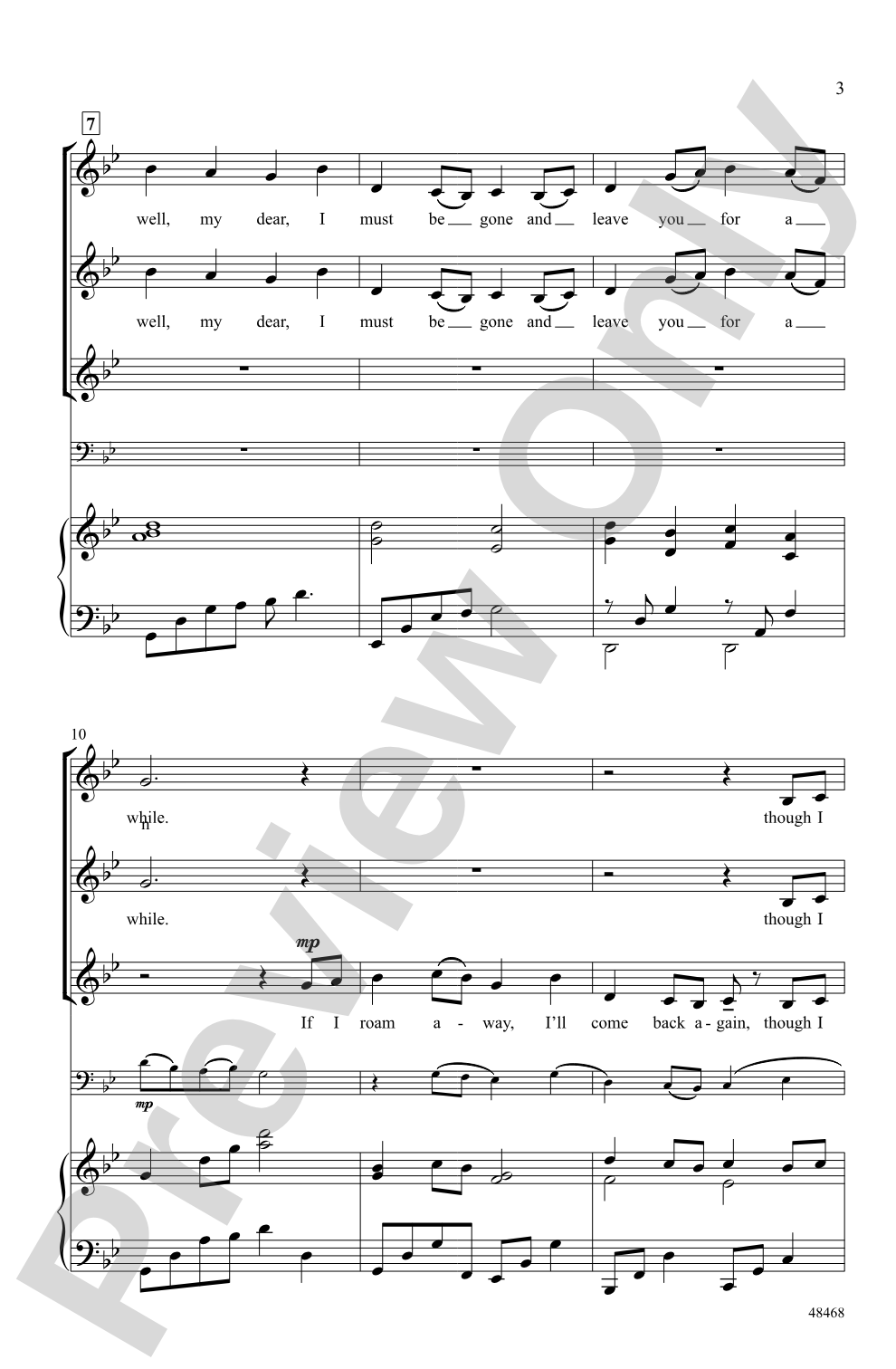
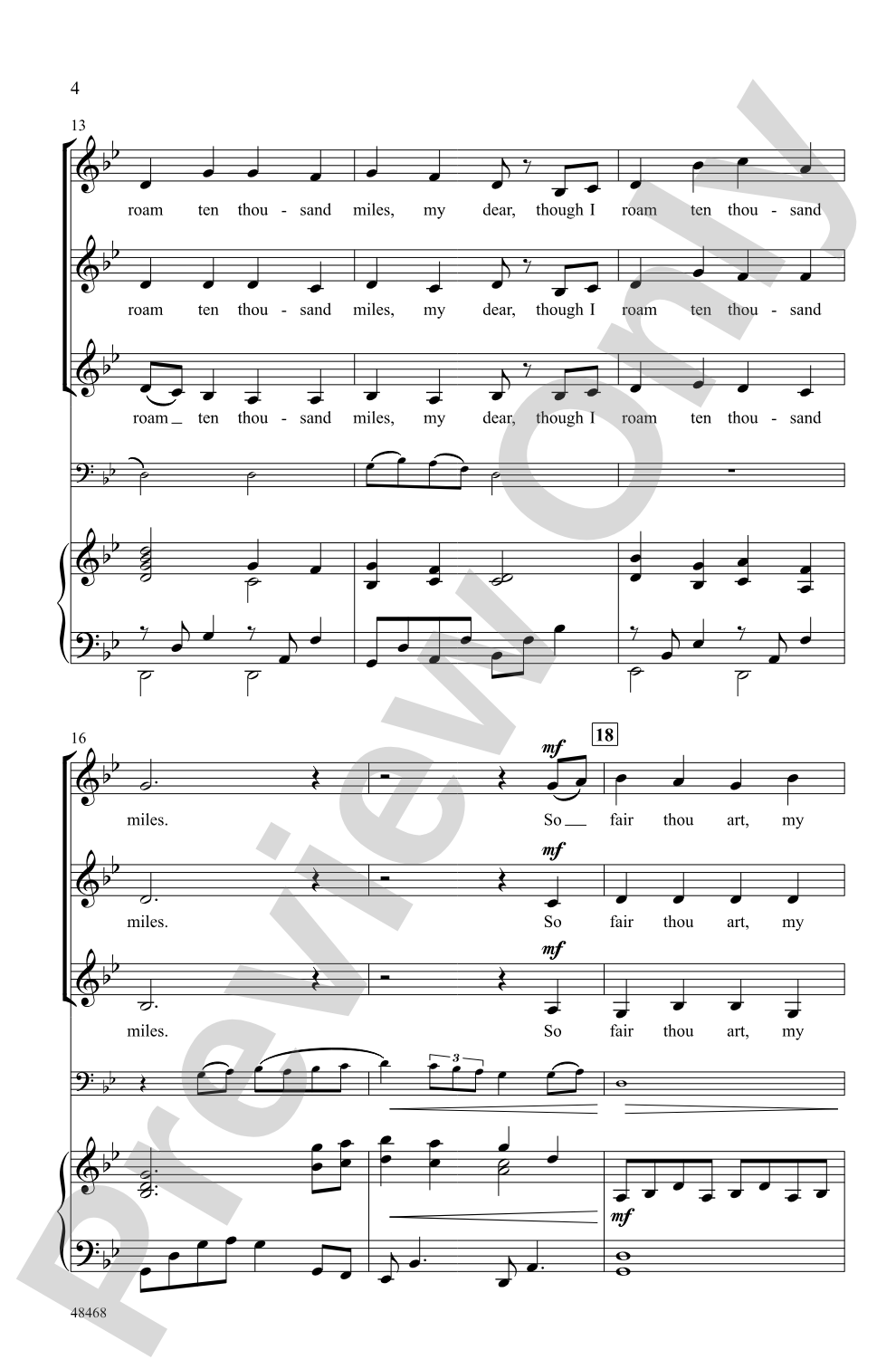
A solemn reflection on parting with the promise to return: these feelings are beautifully expressed in this sensitive arrangement of the 18th-century English folk ballad. An optional cello part dives and soars alongside the voices and piano, offering musical commentary throughout, while the arranger's careful attention to word stress underscores layers of deeper meaning. Extraordinary choral repertoire that will last for years in your library.


The Turtle Dove: SSA Choral Octavo isn't in MakeMusic Cloud just yet...but it could be. Let us know you'd like to see it, and you'll help shape what comes next. In the meantime, start a free trial and dive into thousands of interactive titles your students can play along with today.
Request This Title
Tell us you want it.
Start Your Free Trial
Explore everything that's ready to play right now.
Sample Audio
1
Audio File
--:--
0:00
0:00
Sample Video
No sample videos found.
Additional Details
Series:
Alfred Choral Designs
Publisher:
Alfred Music
Page Count:
12
SKU:
00-PO-0006435
More about this title
About the Arranger: Victor C. Johnson

Victor C. Johnson brings deep experience in choral education and composition to his work as School Choral Editor for Sing!, the educational publishing division of Choristers Guild. Based in Dallas, Texas, he served as choral director at Ft. Worth Academy of Fine Arts from 2000 to 2018, where he built and directed multiple ensembles including the Academy Singers and Academy Men's Choir, while also serving as Artistic Director for the Singing Girls of Texas and Children's Choir of Texas.
With over 500 choral works, vocal solos, and keyboard collections in print, Johnson has established himself as a prolific voice in choral music education. He currently conducts the Dallas Symphony Children's Chorus Mixed Ensemble (grades 9-12), the resident children's choir of the Dallas Symphony Orchestra. His professional involvement includes membership in the American Choral Directors Association, American Guild of Organists, Texas Music Educators Association, National Association for Music Education, and ASCAP.
Why we love this
Johnson's arrangement honors the folk ballad's emotional weight while creating something contemporary and singable for treble voices. The optional cello part transforms what could be a simple arrangement into a layered chamber work, giving directors flexibility in performance context without sacrificing sophistication. His precision with text setting ensures that singers understand every word they're singing, making the piece resonate long after rehearsal ends.
What to expect
The piece settles into the listener like dusk descending on a familiar landscape. There's tenderness in the melody and ache in the harmony, supported by the piano's steady presence and the cello's gentle counterpoint. You feel the weight of parting without despair, held instead by the promise of return.
Who it's for
Treble choirs seeking repertoire with real musical substance and emotional depth. This arrangement works for intermediate-to-advanced high school and college ensembles, as well as community and professional choirs looking for concert or festival material that combines accessibility with artistry.
How to get the most out of it
- Balance the cello part as an equal voice partner rather than accompaniment. Even when the instrument plays beneath the voices, it should have presence and clarity.
- Shape each phrase around the text's emotional arc. Johnson's word stress markings point toward specific moments of vulnerability; honor those moments with slight tempo flexibility or dynamic nuance.
- Work the SSA voicing for blend before layering in text expression. The upper voices need secure intonation to carry the ballad's introspective quality.
- Rehearse with piano and cello together from the start if possible. The interplay between keyboard and strings creates the arrangement's emotional landscape.
How to use it
This arrangement works beautifully as a concert centerpiece when paired with other folk ballad settings or contemporary choral works. Its quiet introspection makes it an effective bridge between more energetic pieces, or it can anchor a program built around themes of connection and longing. For festival competitions, it demonstrates musical maturity and interpretive sophistication.
Skills your students will build
- Singing with text sensitivity and understanding how word stress shapes phrasing
- Blending SSA voicing while maintaining vocal independence
- Responding to chamber-style ensemble balance between voices and instruments
- Interpreting emotional subtext through dynamic control and breath management