
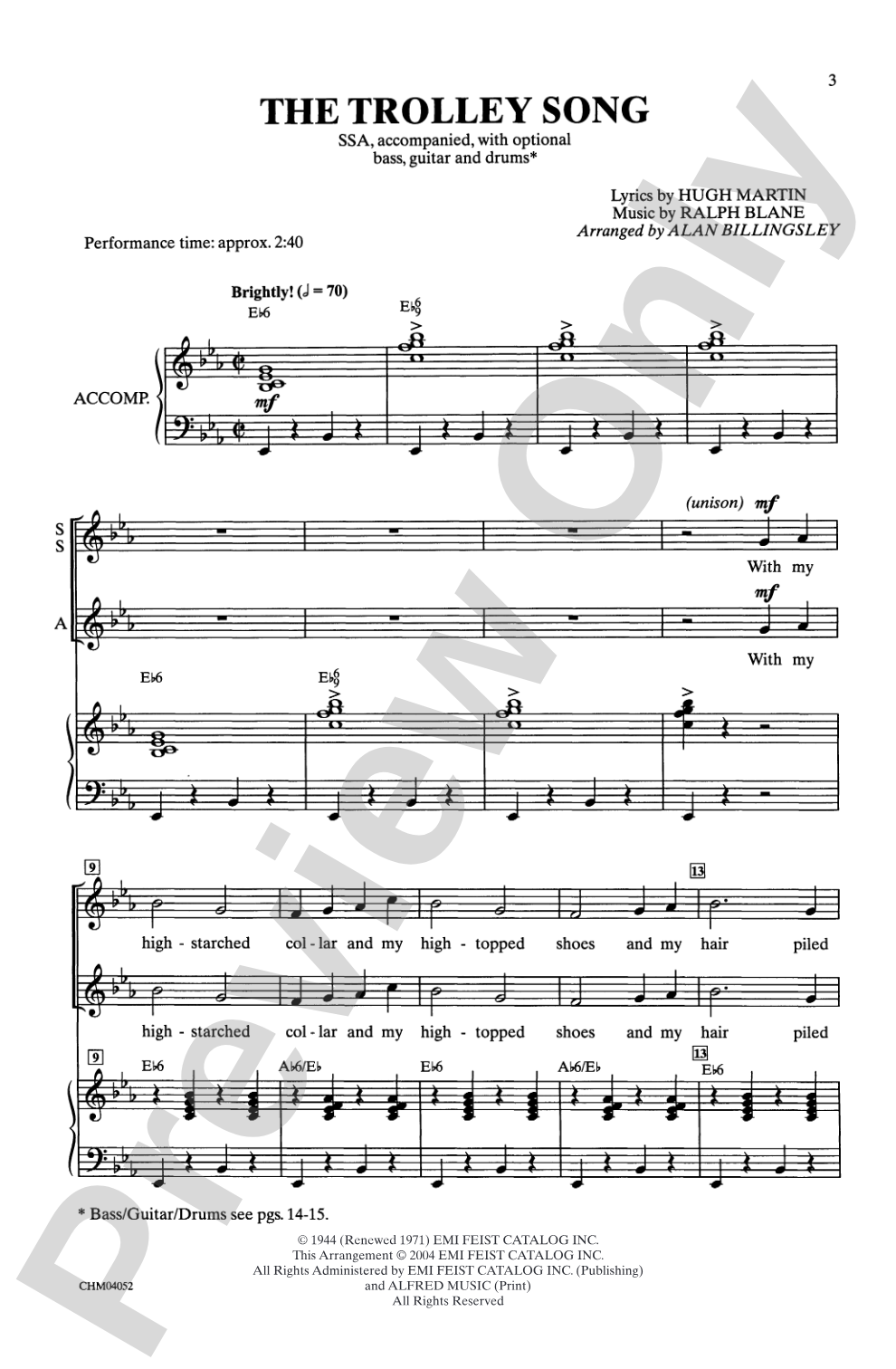
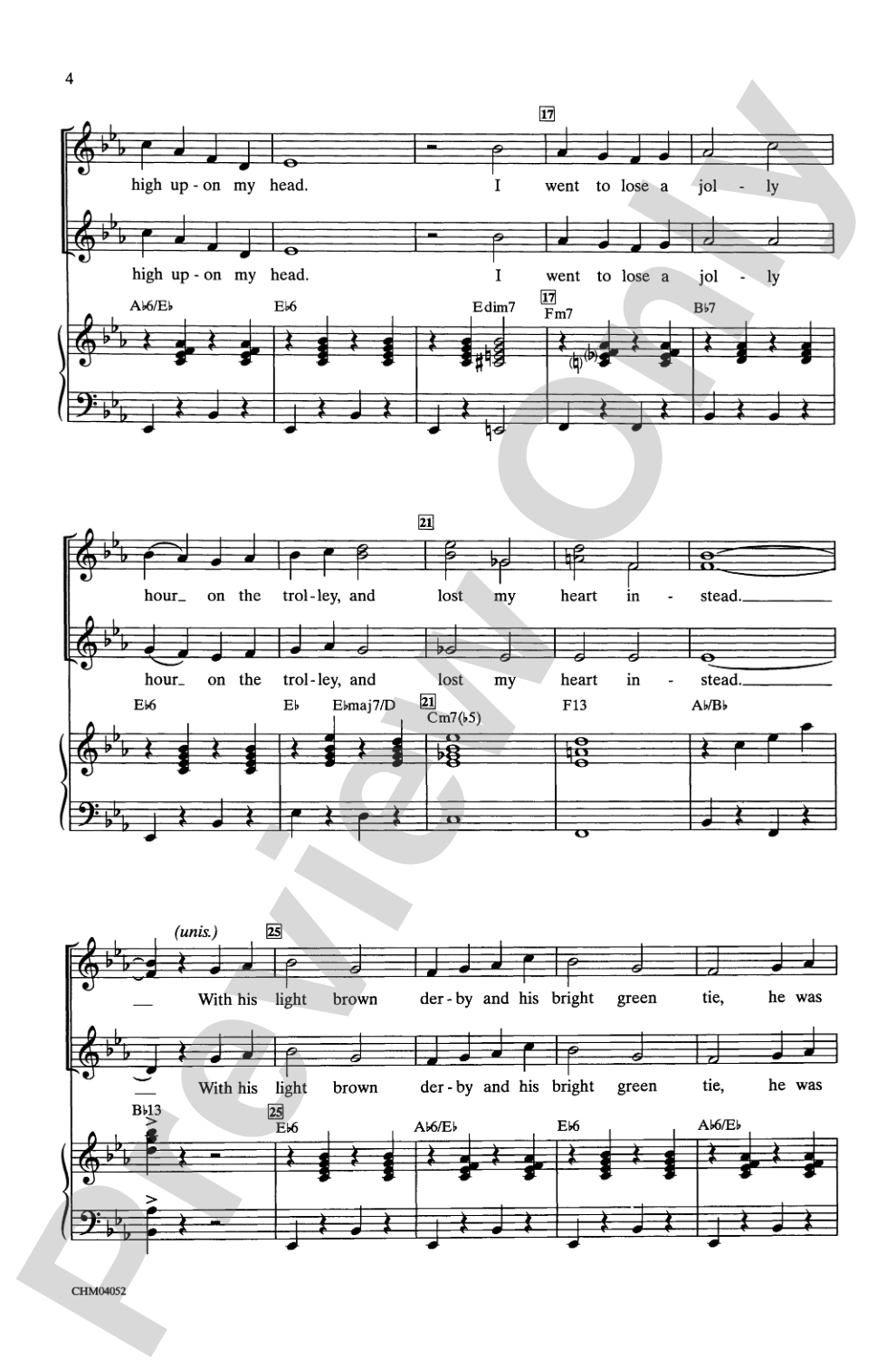
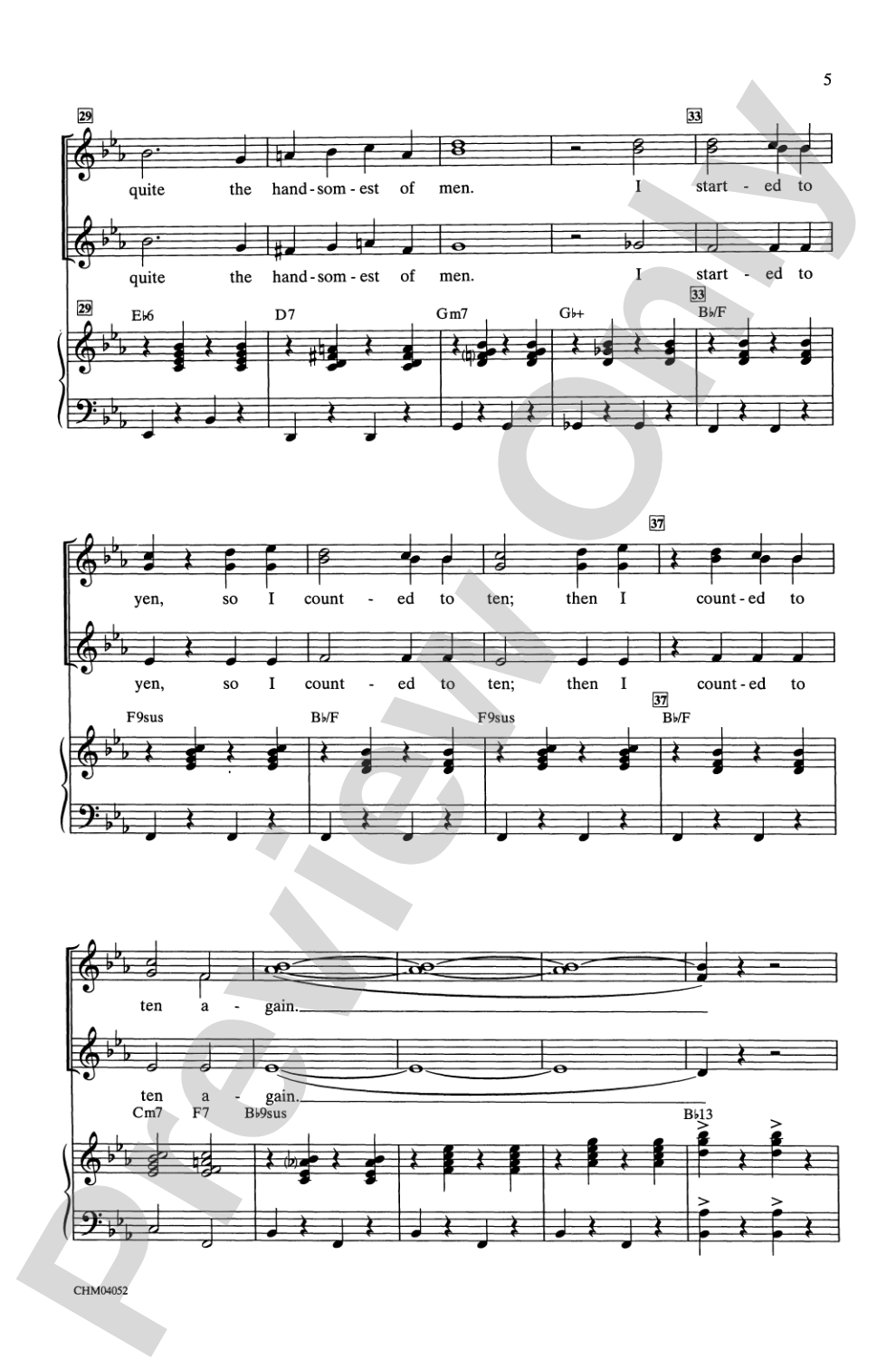

The Trolley Song: SSA Choral Octavo
Lyrics by Hugh Martin, music by Ralph Blane / arr. Alan Billingsley
Level: Moderate
Item: 00-PO-0004843
$2.95
Minimum order quantity: 20 copies
One moment…
Description
This classic song from Meet Me in St. Louis is the perfect piece to show off your women's choir. Alan Billingsley's extraordinary talent and ability to create pop chorals makes "The Trolley Song" a real winner!


The Trolley Song: SSA Choral Octavo isn't in MakeMusic Cloud just yet...but it could be. Let us know you'd like to see it, and you'll help shape what comes next. In the meantime, start a free trial and dive into thousands of interactive titles your students can play along with today.
Request This Title
Tell us you want it.
Start Your Free Trial
Explore everything that's ready to play right now.
Sample Audio
No sample audio found.
Sample Video
No sample videos found.
Additional Details
Series:
Alfred Archive Edition: Alfred Pop Choral Series
Publisher:
Alfred Music
Page Count:
16
SKU:
00-PO-0004843
More about this title
About the Composer: Ralph Blane
Ralph Blane (1914-1995) collaborated with Hugh Martin to write the songs for Meet Me in St. Louis, the 1944 MGM film that became an instant classic. His gift for crafting memorable melodies and clever, singable lyrics made him one of Broadway's most reliable songwriters during the Golden Age of musical theater. Beyond St. Louis, Blane worked extensively in film and television, earning recognition for his ability to write music that could stand alone as popular song while serving the dramatic needs of the story.
Blane's theatrical background shaped his understanding of how music functions in ensemble settings. His melodies sit comfortably in the voice, his lyrics stick in memory, and his harmonic sensibility balances accessibility with genuine musical interest. These qualities made his songs enduring favorites for both professional and student singers.
Why we love this
Alan Billingsley's arrangement captures the infectious energy and charm of the original without oversimplifying the musical landscape. The SSA voicing sits perfectly for women's choirs while maintaining enough harmonic interest to keep singers engaged across all three parts. This is the kind of piece that generates genuine enthusiasm in rehearsal because singers recognize it immediately, love how their voices blend, and feel the success of a familiar tune brought to life.
What to expect
Bouncy, nostalgic, and genuinely fun. The piece captures the joy of that famous MGM scene, complete with the rhythmic forward motion of a city trolley and the playfulness of falling in love. It's an arrangement that lets singers smile while they sing, which audiences feel immediately.
Who it's for
Women's choirs from middle school through community or collegiate levels will find this arrangement accessible and rewarding. The moderate difficulty sits at a comfortable spot for developing singers who want a recognizable crowd-pleaser with genuine musical meat on the bones. Directors building a spring or pops concert will appreciate a piece that entertains audiences while showcasing choir musicianship.
How to get the most out of it
- Keep the tempo bouncy and light. The trolley-car rhythm should feel like motion, not march time. The recorded accompaniment provides a helpful reference for the right energy level.
- Shape the melody with clear phrasing rather than singing it as a straight line. Identify the natural peaks in each phrase and allow the harmony to support those peaks through slight dynamic emphasis.
- Balance the three parts carefully in the homophonic sections. SSA writing can muddy if the middle voice drowns out either the sopranos or altos. Rehearse the parts in pairs to ensure each layer carries its own weight.
- Pay attention to articulation consistency. Crisp consonants on words like 'trolley,' 'clang,' and 'stop' will keep the piece snappy and character-driven rather than smooth and generic.
How to use it
Program this as a centerpiece in a pops or spring concert, where it will land perfectly after something classical and before a closer with different energy. It also works beautifully in a Rodgers and Hammerstein or Golden Age Broadway set, paired with other classic standards. The 16-page octavo makes it substantial enough to warrant rehearsal time while remaining manageable alongside other repertoire.
Skills your students will build
- Balancing three-part harmony in SSA voicing, particularly maintaining clarity of inner voices
- Phrasing popular song material musically rather than rhythmically
- Coordinating rhythmic precision with stylistic lightness and energy
- Singing familiar material with freshness and intentional interpretation