
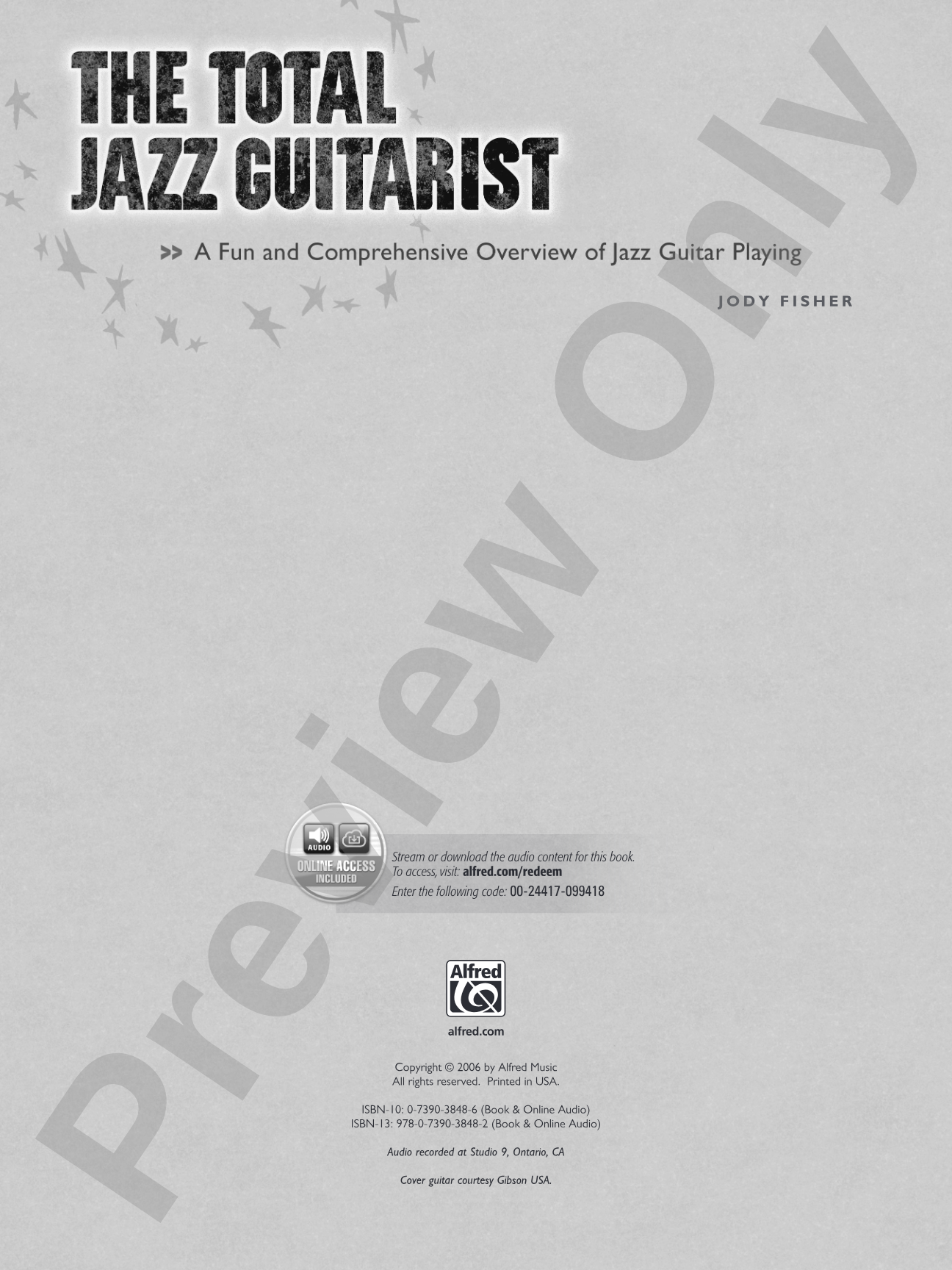

The Total Jazz Guitarist: A Fun and Comprehensive Overview of Jazz Guitar Playing
A Fun and Comprehensive Overview of Jazz Guitar Playing
By Jody Fisher
Item: 00-PB-0002226
$25.99
Pickup currently not available
Related Items
The Total Jazz Guitarist: Guitar Book & Online Audio |
$25.99
|
View |
Description
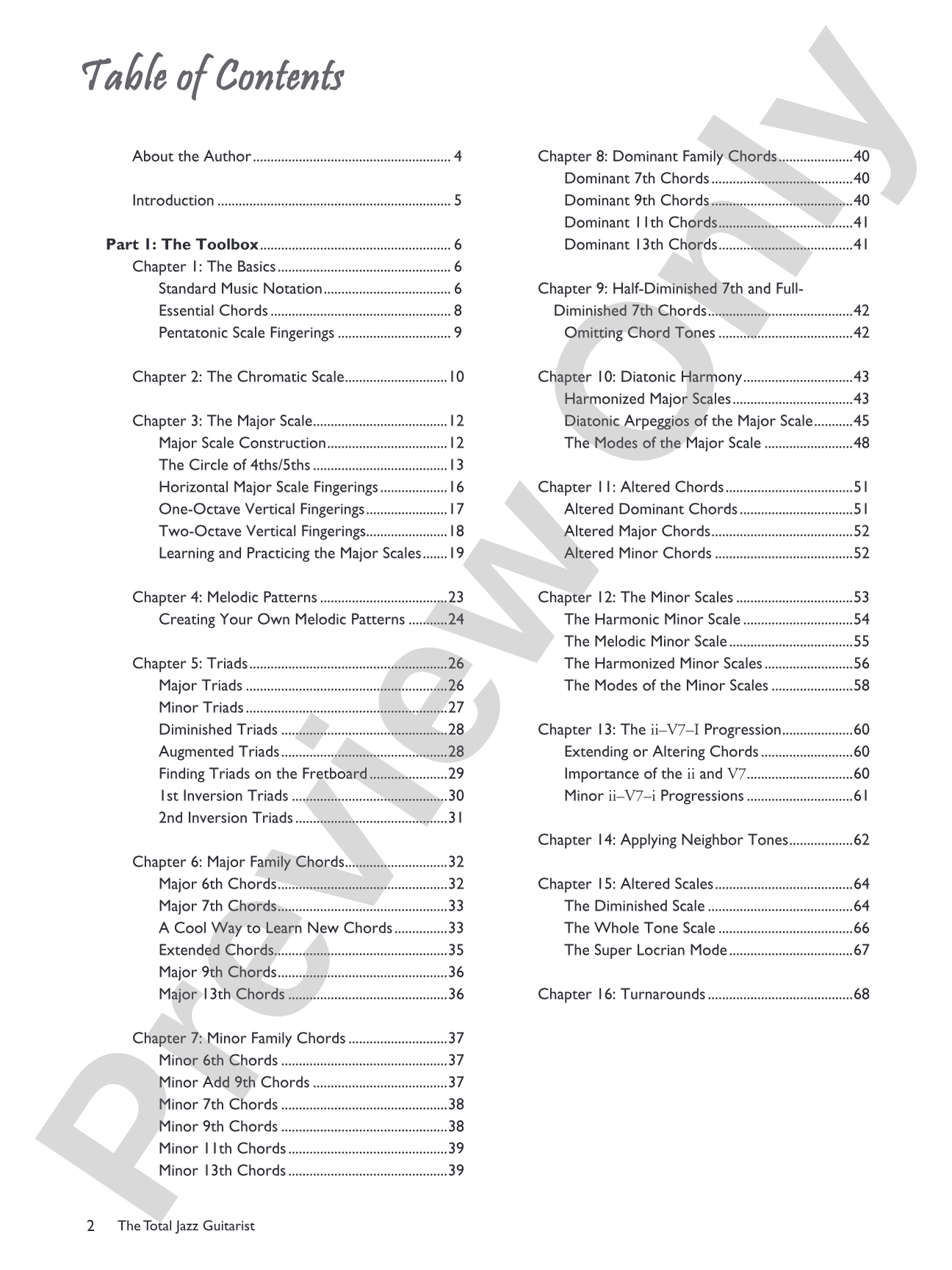
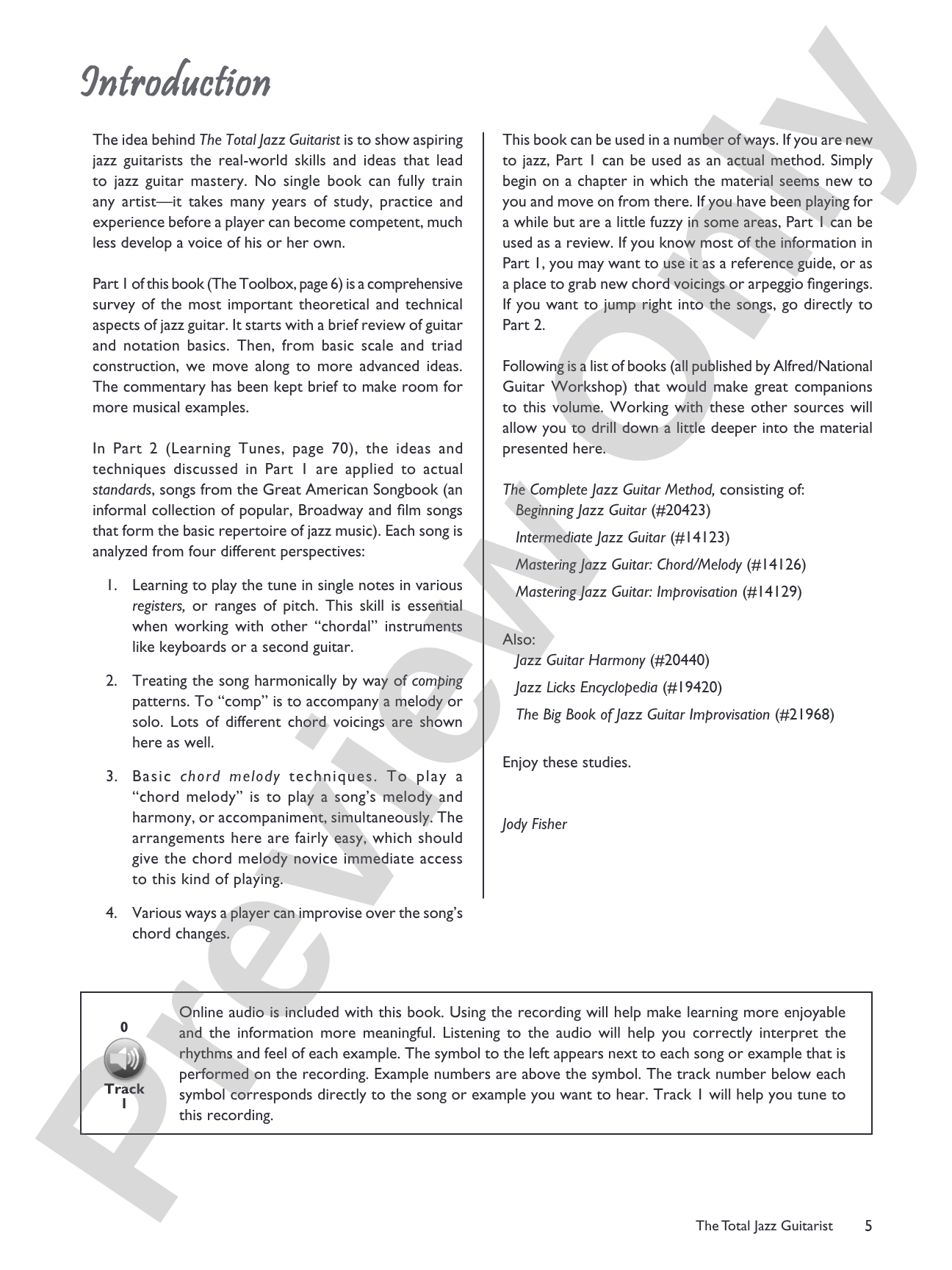
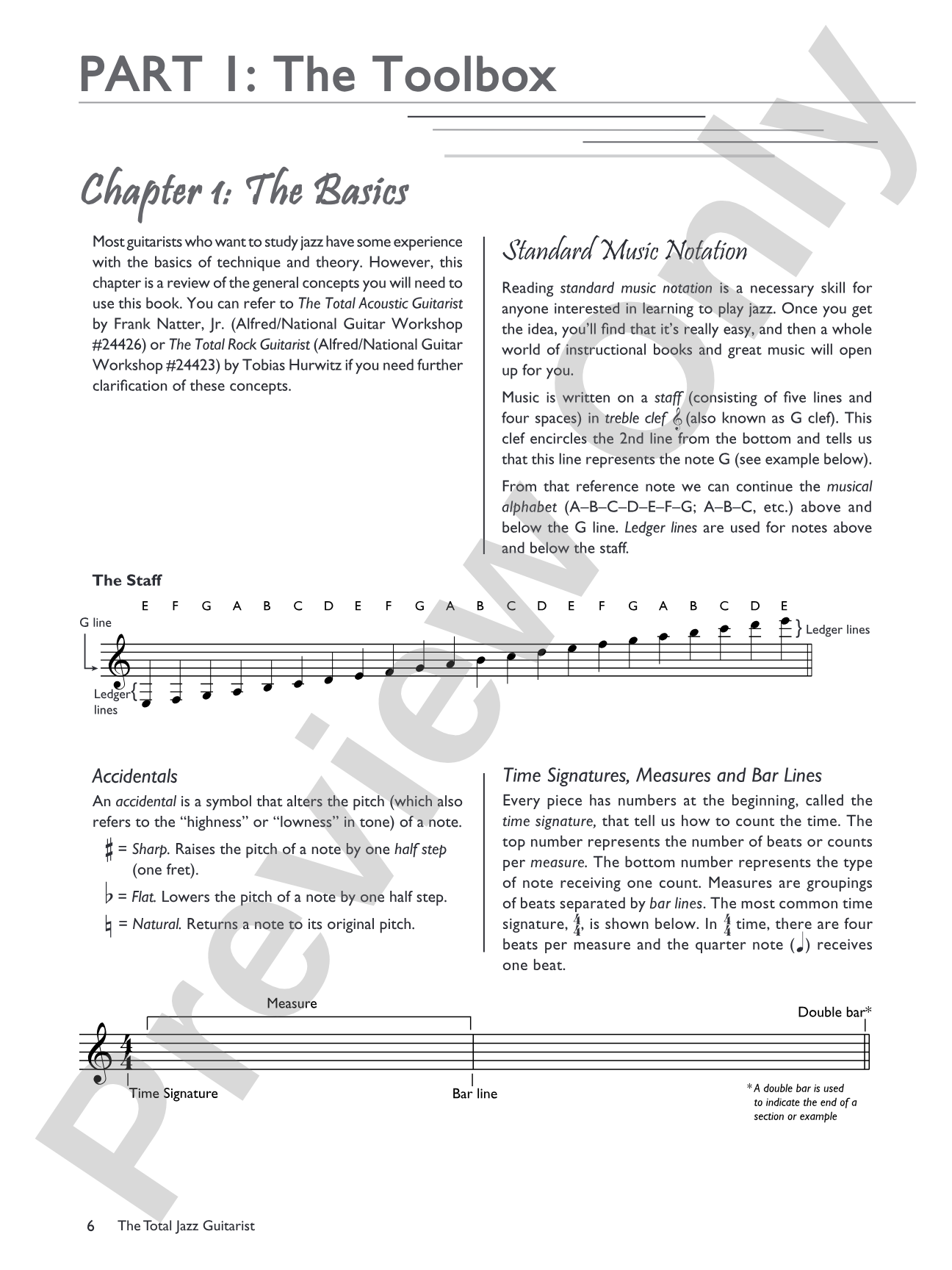
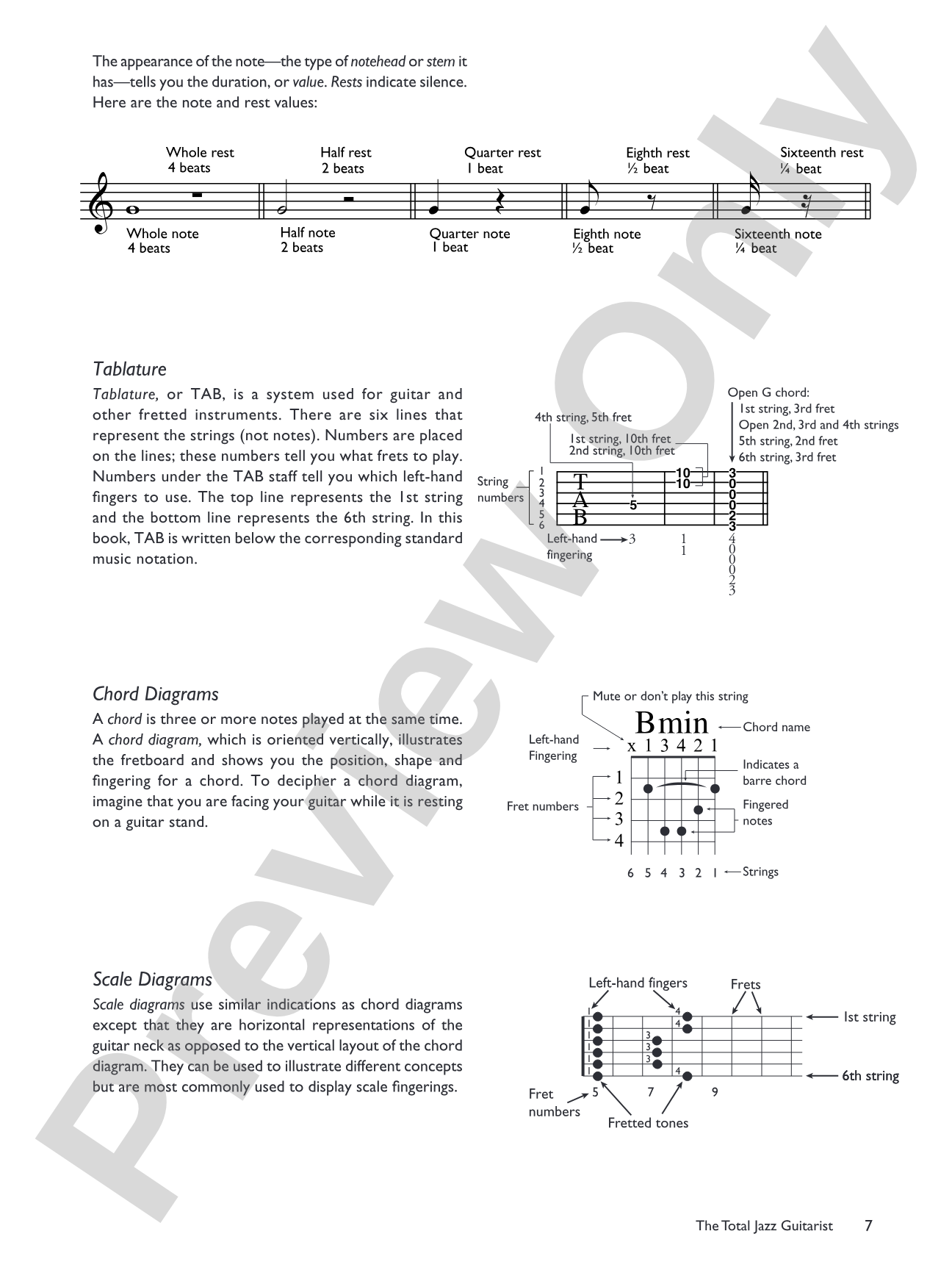
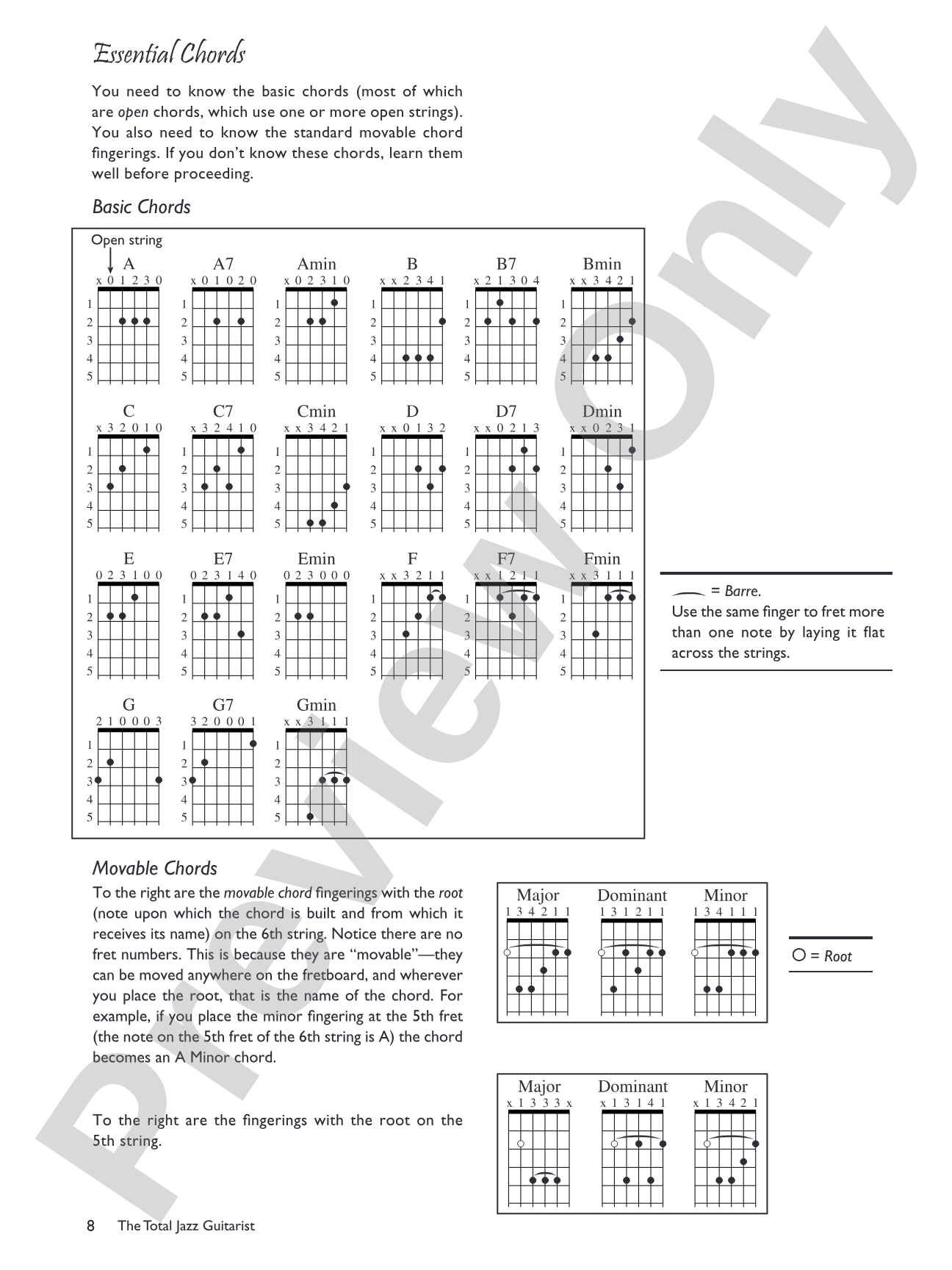
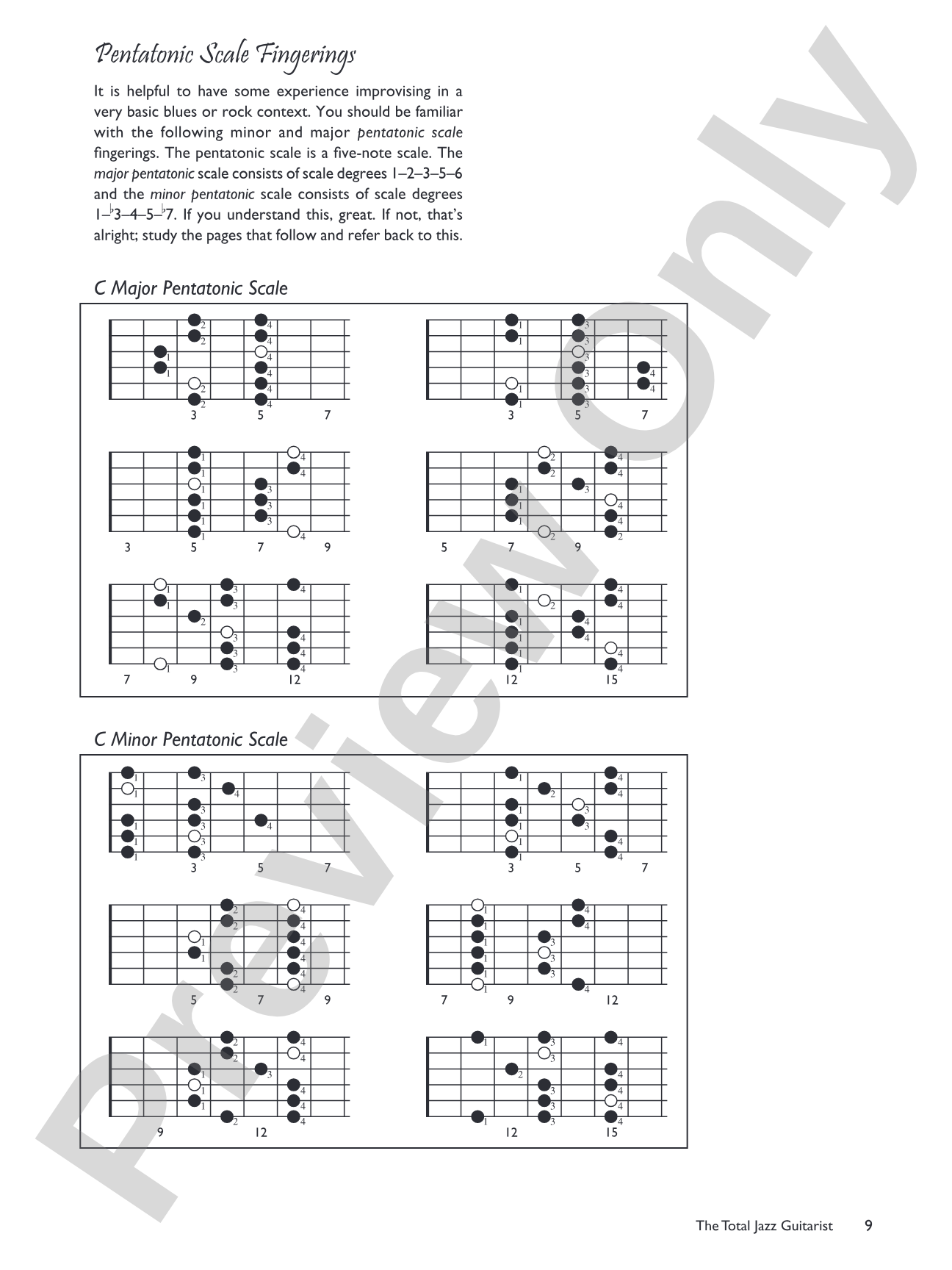
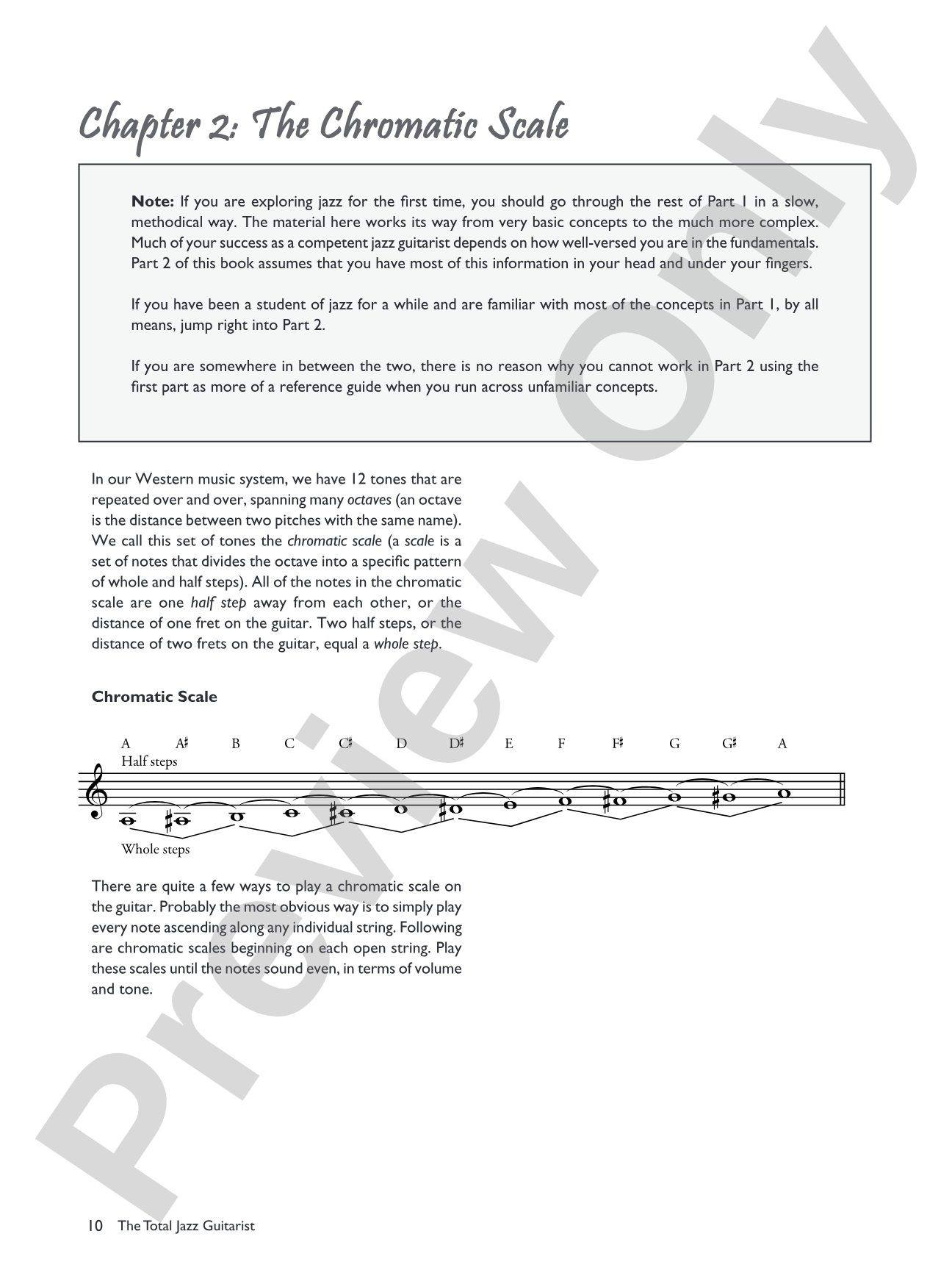
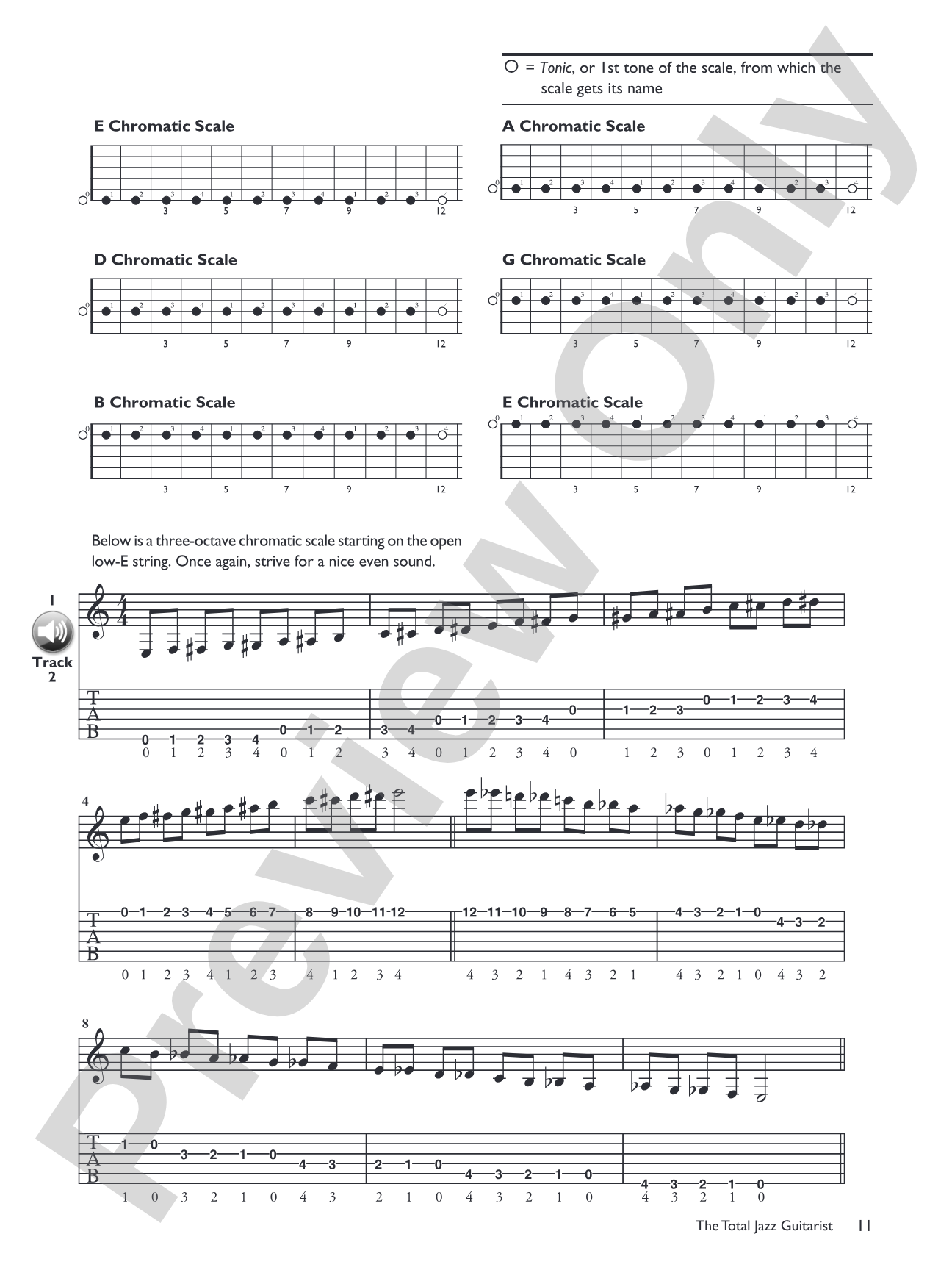
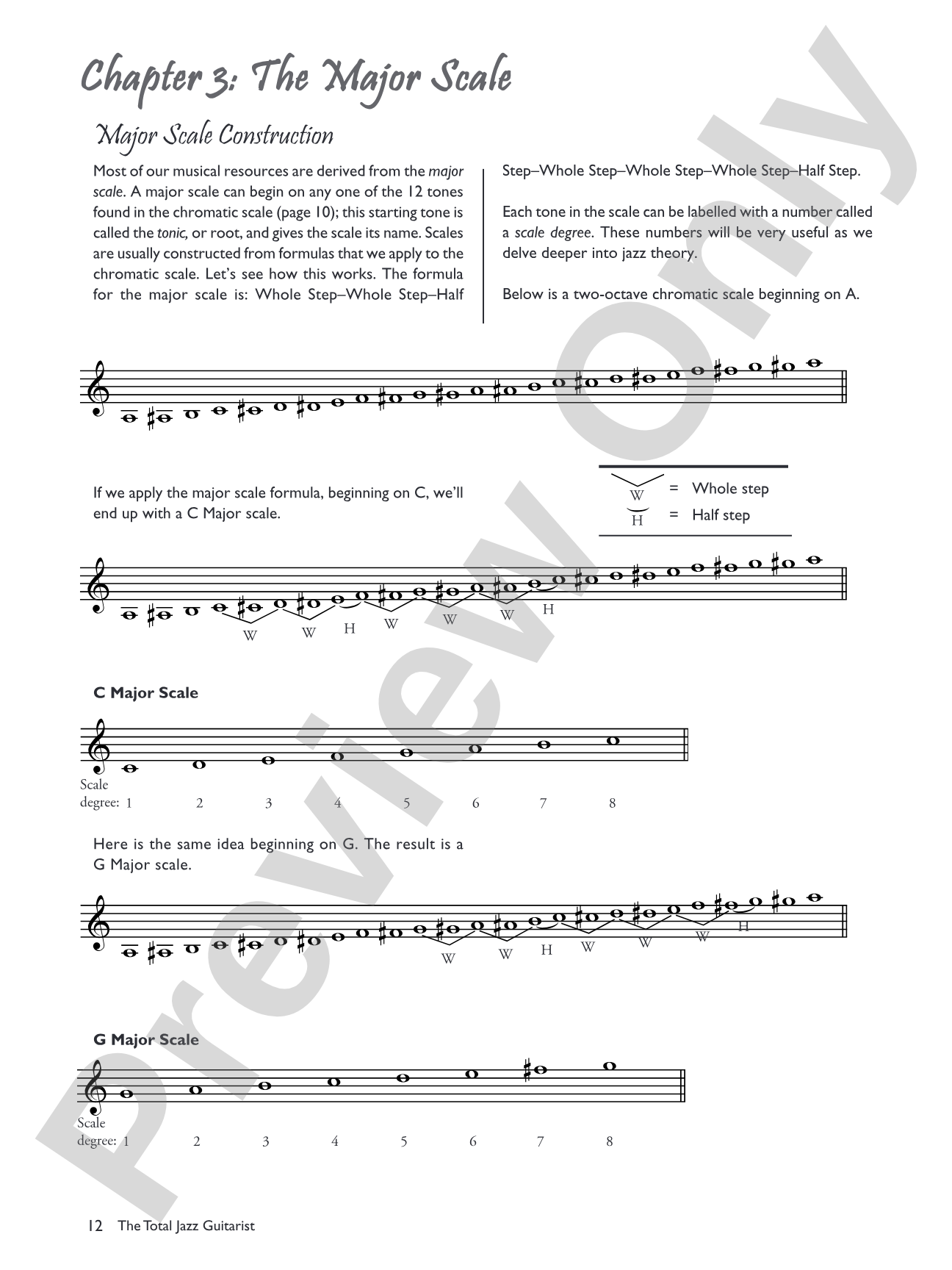
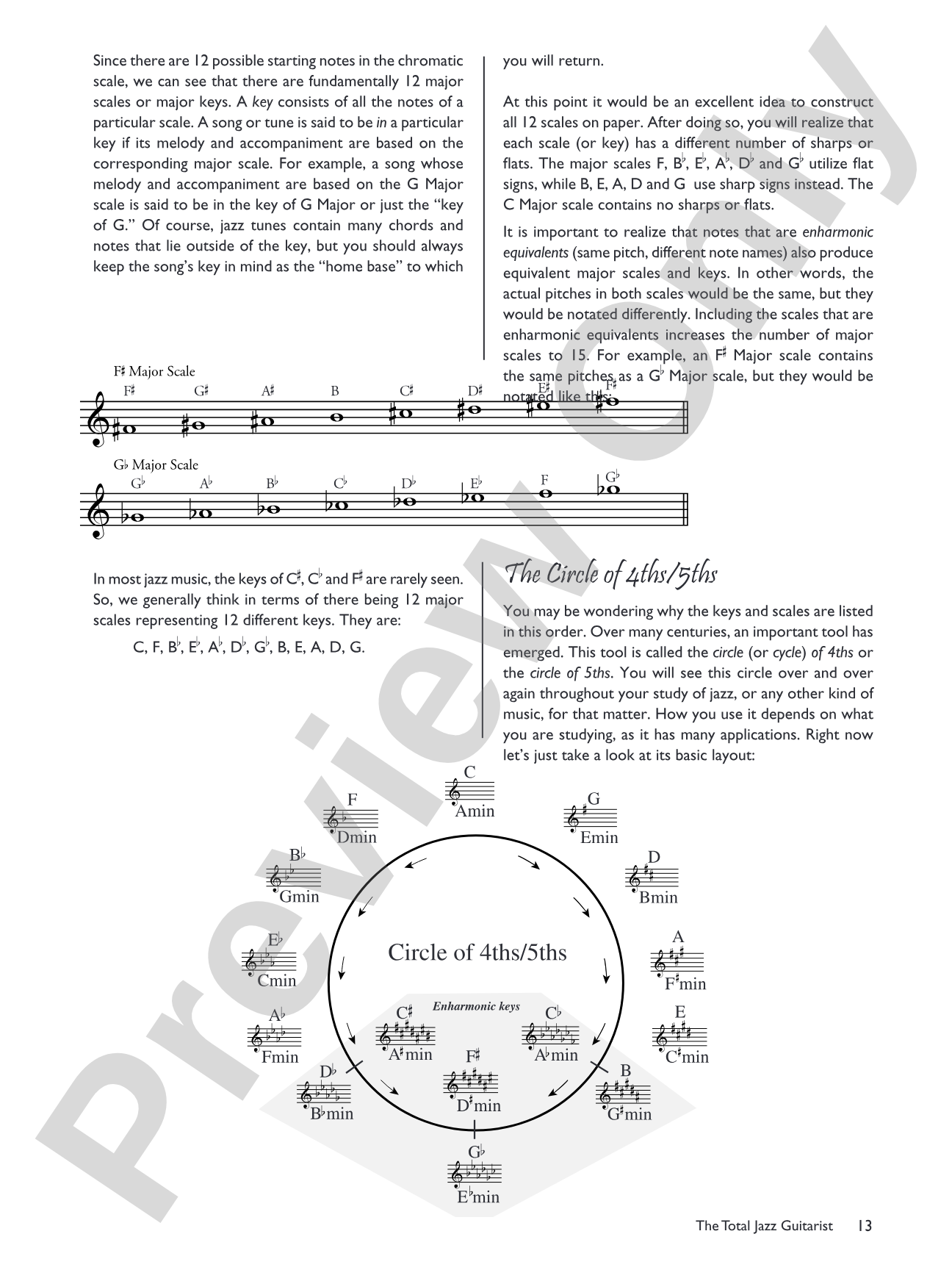
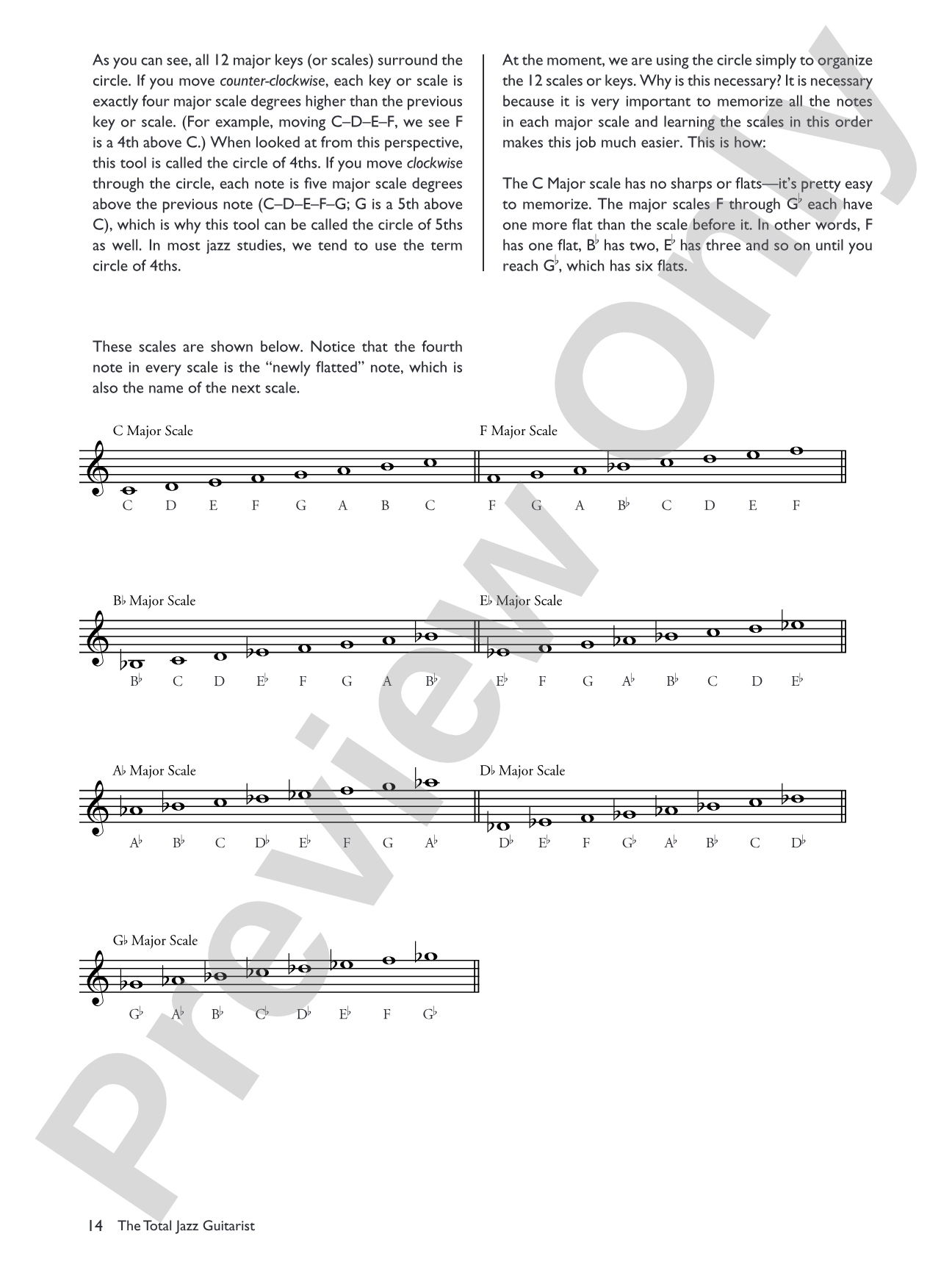
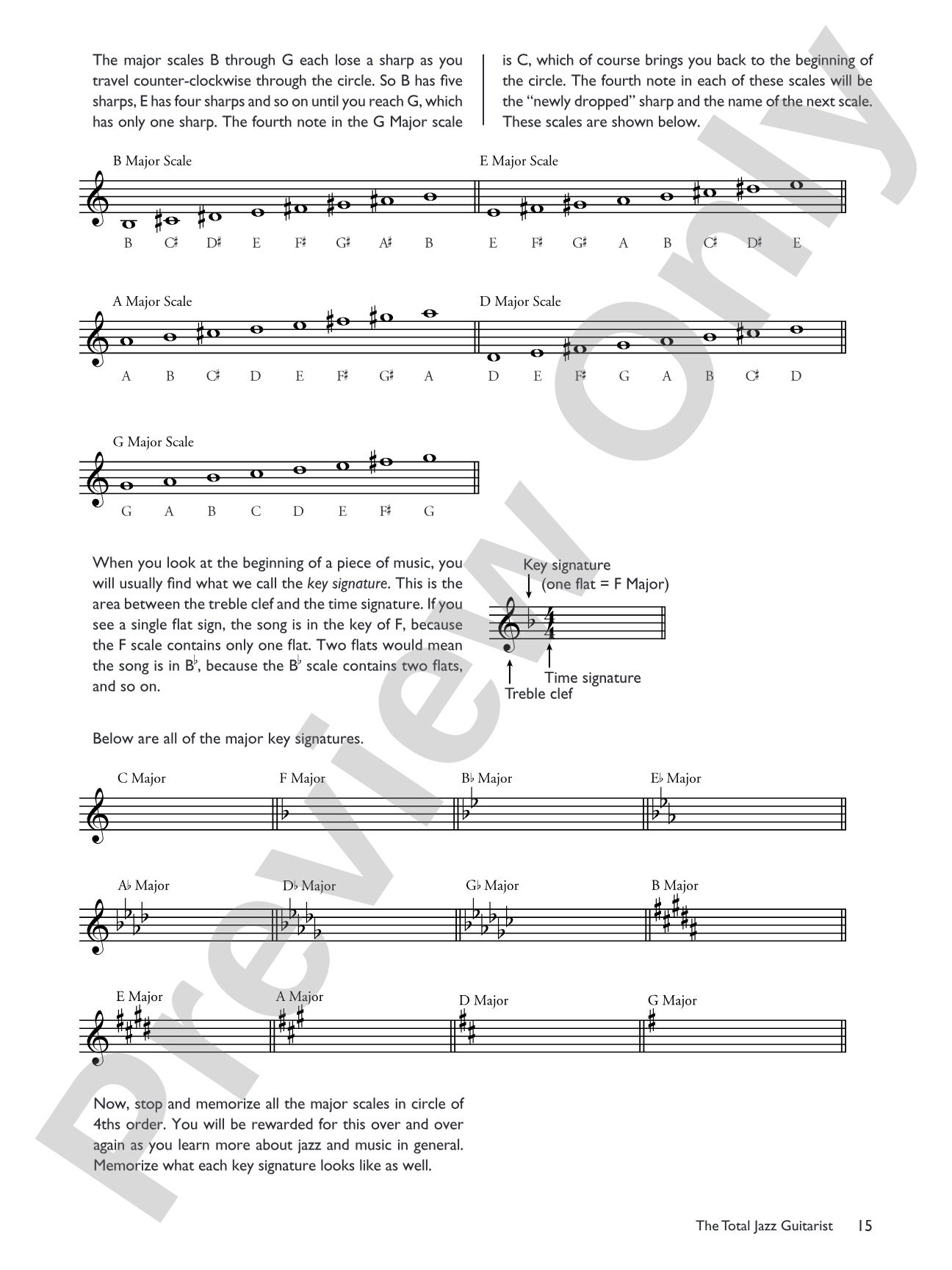
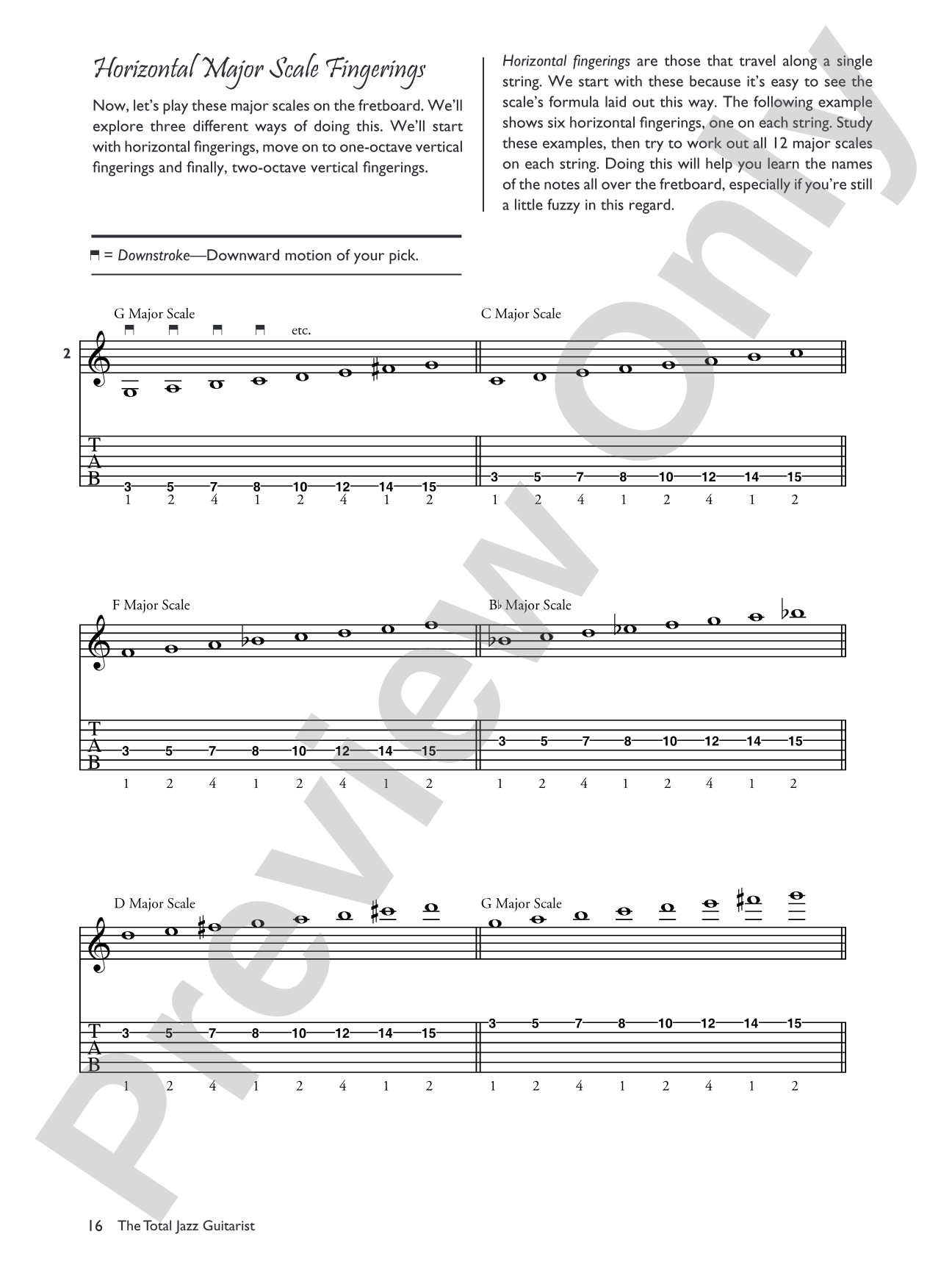
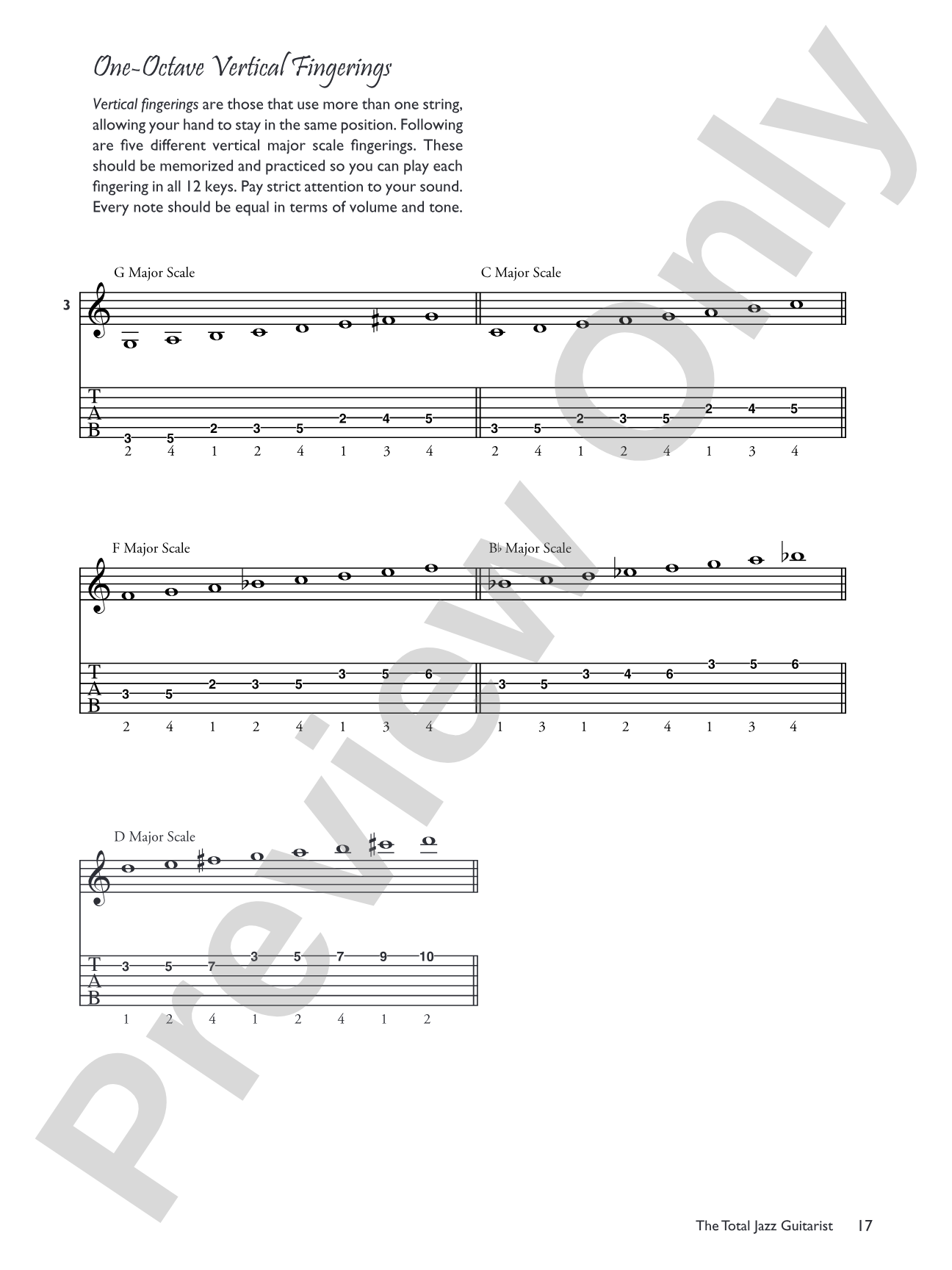
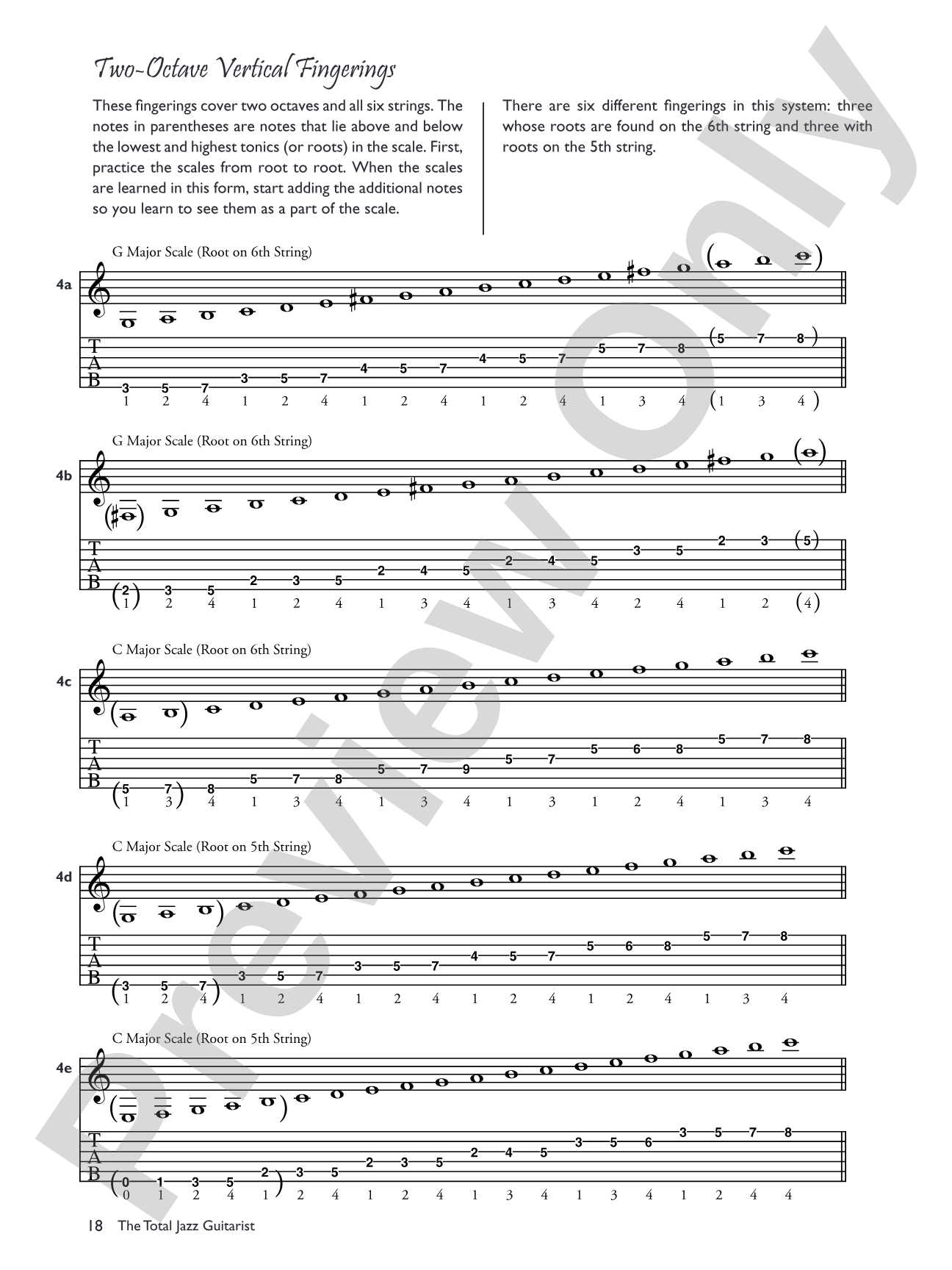
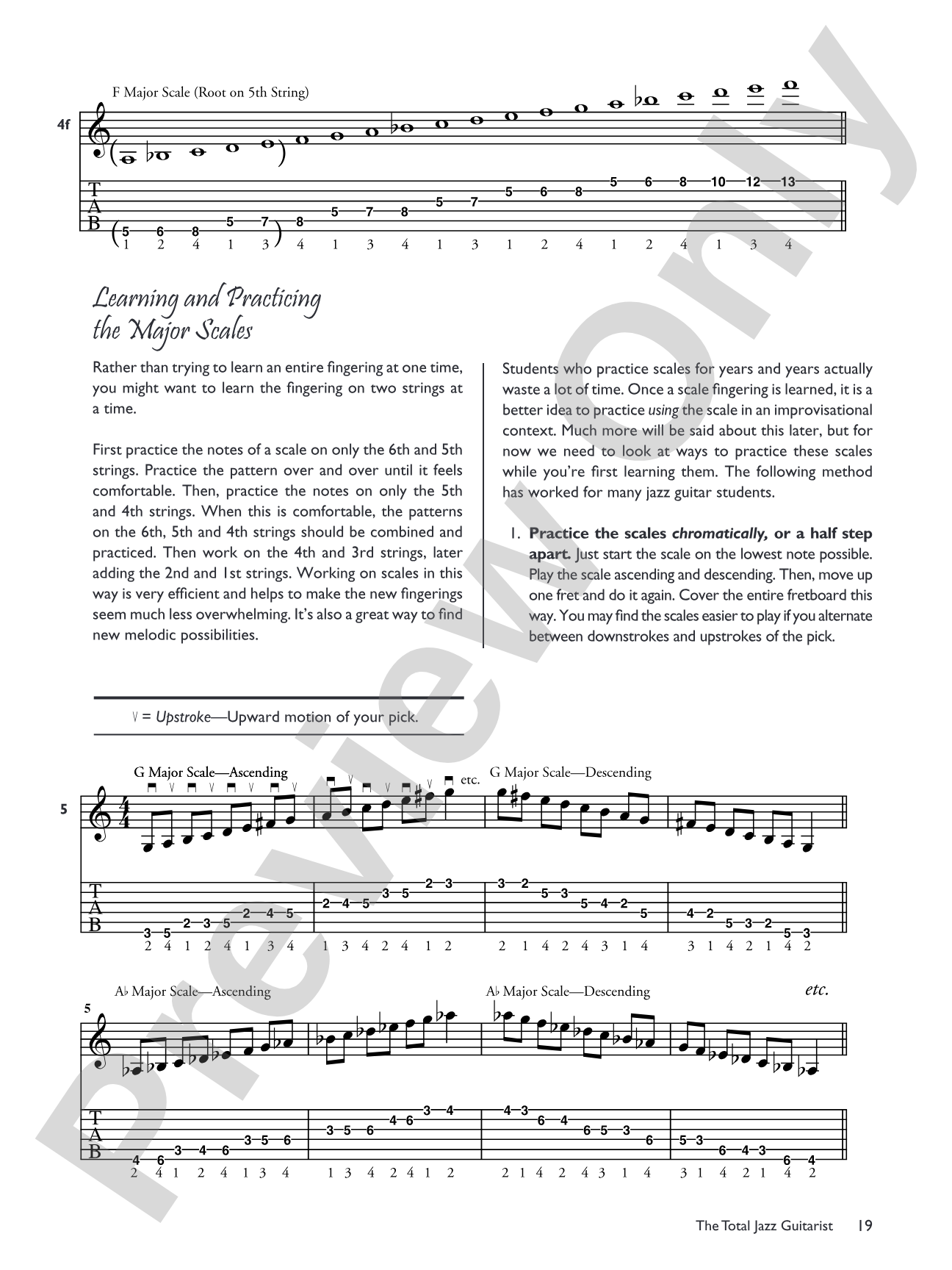
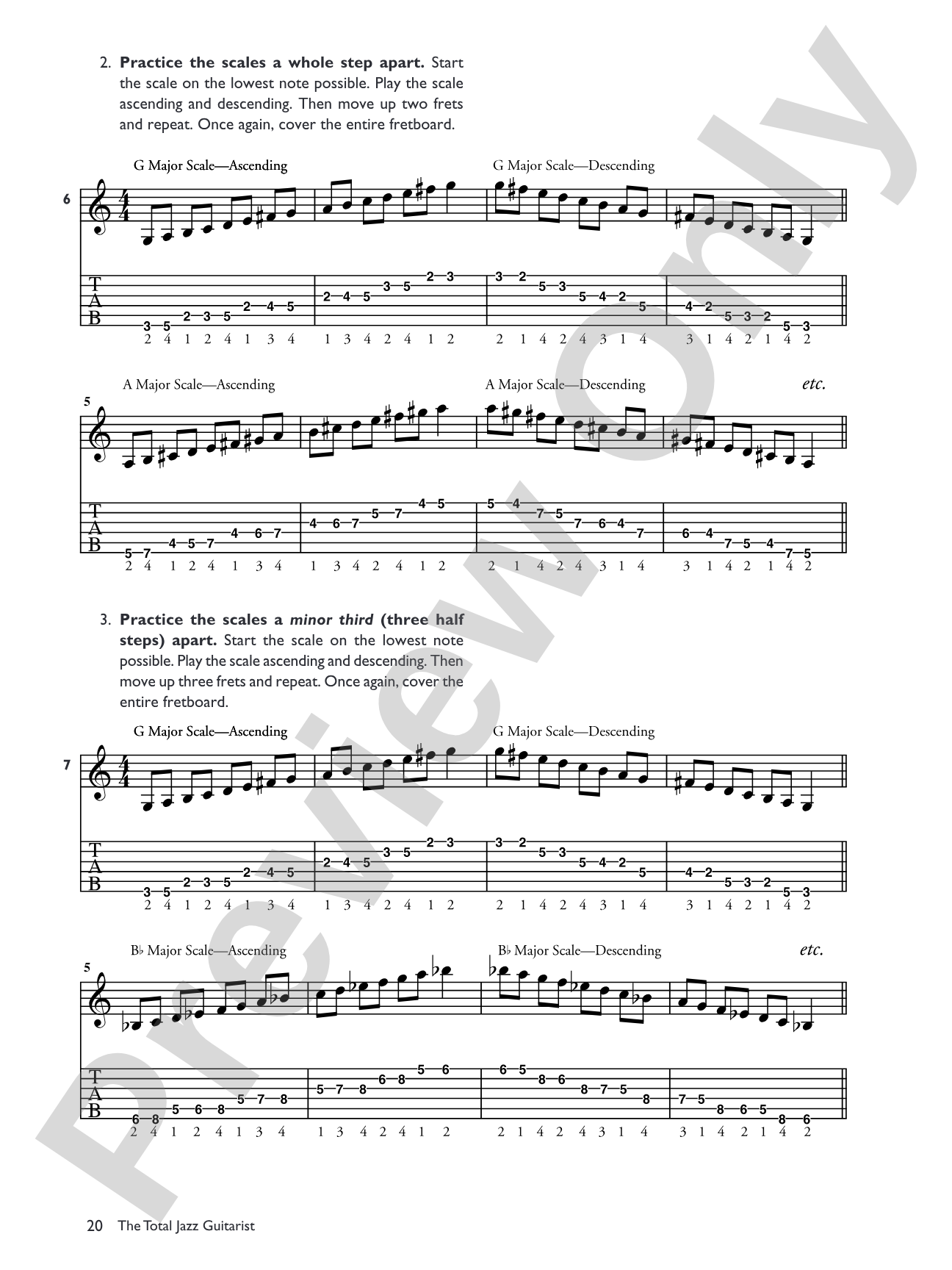
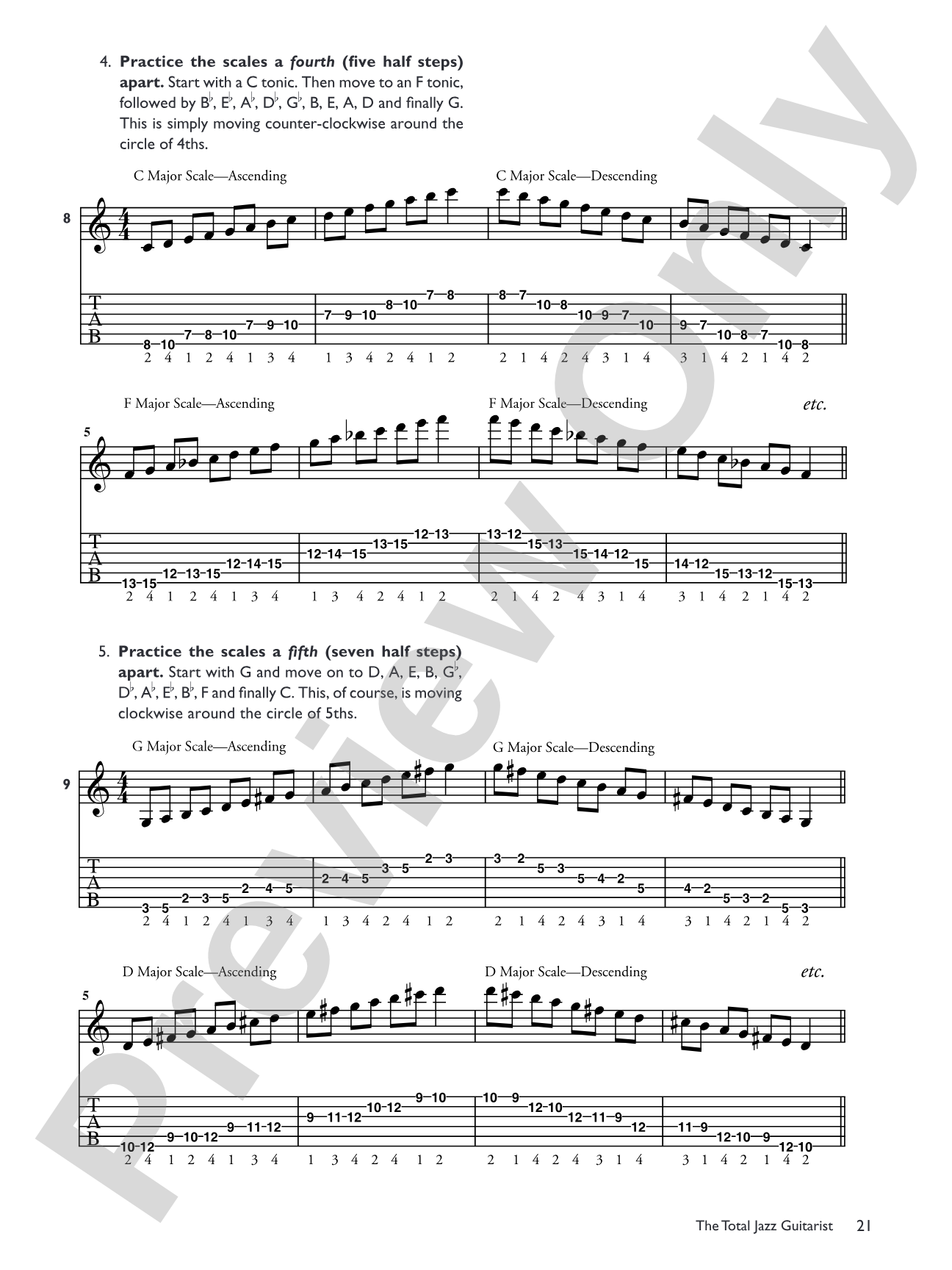
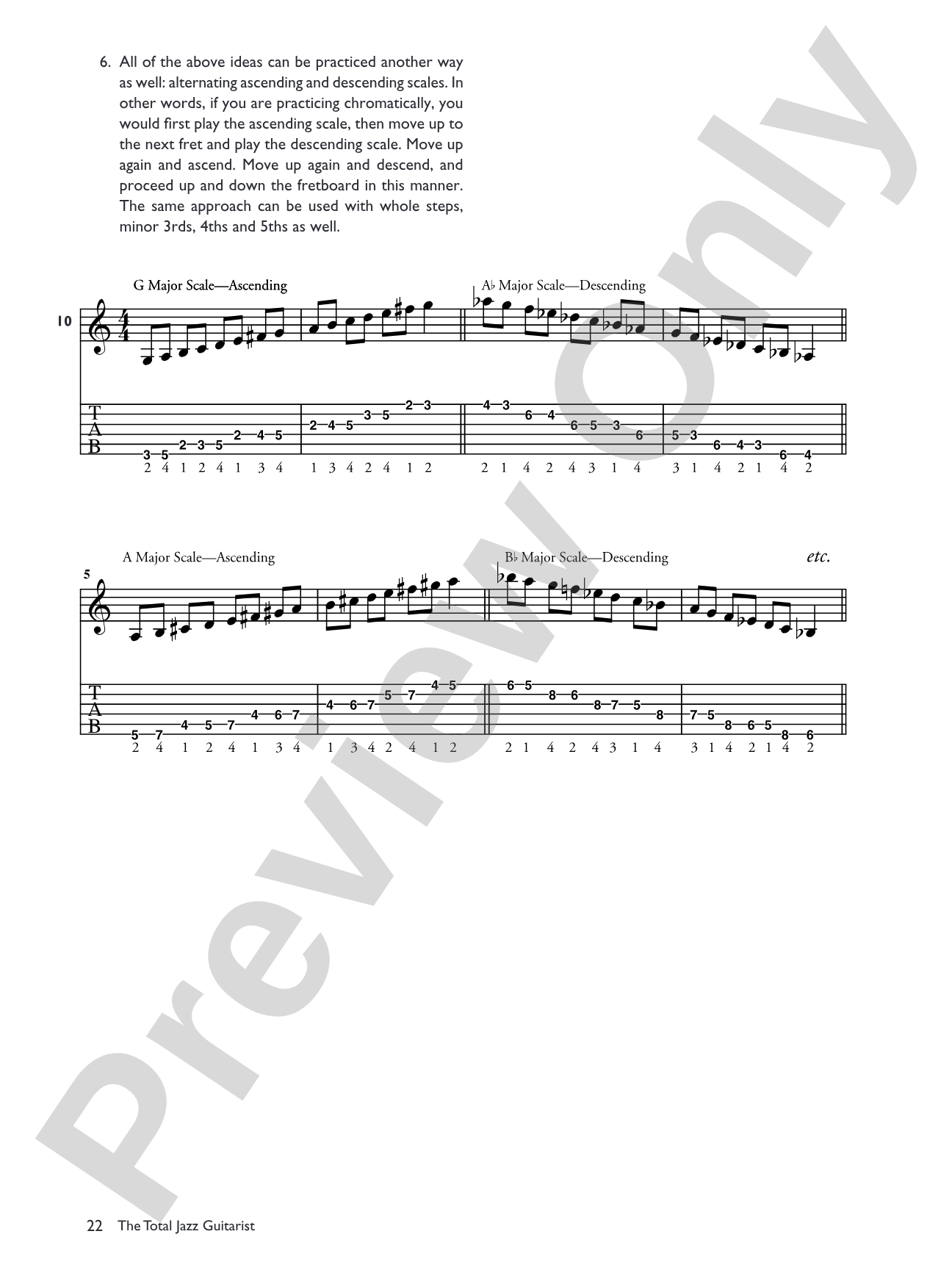
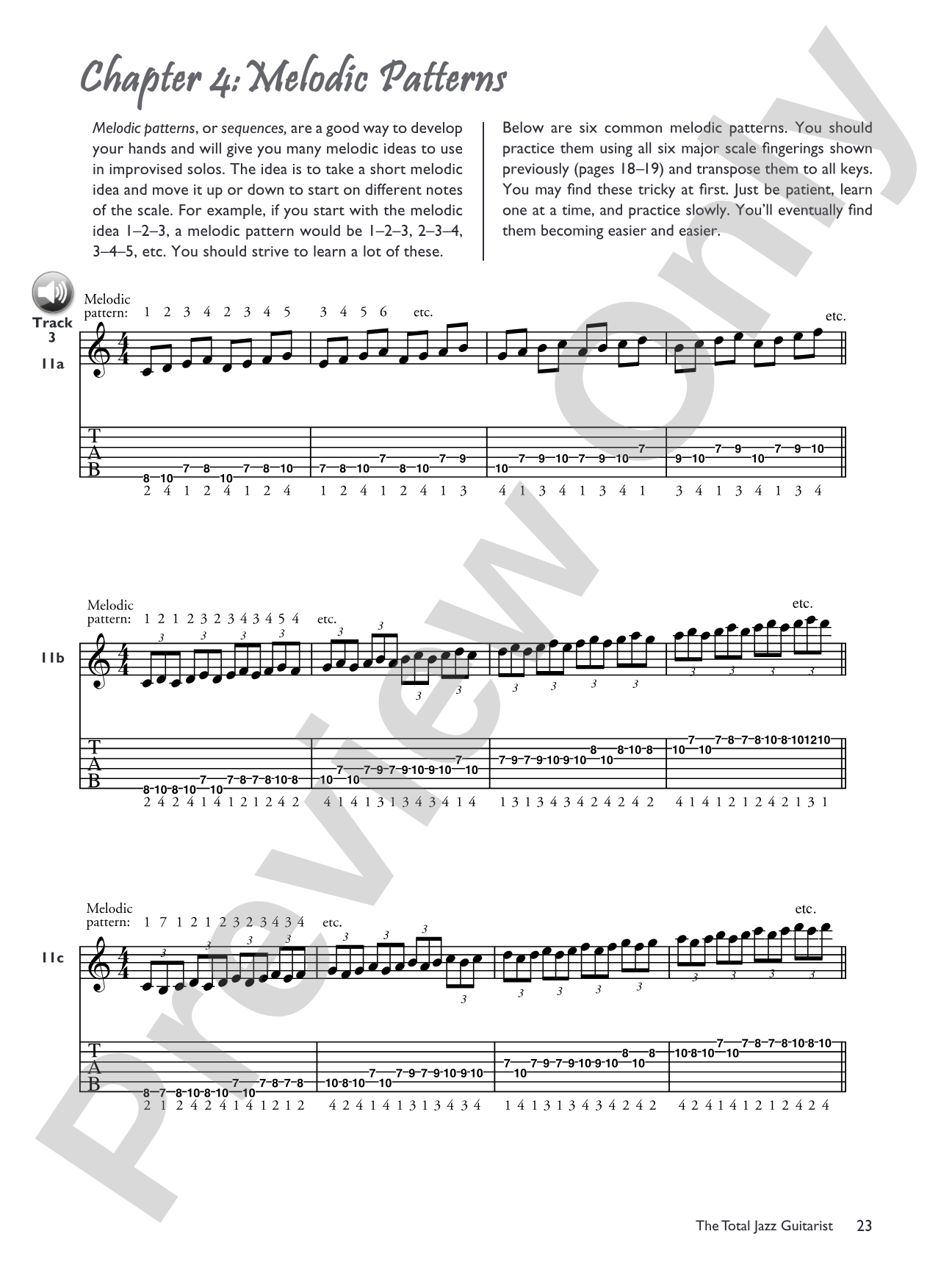
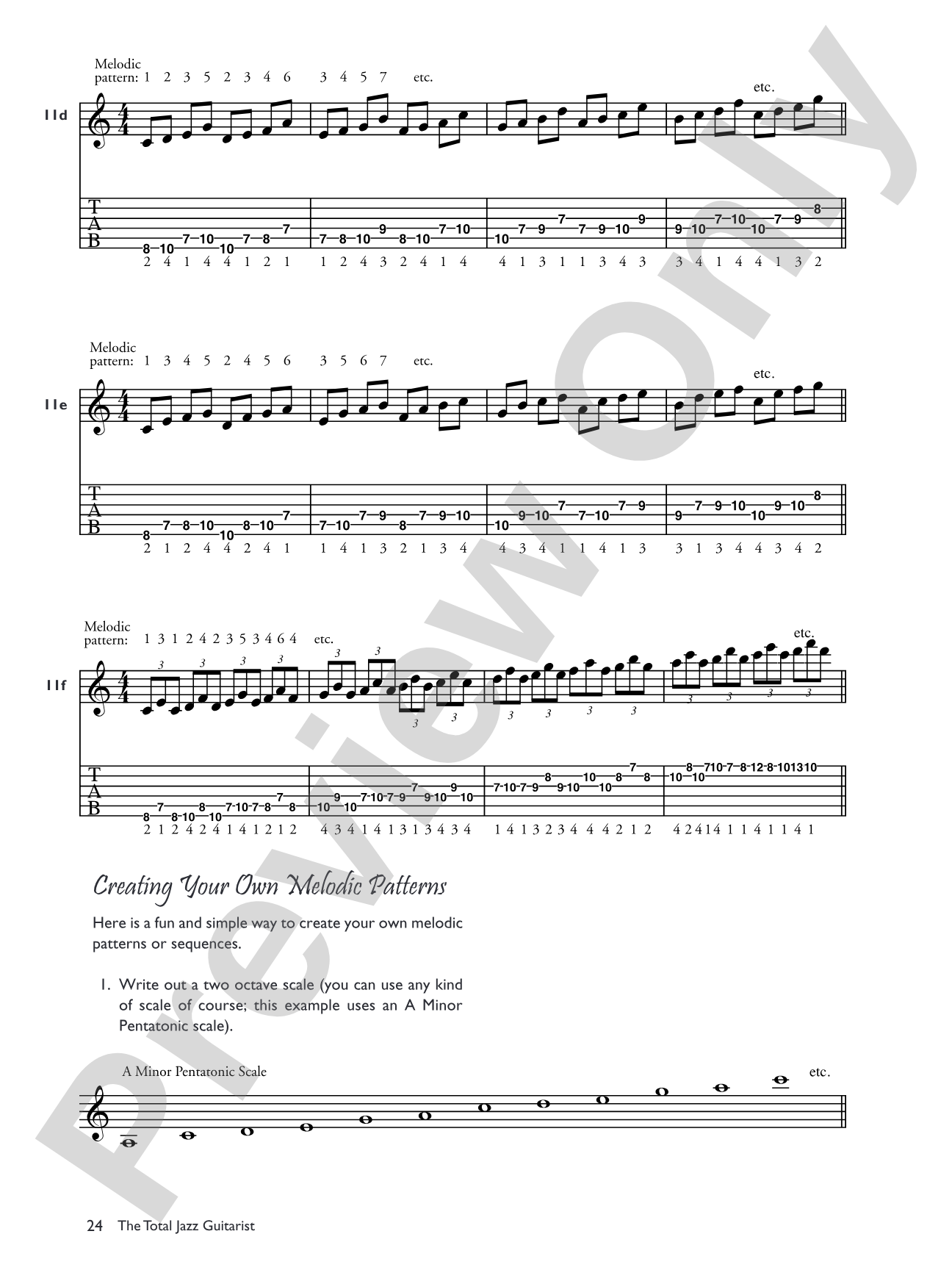
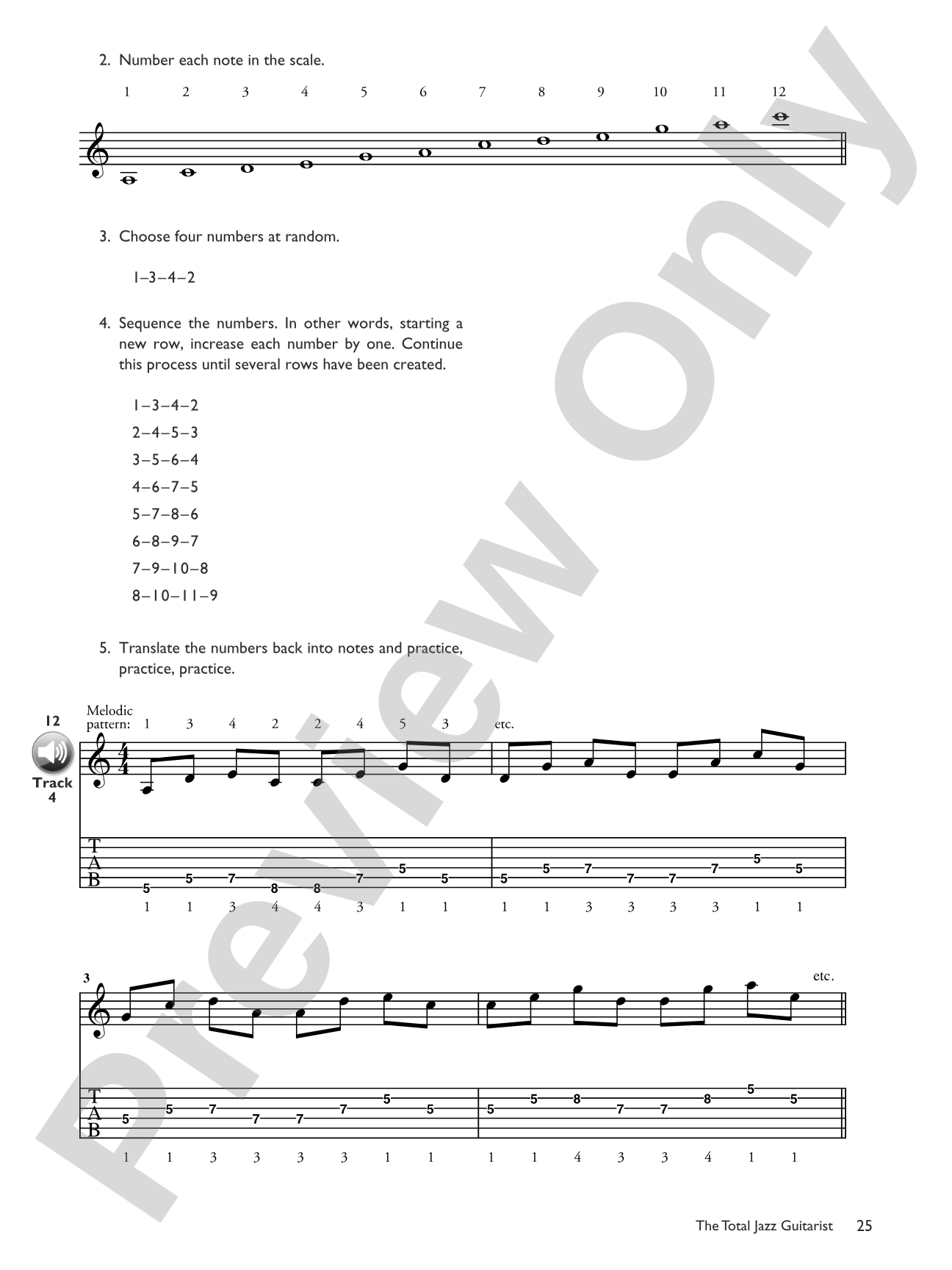
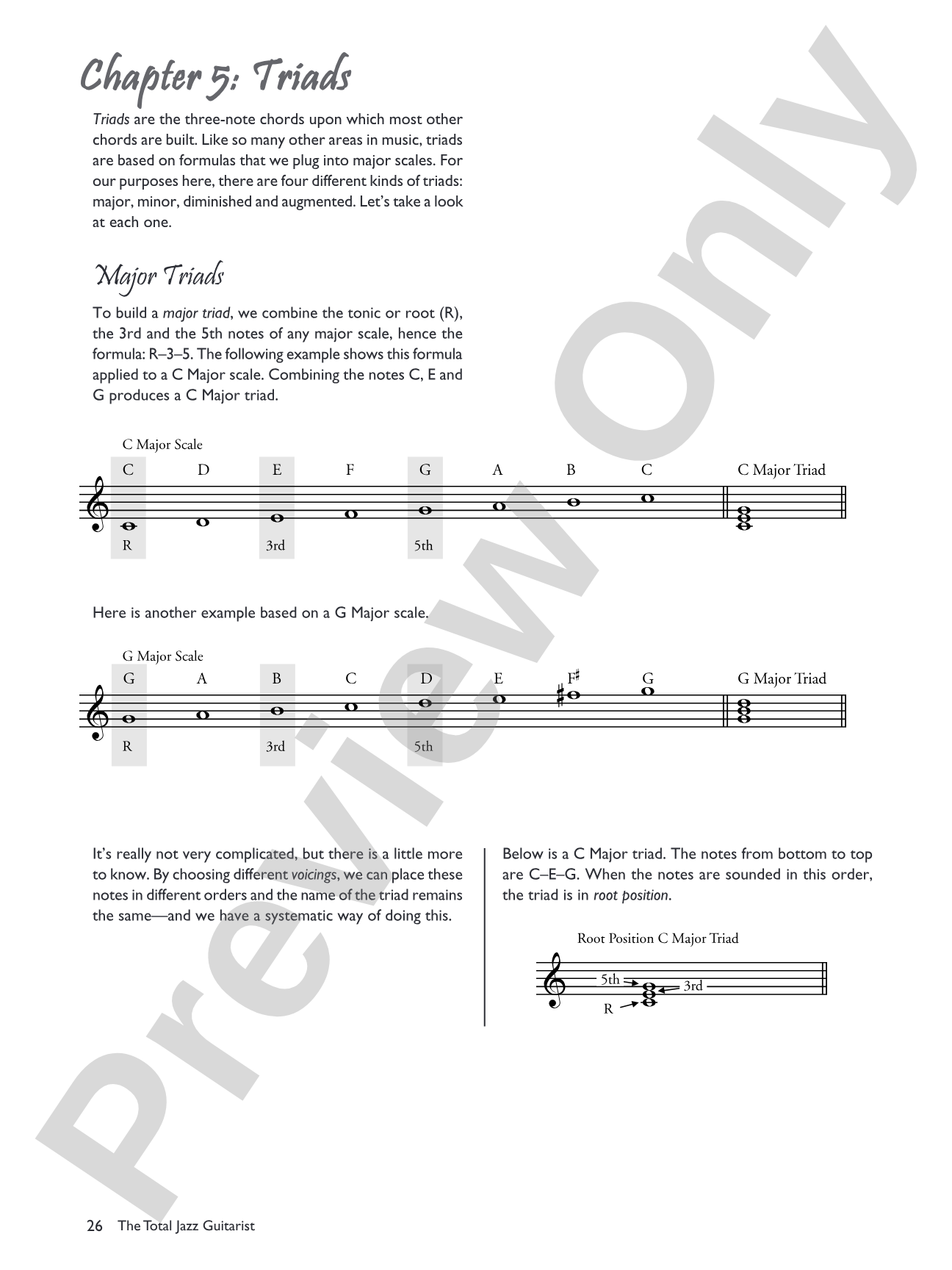
The Total Jazz Guitarist is an exciting journey through the diverse world of jazz guitar playing. Start with basic lessons on the major scale and work your way up to playing intricate chord melodies and jamming over tricky jazz progressions.
This wide-ranging study is for players of all skill levels. Beginning to intermediate students will find all the tools needed to become great guitarists, while more advanced musicians can gain useful tips and fresh perspectives on jazz guitar. A recording demonstrating the examples in the book is included.


This wide-ranging study is for players of all skill levels. Beginning to intermediate students will find all the tools needed to become great guitarists, while more advanced musicians can gain useful tips and fresh perspectives on jazz guitar. A recording demonstrating the examples in the book is included.
The Total Jazz Guitarist: A Fun and Comprehensive Overview of Jazz Guitar Playing isn't in MakeMusic Cloud just yet...but it could be. Let us know you'd like to see it, and you'll help shape what comes next. In the meantime, start a free trial and dive into thousands of interactive titles your students can play along with today.
Request This Title
Tell us you want it.
Start Your Free Trial
Explore everything that's ready to play right now.
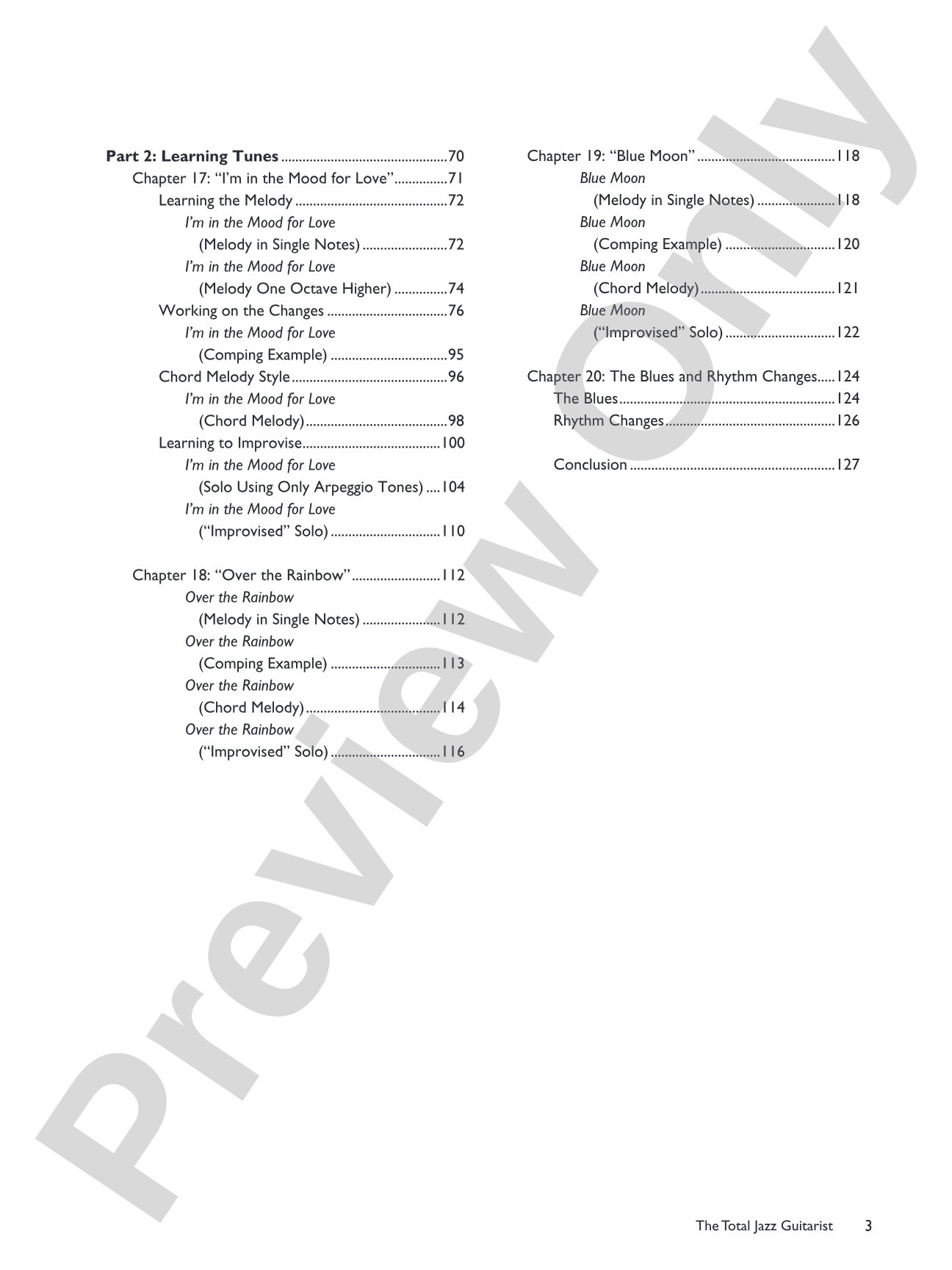
Sample Audio
1
Blue Moon
--:--
2
In the Mood for Love
--:--
Blue Moon
0:00
0:00
Sample Video
No sample videos found.
Additional Details
Series:
The Total Guitarist
Publisher:
Alfred Music
Page Count:
128
SKU:
00-PB-0002226
More about this title
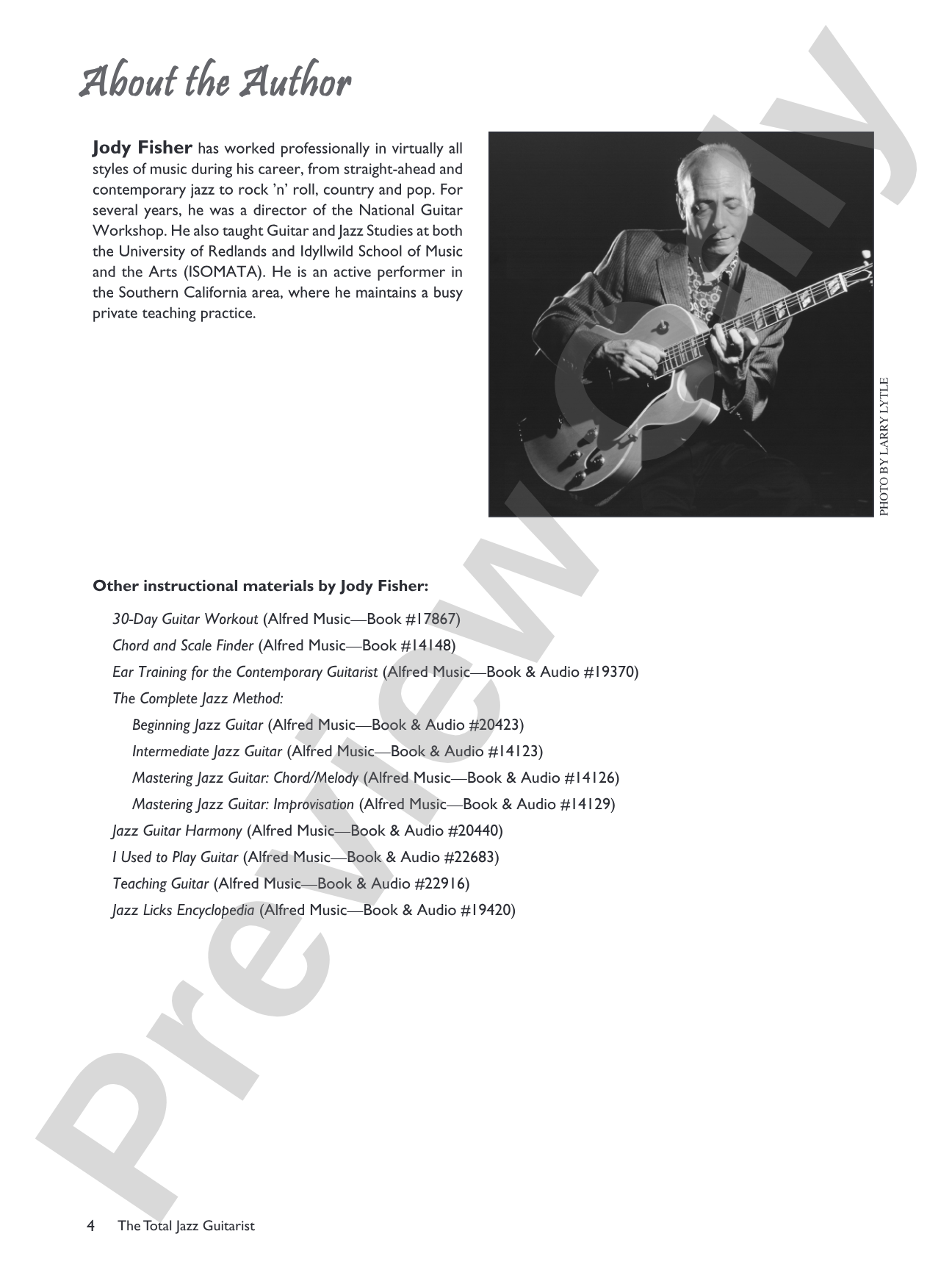
About the Composer: Jody Fisher
Jody Fisher has established himself as a trusted voice in jazz guitar pedagogy, creating instructional materials that bridge the gap between foundational technique and real-world application. His work emphasizes practical musicianship, building students' confidence through clear progressions and achievable milestones.
Why we love this
Fisher resists the temptation to overwhelm beginners with theory first. Instead, he front-loads playable material and gradually introduces complexity, so students experience the joy of sounding like jazz guitarists before mastering every harmonic nuance. The included recording transforms abstract exercises into concrete models, letting students hear exactly how their target sound should develop.
What to expect
This is jazz guitar stripped of pretension. There is real learning happening, but also immediate musicality. You build from familiar territory (the major scale) into territory that felt impossible weeks before, and suddenly you are comping changes and finding your own voice.
Who it's for
Beginning guitarists seeking a structured entry into jazz idiom will find a clear pathway here, while intermediate players working through chord melody concepts or seeking a refreshed approach to progressions gain substantial value. Advanced musicians can mine the book for teaching ideas and alternative explanations for concepts they already understand.
How to get the most out of it
- Start the major scale section slowly and deliberately; let each note breathe before moving on to the chord work that follows. Rushing here undermines everything that comes later.
- When you reach the progression exercises, use the recorded accompaniment to lock into the groove. This shifts your focus from note-finding to phrasing and time feel.
- Record yourself playing the chord melody passages and listen back for clarity of attack. Jazz guitar tone lives in the separation between notes, not their speed.
- Revisit earlier chapters after completing the book. The fresh perspective you'll bring makes previous exercises reveal new possibilities.
How to use it
Assign chapters sequentially to jazz ensemble guitarists who need foundational study outside of rehearsal time. The method also works beautifully as a summer practice guide, allowing students to arrive in fall with measurably improved chord literacy and comping vocabulary. For private instruction, use it as your primary text and let the included recording supplement your own demonstrations.
Skills your students will build
- Major scale construction and fretboard application
- Jazz chord voicings and comping patterns
- Chord melody arrangement and execution
- Improvisation over standard progressions (ii-V-I, blues changes)
- Time feel and rhythmic accuracy in jazz context
- Listening and transcription habits