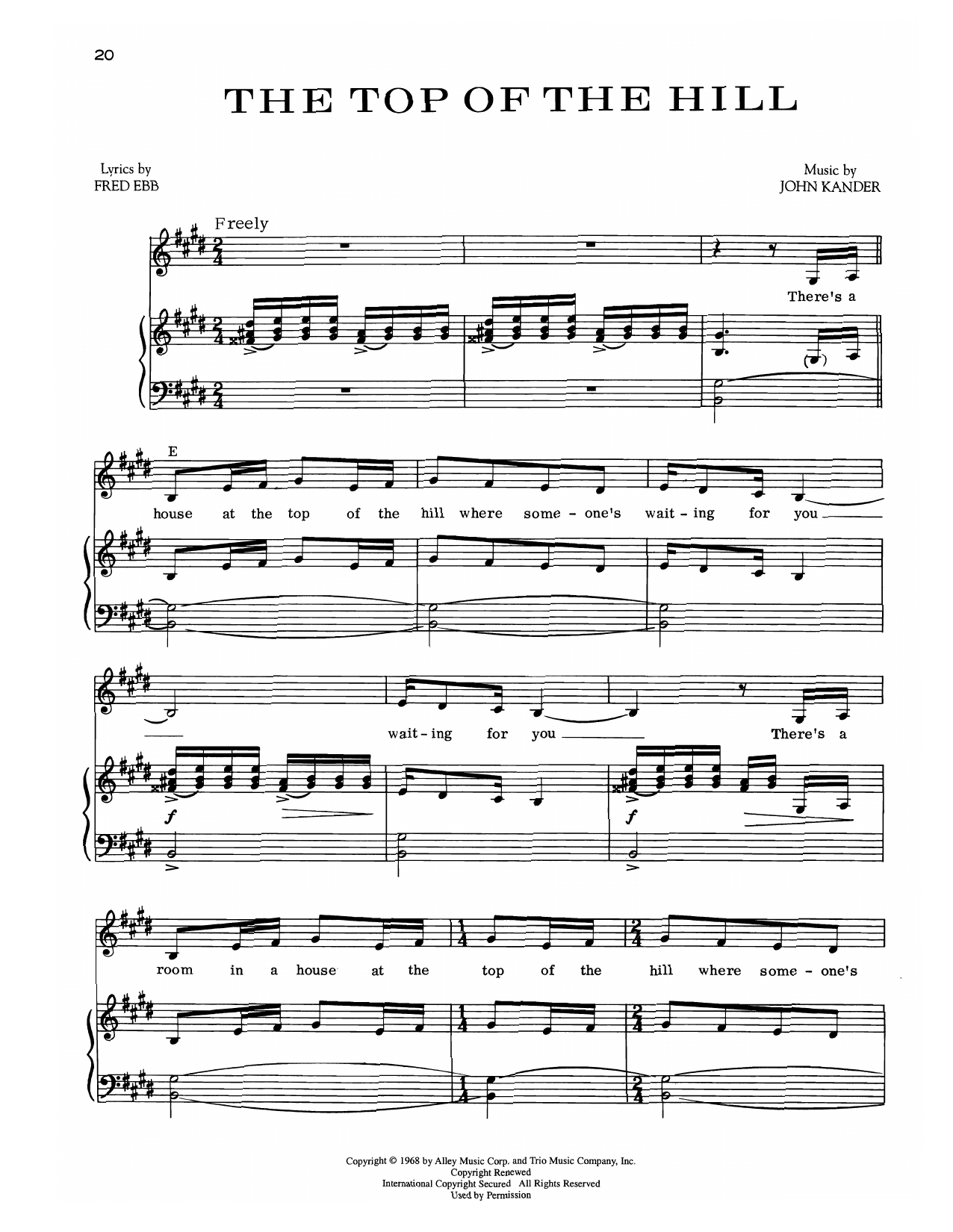
The Top Of The Hill (from Zorba) Sheet Music Preview

The Top Of The Hill (from Zorba): Piano Vocal

Item: 35-DS01732038

Digital Download
$5.99
Description

The Top Of The Hill (from Zorba): Piano Vocal isn't in MakeMusic Cloud just yet...but it could be. Let us know you'd like to see it, and you'll help shape what comes next. In the meantime, start a free trial and dive into thousands of interactive titles your students can play along with today.

Sample Audio
No sample audio found.
Sample Video
Additional Details
Publisher: Hal Leonard
Page Count: 8
SKU: 35-DS01732038

More about this title

About the Creator: Mikis Theodorakis

Mikis Theodorakis stands among the most significant composers of the twentieth century, blending classical training with a deep commitment to Greek folk traditions. His score for Zorba the Greek became a cultural landmark, capturing the spirit of Crete through music that feels both intimate and universal.

Why we love this

The melody sits beautifully for voices with moderate range, and the piano writing supports without overwhelming. Audiences recognize it instantly, which means your performers get the gift of playing something that lands emotionally every single time.

What to expect

The tune carries a wistful, contemplative quality; there is acceptance and gentle wisdom in the harmonic language. Singing it feels like sharing a confidence, and the piano colors the moment with warmth and understanding.

Who it's for

Vocalists developing interpretive skills in contemporary classical and theater repertoire will find this accessible yet dramatically rich. It works equally well for recital, concert, or educational settings where audiences appreciate immediate melodic appeal.

How to get the most out of it

  • Shape the phrase around the lyrical peaks rather than mechanically hitting the printed dynamics. The tune wants to breathe like speech.
  • Let the piano introduction establish the character before the voice enters; resist the urge to rush into the vocal line.
  • Balance the harmony so the vocal line remains the center of focus; the accompaniment is conversational, not competitive.
  • Consider the tempo as a walking pace, not a march. This piece asks for unhurried movement and natural phrasing.

How to use it

This pairs naturally with other twentieth century art song or as a bridge between classical vocal technique and musical theater. A recital devoted to Mediterranean or European traditions gains substance from its inclusion.

Skills your students will build

  • Sustaining lyrical phrases with consistent breath support
  • Balancing vocal projection with accompaniment in an intimate setting
  • Interpreting folk-influenced melody through a classical vocal lens
  • Responding to harmonic color in contemporary keyboard writing

You May Also Like