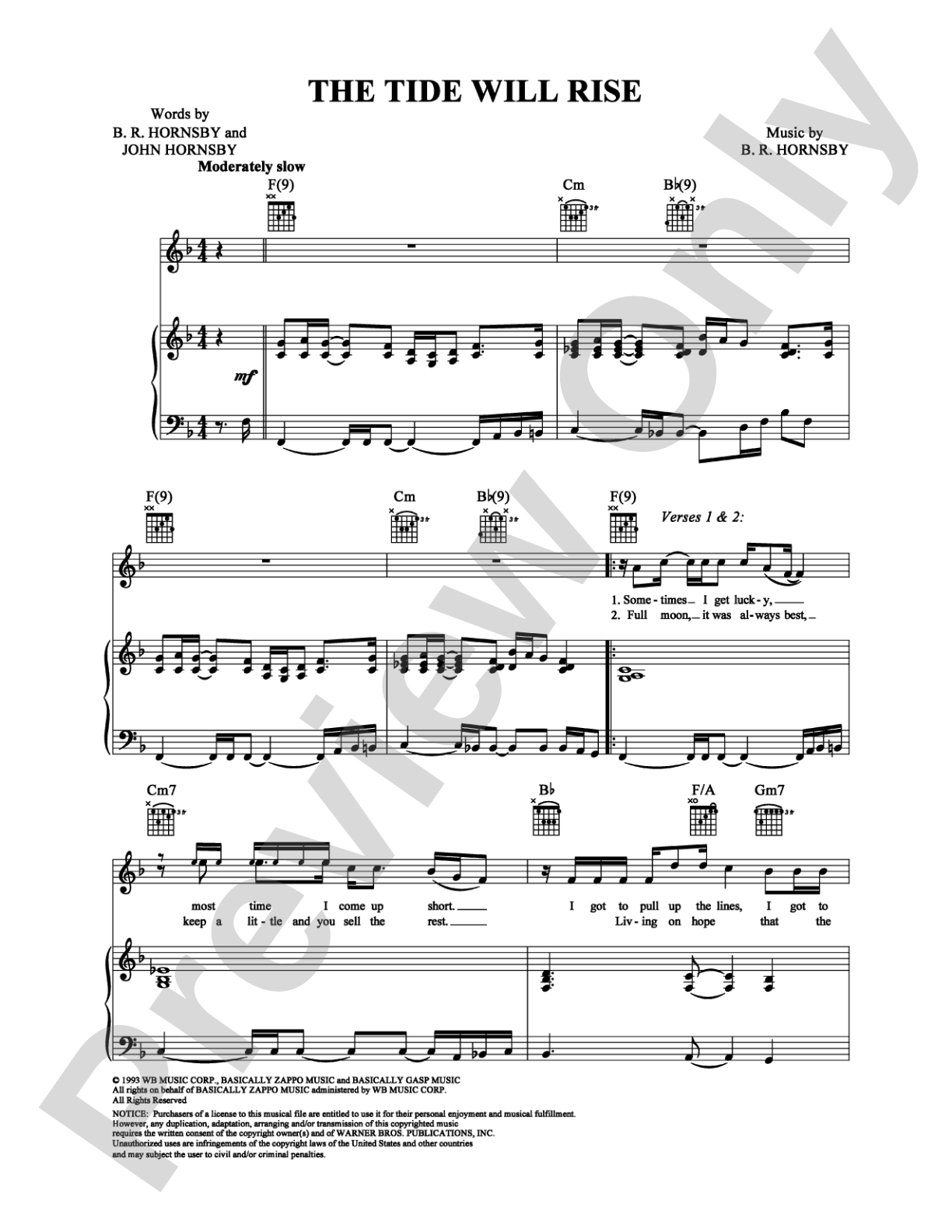
The Tide Will Rise: Piano/Vocal/Chords Digital Sheet Music

The Tide Will Rise: Piano/Vocal/Chords Digital Sheet Music

Bruce Hornsby

Item: 00-PS-0003065

Digital Download
$2.95
Description

The Tide Will Rise: Piano/Vocal/Chords Digital Sheet Music isn't in MakeMusic Cloud just yet...but it could be. Let us know you'd like to see it, and you'll help shape what comes next. In the meantime, start a free trial and dive into thousands of interactive titles your students can play along with today.

Sample Audio
No sample audio found.
Sample Video
Additional Details
SKU: 00-PS-0003065

More about this title

About the Artist: Bruce Hornsby

Bruce Hornsby is a pianist and singer-songwriter whose work spans pop rock, country, and roots music. His career began in the 1980s with the Rankin Family and continued as a solo artist; he has maintained a prolific output across recording, touring, and collaboration for four decades. Hornsby's compositional voice centers on strong melodic writing and lyrical substance, often exploring themes of social observation and personal reflection.

Why we love this

Hornsby's songs work beautifully in the piano/vocal/chords format because his melodies are built on strong harmonic structures and his lyrics reward careful interpretation. The arrangement gives singers and pianists room to shape the phrasing and dynamics while staying grounded in accessible, singable material. This piece sits naturally in a contemporary recital or concert setting where pop-rock songs with substance deserve serious musical treatment.

What to expect

The song carries a reflective, adult contemporary sensibility with the kind of harmonic sophistication and lyrical weight that suggests introspection rather than entertainment for its own sake. The piano part supports the vocal storytelling while maintaining its own rhythmic and tonal character.

Who it's for

This arrangement serves singers and pianists who want to perform contemporary pop-rock material in intimate settings such as recitals, cabaret shows, or coffee house performances. It works equally well for pianists accompanying vocalists or for singer-pianists performing solo.

How to get the most out of it

  • Pay attention to the lyrical narrative as you shape dynamics and phrasing; let the story inform your tempo flexibility and where you build intensity.
  • Use the chord symbols as a starting point for comping, but leave space for the vocal line to breathe rather than filling every beat.
  • Anchor the accompaniment with a steady rhythmic foundation while allowing rubato in the vocal melody during the verses.

How to use it

Program this alongside other contemporary singer-songwriter material or pop-rock songs that emphasize melodic and harmonic substance. It pairs well in a recital that balances classical and contemporary repertoire, offering audiences a bridge between traditional art song and modern songwriting.

Skills your students will build

  • Reading and interpreting chord symbols in a pop/rock context
  • Balancing accompaniment voicings with vocal melody clarity
  • Shaping phrasing and dynamics according to lyrical content in contemporary songs
  • Executing rhythmic accompaniment patterns typical of adult contemporary and pop-rock styles

You May Also Like