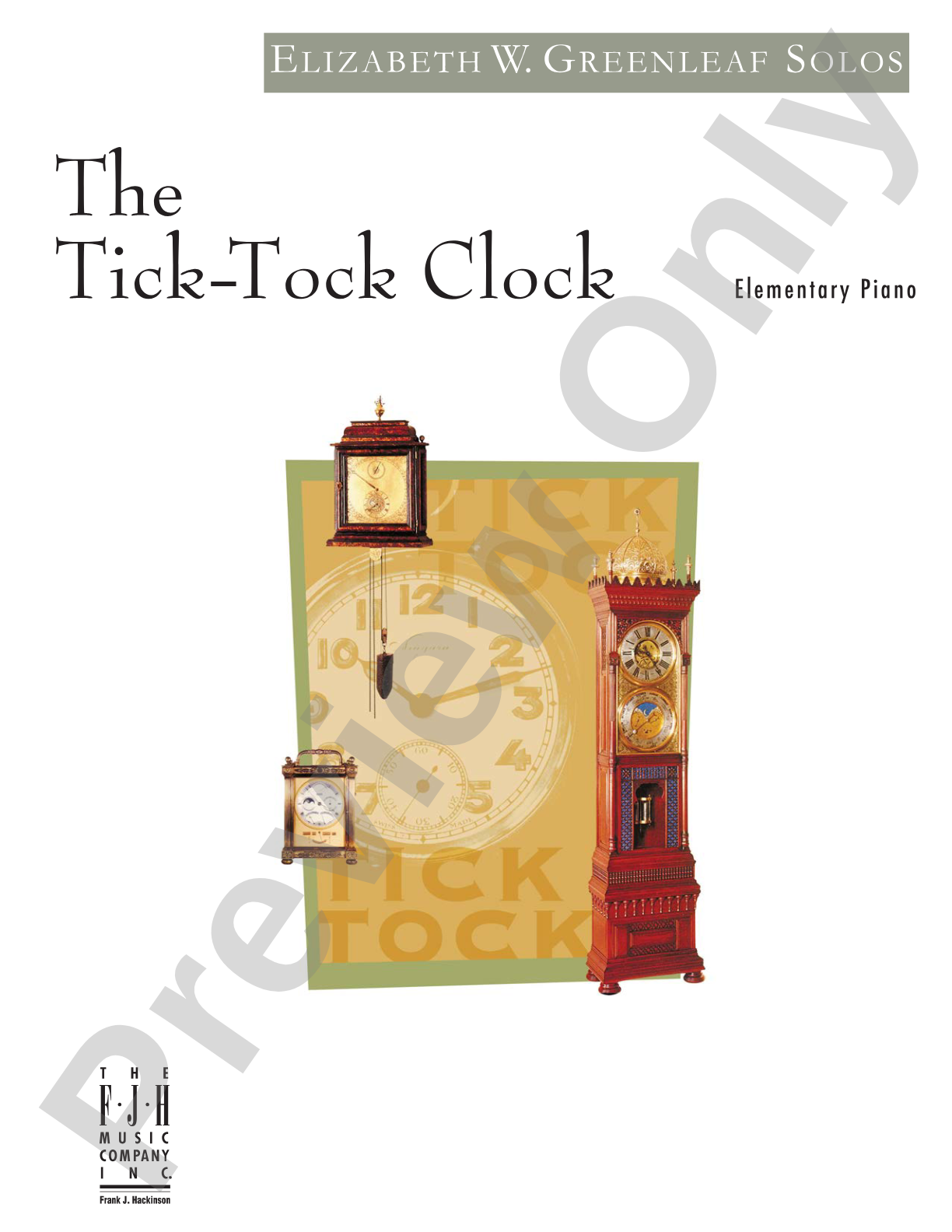
The Tick-Tock Clock Sheet Music Preview

The Tick-Tock Clock: Piano

By Elizabeth W. Greenleaf

Item: 98-DW9168

Digital Download
$2.95
Description
Young students will enjoy the steady rhythm and descriptive lyrics of this charming piece. Written mostly in Middle C position, this solo features staccato passages and alternating legato phrases to represent a ticking clock. An imaginative teacher duet provides additional "ticking"� effects.

The Tick-Tock Clock: Piano isn't in MakeMusic Cloud just yet...but it could be. Let us know you'd like to see it, and you'll help shape what comes next. In the meantime, start a free trial and dive into thousands of interactive titles your students can play along with today.

Sample Audio
No sample audio found.
Sample Video
Additional Details
Series: Written For You
Publisher: The FJH Music Company, Inc.
SKU: 98-DW9168

More about this title

Why we love this

Greenleaf captures what makes early piano repertoire genuinely engaging: a clear musical idea that young students can understand immediately, paired with real compositional craft. The interplay between staccato ticking and legato phrases gives students something concrete to work toward, and the teacher duet transforms practice into a genuine musical conversation rather than a solo recital.

What to expect

You become a clock. The steady heartbeat of the ticking gives the piece a predictable skeleton, but the phrase shaping and the teacher's complementary rhythmic patterns create a living, breathing quality. It's playful without being silly, mechanical without being cold.

Who it's for

Elementary pianists who have moved beyond hand position studies and are ready for pieces with real character. This solo works beautifully for students developing control over contrasting articulations and for those who respond well to descriptive, story-based music.

How to get the most out of it

  • Prepare the staccato passages with a light touch, lifting each note cleanly without tension. These represent the clock's quick clicks and should feel effortless rather than aggressive.
  • Shape the legato phrases as gentle breathing moments between the ticks. A slight rubato here helps the piece feel organic, almost like the clock pausing before it starts again.
  • Coordinate closely with the teacher duet before the first performance. The additional ticking effects work best when you and your teacher establish a shared sense of pulse together.

How to use it

This works well in a recital that celebrates program music and younger composers. Pair it with other descriptive pieces at the elementary level to create a themed set, or use it as a charming opener that sets a lighthearted tone for the concert.

Skills your students will build

  • Contrasting articulation (staccato and legato in the same piece)
  • Rhythmic precision and steady pulse maintenance
  • Hand position security in Middle C position
  • Listening and ensemble coordination with a duet partner
  • Dynamic shaping of legato phrases within a rhythmic framework

You May Also Like