The Three Ravens Sheet Music Preview

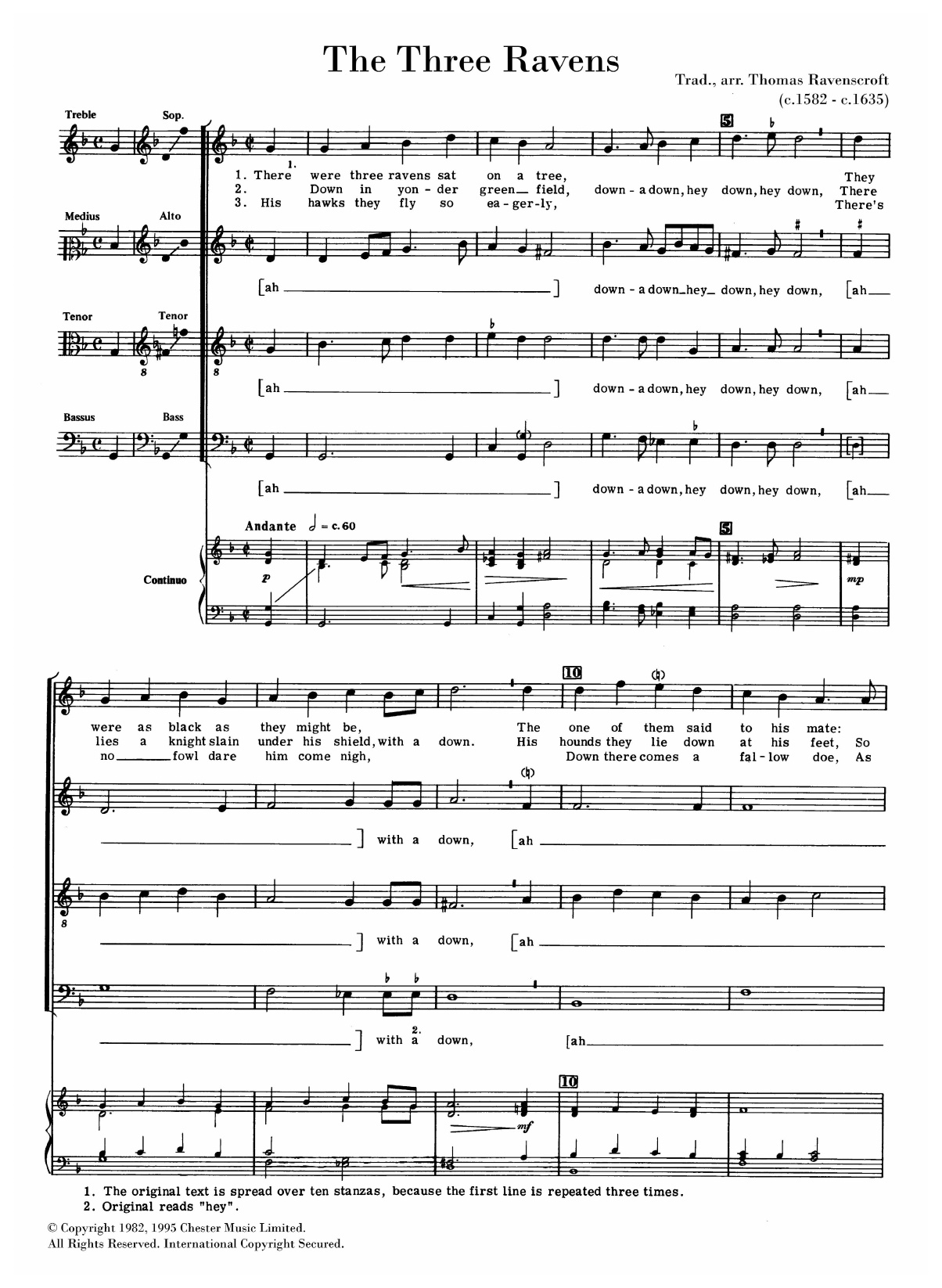
The Three Ravens: SATB Choral Octavo

As performed by Thomas Ravenscroft / Arranged by Anthony Petti

Item: 35-DS00366882

Digital Download
$2.99
Description

The Three Ravens: SATB Choral Octavo isn't in MakeMusic Cloud just yet...but it could be. Let us know you'd like to see it, and you'll help shape what comes next. In the meantime, start a free trial and dive into thousands of interactive titles your students can play along with today.

Sample Audio
No sample audio found.
Sample Video
Additional Details
Publisher: Hal Leonard
Page Count: 2
SKU: 35-DS00366882

More about this title

About the Artist: Thomas Ravenscroft

Thomas Ravenscroft was an English composer and musician active in the late 16th and early 17th centuries, known for his substantial contributions to the English vocal tradition. He compiled and composed works that bridged the Tudor and Stuart eras, establishing himself as a figure who helped preserve and develop secular choral music during a period of significant cultural change.

Ravenscroft's output included catches, rounds, and part songs that demonstrated his gift for setting English texts with clarity and musical wit. His works remain valuable in the educational choral repertoire because they showcase the melodic directness and harmonic language of early modern England.

Why we love this

Anthony Petti's arrangement captures the narrative drive of this ballad without sacrificing the archaic flavor that makes the original so distinctive. The octavo layout keeps the piece accessible for high school and college choirs while honoring the storytelling that makes The Three Ravens unforgettable once singers understand the dark plot.

What to expect

The Three Ravens unfolds with the gravity of a folk narrative set to music. Petti's arrangement balances accessibility with the haunting, slightly melancholic character of the original poem, creating a piece that feels both intimate and theatrical.

Who it's for

This octavo works for any SATB choir seeking secular repertoire with literary substance. High school and college ensembles will find it manageable within two pages while offering genuine artistic challenge.

How to get the most out of it

  • Establish clear diction for the text from the first rehearsal; early English pronunciation shapes how the ballad lands with audiences.
  • Balance the voices so the narrative remains audible even in fuller passages; this piece relies on text comprehension for its impact.
  • Shape phrases according to poetic line rather than harmonic cadence, which often extends beyond what singers might naturally breathe.

How to use it

Use this to anchor a themed concert exploring medieval or Renaissance English poetry in music, or program it alongside other narrative-driven choral works for variety in a concert of contrasting styles. The compact length also makes it ideal for filling a specific program slot without overwhelming longer pieces.

Skills your students will build

  • Singing with accurate historical pronunciation and diction
  • Maintaining narrative clarity across four-part textures
  • Shaping long phrases with structural awareness rather than harmonic landmarks

You May Also Like