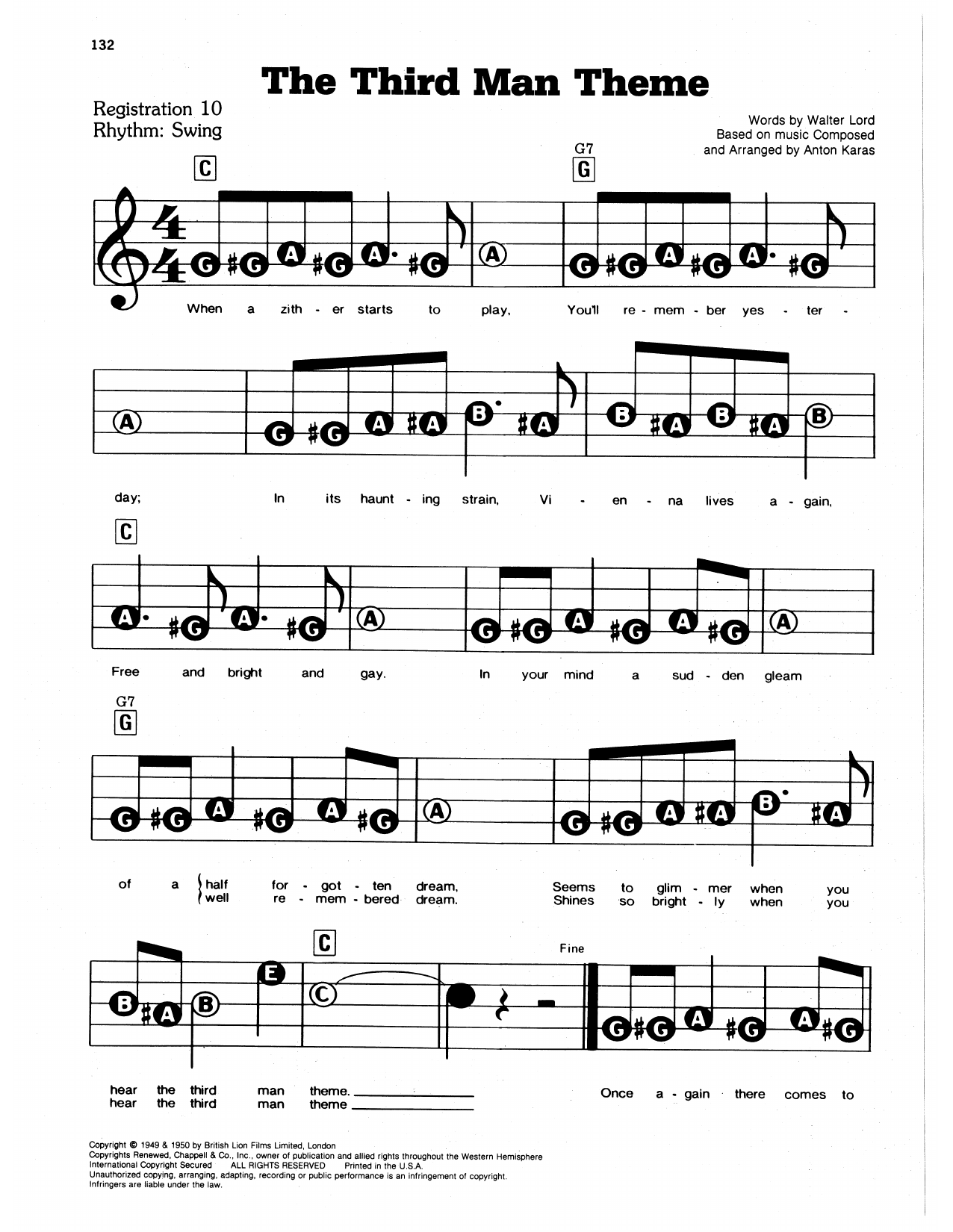
The Third Man Theme: E-Z Play Today

Item: 35-DS00506113

Digital Download
$4.99
Description

The Third Man Theme: E-Z Play Today isn't in MakeMusic Cloud just yet...but it could be. Let us know you'd like to see it, and you'll help shape what comes next. In the meantime, start a free trial and dive into thousands of interactive titles your students can play along with today.

Sample Audio
No sample audio found.
Sample Video
Additional Details
Publisher: Hal Leonard
Page Count: 4
SKU: 35-DS00506113

More about this title

About the Creator: Anton Karas

Anton Karas composed The Third Man Theme for Carol Reed's 1949 film of the same name, creating one of cinema's most iconic musical moments. The zither arrangement became inseparable from the film's Vienna setting and noir atmosphere, winning the Academy Award for Best Original Score and establishing itself as a standard in both film music and popular culture.

Why we love this

This E-Z Play arrangement makes one of film music's greatest melodies accessible to intermediate pianists without sacrificing its character. The piece carries built-in dramatic appeal; students recognize it immediately, which creates genuine motivation to learn it well.

What to expect

Stepping into a shadowy Vienna street at night. The melody pulses with restless energy and vintage elegance, never settling into comfort. A single zither voice traces an unforgettable line through darkness and intrigue.

Who it's for

Pianists who want to tackle recognizable repertoire without excessive technical demands make ideal candidates for this arrangement. The piece suits students in their second or third year of study, as well as adult learners seeking culturally significant material.

How to get the most out of it

  • Emphasize the rhythmic precision of the theme's signature opening figure. The melody's power comes from crisp articulation and steady pulse, not from rushing.
  • Balance the melody against accompaniment textures carefully. Since the original zither sound was thin and percussive, resist the urge to make your left hand too heavy.
  • Shape the phrase arcs subtly. The theme's eight-bar phrases benefit from gentle dynamic swells rather than dramatic peak and valley work.
  • Lean into the film noir mood by maintaining a slightly austere tone quality. This isn't a romantic waltz; it's intrigue and mystery translated to the keyboard.

How to use it

Include this in a film music recital or a program exploring twentieth-century composition beyond the concert hall. It also works as a bridge piece between classical technique work and contemporary popular repertoire, demonstrating how melody transcends medium.

Skills your students will build

  • Maintaining rhythmic precision in repetitive accompaniment patterns
  • Balancing melody prominence over figured left-hand parts
  • Interpreting film music idioms and their performance requirements
  • Shaping non-traditional phrase structures effectively

You May Also Like